Emergency & Projects · Lexington, KY
HVAC system replacement in Lexington, planned around your house
Your furnace and air conditioner are both getting old, repairs keep coming, and you'd rather plan a replacement than wait for a breakdown in January or July. Here's how to choose the right system.
Lexington and nearby counties
Line open 24/7Short answer: HVAC System Replacement in Lexington, KY
Replacing a full HVAC system in Lexington means choosing between a gas furnace with central air, an electric heat pump, or a dual fuel system that pairs both. The right choice depends on gas availability, KU and Columbia Gas costs, the house's heat loss and the duct condition. A proper replacement includes a load calculation, a static pressure test and verified airflow and charge at startup.
Three system types that fit most Lexington homes
Most replacements here come down to one of these three. Each can be a good choice, depending on fuel and house.
| System | Heating source | Where it fits best |
|---|---|---|
| Gas furnace and central air | Natural gas from Columbia Gas | Homes with gas service and a basement or closet furnace |
| Air-source heat pump | Electricity from KU, strip heat backup | All-electric homes and well-sealed newer houses |
| Dual fuel heat pump | Heat pump with gas furnace backup | Gas homes wanting lower mild-weather heating cost |
| Geothermal heat pump | Ground loop with electric backup | Larger lots and long ownership plans |
How to tell it's time to replace both units
Age alone doesn't decide it, but it sets the frame. Central air and heat pumps here often last 12 to 17 years, and gas furnaces commonly reach 18 to 25. When both units are in the back half of those ranges, replacing them together usually costs less than two separate projects a few years apart, and it lets the new coil, blower and outdoor unit be matched.
Refrigerant type is a strong signal. An R-22 air conditioner can't be replaced alone with a modern condenser, and recharging it with reclaimed refrigerant gets more expensive every season. Repair history matters too. Two or three significant repairs in as many years, or a single repair costing more than a third of a new system, usually point toward replacement.
Comfort problems count. Rooms that never cool, a house that feels clammy in July, and high bills often trace back to equipment that was oversized when installed or ducts that leak into a crawlspace. Our guide on repair or replace decisions walks through the math in more detail, including how to weigh repair cost against system age.
Decisions that shape a full system replacement
Equipment brand matters less than these choices. We go over each one during the estimate visit so the quote matches your house.
Fuel choice for heating
If Columbia Gas serves your street, a gas furnace or dual fuel system is on the table. Rural homes on propane often look harder at heat pumps.
Sizing from a load calculation
We run Manual J heat loss and gain for the house as it stands today. New windows or added insulation often mean a smaller system than the old one.
Duct condition and static pressure
A new system can't fix ducts that leak or choke airflow. We measure static pressure and look at returns before finalizing equipment size.
Staging and blower type
Two-stage furnaces and two-stage or variable-speed compressors run longer at lower output, which evens temperatures and pulls more humidity in summer.
Thermostat and controls
Dual fuel and variable-speed systems need a compatible thermostat. We set balance points and staging so the system runs the way it was designed.
Air quality add-ons
Replacement is the easiest time to add a media filter cabinet, a whole-house dehumidifier or fresh-air ventilation, since the ductwork is already open.
Full HVAC replacement prices in central Kentucky
This range covers a matched heating and cooling system on existing ductwork, including removal, installation, startup and commissioning.
- System type. A single-stage gas furnace with central air sits near the low end. Variable-speed heat pumps and dual fuel systems sit higher, and geothermal runs well above this range.
- Size of the house. Tonnage and furnace output follow the load calculation. A 1,400 square foot ranch needs much less capacity than a 3,200 square foot two-story.
- Ductwork changes. Adding returns, resizing a plenum or sealing crawlspace ducts adds cost, but often decides whether the new system performs as rated.
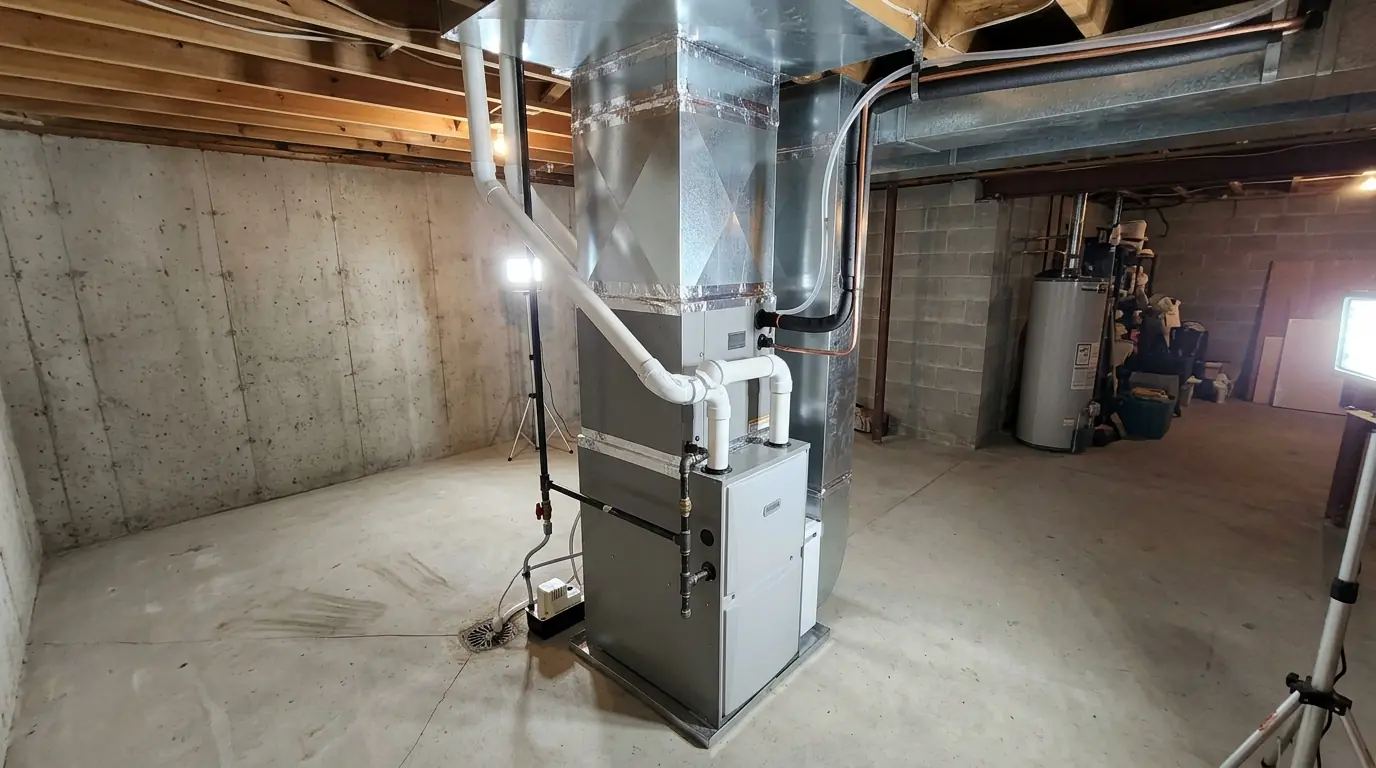
- Venting and gas work. Moving from an 80 percent furnace to a 96 percent model needs PVC venting and a condensate drain. Old metal flues may need a liner.
- Electrical changes. Heat pumps with strip heat may need a larger breaker and wire. We check panel capacity during the estimate visit.
The written price comes after we look at the system, measure the house and check the ducts. You'll see each system option priced separately. Compare typical prices for every service.
From first visit to a running new system
A full replacement usually takes one to two days of installation once equipment is in hand.
Estimate visit and measurements
We measure the house, check the ducts and static pressure, look at the electrical panel and gas line, and talk through how you use each floor.
Options in writing
You get written options, usually two or three system types or efficiency levels, each with its price and what it changes for comfort and operating cost.
Removal and setup
We recover refrigerant, remove the old equipment, and set the new furnace or air handler, coil and outdoor unit on proper supports and pads.
Connections and venting
Gas, venting, refrigerant lines, condensate drains and wiring are completed. Refrigerant joints are brazed under nitrogen and pressure tested.
Commissioning
We pull a deep vacuum, verify charge, set blower speed, check gas pressure and temperature rise, test safeties, and walk you through the thermostat.
Fuel, ducts and old houses in Fayette County
Gas service shapes most replacement decisions in Lexington. Many neighborhoods inside New Circle Road and the newer subdivisions have Columbia Gas lines, so a gas furnace or dual fuel system is easy to keep. Outlying homes in the surrounding counties are more often all-electric or on propane, which shifts the math toward a dual fuel setup or a straight heat pump.
Duct condition varies by era. Homes from the 1970s and 1980s along the Tates Creek corridor often have duct runs through crawlspaces with tired joints and thin insulation. Houses near downtown may have ducts added long after construction, with small returns. In both, we often pair replacement with crawlspace duct sealing or a new return so the system can move the air it was sized for.
Weather sets the targets. A design temperature in the single digits for heat loss, and humid summer days in the upper 80s for heat gain, guide our load numbers. For a direct look at heating fuel choices, read our comparison of heat pumps and gas furnaces. It covers operating cost, comfort and how each handles a cold snap.
We work on Carrier, Trane, Lennox, Rheem and Goodman equipment along with every other major brand found in Lexington homes, and the same testing comes first on all of them.
Neighborhoods and towns that call us for HVAC system replacement
We cover every Lexington neighborhood and the towns around it. These are the places we visit most for this work; the full list is on our Fayette County page and the service area page.
Further reading from our Comfort Blog
Owning an R-22 AC or heat pump in Kentucky
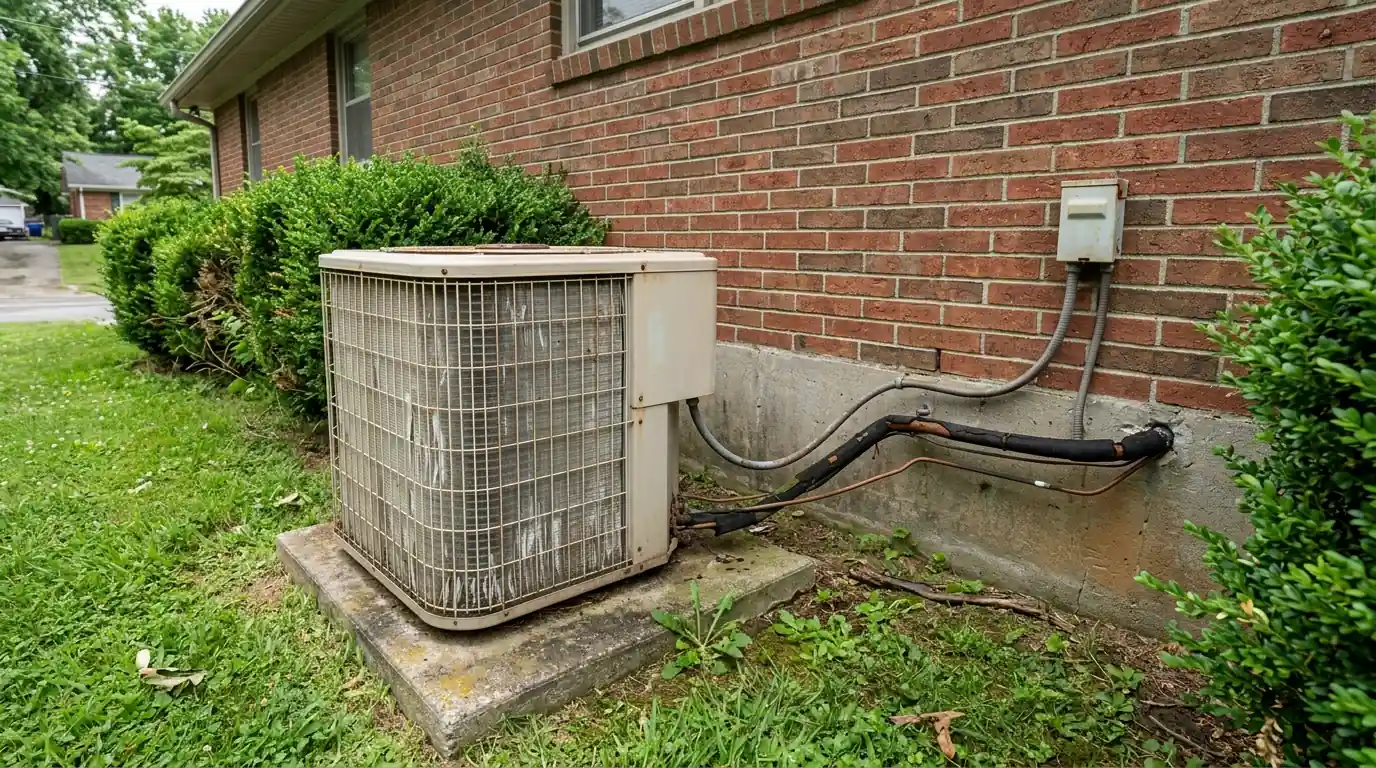
R-22 systems can still run for years, but every repair now carries a refrigerant question. Here is how to tell what you have, what a leak means, and how to plan the switch on your terms.
Repair or replace your HVAC: a plain way to decide
A large repair quote on an old system forces a fast decision. These are the factors we weigh with Lexington homeowners, roughly in the order they matter.

What size AC or heat pump your Lexington home needs
Most sizing mistakes start with a quick square-footage guess. Here is what a real load calculation looks at, why bigger equipment often feels worse, and how ducts and floor plans change the answer.
Common questions on HVAC system replacement around Lexington
Should I replace my furnace and air conditioner at the same time?
If both are past their middle years, usually yes. Replacing them together lets the new coil, furnace blower and outdoor unit be matched for airflow and efficiency, and it saves the labor of two separate installs. If the furnace is under ten years old and its blower suits the new system, replacing only the cooling side can make sense. We'll check both.
Is a heat pump a good HVAC replacement for a Lexington winter?
Modern heat pumps handle most central Kentucky winter weather well, and cold-climate models keep working into the single digits. Below that, strip heat or a gas furnace in a dual fuel setup takes over. For homes with gas service, dual fuel often gives the lowest yearly heating cost. For all-electric homes, a properly sized heat pump is usually the strongest choice.
How long does a full HVAC system replacement take in Lexington?
Most furnace and air conditioner replacements on existing ductwork take one to two days. Switching from an 80 percent to a high-efficiency furnace adds venting work, and changing to a heat pump may add electrical work. Duct changes or a geothermal loop add more time. You'll have heat or cooling restored at the end of each working day whenever possible.
Can my existing ductwork be reused with a new HVAC system?
Often, yes, after testing. We measure static pressure and look for leaks, crushed runs and undersized returns. Ducts in good shape get reused, which keeps cost down. Ducts that leak heavily into a crawlspace or choke airflow get sealed or modified, since a new system on bad ducts won't deliver the comfort or efficiency you're paying for. Call (859) 377-8167 to schedule that check.
Call and describe what the system is doing
A person answers (859) 377-8167 day and night. Tell us what you are seeing and a technician takes it from there.