Lexington neighborhood · Fayette County
Furnace and AC repair in Garden Springs (40504)
Garden Springs ranches are compact, and that makes system size and duct condition matter more than in a big house. We diagnose the problem first, then fix it at the right scale.
Short answer: HVAC service in Garden Springs
Garden Springs (40504) lies between Harrodsburg Road and Georgian Way, north of New Circle Road, and its brick ranches date mostly to the 1960s, the decade Garden Springs Elementary opened. Many have basements and gas forced-air furnaces. Typical service calls involve oversized replacement air conditioners that short cycle, aging furnaces, leaky return paths and finished basements with weak airflow.
Ranches on the plant-named streets of Garden Springs
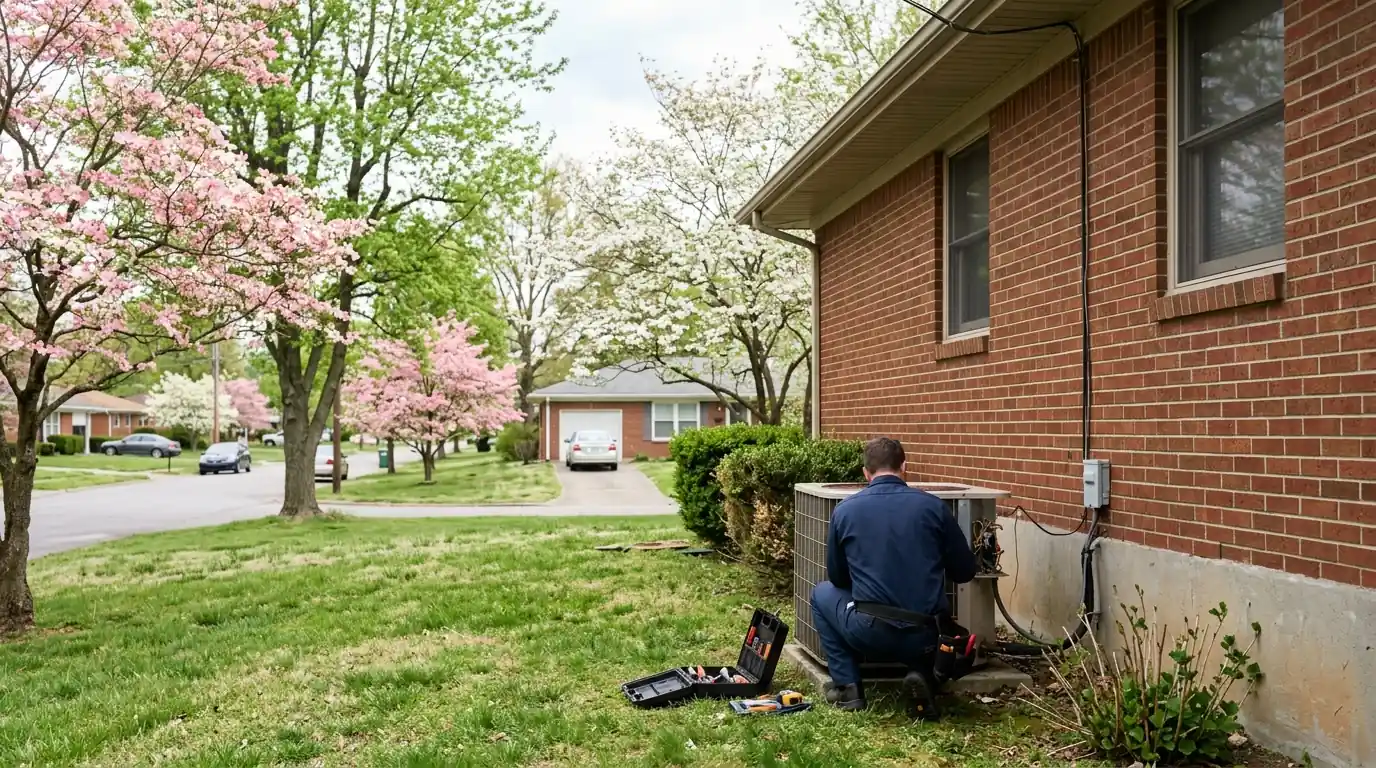
Garden Springs is bounded by Lane Allen Road to the north, Harrodsburg Road to the east, New Circle Road to the south and Georgian Way to the west. Garden Springs Elementary opened on Garden Springs Drive in August 1964, and the streets around it carry plant names: Cypress, Camellia, Balsam, Winterberry, Dogwood, Lily, Sage and Palms. Garden Springs Park and Beaumont Park are both close by.
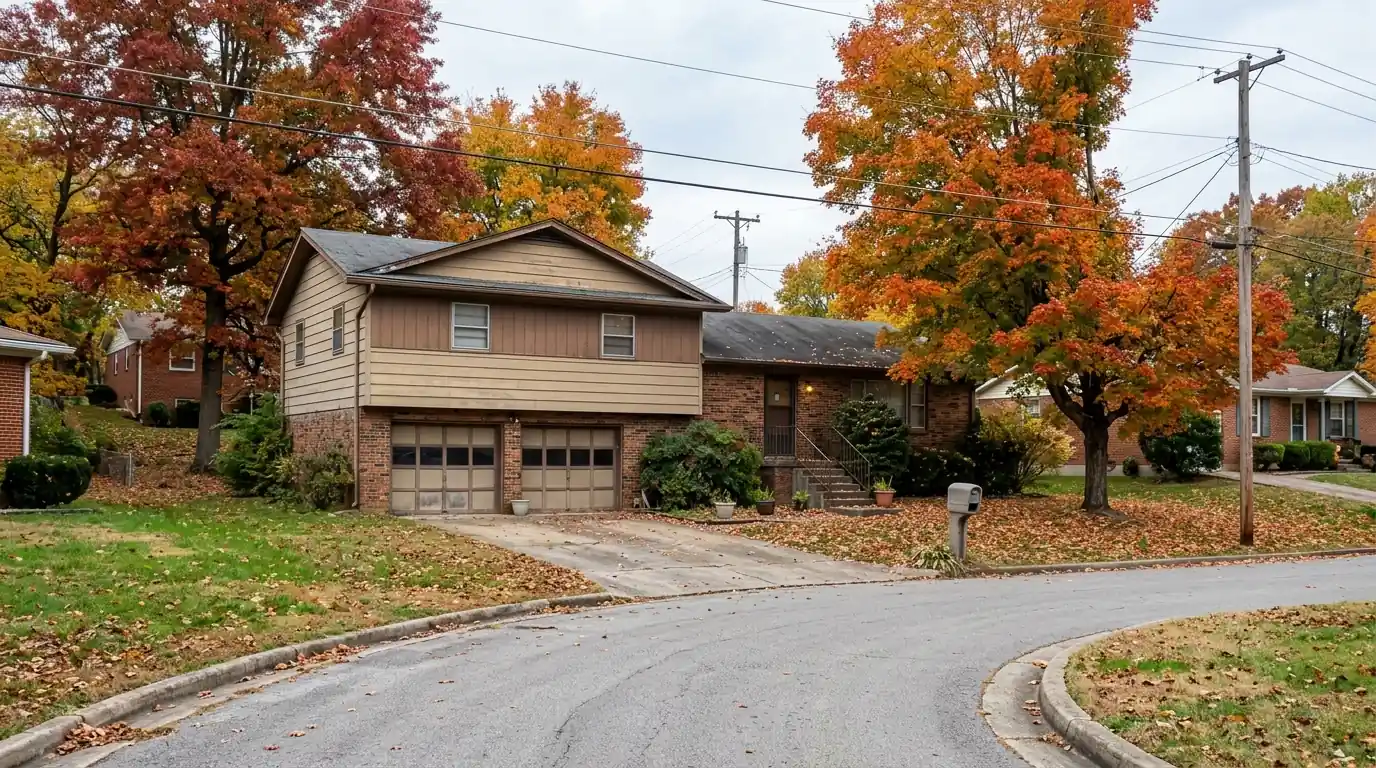
The houses are mostly modest brick ranches from the 1960s, and plenty sit on basements that owners have finished into family rooms and bedrooms. A gas forced-air furnace with central air was the common setup, though some homes have since added heat pumps or a ductless unit in a converted garage. Because the houses are small, a system that is too big or ducts that leak show up quickly as comfort problems.
Why compact Garden Springs ranches lose comfort
Small houses are sensitive to sizing mistakes and air leaks. These are the faults we look for first.
Oversized replacement air conditioners
A condenser sized by rule of thumb cools a small ranch too fast, shuts off before it removes moisture, and leaves rooms clammy on muggy July nights.
Joist-bay returns that leak
Older ranches often use the space between floor joists as a return path. Gaps around it pull dusty, damp basement air into the system and starve the main-floor returns.
Finished basements with no return
Rooms finished later often got a supply register but no return. They stay cold in winter and damp in summer, and their doors whistle when closed.
Worn inducers and igniters
Furnaces replaced in the 1990s and 2000s are reaching the age when inducer motors grind and hot surface igniters crack, often on the first cold morning of fall.
Rusty supply boots
Summer condensation rusts the sheet metal boots under floor registers. Rust flakes and loose joints cut airflow to the rooms they feed.
From your phone call to heat in a Garden Springs ranch
A no-heat call in Garden Springs usually goes like this.
Describe what you see
Tell us whether the furnace tries to start, clicks, shows a blinking light or stays silent. Those clues point us toward the right parts before we arrive.
Safety and gas checks
We check gas pressure, venting and carbon monoxide at the furnace first, since many units here sit in finished basements next to living space.
Find the failed part
We test the igniter, flame sensor, inducer, pressure switch, limit and control board, and read any stored fault codes.
Written price, then repair
You see the diagnosis and the price first. Common furnace parts ride on the truck, so many repairs finish on the same visit.
Run a full heating cycle
We watch the furnace start, heat and shut down normally, check the temperature rise and leave a clean filter in place.
Sizing the next system for a smaller Garden Springs ranch
Bigger is not better in a 1960s ranch. A load calculation that accounts for the brick walls, attic insulation, windows and basement often lands on a smaller unit than the one being replaced. The right size runs longer cycles and pulls more moisture, which is why our article on a house that feels clammy keeps coming back to sizing.
When it is time for a right-sized central air system, we also look at the return path and the basement rooms. A garage or finished space the ducts never reached can take a single ductless head. Neighboring Gardenside homes across Lane Allen Road share many of the same issues. Call (859) 377-8167 to have your Garden Springs system looked at.
The work we do most often in Garden Springs
Furnace Repair
Gas furnaces in Garden Springs basements are often on their second or third generation, and inducers, igniters and control boards are the usual failures.
AC Repair
Compact ranches feel a failed capacitor or low refrigerant within hours on a humid day, and quick repairs keep the basement from turning damp.
Furnace Tune-Ups
A fall check before the first cold snap catches cracked igniters and dirty flame sensors in the furnaces that heat these 1960s ranches.
Duct Sealing
Joist-bay returns and loose basement seams pull damp air into the system, and sealing them helps a small house hold steady temperatures.
AC Installation
A proper load calculation keeps a Garden Springs ranch from getting another oversized condenser that short cycles and leaves rooms clammy.
Ductless Mini Split Installation
Converted garages and finished basements the ducts never reached are a good fit for a single ductless head.
Neighboring areas around Garden Springs
Questions we hear from Garden Springs
What size air conditioner does a Garden Springs ranch need?
It depends on the house, not the old nameplate. Brick walls, attic insulation, window area, shade and whether the basement is finished all change the cooling load. Small ranches often end up with a smaller condenser than the one being replaced once a proper calculation is done. We measure the house and run the numbers before recommending a size.
Why is the finished basement in my Garden Springs home always cold?
Basements lose heat to the surrounding ground, and many got supply registers but no return when they were finished. Cool air settles there and the furnace cannot pull it back. We check the supply and return paths, then suggest options such as an added return, a damper adjustment or a ductless head for that level.
Should I repair or replace a 1990s furnace in Garden Springs?
A furnace that old can still be worth repairing if the heat exchanger is sound and the part is modest, such as an igniter or flame sensor. If it needs an inducer motor or control board and shows rust or cracks, replacement usually makes more sense. We show you the condition and the numbers for both before you decide.
Heating or cooling trouble in Garden Springs?
Call (859) 377-8167 any hour. Tell us what the system is doing and where you are, and we will take it from there.