Heating · Lexington, KY
Carbon monoxide safety checks for Lexington homes
You have gas appliances, an attached garage or an older chimney, and you want to know whether any of them is putting carbon monoxide into the air your family breathes.
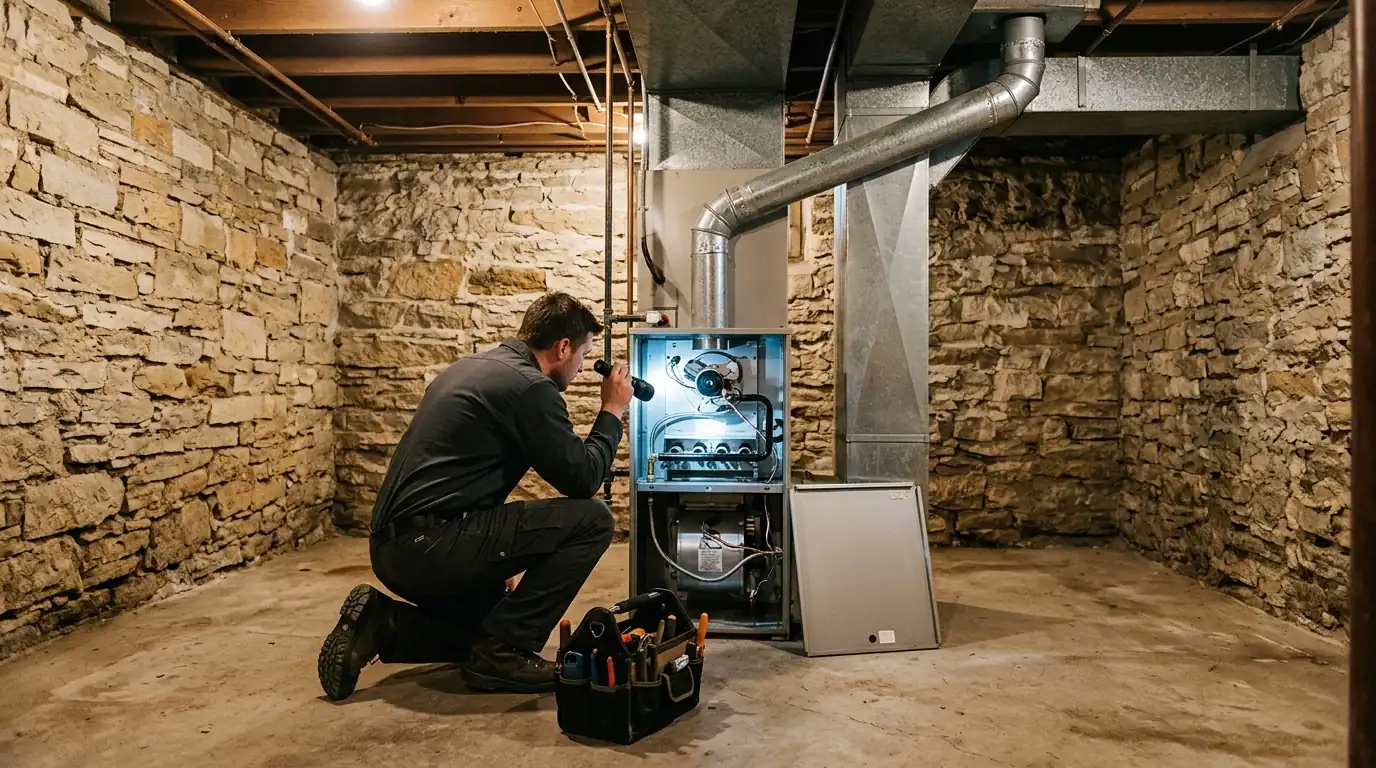
Lexington and nearby counties
Line open 24/7Short answer: Carbon Monoxide Safety Check in Lexington, KY
A carbon monoxide safety check measures CO at every fuel-burning appliance and in the living space, tests furnace and water heater draft, inspects venting and the heat exchanger, and checks your alarms. If a CO alarm sounds or anyone feels headachy, dizzy or sick, do not wait for a check: get everyone outside and call 911 or the Columbia Gas emergency line from outdoors.
Every place we test for carbon monoxide
Carbon monoxide comes from incomplete burning or from exhaust that ends up indoors. We test each source in the house, not only the furnace.
Furnace flue and heat exchanger
We measure CO in the flue gas, inspect the heat exchanger with a camera where we can reach it, and watch the flame when the blower starts for movement that points to a crack.
Gas water heater draft hood
With the water heater firing, we check for spillage at the draft hood. Exhaust that rolls out instead of rising up the vent is one of the most common CO sources we find.
Range, oven and cooktop
Gas ovens produce some CO, especially during long bakes or self-cleaning cycles. We measure at the oven vent and in the kitchen air with the oven running.
Fireplaces and gas logs
Vent-free gas logs, a stuck damper or a cracked flue liner can all push combustion gases into the room. We test while the unit runs.
Attached garage
Car exhaust, generators and gas tools in an attached garage can seep through gaps around the house door, ductwork or a furnace closet that shares a wall.
Living space and bedrooms
We walk the house with a low-level meter, taking readings near sleeping areas and on each floor, and compare them with the air outside.
If your CO alarm goes off, do this first
Our check is planned safety work. It does not replace 911 or the gas company when an alarm is sounding or someone feels ill.
- Get every person and pet out of the house right away.
- Leave doors open behind you only if it does not slow you down.
- Call 911 from outside if anyone has a headache, nausea, dizziness or confusion.
- If you also smell gas, call the Columbia Gas emergency line from outside.
- Do not go back in until responders say the air is safe.
- Do not restart the furnace or water heater before a technician inspects it.
- After responders clear the house, call us to find the source.
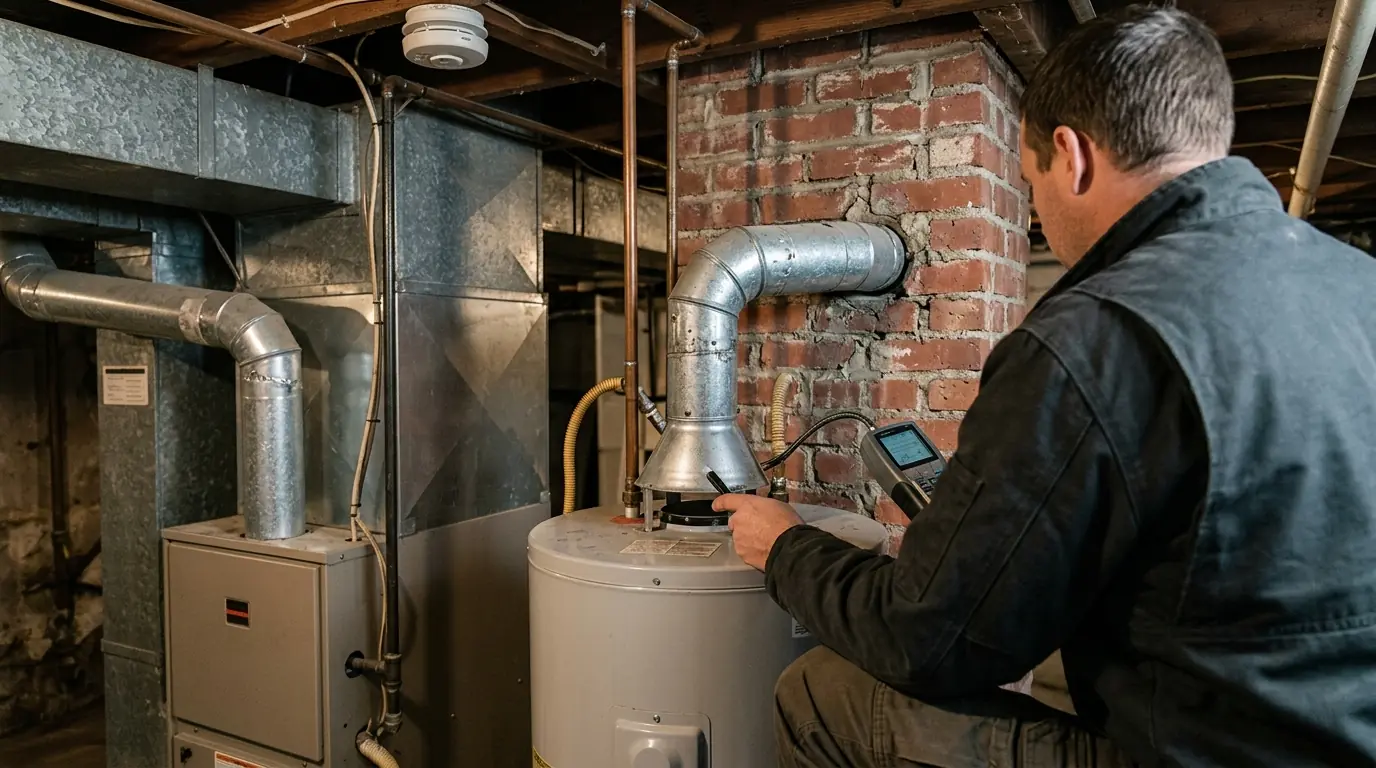
How a carbon monoxide inspection unfolds
The visit usually takes one and a half to two hours, depending on how many gas appliances the house has.
Outdoor and indoor baseline
We record CO outside and in each main room before any appliance runs. Outdoor air normally reads zero to two parts per million, which gives us a clean comparison.
Worst-case draft setup
We close interior doors and turn on the dryer, bath fans and range hood to pull the house negative, then fire each vented appliance and check whether its exhaust still rises.
Appliance by appliance
Furnace, water heater, range, fireplace and any space heater are tested at their flue or exhaust and in the room around them, with the readings written down.
Venting and heat exchanger
We follow vent pipes for slope, joints, rust and blockages, check chimney caps and PVC terminations outside, and inspect the furnace heat exchanger.
Alarms and findings
We test your CO alarms, note their age and placement, and give you a written report of every reading and anything that needs repair.
What carbon monoxide readings in the home mean
These are room-air readings in parts per million. Flue readings are judged separately against each appliance design.
| Room reading | What it suggests | What we do |
|---|---|---|
| 0 to 2 ppm | Normal background level | Record it and move on |
| 3 to 9 ppm | A small source is adding CO | Trace the source appliance |
| 10 to 35 ppm | A real problem, often venting or burning | Shut off the appliance, open the house |
| Above 35 ppm | Unsafe for living space | Everyone out, call 911 |
Chimneys, garages and storm outages in Lexington
Older Lexington homes carry a particular CO risk. In houses near downtown and in Chevy Chase or Kenwick, furnaces and water heaters often still vent into brick chimneys built long before modern appliances. When a furnace is replaced with a high-efficiency model vented through PVC, the water heater may be left alone in a chimney sized for two, which keeps the flue cold and can make it spill. Mortar and clay liners also crumble over time and block the flue.
Newer subdivisions bring a different issue: attached garages and tight construction. A car warmed up in a closed garage on a January morning can push exhaust through the house door or into return ducts. Tight homes with strong range hoods and bath fans can also pull exhaust back down a water heater vent. If your house feels stuffy in winter, our fresh-air ventilation options can help balance that pressure.
Central Kentucky ice storms and spring wind knock out KU power for hours or days, and portable generators run too close to the house are a leading cause of CO alarms during outages. Keep generators well away from doors, windows and vents. Also keep your dryer vent clear, since a blocked one adds to depressurization; our dryer vent cleaning handles that.
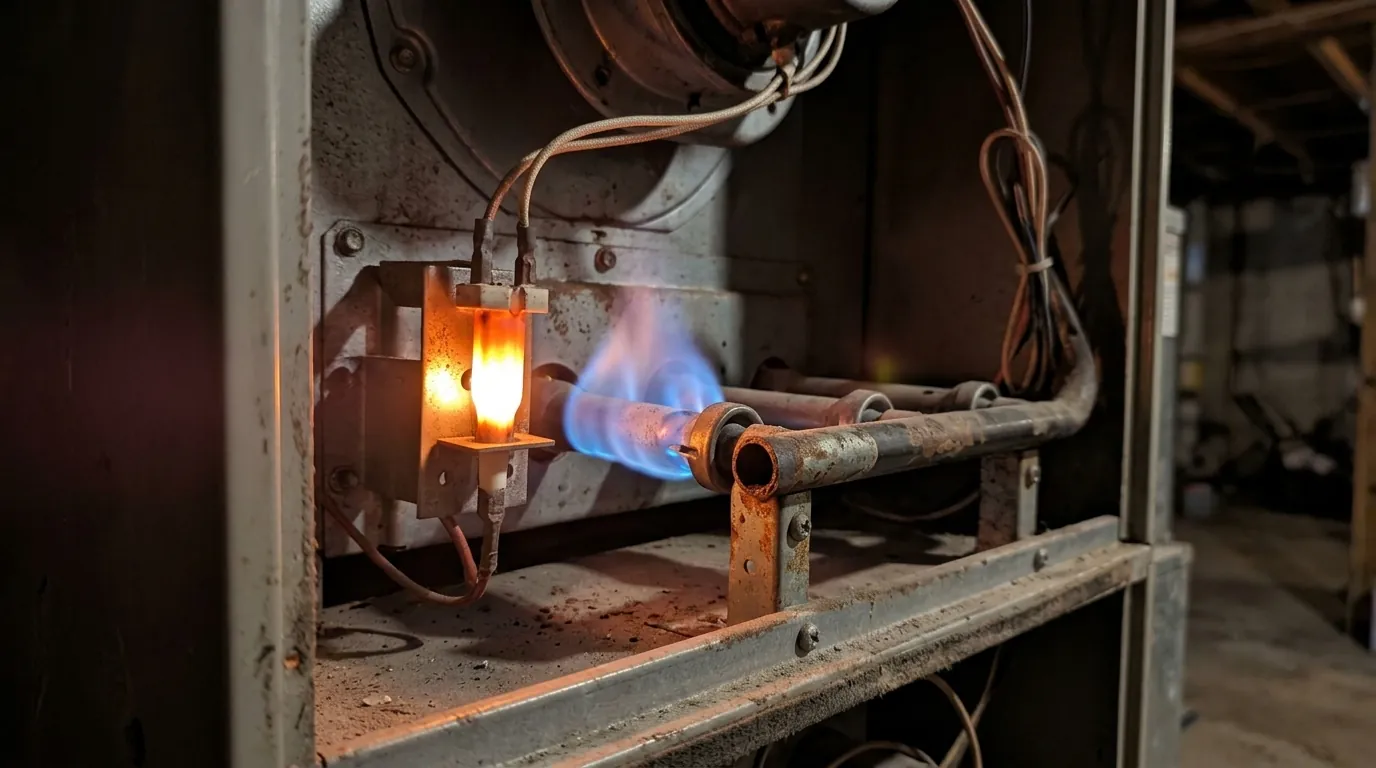
Signs that point to a carbon monoxide source
CO has no smell, so these clues matter. Any one of them is reason to book a check, and symptoms in people are reason to call 911 first.
Symptoms that ease outdoors
Headaches, nausea or tiredness that several people share at home and that fade after leaving the house are the classic warning, especially in winter.
Lazy yellow burner flames
Natural gas burners should burn mostly blue. Tall, floating or yellow flames on a furnace, water heater or range point to poor combustion.
Soot or scorch marks
Black streaks around a furnace door, water heater draft hood or fireplace opening mean exhaust has been escaping where it should not.
Heavy window condensation
Persistent moisture on windows in winter can come from exhaust gases, which carry water vapor, entering the house instead of leaving through the vent.
Alarm chirps or short beeps
A chirp often means a low battery or an alarm at end of life. Most CO alarms are rated for seven to ten years and should be replaced on schedule.
We work on Carrier, Trane, Lennox, Rheem and Goodman equipment along with every other major brand found in Lexington homes, and the same testing comes first on all of them.
Where we handle carbon monoxide safety check most often
We cover every Lexington neighborhood and the towns around it. These are the places we visit most for this work; the full list is on our Fayette County page and the service area page.
Further reading from our Comfort Blog
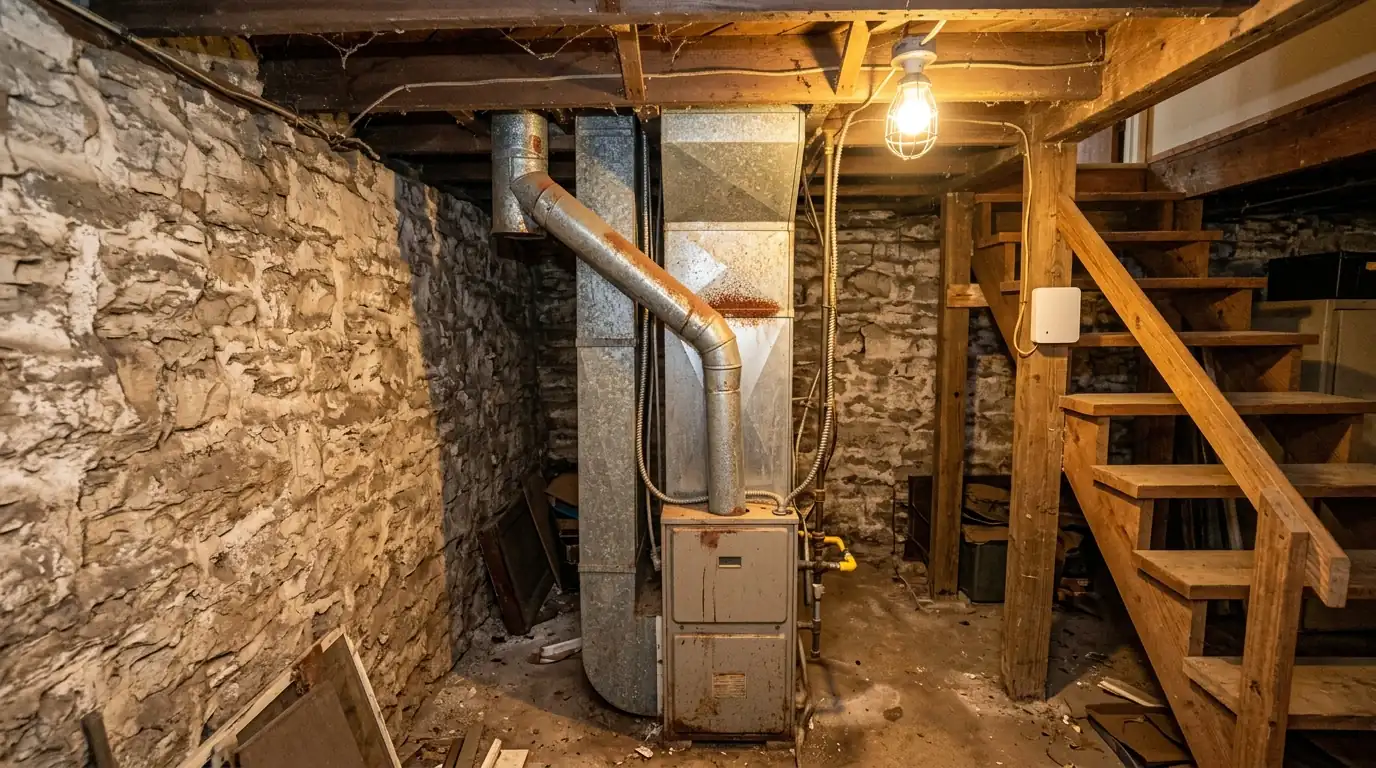
Furnace smells and carbon monoxide: when to leave
Some furnace smells are harmless and fade within the hour. Others mean shut the system off, and a few mean get everyone out of the house first and ask questions later.
Common questions on carbon monoxide safety check around Lexington
Where should carbon monoxide alarms go in a Lexington home?
Put one on every level of the house and one outside each sleeping area, plus one near the door from an attached garage. Follow the alarm maker's height guidance, keep them away from fuel-burning appliances by several feet to avoid nuisance alarms, and replace them by the date printed on the back. We check placement and age during every carbon monoxide safety check.
Can a cracked furnace heat exchanger cause carbon monoxide in the house?
It can. A crack lets combustion gases mix with the air the blower sends through your ducts, and it can also disturb the flame so the furnace burns poorly and makes more CO. Not every crack leaks measurable CO right away, which is why we pair the visual inspection with flue and room readings. A confirmed crack means the furnace stays off; our furnace repair page covers what happens next.
How is a carbon monoxide safety check different from a furnace tune-up?
A tune-up focuses on the furnace: cleaning, adjusting and measuring it so it runs well, including a flue CO reading. A carbon monoxide safety check looks at the whole house: every gas appliance, chimney and vent, the attached garage, worst-case draft with fans running, room readings on each floor and your alarms. Call (859) 377-8167 if you are unsure which visit fits.
Should I get a carbon monoxide check after buying an older Lexington house?
Yes, it is a sensible first-winter step. Older homes often have gas appliances sharing an aging chimney, vent pipes added over the years by different owners, and alarms of unknown age. A check gives you baseline readings, shows whether each appliance drafts properly, and tells you which repairs, if any, should happen before heavy heating season begins.
Need carbon monoxide safety check today?
A person answers (859) 377-8167 day and night. Tell us what you are seeing and a technician takes it from there.