Ductless & Controls · Lexington, KY
Thermostat installation in Lexington wired for your system
You want a smart or programmable thermostat, or your old one is acting up, and you need it wired and configured correctly for a heat pump, furnace, boiler or dual fuel system.
Lexington and nearby counties
Line open 24/7Short answer: Thermostat Installation in Lexington, KY
Picking a thermostat starts with your equipment: single or two-stage, heat pump with backup heat, dual fuel, boiler zones or a variable-speed system. Then check wiring, since most smart thermostats need a C-wire for steady power. We install, wire and configure the staging, reversing valve and backup heat settings. Most installs around Lexington run about $187 to $629, plus the thermostat if you buy it from us.
Matching a thermostat to the system it controls
The thermostat on the wall has to speak the same language as the equipment in the basement. These are the setups we wire most often.
Single-stage gas furnace and AC
The simplest setup: one heat, one cool, plus fan. Almost any programmable or smart thermostat works, as long as it has steady power.
Two-stage furnace or AC
Needs a thermostat with separate W2 or Y2 terminals, or one set to manage staging by time. Wired as single-stage, the system never uses its quiet low stage.
Heat pump with strip heat
Requires an O or B reversing valve setting and an AUX terminal. Wrong settings make the heat pump cool in winter or send it to strip heat far too often.
Dual fuel heat pump and furnace
The thermostat, or an outdoor sensor and control kit, must decide when to switch from heat pump to gas. A balance point near freezing is a common starting place.
Boiler zones
Each zone has its own thermostat, usually a simple two-wire heat-only connection. Smart models need a C-wire or a power adapter at the zone control.
Communicating systems
Some Carrier, Trane, Lennox and Daikin variable-speed systems use their own communicating controls. A standard thermostat can disable features, so we check before swapping.
Why the C-wire causes most smart thermostat trouble
A smart thermostat needs constant 24-volt power for its screen and Wi-Fi radio. That power comes through the common wire, labeled C. Many Lexington homes, especially those with thermostats installed in the 1980s and 1990s, have only four or five conductors in the wall and nothing on the C terminal. Some smart models try to steal power through the heating or cooling wires instead, and that can make a furnace short cycle, a relay chatter or the thermostat reboot in the middle of a cold night.
We solve it one of three ways. If there is an unused conductor in the cable, we connect it at both ends. If not, we can pull a new cable from the furnace to the wall, which is usually easy in homes with a basement and harder in finished two-story walls. The third choice is an add-a-wire adapter at the equipment that lets the existing wires carry an extra signal. We pick the method that works cleanly in your house, not the one that saves us a trip to the basement.
How we install and set up a new thermostat
Most single-thermostat installs take about an hour. Pulling new cable or setting up a dual fuel system adds time.
Check the equipment first
We look at the furnace, air handler, heat pump or boiler control board to see which terminals are used, how many stages exist and where the C-wire can come from.
Confirm the right model
If you bought a thermostat, we confirm it supports your system. If you have not, we suggest models that fit your equipment and how you like to control it.
Wire and mount
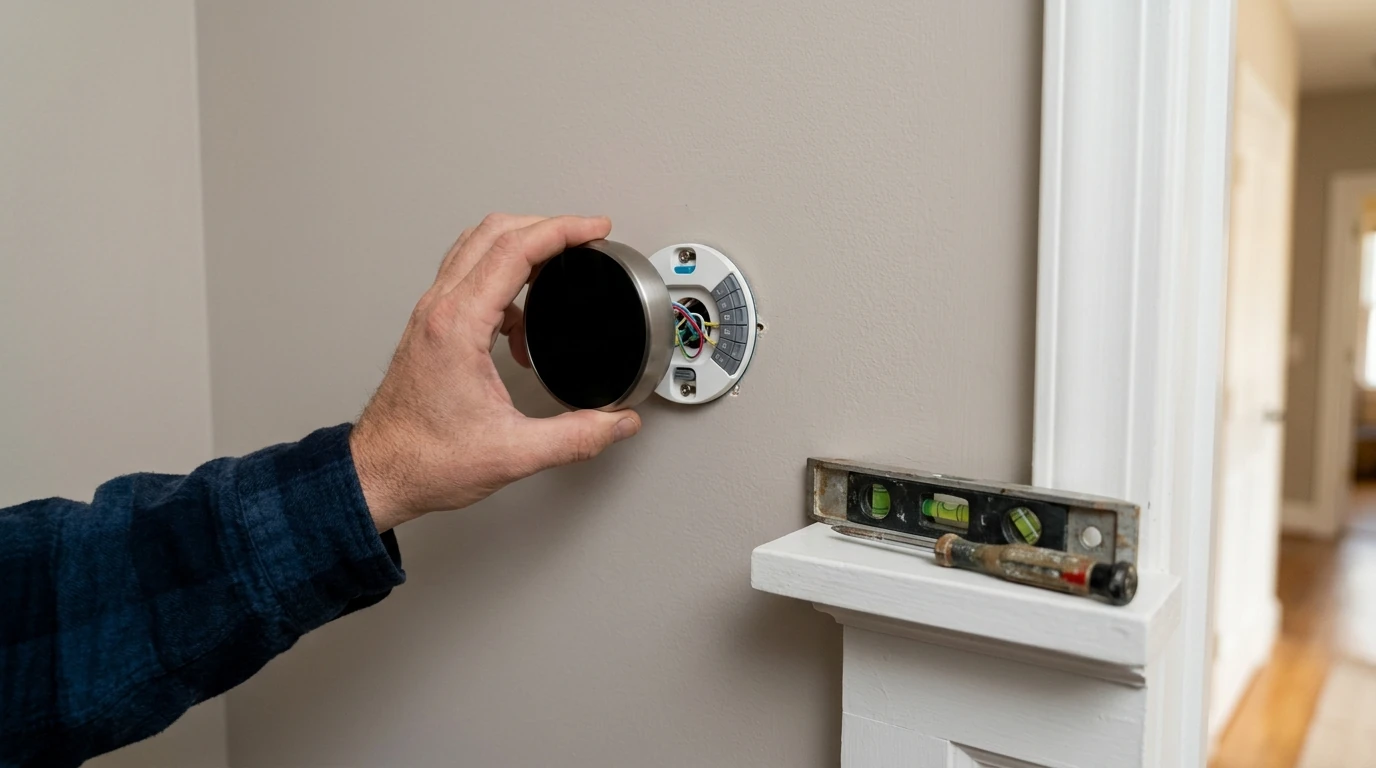
The old thermostat comes off, wires are labeled and connected at both ends, holes are sealed to stop drafts that fool the sensor, and the new base is leveled.
Configure the settings
We set the equipment type, stages, reversing valve, backup heat lockout, fan behavior and cycle rate, then run each mode to prove it.
Show you the controls
Before we leave, we connect the thermostat to your Wi-Fi if you want, set a schedule, and show you how to read AUX, EM heat and fan settings.
What a thermostat installation runs in Lexington
This range covers labor and wiring for most single-thermostat installs. The thermostat itself is extra if we supply it.
- C-wire situation. An unused conductor in the wall keeps the job short, while pulling new cable through finished walls or adding an adapter adds parts and time.
- System type. A basic furnace and AC is quick. Heat pumps, dual fuel and multi-stage systems take longer to configure and test in every mode.
- Number of zones. Zoned homes and boiler systems with several thermostats are priced per thermostat, with a lower price for each additional one.
- Wall repair. Old round thermostats often leave paint lines or holes, and we can fit a trim plate so the new one covers the old outline.
- Accessories. Outdoor sensors for dual fuel, remote room sensors for a cold bedroom and humidity control wiring each add a little to the install price.
These are typical labor ranges for 2026. Your written price comes after we look at the system and the wiring. Compare typical prices for every service.
Thermostat settings that matter in central Kentucky
Two settings make the biggest difference here. For heat pumps, the backup heat lockout tells strip heat when it is allowed to help. Set it too loose, and the strips run on mild 40 degree mornings and KU bills spike. Set it too tight, and the house falls behind in a single digit cold snap. We set it to fit your heat pump and house, and our AUX and EM heat guide explains what the screen is telling you.
In summer, humidity control matters as much as temperature. Lexington nights stay muggy, and a thermostat that runs the fan constantly can push moisture from the coil back into the house. We usually leave the fan on AUTO, and if your thermostat supports it, set a dehumidify function that slows the blower. For homes with stubborn summer humidity, a whole-house dehumidifier can be wired to the same thermostat. If you are unsure which settings fit, call (859) 377-8167 and we will talk through it.
Signs your current thermostat needs replacing
Thermostats rarely fail outright. More often they drift, misread or confuse the equipment. These are the clues we look for.
- Room temperature differs from the display by more than two degrees.
- The system short cycles even though the filter and equipment check out.
- Heat pump strips run on mild days or the AUX light stays on.
- A mercury thermostat is still on the wall and should be recycled properly.
- The screen goes blank or reboots during heating or cooling calls.
- You added a second stage or heat pump but kept the old thermostat.
We work on Carrier, Trane, Lennox, Rheem and Goodman equipment along with every other major brand found in Lexington homes, and the same testing comes first on all of them.
Where we handle thermostat installation most often
We cover every Lexington neighborhood and the towns around it. These are the places we visit most for this work; the full list is on our Fayette County page and the service area page.
Further reading from our Comfort Blog
AUX heat and EM heat explained for cold snaps
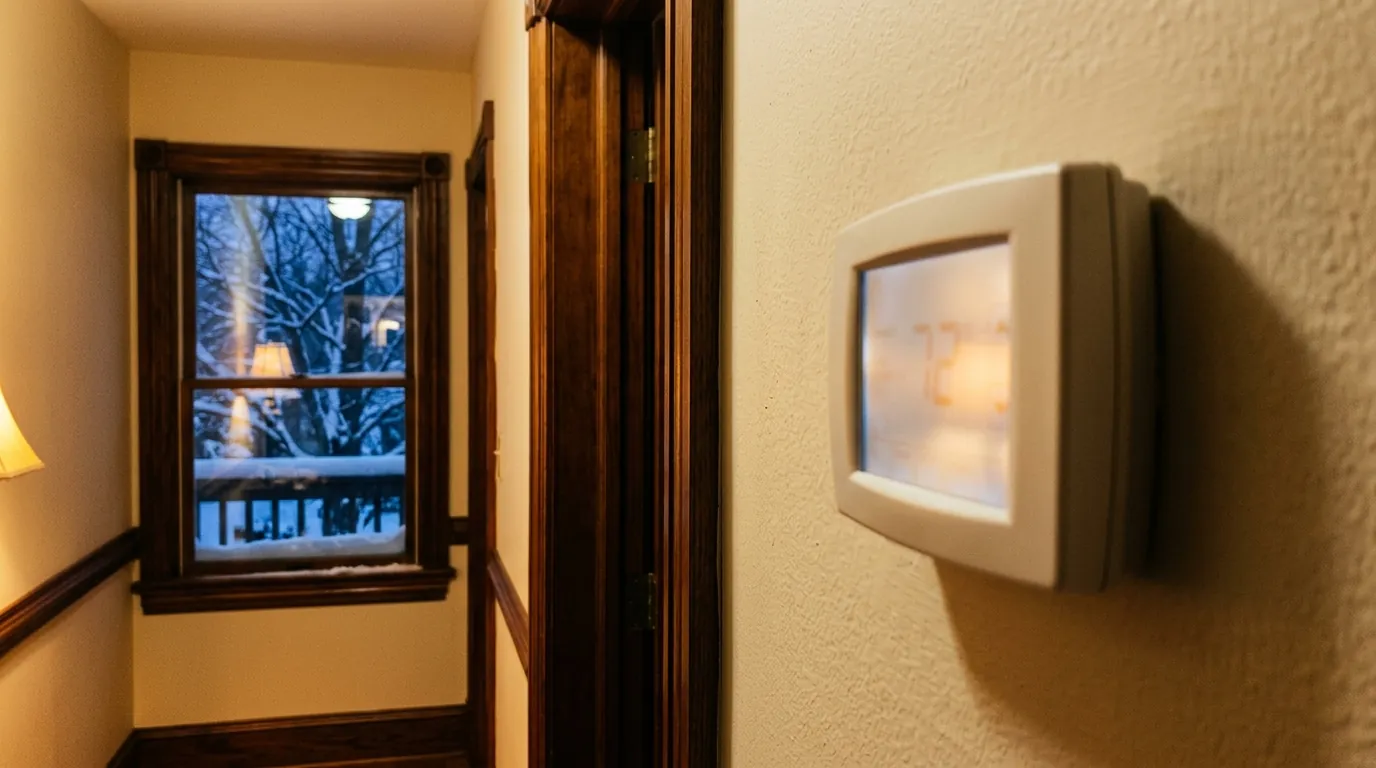
Those two small labels on a heat pump thermostat cause more winter confusion than almost anything else. One is automatic and expected. The other is a manual setting you should rarely need.
Common questions on thermostat installation around Lexington
Do I need a C-wire to install a smart thermostat in my Lexington home?
Most smart thermostats need one, and even models that claim to work without it run better with it. Without a C-wire, some thermostats pull power through other wires, which can cause short cycling, chattering relays or random restarts. We check the cable for a spare conductor first, and add a new cable or an adapter only if needed.
Can any smart thermostat control a heat pump with backup strip heat?
Most mainstream smart thermostats can, as long as they have the right terminals: O or B for the reversing valve, Y for the compressor, and W2 or AUX for strip heat. The important part is configuration. The thermostat must know it controls a heat pump and when strip heat is allowed, or it can raise winter bills sharply.
Will a new thermostat work with my variable-speed system?
Some variable-speed systems from Carrier, Trane, Lennox and Daikin use communicating controls that talk to the equipment over two or four wires. A standard thermostat may run them only in basic stages and lose features like dehumidification and fine airflow control. We check your equipment model before recommending a thermostat so you keep what you paid for.
Where should a thermostat be mounted in the house?
On an interior wall in a room you use, about five feet up, away from supply registers, sunny windows, exterior doors, kitchens and lamps. A thermostat in a sunny hallway or on an outside wall reads wrong and runs the system unevenly. If yours is in a poor spot, we can move it during the install.
Call and describe what the system is doing
A person answers (859) 377-8167 day and night. Tell us what you are seeing and a technician takes it from there.