Indoor Air Quality · Lexington, KY
Whole-house air filtration in Lexington for pollen and pet dander
Pollen season hits, the cat sheds and the dust is back two days after cleaning. The right whole-house filter traps far more of it, as long as it's matched to what your blower can push air through.
Lexington and nearby counties
Line open 24/7Short answer: Air Purifiers & Filtration in Lexington, KY
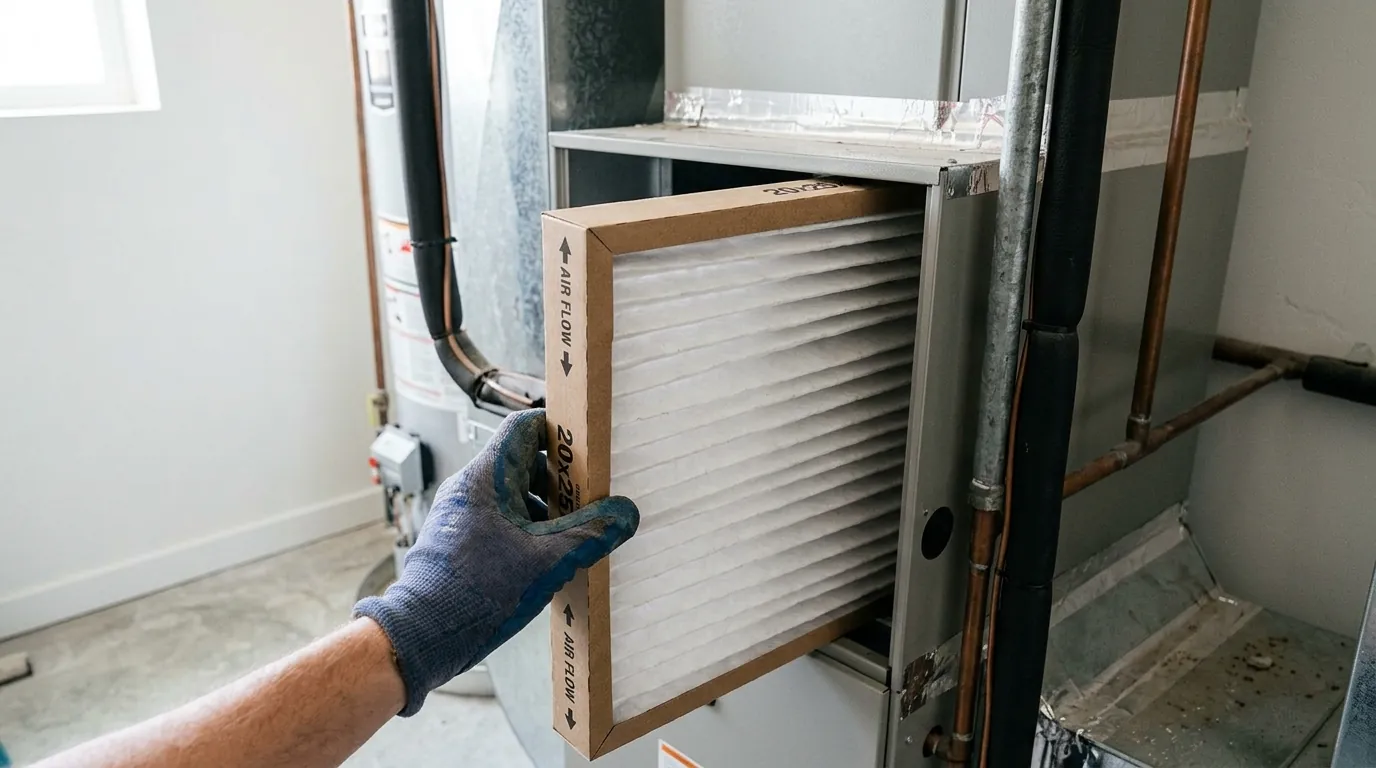
For most Lexington homes, the best whole-house filtration is a 4 or 5-inch media cabinet holding a MERV 11 to 13 filter, sized so pressure drop stays low. It captures pollen, pet dander and most fine dust on every pass of the blower. Bypass HEPA units suit severe allergy or asthma households. Thin 1-inch high-MERV filters often restrict airflow, and ionizers that make ozone are best avoided.
Comparing filter options by what they catch and cost
Every option below goes in the return air path of a forced-air system. The right one depends on who in the house is sneezing and how much air your blower can move.
| Option | Catches well | Main trade-off |
|---|---|---|
| 1-inch MERV 8 pleated | Lint, pollen, larger dust | Misses fine particles and fills fast |
| 4 or 5-inch media, MERV 11 to 13 | Pollen, dander, most fine dust | Needs a cabinet installed in the return |
| Electronic air cleaner | Very fine particles and smoke | Cells need washing every few months |
| Bypass HEPA unit | Nearly all airborne particles | Higher cost and its own fan to maintain |
| Washable or electrostatic | Large lint and hair | Low capture and hard to clean fully |
Why MERV rating alone can mislead you
MERV tells you how well a filter catches particles in a lab test. It says nothing about how hard your blower has to work to push air through it. A 1-inch MERV 13 filter packs dense media into a small face area, and on many older blowers it raises the pressure drop across the filter from about 0.1 to 0.3 inches of water column or more. That's often half the blower's whole budget gone at the filter.
When airflow drops, a few things follow. The AC coil runs colder and can freeze on humid days, the furnace heat exchanger runs hotter, and the blower motor works harder. Variable-speed motors ramp up to compensate, which uses more electricity and adds noise at the grilles. So a filter that looks like an upgrade on the package can quietly cost you comfort and efficiency.
Depth fixes that. A 4 or 5-inch media filter has many times more surface area, so a MERV 11 or 13 filter in a cabinet usually adds less resistance than a 1-inch MERV 8. We measure pressure drop before and after, so you see the number. Our guide to filter sizes and MERV covers the homeowner side of choosing and changing filters.
Matching filtration to the people in your house
Who lives in the house matters more than any product claim. These are the situations we plan around most often.
Seasonal pollen allergies
Tree pollen in spring and ragweed in late summer are large particles that a MERV 11 media filter catches well. Running the fan more often during peak weeks helps it work.
Cats, dogs and dander
Dander is smaller and stays airborne longer than pollen. A MERV 13 media filter plus regular vacuuming makes a noticeable difference in homes with several pets.
Asthma in the family
When fine particles trigger symptoms, a bypass HEPA unit or a MERV 13 or higher media filter with longer fan runtime gives the strongest whole-house capture.
Smoke and wildfire haze
Fine smoke particles need MERV 13 or better. Some summers bring haze from distant wildfires, and those days are when better filtration earns its keep.
Remodeling or new flooring
Construction dust overloads any filter quickly. A cheap 1-inch filter changed often during the work, then a media filter afterward, protects the coil and blower.
Odors and chemical smells
Particle filters don't remove gases. Odors and VOCs need source control, fresh air or a carbon stage, which we'll talk through rather than oversell a filter.
Installing a media cabinet on an existing system
Most cabinet installs take two to four hours on a basement or closet furnace. Attic and crawlspace air handlers can take longer.
Measure static pressure
We record total external static pressure and the pressure drop across your current filter, so the new setup can be compared against real numbers.
Choose the cabinet size
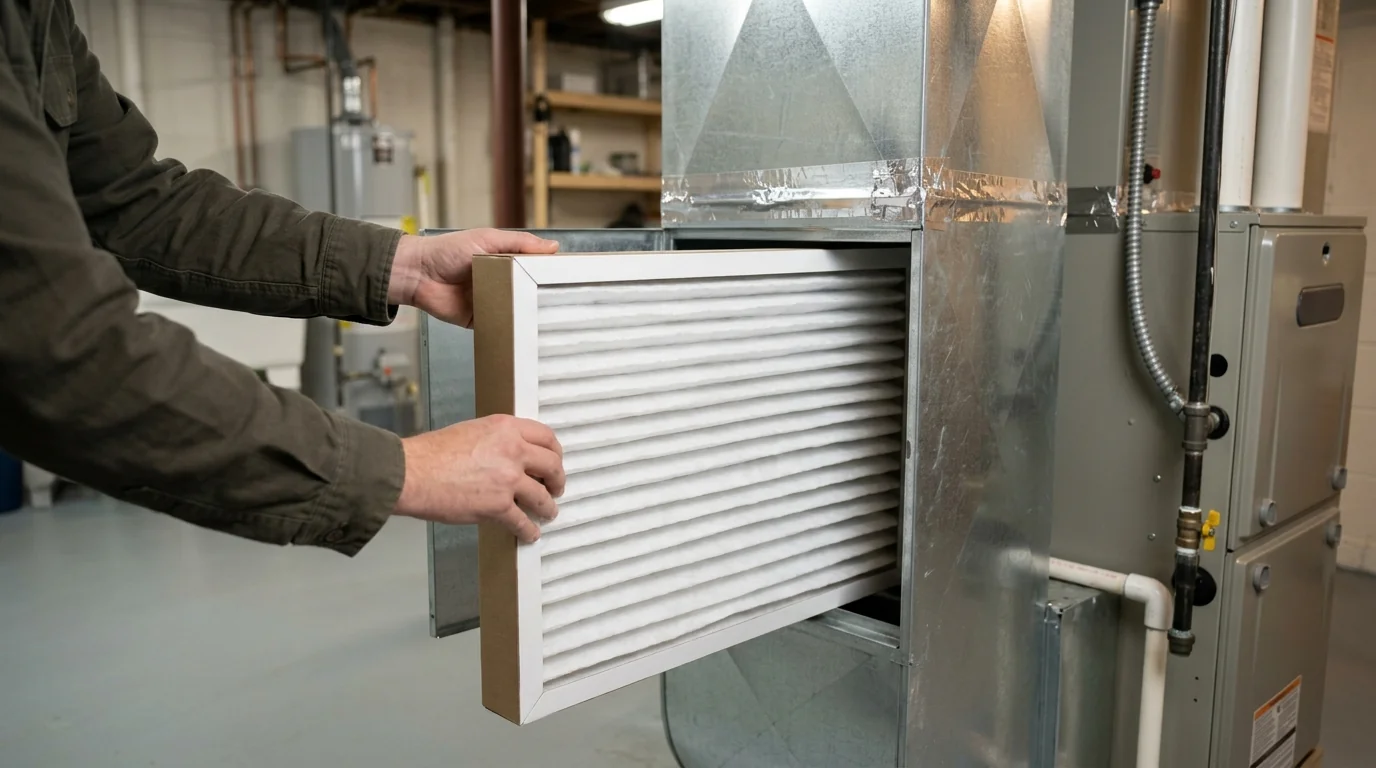
Cabinet size follows your system airflow. A 3-ton system usually needs a 20 by 25 inch face or larger to keep pressure drop low at MERV 13.
Fit it in the return
The cabinet goes in the return just ahead of the blower. We cut and transition the return duct, seal every joint with mastic and close the old filter slot.
Seal the filter door
A cabinet only works if air can't slip around the filter. We check the door gasket and the gaps along the filter edges.
Retest airflow
With the new filter in, we measure pressure drop and static pressure again, and show you how often to change it for your house.
What whole-house filtration costs to install in 2026
A media cabinet on an accessible furnace sits at the low end. Electronic air cleaners and bypass HEPA units with their own fan run toward the top.
- Type of filtration. A media cabinet is the simplest install. Electronic cleaners need a power connection, and bypass HEPA units need their own duct connections and fan.
- Return duct layout. A straight, roomy return drop is easy to fit. Tight closets and short returns need custom transitions to make room for a cabinet.
- Equipment location. Basement furnaces are quick. Attic air handlers and crawlspace units need more time, and filter access for future changes has to be planned.
- Return system changes. If pressure drop stays high because there's only one small return, adding return capacity may be part of the job.
- Replacement filter cost. Media filters last 6 to 12 months and cost more each than 1-inch filters, while HEPA units need prefilters and a HEPA element over time.
The written price comes after we look at the system and measure static pressure, so the cabinet or unit we quote fits your blower. Compare typical prices for every service.
Bluegrass pollen calendars and Lexington filter habits
Central Kentucky has a long allergy season. Tree pollen starts in March, grass follows in May and June, and ragweed runs from mid-August into the first frost. Mold spores climb in damp late summer and fall weather. Cars parked outside in April wear a yellow-green film of tree pollen most mornings, and some of that load ends up at your return grille.
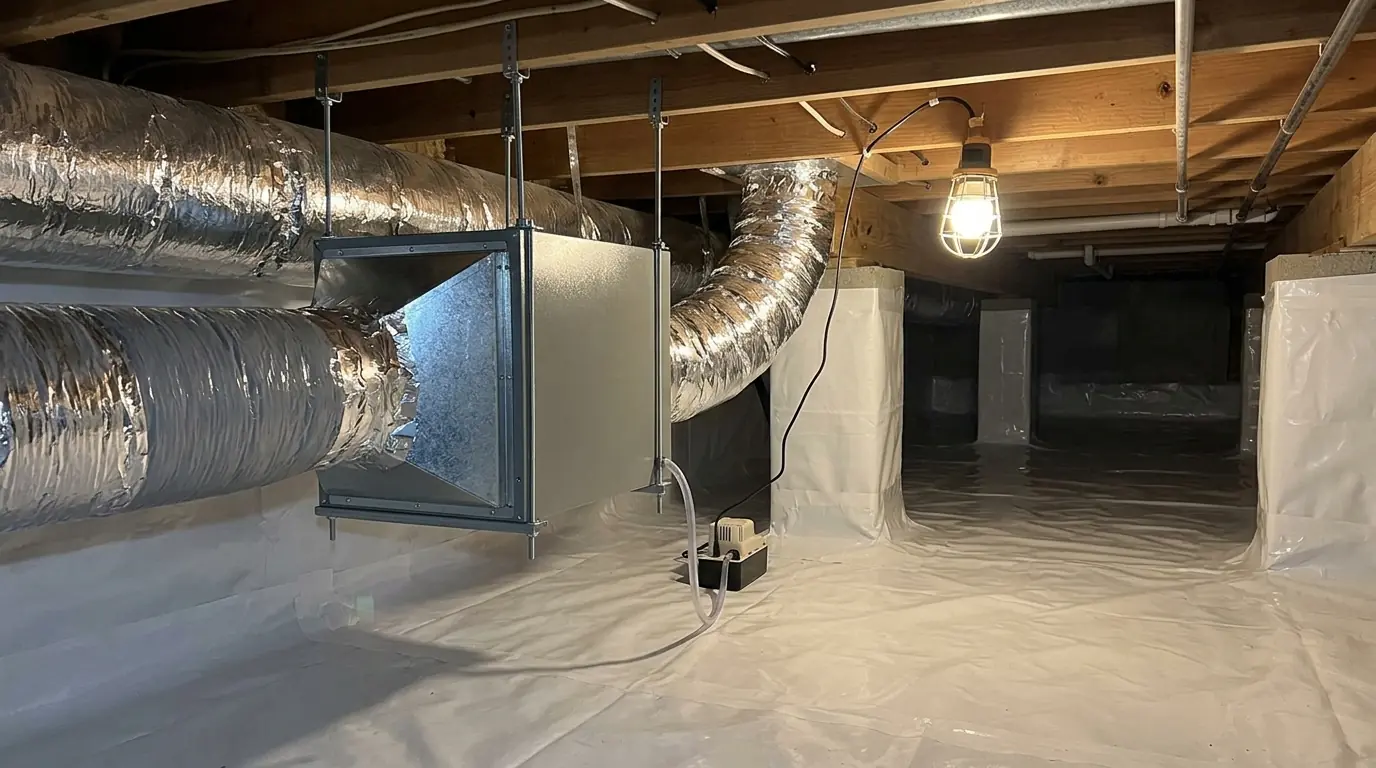
That calendar shapes how we set up filtration. A media filter changed in early March and again in late August lines up with the heaviest loads. During peak weeks, running the blower on a circulate setting gives the filter more passes at the air. Homes with crawlspace returns pull in extra dust and mold spores, so sealing leaky return ducts often matters as much as the filter.
For problems a filter doesn't address, such as the musty smell from a damp crawlspace, humidity control comes first, and in a very tight house fresh air may matter more than filtration. If you're not sure what's driving the symptoms, measuring your indoor air puts numbers on it before you spend money. To talk through filtration for your house, call (859) 377-8167.
We work on Carrier, Trane, Lennox, Rheem and Goodman equipment along with every other major brand found in Lexington homes, and the same testing comes first on all of them.
Neighborhoods and towns that call us for air purifiers & filtration
We cover every Lexington neighborhood and the towns around it. These are the places we visit most for this work; the full list is on our Fayette County page and the service area page.
Further reading from our Comfort Blog
How often to change a furnace filter, and which MERV
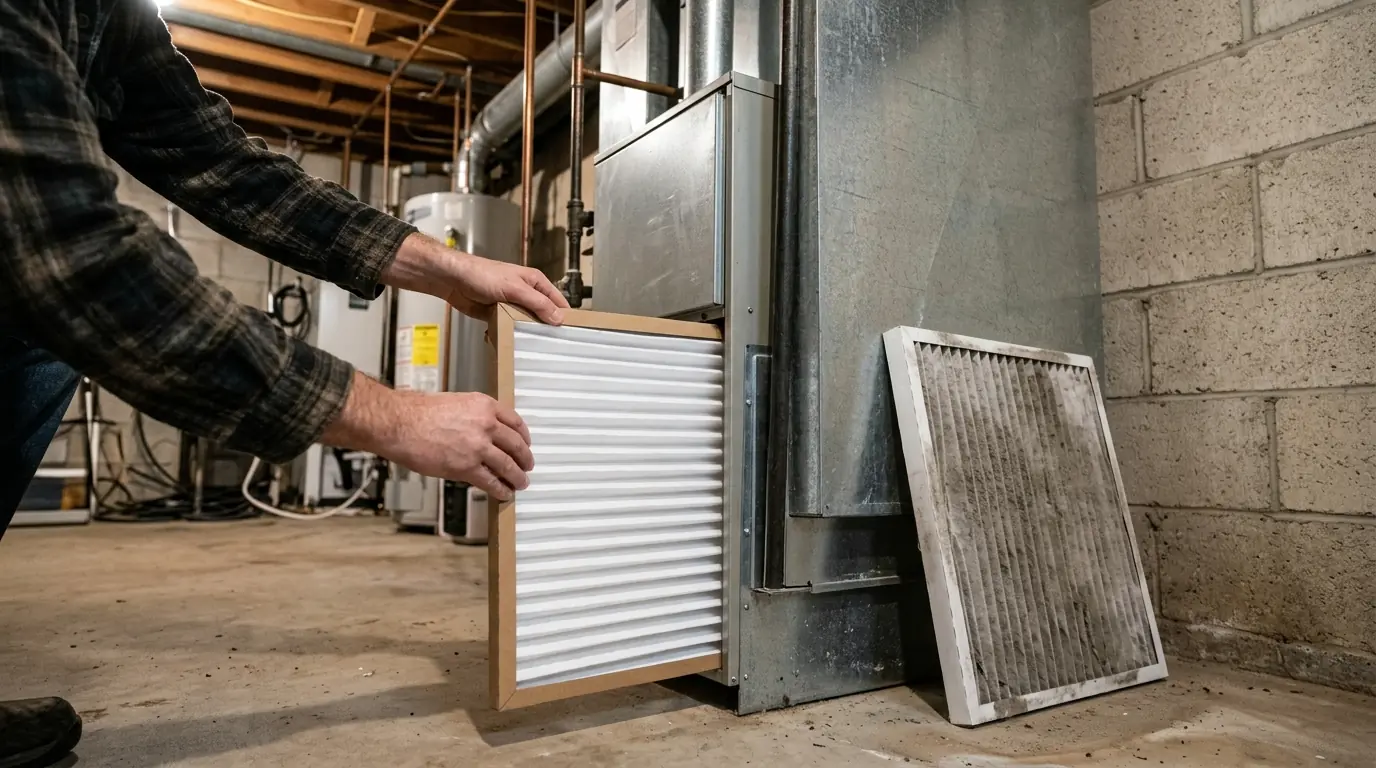
The filter is the cheapest part of your heating and cooling system, and the one most often ignored. Getting the size, thickness and change schedule right protects the equipment and the air you breathe.
Common questions on air purifiers & filtration around Lexington
Will a MERV 13 filter hurt my furnace or air conditioner?
A 1-inch MERV 13 filter can restrict airflow enough to cause problems on many systems, especially older ones with small returns. A 4 or 5-inch MERV 13 media filter usually doesn't, because its larger surface area keeps resistance low. Measuring the pressure drop across the filter tells you for certain on your system.
Are ionizer or ozone air purifiers safe to add to HVAC ductwork?
We steer people away from devices that produce ozone on purpose. Ozone irritates lungs, and the levels needed to affect odors or microbes are higher than is comfortable to breathe. Some ionizing devices also produce small amounts of ozone as a byproduct. If a product's claims rely on ozone, mechanical filtration is the safer choice.
How often should a 4-inch media air filter be changed?
Most homes change a 4 or 5-inch media filter every 6 to 12 months. Homes with several pets, heavy pollen exposure or recent remodeling may need it every 3 to 4 months. A filter that looks gray across its whole face, or a jump in static pressure at a tune-up, means it's time.
Does whole-house air filtration help with dust in a Lexington home?
It helps with the dust that's airborne and passes through the return, which is a large share of household dust. It can't catch dust that settles before reaching a return, so cleaning still matters. If dust comes back very fast, leaky return ducts pulling from a crawlspace or attic are often part of the cause.
Ready to talk about air purifiers & filtration?
A person answers (859) 377-8167 day and night. Tell us what you are seeing and a technician takes it from there.