Lexington neighborhood · Fayette County
Furnace and heat pump repair in Hartland (40515)
Hartland's two-story colonials send all their air up from one basement unit, so bedrooms bake in July while the lower level stays cold. We find the cause and fix it.
Short answer: HVAC service in Hartland
Most Hartland homes in 40515 went up between the mid 1980s and the late 1990s as two-story houses over full basements, heated by either a gas furnace or an electric heat pump. The usual service calls are upstairs rooms that will not cool, heat pumps leaning on backup strips during cold snaps, and gas furnaces with worn igniters or flame sensors.
Two floors over a basement: how Hartland houses are built
Hartland fills the stretch of southeast Lexington between Tates Creek Road and Armstrong Mill Road, with Kenesaw Drive to the north and the urban growth boundary to the south. Most houses here went up from the mid 1980s through the late 1990s: brick and siding colonials, traditional two-stories and some ranches set on courts and cul-de-sacs. A full basement is common, often finished, and many walk out to the back yard. Newer pockets such as Harper Woods are still adding homes.
Gas and electric service both run through the neighborhood, so you will find either kind of heat. Some houses pair a natural gas furnace with a central air condenser; others run an electric heat pump with backup heat strips in the air handler. In nearly every case the indoor unit sits in the basement and pushes air up two floors through wall chases. That long climb explains most of the comfort complaints we hear from Hartland homeowners.
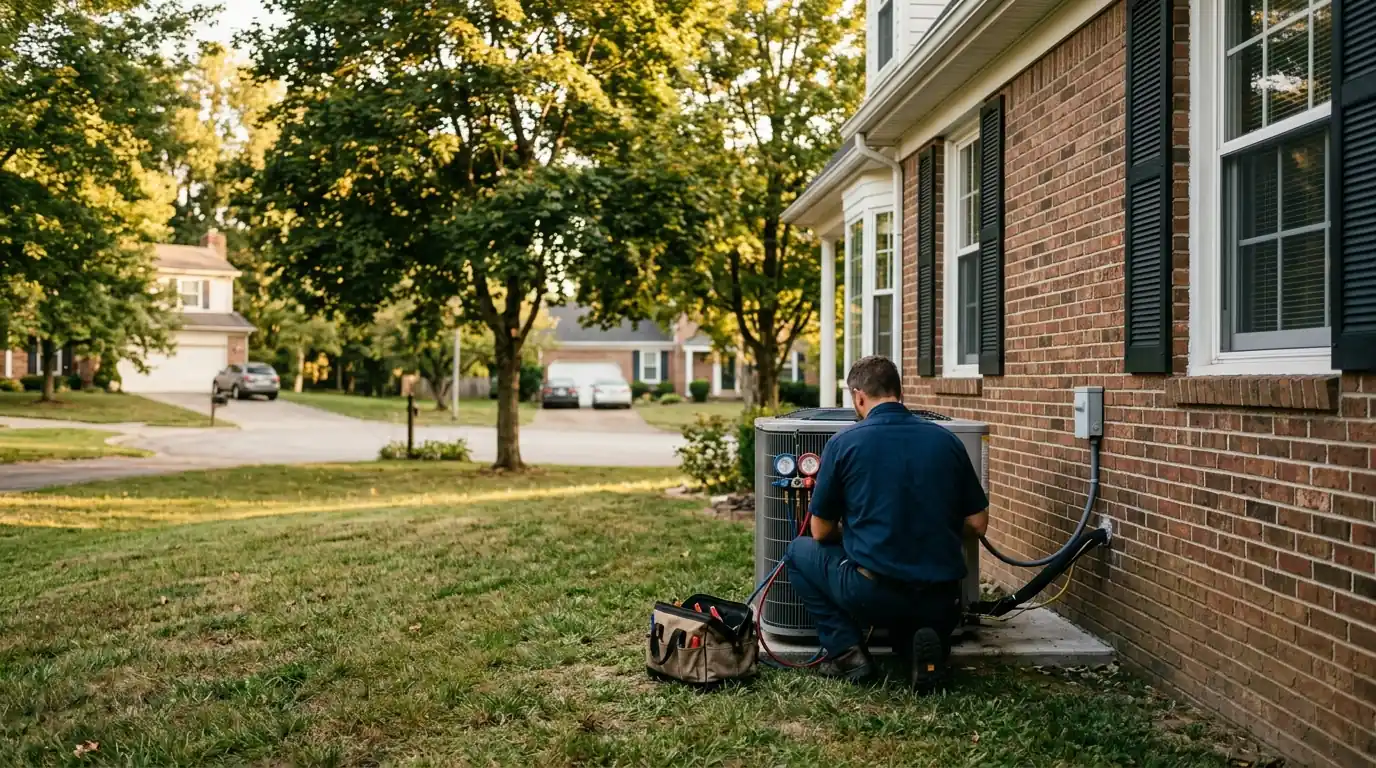
Where Hartland heating and cooling tends to struggle
These problems follow directly from how Hartland houses were built and what heats them.
Hot upstairs bedrooms in July
Cooled air leaves the basement unit and climbs two floors through narrow chases. By the time it reaches the back bedrooms there is too little of it, especially when the upstairs has only one small return.
Strip heat on cold nights
Heat pumps lean on electric backup heat when nights fall into the 20s. If the outdoor unit is weak or the defrost control sticks, the strips carry the house and the KU bill jumps.
Furnace igniters and flame sensors
Basement gas furnaces cycle hard through Lexington winters. Hot surface igniters crack and flame sensors coat over, so the burners light and then drop out after a few seconds.
Leftover R-22 condensers
A condenser installed when these houses were new used R-22, which is no longer produced. A leak on one of these turns a repair call into a replacement conversation quickly.
Musty finished basements
Walk-out lower levels stay cool and damp through humid summers. Without enough return air or dehumidification, the basement smells musty while the floors above feel fine.
Gas furnace, heat pump or both in a Hartland house
Hartland has all three setups, and each has its own strengths and weak spots in a Lexington winter.
| Setup | Strength here | What to watch |
|---|---|---|
| Gas furnace with central air | Hot supply air on 20 degree nights | Igniter, flame sensor, venting |
| Heat pump with electric strips | Efficient heat in mild fall and spring | Defrost, reversing valve, strip run time |
| Dual fuel | Heat pump most days, gas when it turns bitter | Switchover temperature and thermostat wiring |
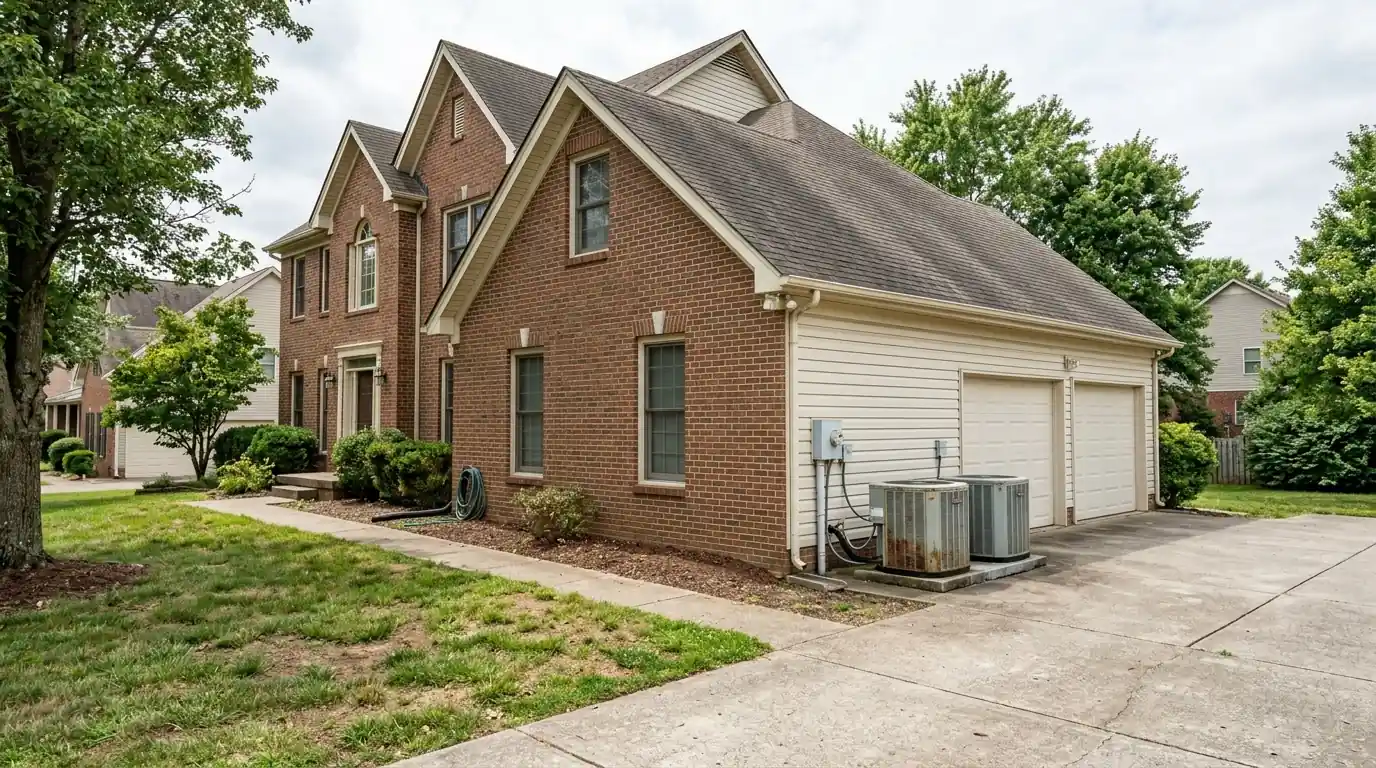
Planning the next system for a Hartland two-story
If your current system is near the end, replacement is the moment to fix the upstairs problem instead of copying the old layout. On a two-story over a basement, zoning the second floor with its own thermostat and damper often does more for comfort than a bigger unit. Where gas is already at the meter, a dual fuel pairing lets a heat pump carry mild days and the furnace take the bitter nights.
We start with a room-by-room load calculation and a look at the duct sizes, then lay out options with a written price. If you are still deciding whether to fix or replace, our guide on repairing versus replacing equipment walks through the math. Call (859) 377-8167 and we will set a time that fits your week.
Before you call about a Hartland comfort problem
A few minutes of checking helps us bring the right parts on the first trip.
- Note which rooms run warm or cold and the time of day it peaks.
- Make sure upstairs supply registers are open and not covered by rugs or furniture.
- Check the filter at the basement unit and replace it if it looks gray.
- Look at the thermostat: AUX or EM HEAT showing in mild weather is worth mentioning.
- Clear leaves, mulch and shrubs at least two feet from the outdoor unit.
- Tell us if the furnace sits in a finished basement or behind a closet door.
Service calls we take most in Hartland
HVAC Zoning Systems
Two floors over a basement on one thermostat is the classic Hartland complaint, and a zoned system gives the upstairs its own call for cooling.
Heat Pump Repair
Many Hartland houses heat with an electric heat pump, and cold snaps expose weak compressors, sticky defrost controls and strips that run too long.
Furnace Repair
Gas furnaces in Hartland basements log long winter run times, so igniters, flame sensors, inducer motors and pressure switches wear out in turn.
Dual Fuel Systems
With gas and electric both on the street, Hartland homes can pair a heat pump with a furnace and let each run when it costs less.
Whole-House Dehumidifiers
Finished walk-out basements stay damp through Kentucky summers, and a ducted dehumidifier keeps the lower level dry without overcooling it.
HVAC System Replacement
Systems installed in the 2000s are reaching the age where a planned replacement beats another emergency repair in August.
Neighboring areas around Hartland
Hartland heating and cooling questions
Why is my Hartland upstairs so much warmer than the basement?
Your air handler sits in the basement and has to push cooled air up two floors, while heat from the roof collects in the upstairs bedrooms. In a lot of two-story homes the second floor also has only one or two small returns, so warm air never gets pulled back to the unit. We measure airflow at the registers, check duct sizes and blower speed, then explain fixes ranging from damper balancing to an added return or zoning.
Should I switch my Hartland heat pump to a gas furnace?
Not necessarily. If gas is already at the meter and the ducts are sound, a dual fuel setup often makes the most sense: the heat pump runs on mild days and the furnace takes over when nights drop into the 20s. In an all-electric house, a newer variable-speed heat pump may be simpler. We look at the gas line, electric panel, ducts and your bills before recommending either path.
Can you replace a furnace in a finished Hartland basement without tearing out walls?
Usually, yes. In most finished basements the furnace sits in a utility room or closet with a door, and the new unit comes in along the same path the old one leaves by. If shelving or a built-in blocks the way, tell us when you call so we can plan around it. We protect floors and carpet with drop cloths during the swap.
Heating or cooling trouble in Hartland?
Call (859) 377-8167 any hour. Tell us what the system is doing and where you are, and we will take it from there.