Cooling · Lexington, KY
AC repair in Lexington for systems that stop cooling
The air conditioner runs, but the house keeps creeping past the setpoint, or the outdoor unit hums and never starts. We find the part that failed, prove it with meter readings, and get cold air moving again.
Lexington and nearby counties
Line open 24/7Short answer: AC Repair in Lexington, KY
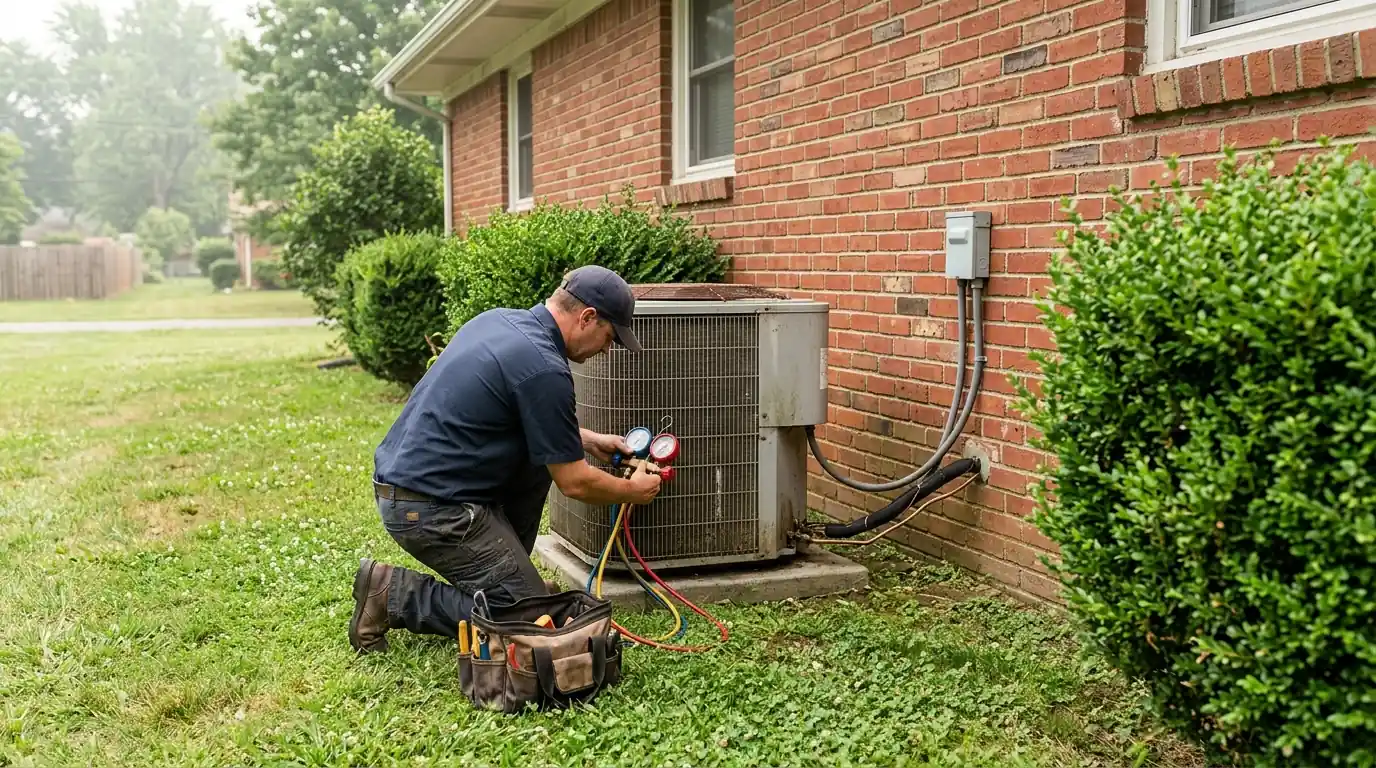
Most AC failures in Lexington come down to a short list of parts: a weak run capacitor, a pitted contactor, a seized condenser fan motor, a clogged coil or a refrigerant leak. A technician confirms the fault with a meter and gauges, quotes the repair in writing, then checks temperature split and amp draw afterward to prove the system cools properly again.
Five quick checks before you call for AC repair
Some cooling problems clear up without a visit. These checks take about ten minutes, and nothing on the list involves opening a panel or touching wiring.
- Set the thermostat to Cool, fan on Auto, at least three degrees below room temperature.
- Replace a filter that looks gray and matted, since a choked filter can freeze the coil.
- Check the breakers for both the outdoor unit and the indoor furnace or air handler.
- Make sure the furnace door is seated, because a loose panel switch stops the blower.
- If the copper lines or indoor coil show ice, set cooling off and run the fan only.
- If a breaker trips a second time, leave it off and call rather than resetting again.
- Look for standing water in the drain pan, which can trip a float switch and stop cooling.
Parts that fail most when a Lexington AC quits
These are the faults we find most often on summer service calls, listed roughly in order of how often they turn up.
Weak run capacitor
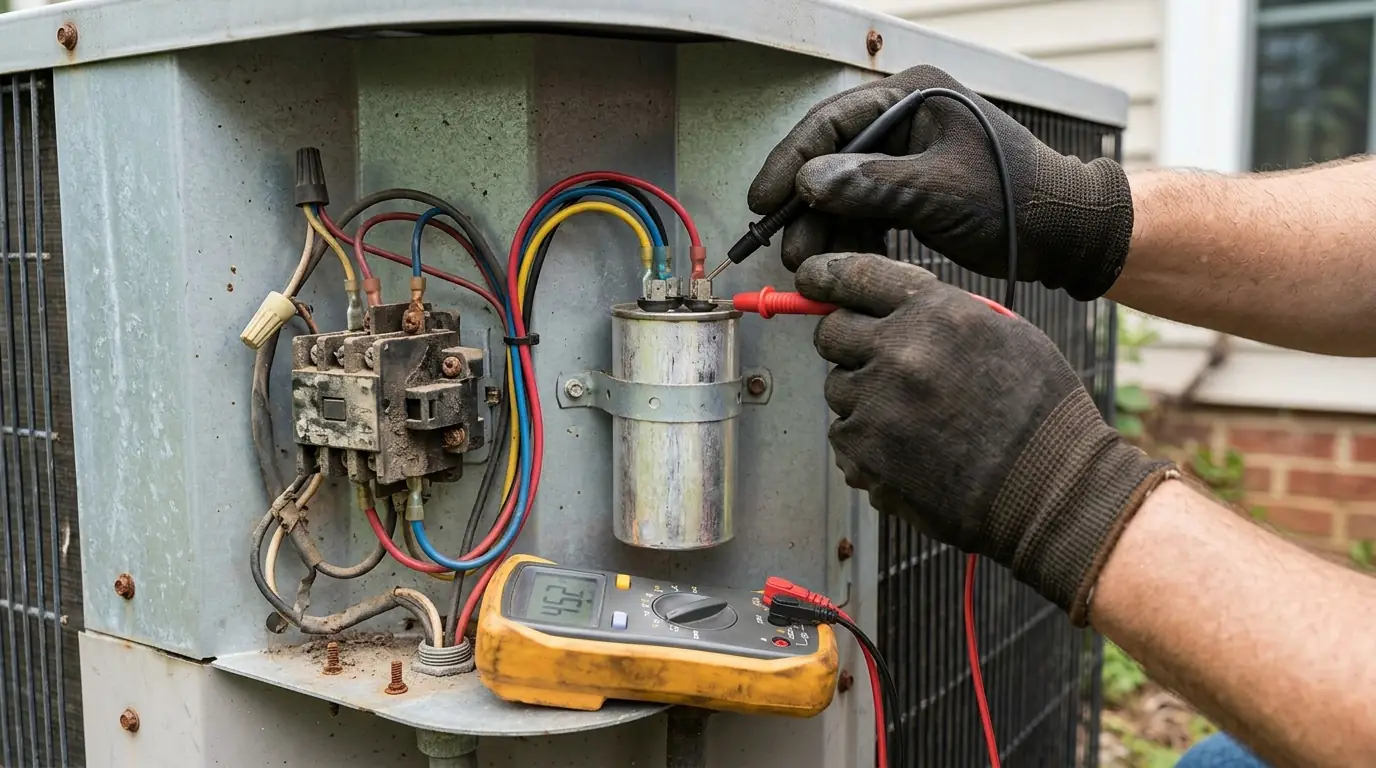
The capacitor gives the compressor and condenser fan the push they need to start. We read it in microfarads, and one testing more than 6 percent under its printed rating gets replaced.
Pitted or stuck contactor
This relay switches 240 volts to the outdoor unit. Ants, pollen and arcing burn the contact points until it chatters, sticks closed, or never pulls in at all.
Condenser fan motor failure
When the top fan stops, head pressure climbs fast and the compressor trips on its internal overload. A hot, humming cabinet with a motionless fan usually points straight here.
Slow refrigerant leak
Low charge shows up as low suction pressure, high superheat and a coil that ices over. Adding refrigerant without locating the leak only buys a few weeks of cooling.
Frozen evaporator coil
Restricted airflow from a dirty filter, a dirty coil or closed registers drops the coil below freezing. The ice then blocks airflow further until cooling nearly stops.
Blower motor or control board
If the outdoor unit runs but no air moves inside, we check the blower motor windings, its capacitor or ECM module, and the board signal that drives it.
What happens during an AC repair visit at your house
Most visits follow the same order, and you'll see the readings before we recommend anything.
Hear the symptoms first
We ask what the system did before it failed: noises, ice, breaker trips, short cycling. Those details often narrow the fault before a single panel comes off.
Kill power and inspect
With the disconnect pulled, we look over the contactor, capacitor, wiring and fan blade, then check the indoor filter, coil face and condensate drain for obvious trouble.
Measure under load
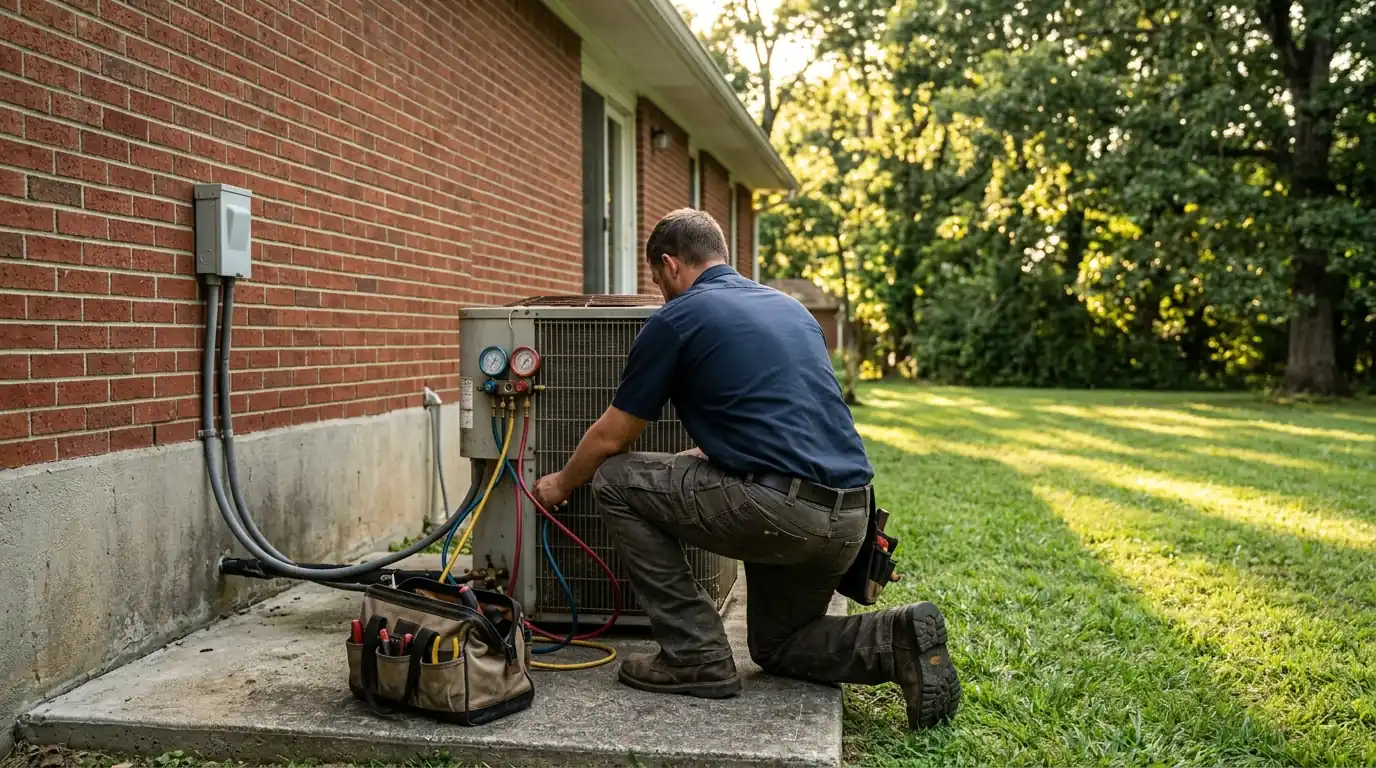
Back under power, we record supply and return temperatures, compressor and fan amp draw, and refrigerant pressures with superheat or subcooling, depending on the metering device.
Price it in writing
You get the diagnosis in plain words and a written price for the repair. Nothing gets replaced until you approve the number.
Repair and prove it
After the repair, we run the system at least fifteen minutes and repeat the readings so you can see the temperature split and amp draw back in range.
How Lexington summers and soil wear on air conditioners
Central Kentucky summers aren't extreme on paper, with highs mostly in the mid to upper 80s. The humidity is what works an air conditioner hard. A muggy July night keeps the system pulling moisture long after sunset, so compressors here log more run hours than the thermostat reading suggests. Those long run hours are exactly what wear out capacitors and contactors.
Spring and fall pollen, plus cottonwood fluff in early summer, mats onto the outdoor coil fins. A coated coil can't shed heat, so head pressure and amp draw climb on every hot afternoon. Summer thunderstorms add their own stress. Brief power flickers on the KU lines can chatter a contactor or scramble a control board, and calls pick up after a stormy night.
The ground matters too. Lexington sits on limestone with karst pockets, and outdoor pads on settling soil slowly tilt. A leaning condenser strains its copper lines, and a badly tilted compressor does not lubricate the way it was designed to. In 1950s and 1960s ranches with crawlspace air handlers, we also find drain lines and duct connections that have shifted over the years.
What AC repairs cost around Lexington in 2026
Most summer repairs land inside this range. Capacitors and contactors sit at the low end, while motors, leak repairs and control boards push toward the top.
- Which part failed. A dual run capacitor or contactor is a modest part. A condenser fan motor or a variable-speed blower motor costs several times more.
- Refrigerant type and amount. R-410A prices have climbed under the federal phasedown, and R-22 now comes only from reclaimed stock, so any repair needing a recharge costs more.
- Where the equipment sits. An air handler in a tight crawlspace or a hot attic takes longer to reach and work on than a basement furnace with open floor space around it.
- Blower motor style. Older PSC blower motors are simple swaps. ECM and variable-speed motors cost more, though sometimes only the control module needs replacing.
- Manufacturer parts coverage. If the failed part is still covered by the equipment maker, the part cost often drops out and the bill is mostly labor.
The written price comes after we look at the system and confirm the fault. A compressor replacement runs well above this range, and we'll go through that choice with you before anything is ordered. Compare typical prices for every service.
When an AC repair stops making financial sense
We repair most failures, but in these situations we'll also show you the numbers for a full system replacement so you can compare.
| Situation | What we usually suggest |
|---|---|
| Under 10 years old, capacitor or contactor failure | Repair it; the system has plenty of life left |
| Failed compressor with no maker coverage left | Compare compressor cost against a new matched system |
| R-22 system that needs refrigerant | Price both, since reclaimed R-22 makes recharges costly |
| 15 years or older with a leaking coil | Usually replace the condenser and coil together |
| Repeated breaker trips and high amp draw | Test compressor windings before spending on parts |
The readings that prove your AC is really fixed
A repair isn't finished just because the fan starts spinning. We measure the air entering the return and the air leaving the supply plenum. With a clean coil and correct airflow, that temperature split usually lands between 16 and 22 degrees. A split under 14 points to low charge or a coil problem, while a split over 24 often means weak airflow.
On the refrigerant side, we read superheat on fixed-orifice systems and subcooling on systems with a TXV, then compare against the manufacturer's chart for that day's indoor and outdoor conditions. If superheat runs high and the coil keeps icing, the next step is tracking down the refrigerant leak with an electronic detector and bubble solution.
Last, we clamp an amp meter on the compressor and fan motor and compare against the nameplate. A compressor drawing close to its rated load amps on a mild day is a warning, not a pass. You'll see each number, and if something still looks marginal, we'll say so plainly instead of leaving it for August.
We work on Carrier, Trane, Lennox, Rheem and Goodman equipment along with every other major brand found in Lexington homes, and the same testing comes first on all of them.
Lexington-area places we cover for AC repair
We cover every Lexington neighborhood and the towns around it. These are the places we visit most for this work; the full list is on our Fayette County page and the service area page.
Further reading from our Comfort Blog
Get your AC ready before the first hot, humid week
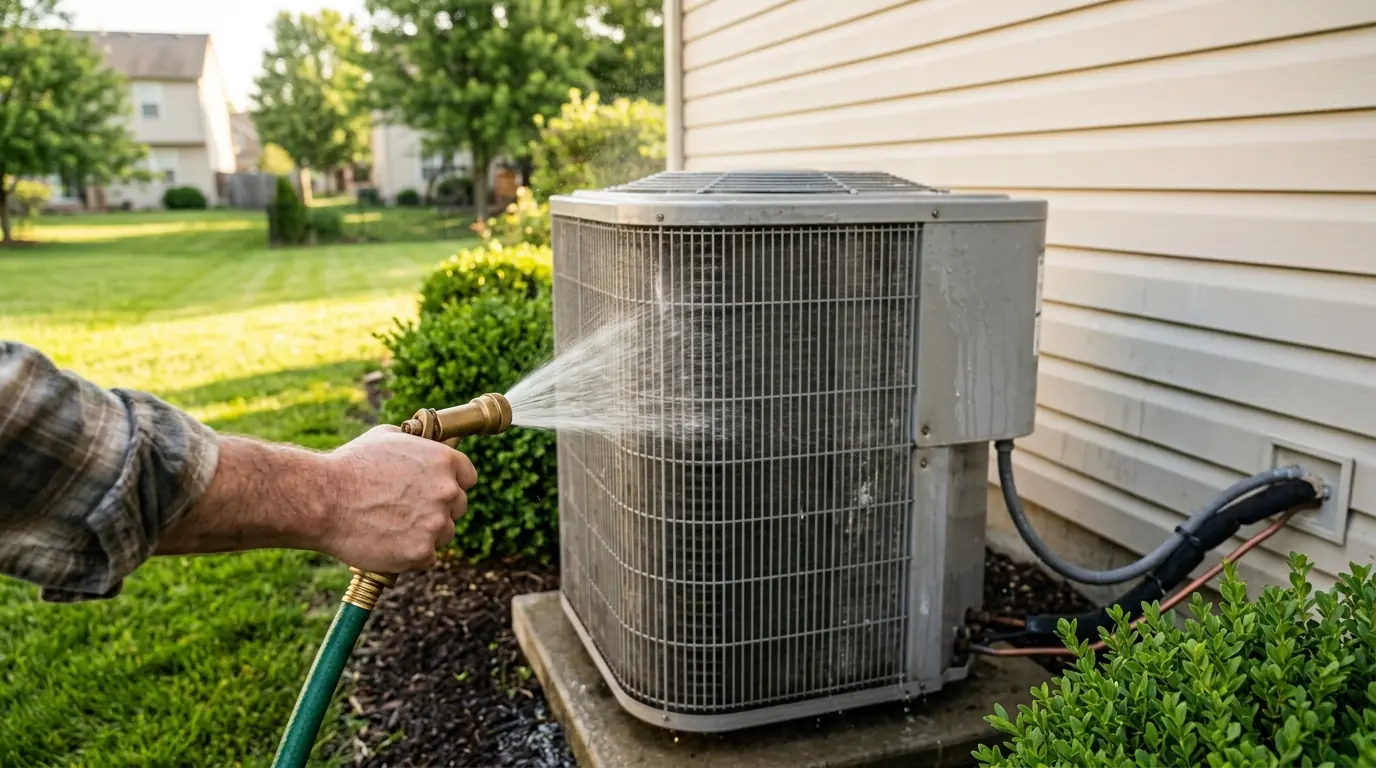
The first stretch of 85-degree, sticky days is when weak capacitors, clogged drains and dirty coils give out. A short homeowner checklist and one test run catch most of it early.
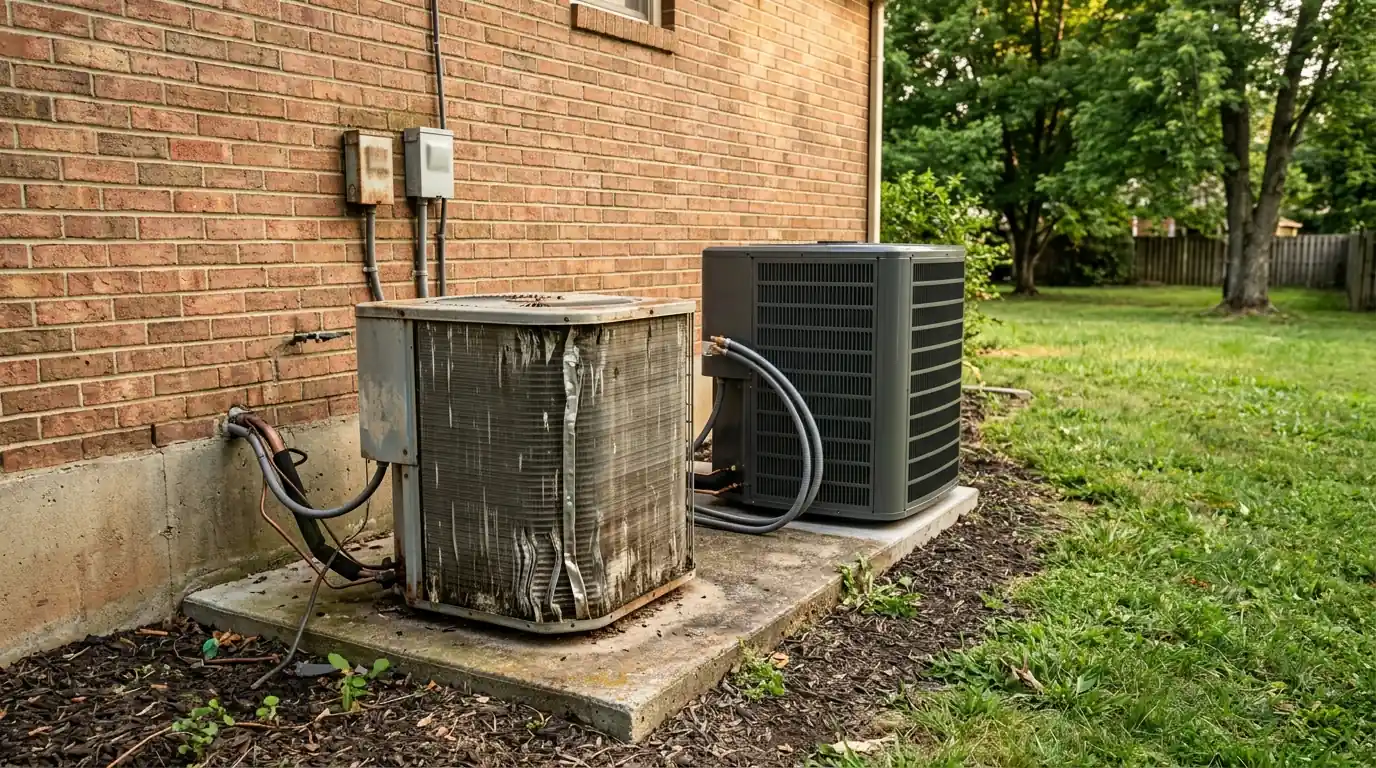
Repair or replace your HVAC: a plain way to decide
A large repair quote on an old system forces a fast decision. These are the factors we weigh with Lexington homeowners, roughly in the order they matter.
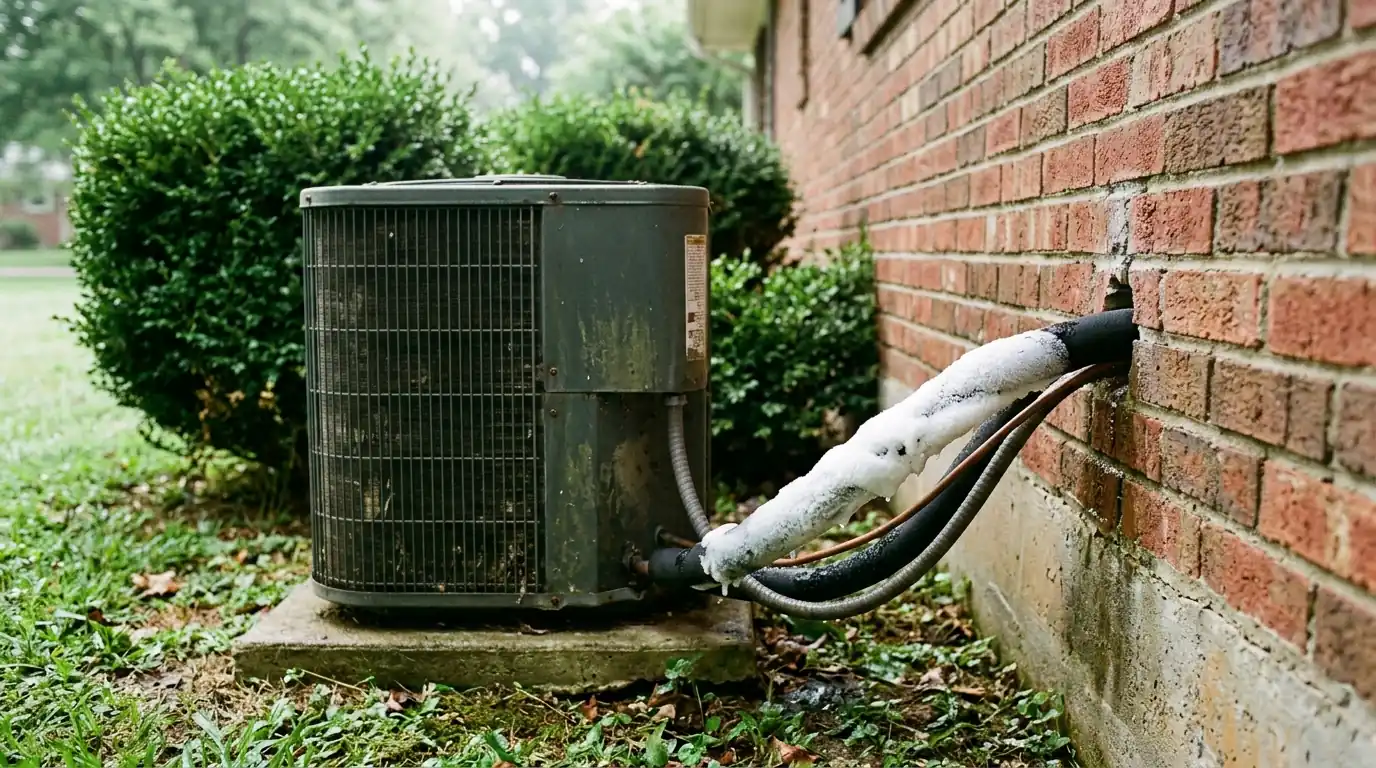
Ice on AC lines: causes and what to do first
A frosted copper line looks alarming, but it is a symptom rather than the problem. Here is what usually causes it, how to thaw the system safely, and what to leave alone.
Common questions on AC repair around Lexington
Why does my AC run all day while the house stays at 78 degrees?
Usually the system is moving air but not removing enough heat. A dirty outdoor coil, low refrigerant charge, a clogged filter or leaky return ducts in a crawlspace are the common causes. Check the filter first. If it's clean and the register air feels only slightly cool, call (859) 377-8167 and we'll measure the temperature split to see where the capacity is going.
Is it safe to keep running an AC with ice on the copper lines?
No. Ice on the suction line or indoor coil means airflow or refrigerant charge is off, and running it can send liquid refrigerant back to the compressor. Set the thermostat to Off, switch the fan to On to melt the ice, and put towels near the indoor unit. Our article on ice on the refrigerant lines covers what to check while it thaws.
How long does an AC run capacitor last in Kentucky heat?
Most run capacitors last 5 to 10 years here. Heat inside the outdoor cabinet and long humid-season run hours slowly drain their capacity. A bulging top is an obvious sign, but many fail with no visible change, which is why we test microfarads instead of guessing. Replacing a weak capacitor early also takes strain off the compressor and fan motor.
Can an older R-22 air conditioner still be repaired in Lexington?
Yes. Electrical parts, motors and controls on R-22 systems are repaired the same way as on newer ones. The limit is refrigerant. R-22 has been out of production since 2020, so any leak repair depends on reclaimed gas, which is expensive. When an R-22 system needs a recharge, we price the repair and a replacement side by side so you can decide.
Why does my outdoor AC unit hum while the fan stays still?
A hum with no fan movement usually means a motor is getting power but can't start. A weak capacitor is the most common cause, followed by a seized fan motor or a compressor that can't start against pressure. Turn the system off at the thermostat, since a stalled motor overheats quickly, and have the capacitor and motor tested before running it again.
Ready to talk about AC repair?
A person answers (859) 377-8167 day and night. Tell us what you are seeing and a technician takes it from there.