Lexington neighborhood · Fayette County
Air conditioning and gas furnace repair in Southern Heights (40503)
Southern Heights was laid out in 1922, long before central air reached Lexington homes. Many of its brick houses now pair a basement furnace with cooling added later, and the two do not always work well together.
Short answer: HVAC service in Southern Heights
We repair central air conditioners, gas furnaces and the ductwork between them in Southern Heights (40503), the neighborhood platted in 1922 between Nicholasville Road, the University of Kentucky Arboretum and Edgemoor Drive. Its older brick houses often have cooling added to ducts first sized for heat, so along with the failed part we check airflow, coil matching and basement moisture.
Shady Lane, Johnston Boulevard and the 1922 Southern Heights plat
Southern Heights was recorded in July 1922 as a 94-lot subdivision laid out along what was then Nicholasville Pike, Shady Lane, McDonald Avenue and Johnston Boulevard. A 36-lot Walton Addition on Shady Lane followed in 1925. Today the neighborhood sits with Nicholasville Road on the west, the UK Arboretum and the Baptist Health hospital campus to the north, and Edgemoor Drive and Blueberry Road to the south.
Expect solid two-story brick homes with basements, some dating from the 1920s, on generous lots for a neighborhood this close to campus. The older houses here were built without central air. Cooling arrived later, usually as a condenser outside and an evaporator coil set on top of the basement furnace, pushing air through ducts that were laid out to carry heat.
That arrangement explains most comfort complaints. Warm air rises on its own, but cool air has to be pushed up two floors, so second-floor bedrooms in a brick two-story are usually the first to suffer in July. Our article on why upstairs runs hotter covers the fixes, from balancing dampers to added returns.
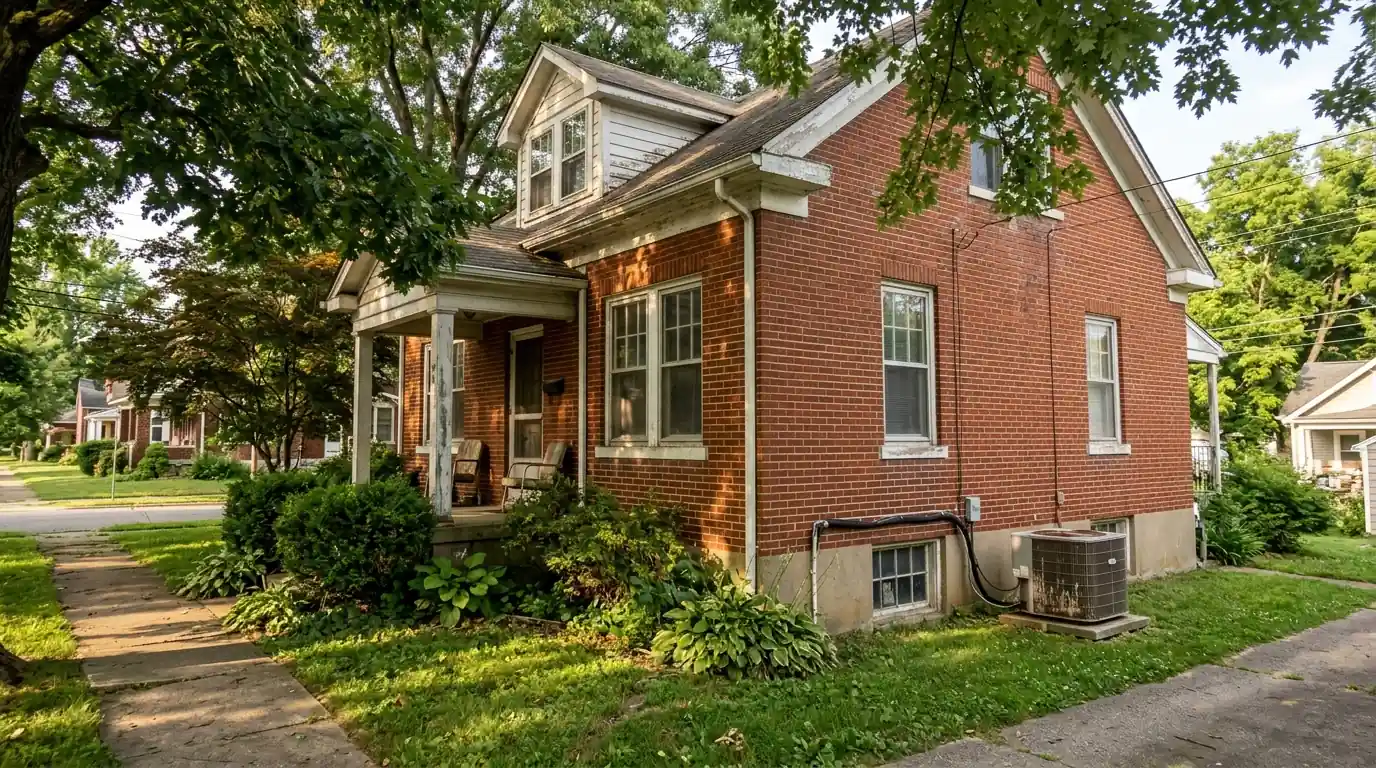
Where late-added cooling trips up a 1920s brick house
These are the faults we trace most often in Southern Heights homes that gained air conditioning after they were built.
Ducts sized for heat, not cooling
Cooling needs more airflow than heating. Small supply runs and a single return make the blower strain, registers whistle and the coil can ice over on humid afternoons.
Brick walls releasing heat after dark
Solid brick soaks up afternoon sun and gives it back through the evening, so the air conditioner keeps running well past sunset in July and August.
Condenser and coil that do not match
A new condenser paired with an old indoor coil, or the reverse, loses capacity and efficiency. Mismatched halves are a common source of weak cooling and early compressor trouble.
Damp basement air in the return
A return grille low in a damp basement pulls musty, humid air into the system, which makes the whole house feel sticky and loads the coil.
Condensate pump with no floor drain
Older basements may lack a drain near the furnace, so the AC drain line runs to a small pump. When that pump fails, water spills across the floor or a safety switch shuts the cooling off.
Typical price to replace central air in a Southern Heights home
Most cooling replacements here involve a new condenser and matching indoor coil set on an existing gas furnace. This range reflects 2026 work in central Kentucky.
- Duct changes for cooling airflow. Adding a return or enlarging a trunk raises the price, but it often decides whether the new system cools the second floor at all.
- Line set length and route. A long refrigerant run from the yard to a basement furnace, or one that has to be replaced, adds material and labor.
- Electrical circuit and disconnect. Older wiring may need a new dedicated circuit and disconnect sized for the condenser.
- Furnace blower capacity. If the furnace blower cannot move enough air for the new coil, replacing the furnace at the same time can be the better buy.
- Size and efficiency rating. Tonnage from a load calculation and the efficiency level you choose set the equipment cost.
These are typical ranges, not quotes. You get a written price after we look at the furnace, ducts, wiring and the outdoor spot. Compare typical prices for every service.
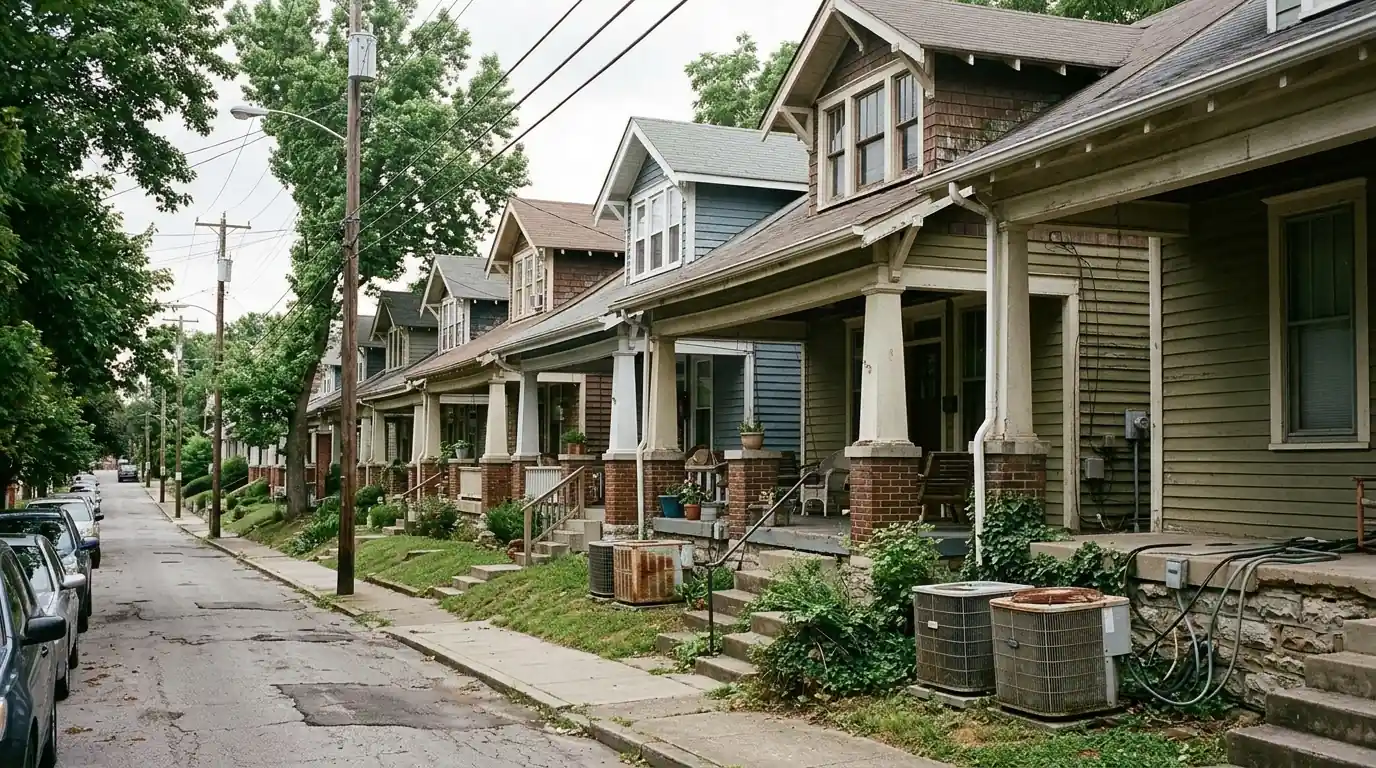
Reaching a Southern Heights basement from Nicholasville Road
Nicholasville Road is one of the busiest corridors in Lexington, and traffic near the hospital and the UK campus can back up at almost any hour. We usually come in by the side streets. When you call, tell us whether the house is reached from Shady Lane, Johnston Boulevard or Edgemoor Drive, and where a truck can park without blocking a neighbor's driveway.
In a house with a basement, the furnace almost always sits down there, often next to the water heater. Clear the stairs and a few feet around both before we arrive. If the basement takes on water during spring storms, mention it: a furnace near a damp floor needs its burners and flue checked more often, and a whole-house dehumidifier may be worth pricing alongside any cooling work.
What Southern Heights homes call us for
AC Repair
Brick two-stories keep air conditioners running hard through July, and capacitors, contactors and fan motors are usually the first parts to give out.
Evaporator Coil Replacement
Coils set on older basement furnaces can corrode or be mismatched to a newer condenser, costing cooling capacity every summer.
Furnace Repair
Basement gas furnaces here carry the house through cold snaps, and dirty flame sensors and worn igniters are frequent no-heat causes.
Ductwork Replacement
Ducts laid out for heat often need a larger return or a new trunk to carry the airflow central air requires.
AC Drain Line Repair
Basements without a nearby floor drain depend on condensate pumps, and a failed pump can flood the floor or stop the cooling.
Whole-House Dehumidifiers
A dehumidifier tied into the ducts dries a damp basement and the rooms above without overcooling the house.
Also close to Southern Heights
Questions we hear from Southern Heights
Can the ductwork in a 1920s Southern Heights house handle central air?
Often it can, with changes. Ducts installed for a furnace were sized for heating airflow, which is lower than cooling needs. We measure static pressure and airflow at the registers first. Adding a return, enlarging a trunk or sealing basement joints usually gets the house there, and when a run cannot be fixed, new duct runs or a single ductless head can cover the problem rooms.
Why does my Southern Heights air conditioner keep running after the sun goes down?
Brick walls store heat through the afternoon and release it into the rooms for hours after sunset, so the system keeps working late. That is normal to a point. If it never shuts off, or the house will not drop below 76 on a mild night, low refrigerant, a dirty coil or restricted airflow is more likely, and those are worth a visit.
Should the furnace be replaced along with the air conditioner in a Southern Heights home?
Not always. If the furnace is under 15 years old, its blower can move enough air for the new coil and the heat exchanger tests clean, replacing only the condenser and coil makes sense. If the furnace is older or undersized for cooling airflow, doing both at once saves a second round of labor and keeps the system matched.
Heating or cooling trouble in Southern Heights?
Call (859) 377-8167 any hour. Tell us what the system is doing and where you are, and we will take it from there.