Ductwork & Airflow · Lexington, KY
Air duct cleaning in Lexington when the ducts actually need it
Dust puffing from the registers, drywall grit after a remodel or mouse debris in the crawlspace ducts are real reasons to clean. We look inside first, so you only pay for cleaning your ducts actually need.
Lexington and nearby counties
Line open 24/7Short answer: Air Duct Cleaning in Lexington, KY
Air duct cleaning is worth it when the ducts hold visible debris, renovation dust, pest droppings or mold growth, or when you move into a home with an unknown history. It won't cure allergies by itself. A proper job starts with a camera inspection, then uses a negative-air collection machine, rotating brushes through every run, and cleaning of the blower wheel and coil, not just the registers.
What our camera shows us before we quote a cleaning
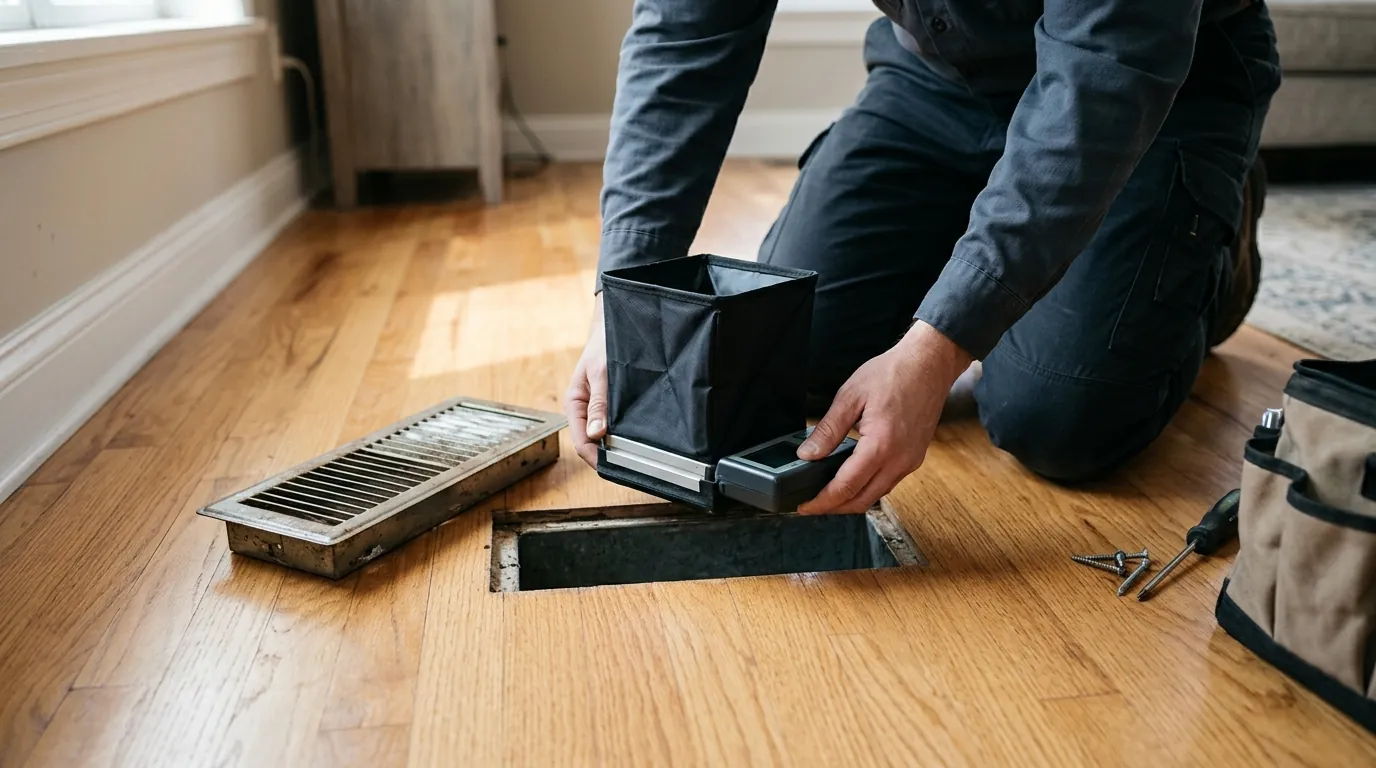
Every duct cleaning visit starts with an inspection, because some systems need cleaning and plenty don't. Here's what we look at and photograph for you.
- Main supply trunk and the first branch takeoffs off the supply plenum
- Return drop and return trunk, where the heaviest dust usually collects
- Panned floor joist returns in ranch homes, checked for debris and open edges
- Blower wheel blades for caked dust that cuts airflow and adds noise
- Evaporator coil face for matting, rust and biological growth
- Filter rack for gaps that let air slip around the filter entirely
- Register boots for drywall dust, construction scraps and pest droppings
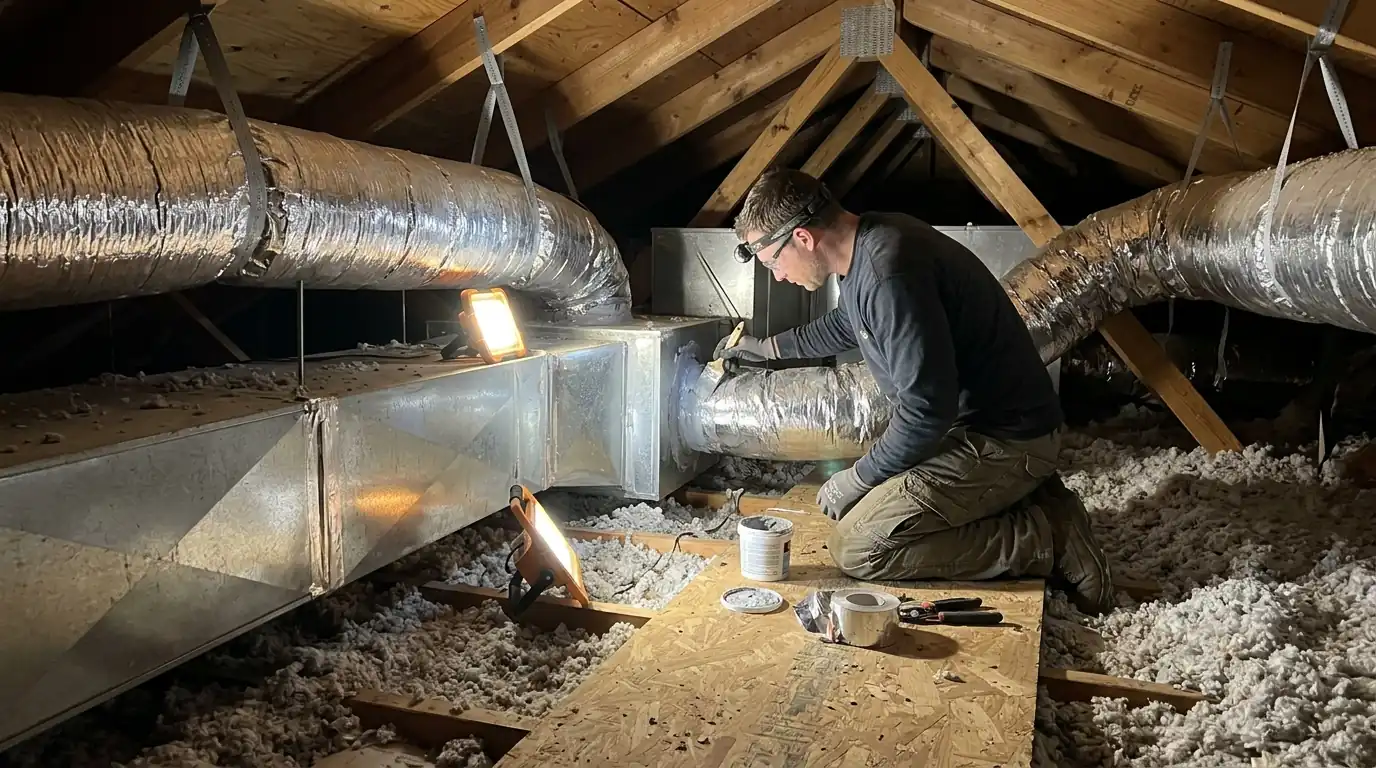
- Crawlspace and attic runs for crushed, disconnected or wet sections
Situations where duct cleaning is money well spent
These are the cases where cleaning makes a visible difference. If none of them fit your house, a better filter usually does more for the money.
Drywall dust after a remodel
Sanding dust gets pulled into the returns and settles in boots and on the blower wheel. It's fine enough to pass a basic filter and keeps resurfacing on furniture for months.
Rodent or insect activity
Droppings, nesting material and dead insects in crawlspace ducts carry odor and allergens through the house each time the blower starts. Cleaning comes after the entry points are closed.
Visible mold growth inside
Growth on duct surfaces or the coil means moisture is getting in. We clean it, but only after the leak, condensation or drain problem behind it has been fixed.
Moving into an unknown house
A home with years of smoking, several pets or a long vacancy can hold heavy buildup. A camera look tells you quickly whether the ducts are part of the odor.
Debris blowing from registers
Dust visibly puffing out when the system starts, or gray streaks around ceiling supply registers, points to loose buildup inside or a leaky return pulling in dirt.
Blower wheel caked with dust
A dirty wheel moves noticeably less air, which can freeze an AC coil or overheat a furnace. Cleaning the wheel alone sometimes restores most of the lost airflow.
Can clean ducts fix allergies on their own?
Honestly, not by themselves. Dust resting inside a sheet metal duct mostly stays put, and research hasn't shown that routine cleaning prevents health problems in a typical home. What drives indoor allergy symptoms is what's floating in the air right now: pollen tracked in on shoes, pet dander, and dust mite debris from bedding. The filter and the fan runtime deal with that, not the inside surface of a duct.
Where cleaning does help allergy-prone households is when the ducts are actively shedding: renovation dust, pest debris or loose buildup the return keeps stirring up. Removing that source breaks the cycle. After a cleaning we usually suggest a better filter as well, because clean ducts behind a thin 1-inch filter start collecting dust again within a season or two.
Leaky return ducts deserve a mention too. A return that pulls air from a crawlspace or attic brings in dust, insulation fibers and humidity faster than any cleaning can remove it. In those houses, sealing the return side does more for the air than brushing the ducts, and we'll say so plainly if the camera shows it.
How a source-removal cleaning moves through your house
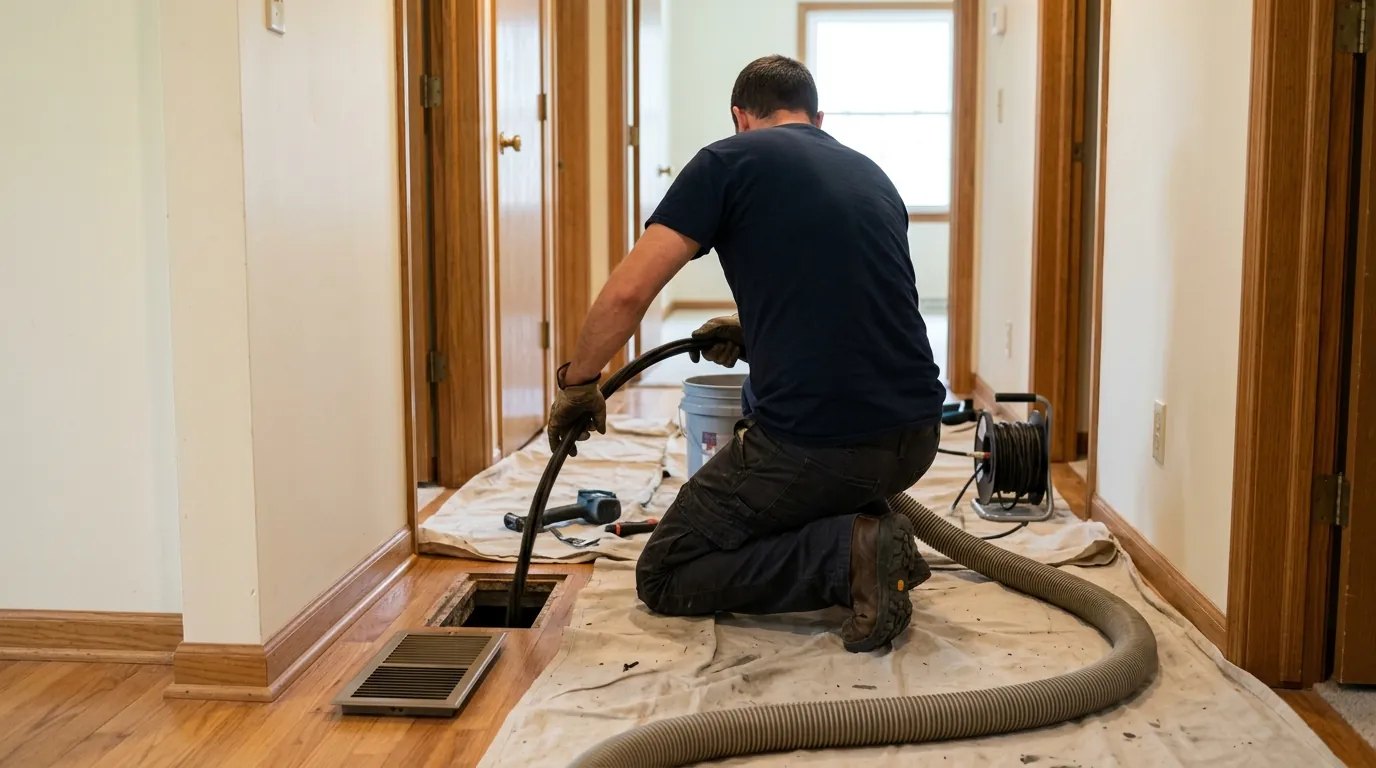
A full cleaning on a typical single-system home takes four to six hours. We protect floors and furniture near the registers and work room by room.
Set up negative air
We cover the registers, run a collection hose to the main trunk and connect a negative-air machine that holds the whole duct system under suction while we work.
Agitate every branch
Rotating brushes and air whips go into each supply and return run, knocking buildup loose so the suction carries it back to the collection machine and out of the house.
Clean registers and boots
Registers come off and get washed, and the boots behind them are vacuumed. Drywall scraps, screws and lost toys turn up here more often than you'd think.
Blower wheel and coil
We clean the blower wheel and housing, then check the coil. A matted coil gets cleaned in place so the airflow gain isn't lost at the last component.
Patch and photograph
Access holes are closed with metal plugs and foil tape made for ductwork. You see before and after photos taken from the same spots inside the ducts.
What duct cleaning costs in Lexington in 2026
This is the typical range for source-removal cleaning of one forced-air system with the blower wheel included. Coil cleaning and duct repairs are priced separately when they're needed.
- Number of runs. A compact ranch with ten registers takes far less time than a two-story house with twenty-plus runs and several returns.
- Second system. Homes with separate upstairs and downstairs equipment have two full duct systems, each needing its own setup, cleaning and blower work.
- Duct type and condition. Sheet metal cleans fully. Flex duct needs gentler tools, and badly torn or crushed flex is better replaced than cleaned, which changes the scope.
- Contamination level. Pest debris and heavy renovation dust take extra passes and more time on the collection machine than light, ordinary household dust.
- Coil and blower condition. A matted coil or caked blower wheel adds labor, and sometimes the wheel has to come out of the cabinet to be cleaned properly.
The written price comes after we look at the system with the camera. If your ducts don't need cleaning, we'll show you the photos and tell you so. Compare typical prices for every service.
Crawlspace returns, new-build dust and Bluegrass pollen
Many of the 1950s and 1960s ranches around Gardenside and Stonewall have their ductwork in a crawlspace, and some use panned floor joists as return ducts. Those panned returns were rarely sealed. They pull crawlspace air, dust and the musty smell of damp soil over limestone straight into the blower. Cleaning them helps for a while, but sealing the pan edges is what keeps them clean.
Newer subdivisions bring a different problem. Builders often run the system during construction, so drywall dust and sawdust end up in the returns before anyone moves in. If you bought a house finished in the last couple of years and keep seeing fine white dust on dark furniture, a camera look at the return boots and blower wheel is worthwhile.
Then there's pollen. Lexington's spring tree pollen and late summer ragweed coat everything, and a loose filter rack lets that load straight into the coil and blower. A tighter filter setup, explained in our filter and MERV guide, is the cheapest way to keep ducts clean after a cleaning. To set up a camera inspection, call (859) 377-8167.
We work on Carrier, Trane, Lennox, Rheem and Goodman equipment along with every other major brand found in Lexington homes, and the same testing comes first on all of them.
Lexington-area places we cover for air duct cleaning
We cover every Lexington neighborhood and the towns around it. These are the places we visit most for this work; the full list is on our Fayette County page and the service area page.
Air Duct Cleaning: what Lexington homeowners ask
How often should air ducts be cleaned in a Lexington home?
There's no fixed schedule. Most homes with a good filter that fits tightly can go many years without duct cleaning. We suggest it after a renovation, after a pest problem, when mold growth is found and its moisture source is fixed, or when you move into a house with an unknown history. A camera inspection answers the question for your house specifically.
Will air duct cleaning lower my energy bill?
Cleaning the duct walls rarely changes the bill much, because a layer of dust inside a duct barely slows the air. Cleaning a caked blower wheel or a matted coil can make a real difference, since both choke airflow and make the system run longer. That's why the blower wheel is part of every duct cleaning we do, and the coil gets checked too.
Is air duct cleaning safe for flex duct in the attic?
Yes, with the right tools. Flex duct has a thin plastic inner liner, so we use softer brushes and lighter agitation than in sheet metal. If the liner is already torn, collapsed or pulled off its collar, cleaning won't fix it, and replacing that one run usually costs less than people expect.
Should air duct cleaning include sanitizer fogging?
Not as a routine add-on. Fogging ducts with a chemical only makes sense after confirmed microbial growth has been physically removed and the moisture problem fixed, and then only with products labeled for use in ductwork. Spraying sanitizer into dusty ducts mostly wets the dust. Physical removal is what actually cleans the system.
How should I prepare the house for air duct cleaning?
Clear a path to each register and to the furnace or air handler, and move small items off furniture near the vents. Let us know about pets, since the collection hose runs through a doorway for several hours. If you've been remodeling, finish all sanding first, otherwise the returns pick up fresh dust right after the cleaning.
Call and describe what the system is doing
A person answers (859) 377-8167 day and night. Tell us what you are seeing and a technician takes it from there.