Cooling · Lexington, KY
AC drain line repair in Lexington before water reaches the ceiling
There's water pooling around the furnace, a stain spreading on the ceiling under the attic unit, or the AC simply stopped and the drain pan is full. A blocked condensate line causes all three.
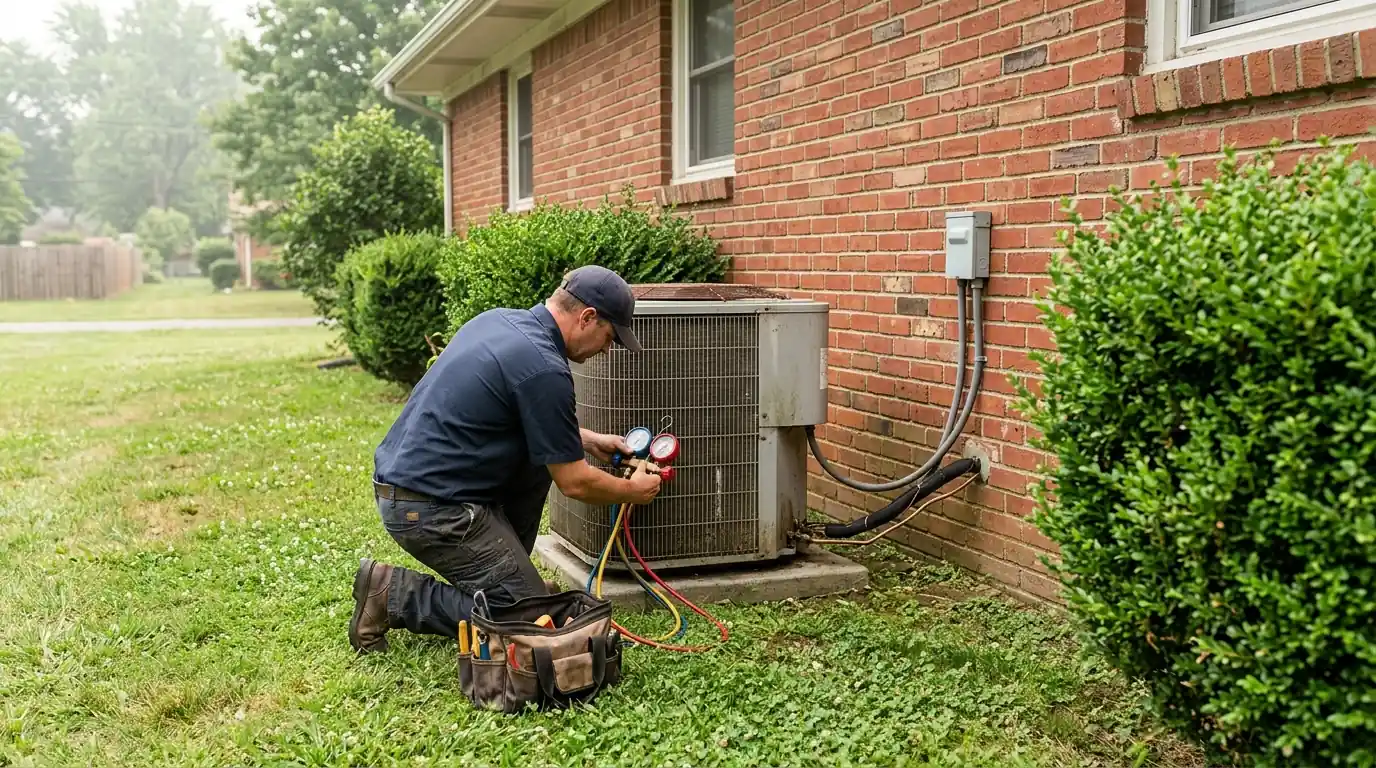
Lexington and nearby counties
Line open 24/7Short answer: AC Drain Line Repair in Lexington, KY
When an AC drain backs up, turn cooling off at the thermostat, soak up standing water, and check whether a float switch has tripped. A technician clears the line with suction or pressure, flushes the trap, repairs any sagging or cracked pipe, tests the float switch, and checks the condensate pump if one is used. Most drain problems are fixed in one visit.
Stop the water first, then deal with the drain
Water damage spreads faster than most HVAC problems, so these steps come before anything else.
- Set the thermostat to Off so the coil stops producing water.
- Soak up standing water with towels or a wet vacuum around the unit.
- If water drips through a ceiling, put a bucket below and poke a small relief hole.
- Look for a tripped float switch on the drain pan or condensate line.
- Check whether the condensate pump is humming without pumping or not running at all.
- Keep outlets and extension cords near the unit dry and unplugged if wet.
- Leave any electrical panel inside the furnace closed and call for service.
Why condensate lines clog in central Kentucky
A typical air conditioner here can pull several gallons of water a day from muggy summer air. These are the reasons that water stops draining.
Algae and slime growth
Warm, dark, wet PVC is ideal for biological growth. The slime builds through June and July until it seals the trap or a low spot in the pipe.
Dust past a poor filter
Dust that slips by a loose or low-grade filter lands on the wet coil and washes into the pan, where it mixes with slime and thickens it.
Missing or dry trap
Without a proper trap, the blower can pull air back up the drain and hold water in the pan. A dry trap can also let air leak into the system.
Sagging or flat pipe
Drain lines need a steady downward slope, about a quarter inch per foot. Pipe that sags between hangers holds water and sludge in the low spot.
Failed condensate pump
Basement systems often pump water up and out. A pump with a stuck float, a failed motor or a clogged check valve lets the reservoir overflow.
Frozen outdoor termination
Lines that end outside can freeze shut during cold snaps on heat pumps and high-efficiency furnaces, which also send water down the same line.
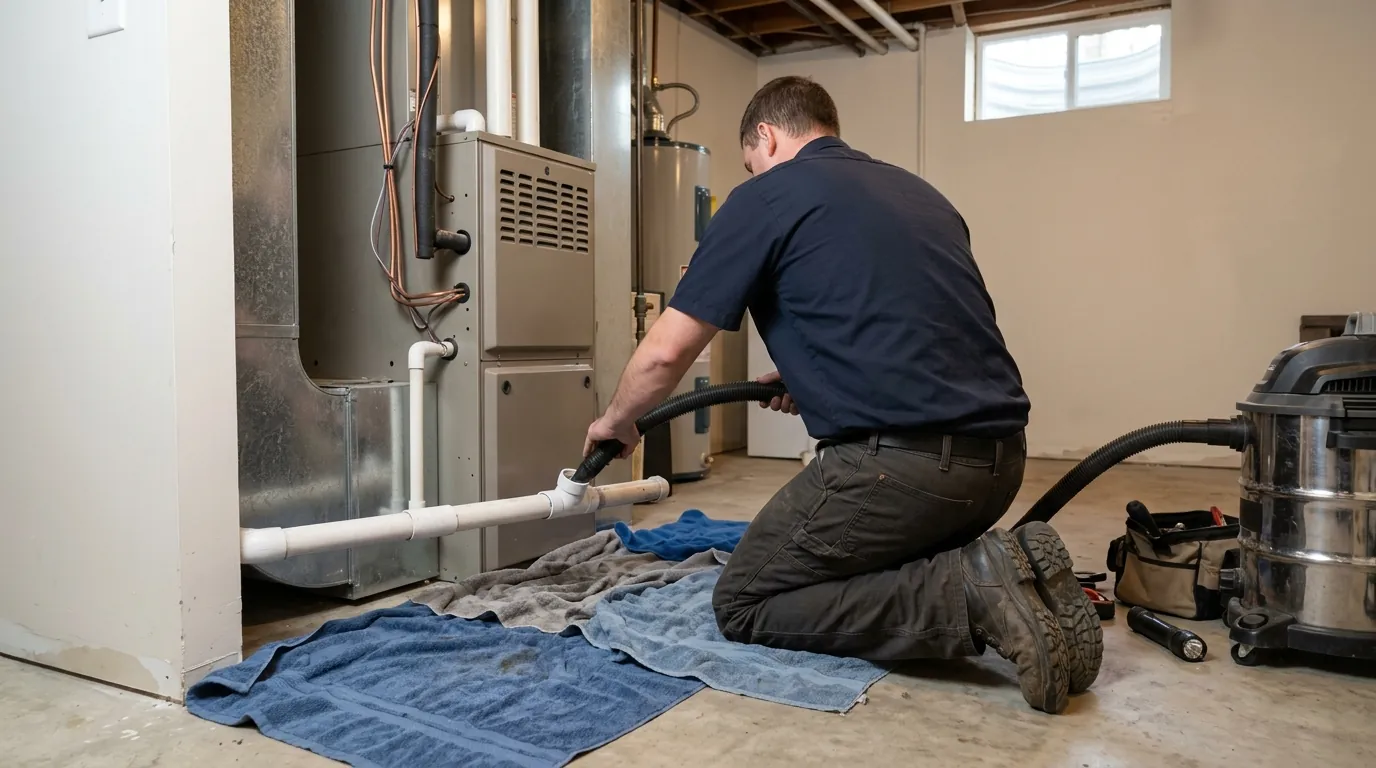
How we clear and rebuild a backed-up drain
Clearing the line is only part of the visit. We also fix what made it clog.
Find the blockage
We open the cleanout tee, check the pan, the trap and the drain outlet, and see whether water stands at the coil or farther down the line.
Clear the line
Depending on access, we pull the clog out with a wet vacuum at the outlet or push it through with low pressure, then flush with clean water.
Inspect pipe and slope
We follow the run looking for sags, cracked fittings and glue joints that weep. Bad sections get recut, sloped and supported properly.
Test the safeties
We fill the pan or the switch reservoir to confirm the float switch stops the system before water spills. A failed switch gets replaced.
Confirm drainage
With the system running, we watch water flow from the termination or pump discharge and check that the trap holds water and seals.
Drain problems tied to Lexington homes and seasons
Lexington's summer humidity means condensate is constant from June through September. On a muggy afternoon, a 3-ton system can drain half a gallon an hour or more. A slow drain that kept up in May can fall behind by July, which is why most backups show up during the first long humid stretch rather than on the first warm day. Flushing the line during a spring AC tune-up heads off most of them.
House design changes the risk. Basement furnaces in 1990s and 2000s homes often drain to a floor drain or rely on a condensate pump, and those pumps wear out. Attic air handlers in two-story homes sit above finished ceilings, so a clog there can stain drywall before anyone sees water. Crawlspace systems in older ranches often have long, flat drain runs that settle over time.
Ice causes drain trouble too. When a coil freezes from low airflow or low charge, it melts all at once and can overwhelm the pan. If ice keeps forming, read about ice on the AC lines, because the drain is only the symptom. In winter, high-efficiency furnaces send acidic condensate down these same lines, so a drain checked during a fall furnace tune-up matters too.
Typical cost to clear or repair an AC drain
Clearing a simple clog sits at the low end. Rebuilding a long run, replacing a corroded pan or installing a new condensate pump moves toward the top.
- Clog only or pipe repair. A clog cleared through the cleanout costs less than recutting and resloping several feet of PVC or adding hangers along a sagging run.
- Condensate pump replacement. A failed pump means a new unit with its check valve and tubing, plus a safety switch wired so the AC stops if it fails.
- Float switch or secondary pan. Adding a float switch where none exists, or replacing a rusted secondary pan under an attic unit, adds parts and labor.
- Access to the equipment. Attic and crawlspace units take longer to reach and work around than a basement furnace with the drain at chest height.
- Primary pan condition. A cracked or rusted primary pan built into the coil can't always be swapped alone, and may lead to a coil conversation.
The written price comes after we look at the system and trace the drain. Water cleanup and drywall repair are separate from the HVAC work. Compare typical prices for every service.
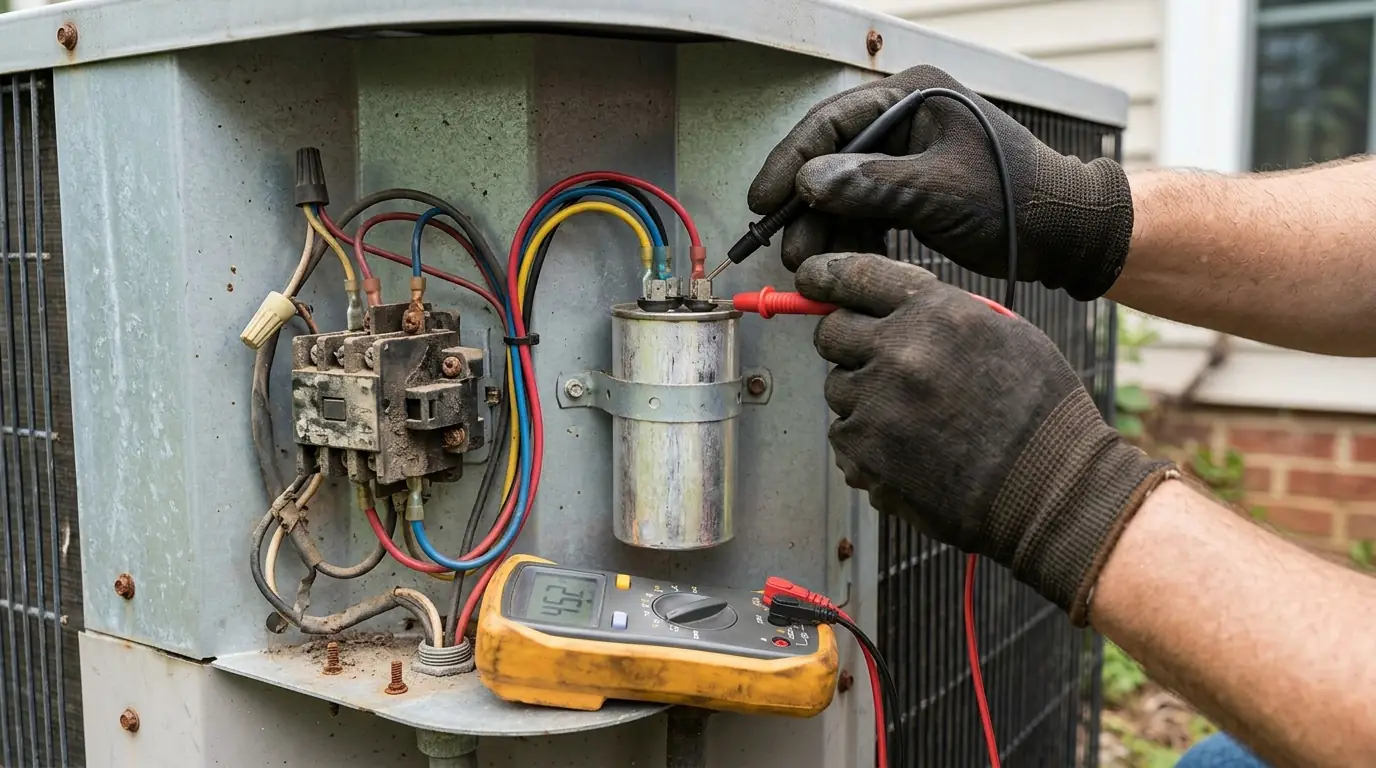
Float switch, condensate pump or gravity drain compared
Each part plays a different role. Knowing which one your system relies on helps you spot trouble earlier.
| Part | What it does | Warning sign |
|---|---|---|
| Gravity drain line | Carries water downhill to a drain or outside | Water standing in the pan |
| Float switch | Shuts cooling off if water rises | AC stops with blower still running |
| Condensate pump | Lifts water up and out of a basement | Humming, gurgling or an overflowing reservoir |
| Secondary drain pan | Catches overflow under attic units | Water in the pan below the unit |
We work on Carrier, Trane, Lennox, Rheem and Goodman equipment along with every other major brand found in Lexington homes, and the same testing comes first on all of them.
Neighborhoods and towns that call us for AC drain line repair
We cover every Lexington neighborhood and the towns around it. These are the places we visit most for this work; the full list is on our Fayette County page and the service area page.
Further reading from our Comfort Blog
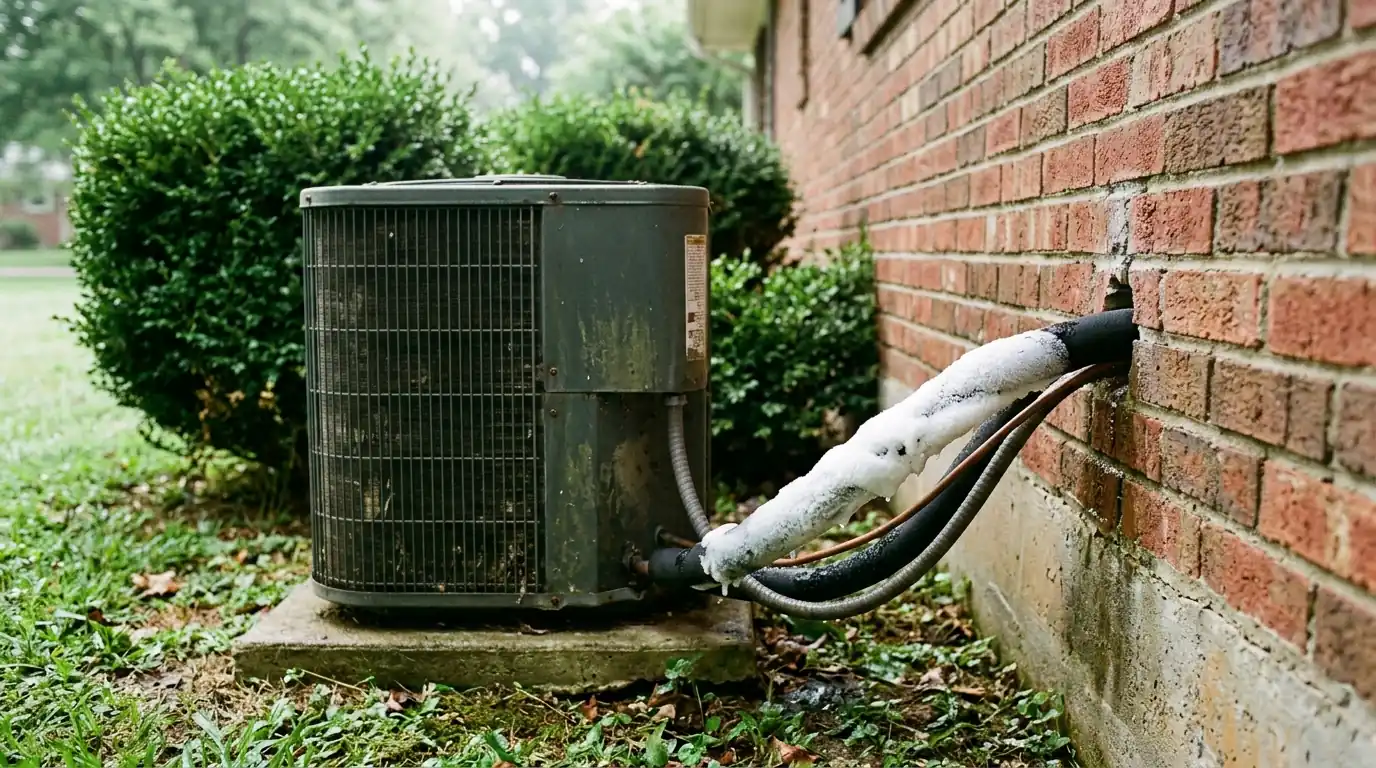
Ice on AC lines: causes and what to do first
A frosted copper line looks alarming, but it is a symptom rather than the problem. Here is what usually causes it, how to thaw the system safely, and what to leave alone.
AC Drain Line Repair: what Lexington homeowners ask
Why does my AC shut off and then start again after the drain pan empties?
That points to a float switch doing its job. When water rises in the pan or line, the switch opens and stops cooling. As water slowly drains or evaporates, the switch closes and cooling restarts. The underlying drain is partly blocked. Clearing the line and checking the trap usually stops the cycle, and we confirm the switch trips at the right level.
Can I pour vinegar down my AC condensate drain line?
A cup of distilled white vinegar poured into the cleanout tee every month or two during cooling season helps slow algae growth. It won't clear a line that is already blocked, and it should go into the cleanout, not directly onto the coil. Avoid bleach in lines with metal parts, and never mix cleaning products in the drain.
Why is my basement AC condensate pump humming but not pumping?
A humming pump with a full reservoir usually has a stuck float, a seized motor, or a clogged check valve or discharge tube. Unplug it, check the tube for kinks, and look for sludge in the reservoir. If it still won't pump, it needs repair or replacement. A safety switch wired to the pump stops the AC before it overflows.
Is a leaking AC drain line in an attic urgent?
Yes. An attic unit sits above finished ceilings, and once water overflows the secondary pan, it soaks insulation and drywall quickly. Turn cooling off at the thermostat and call (859) 377-8167 any time of day. We'll clear the line, check both pans, and confirm the float switch works so the next clog stops the system instead of leaking.
Need AC drain line repair today?
A person answers (859) 377-8167 day and night. Tell us what you are seeing and a technician takes it from there.