Cooling · Lexington, KY
AC tune-ups in Lexington that measure, not just rinse
You want the air conditioner to start cleanly on the first hot week and not quit on the worst one. A real tune-up finds weak parts while they're still cheap to replace.
Lexington and nearby counties
Line open 24/7Short answer: AC Tune-Ups in Lexington, KY
An AC tune-up should include measurements, not only a hose rinse. A technician tests the run capacitor in microfarads, inspects the contactor, records compressor and fan amp draw, checks refrigerant charge by superheat or subcooling, measures temperature split and static pressure, cleans the outdoor coil, and clears the condensate drain. Spring, before Lexington's humid season, is the best time to schedule it.
Every item on our spring cooling checklist
Each item gets a reading or a visual pass, and you get the numbers at the end of the visit.
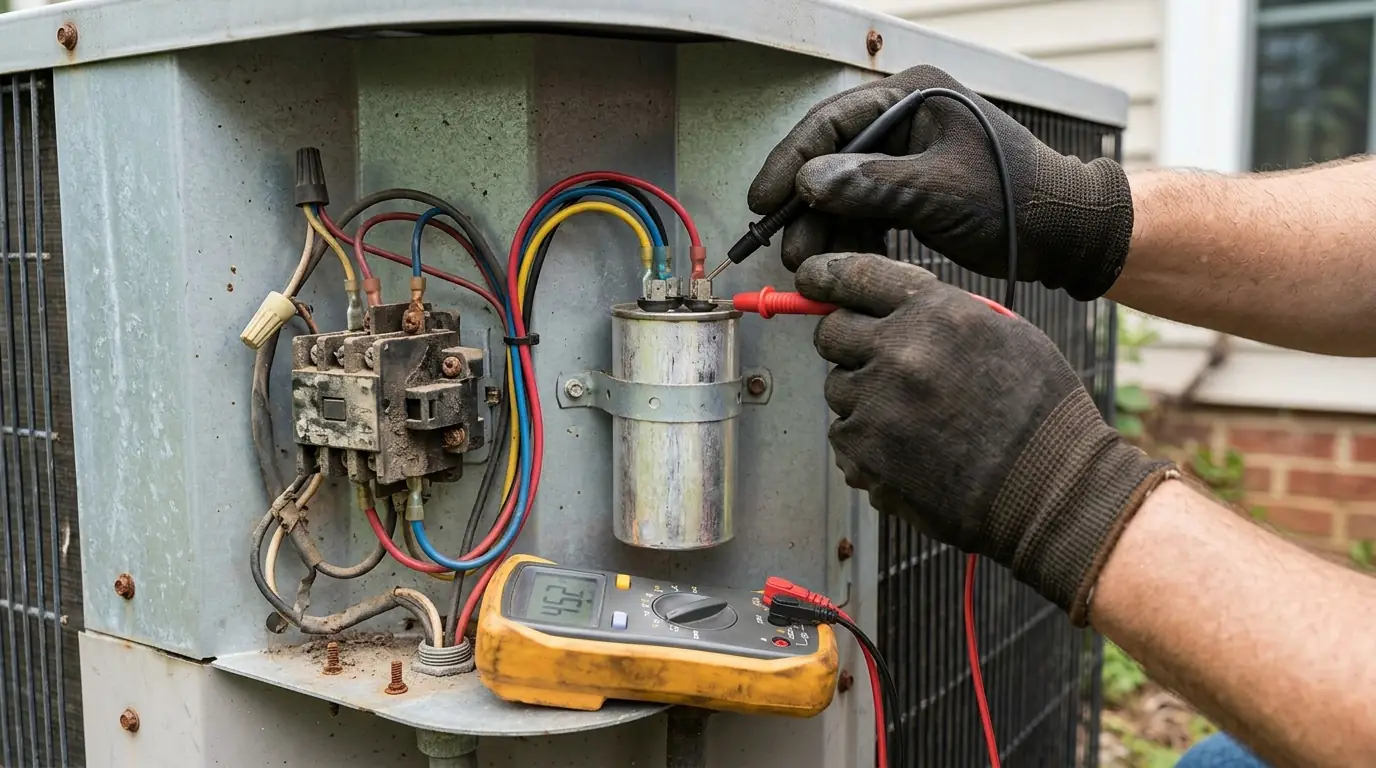
- Run capacitor tested in microfarads against its printed rating
- Contactor points inspected for pitting, burn marks and insect nests
- Compressor and condenser fan amp draw compared to the nameplate
- Refrigerant charge checked by superheat or subcooling for that day
- Supply and return temperatures recorded for the temperature split
- Total external static pressure measured across the furnace or air handler
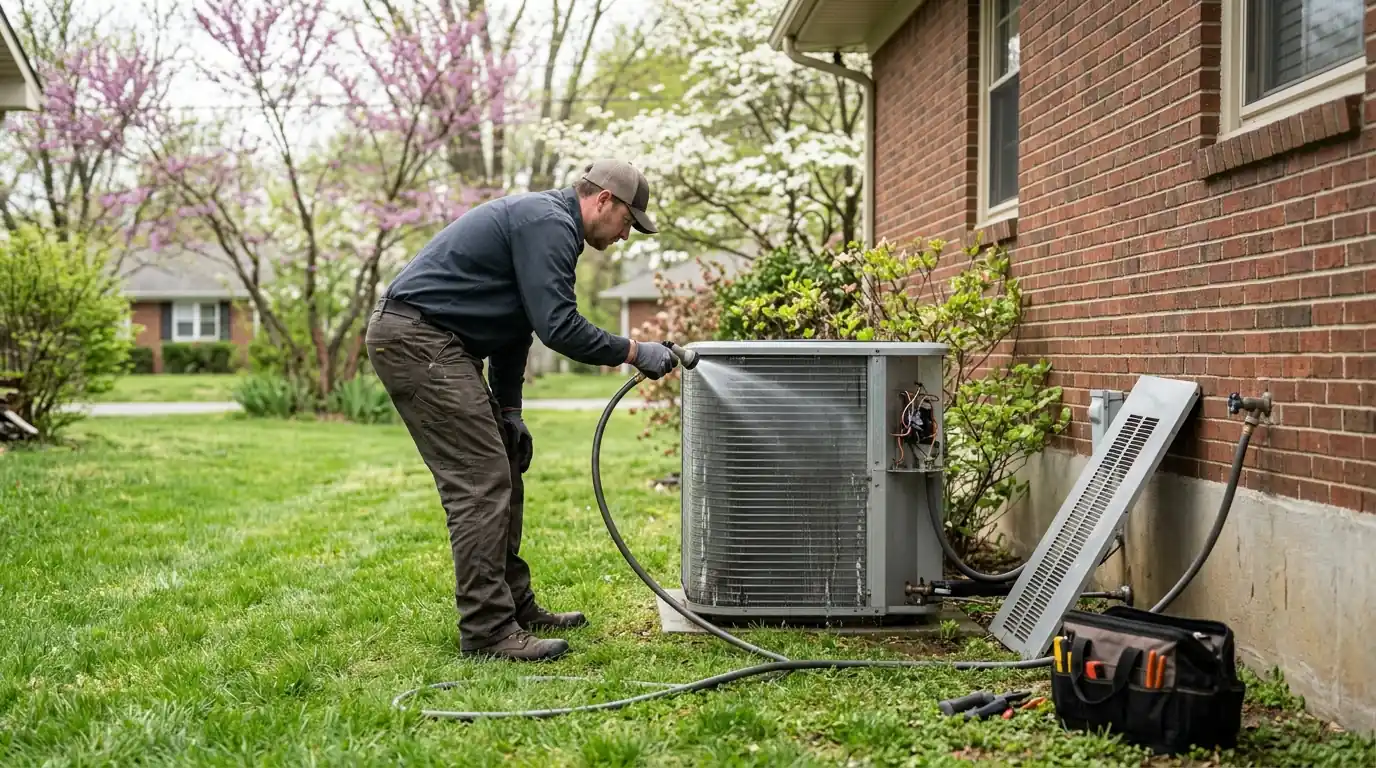
- Outdoor coil cleaned from the inside out with a coil cleaner
- Condensate drain flushed, trap checked and float switch tested
- Electrical connections tightened and the disconnect inspected for heat damage
What the numbers from a tune-up tell us
The readings matter more than the cleaning. A capacitor rated 45 plus 5 microfarads that tests at 41 on the compressor side is already outside the usual 6 percent tolerance. It may start the compressor today and fail during a heat wave. Replacing it in April is a small, planned expense, while the same part in July comes with a hot house and a wait.
Amp draw tells a similar story. A condenser fan motor drawing well above its rated amps is working against worn bearings, and a compressor near its rated load amps on a 75 degree spring day is struggling. We note those numbers and compare them year to year, so a slow change shows up before it turns into a breakdown.
Static pressure shows how hard the blower is working. If a system reads 0.85 inches of water column against a design of 0.5, the problem is usually a restrictive filter, a dirty coil or undersized returns. That one reading explains a lot of noisy registers and weak airflow upstairs, and it tells us whether a thicker filter would help or hurt.
Problems a spring tune-up catches early
These are the findings that most often turn a routine visit into a repair recommendation, and each one is cheaper in spring than mid-summer.
Capacitor drifting low
A capacitor a few microfarads under rating still starts the system on cool days, then fails on the first 90 degree afternoon when the compressor needs every bit of help.
Ants in the contactor
Fire ants and other insects are drawn to the electrical field. Their bodies get crushed between the contact points, which keeps the contactor from closing or burns it.
Charge slightly low
A small leak shows as high superheat before the coil ever ices. Catching it early means the leak search happens before a full summer of running undercharged.
Algae starting in the drain
Condensate lines grow a slime that thickens through summer. Flushing in spring heads off the overflow that trips a float switch or stains a ceiling.
Pollen-matted outdoor coil
Tree pollen and grass clippings from mowing pack into the fins. A coated coil can raise head pressure enough to add noticeable cost to every month of cooling.
Worn or loose wiring
Heat and vibration loosen lugs at the contactor and disconnect. A loose connection runs hot, discolors insulation and eventually burns through without warning.
How a tune-up visit fits into your morning
Most visits take 60 to 90 minutes, and you don't need to be home for all of it once we've checked the thermostat and indoor unit.
Thermostat and indoor unit
We confirm the thermostat calls cooling correctly, check the filter, look at the indoor coil face, and measure static pressure with the blower running.
Outdoor unit shut down
With power off, we inspect the contactor, test the capacitor, tighten connections, check the fan blade, and clean the coil from the inside out.
Running measurements
After at least 15 minutes of operation, we record pressures, superheat or subcooling, amp draws, and supply and return temperatures.
Drain and safeties
We flush the condensate line, check the trap for sealing, and confirm the float switch shuts the system down when water rises.
Readings and findings
You get the numbers in writing with plain notes. If a part is weak, we'll tell you how weak and what it costs before touching it.
What a cooling tune-up costs in central Kentucky
This is the typical range for a standard split system tune-up. Parts found weak during the visit are priced separately and only replaced with your approval.
- Number of systems. A home with separate upstairs and downstairs systems needs two full sets of readings and two coil cleanings, though the second system usually costs less.
- Coil condition. A badly packed outdoor coil can need a second cleaning pass and a longer rinse, especially under trees that drop seeds and fluff.
- Indoor unit access. Air handlers in attics or low crawlspaces take more time to reach for the drain and coil checks than a basement furnace does.
- Drain line condition. A partly clogged line may need more than a simple flush, such as clearing the trap or replacing a short PVC section.
- Equipment type. Two-stage and variable-speed systems take a little longer because we check performance in more than one operating mode.
The written price comes after we look at the system. If the visit turns into a repair, you'll get that price separately before anything is replaced. Compare typical prices for every service.
Why April tune-ups suit Lexington weather
Central Kentucky often gets a stretch of 80 degree days in May, then settles into humid summer by mid-June. The first warm spell is when weak capacitors and dirty coils show themselves, and it's also when everyone calls at once. A tune-up in March or April avoids that rush and leaves time to order a part if one is needed.
Spring tree pollen in Lexington peaks from late March into May, and that's usually when outdoor coils load up the fastest. Cleaning the coil after the heaviest pollen drop gives the cleanest start to summer. If your system is a heat pump, it runs year-round and benefits from a visit in both seasons. Our heat pump maintenance covers the heating side as well.
Homes with crawlspace air handlers deserve extra attention to the drain and the duct connections, since moisture there is constant. If you'd like to handle some prep yourself, the first hot week checklist walks through the homeowner side, from clearing leaves to changing the filter. To get on the spring list, call (859) 377-8167.
We work on Carrier, Trane, Lennox, Rheem and Goodman equipment along with every other major brand found in Lexington homes, and the same testing comes first on all of them.
Lexington-area places we cover for AC tune-ups
We cover every Lexington neighborhood and the towns around it. These are the places we visit most for this work; the full list is on our Fayette County page and the service area page.
Further reading from our Comfort Blog
Get your AC ready before the first hot, humid week
The first stretch of 85-degree, sticky days is when weak capacitors, clogged drains and dirty coils give out. A short homeowner checklist and one test run catch most of it early.
Questions about AC tune-ups in Lexington
How often does a central air conditioner in Lexington need a tune-up?
Once a year, ideally in spring before steady cooling starts. Kentucky's long humid season means the system runs many hours from June through September, and a yearly check of the capacitor, charge, coil and drain catches most problems before they cause a breakdown. Heat pumps run year-round and do better with a spring and a fall visit.
Can I hose off my outdoor AC coil instead of booking a tune-up?
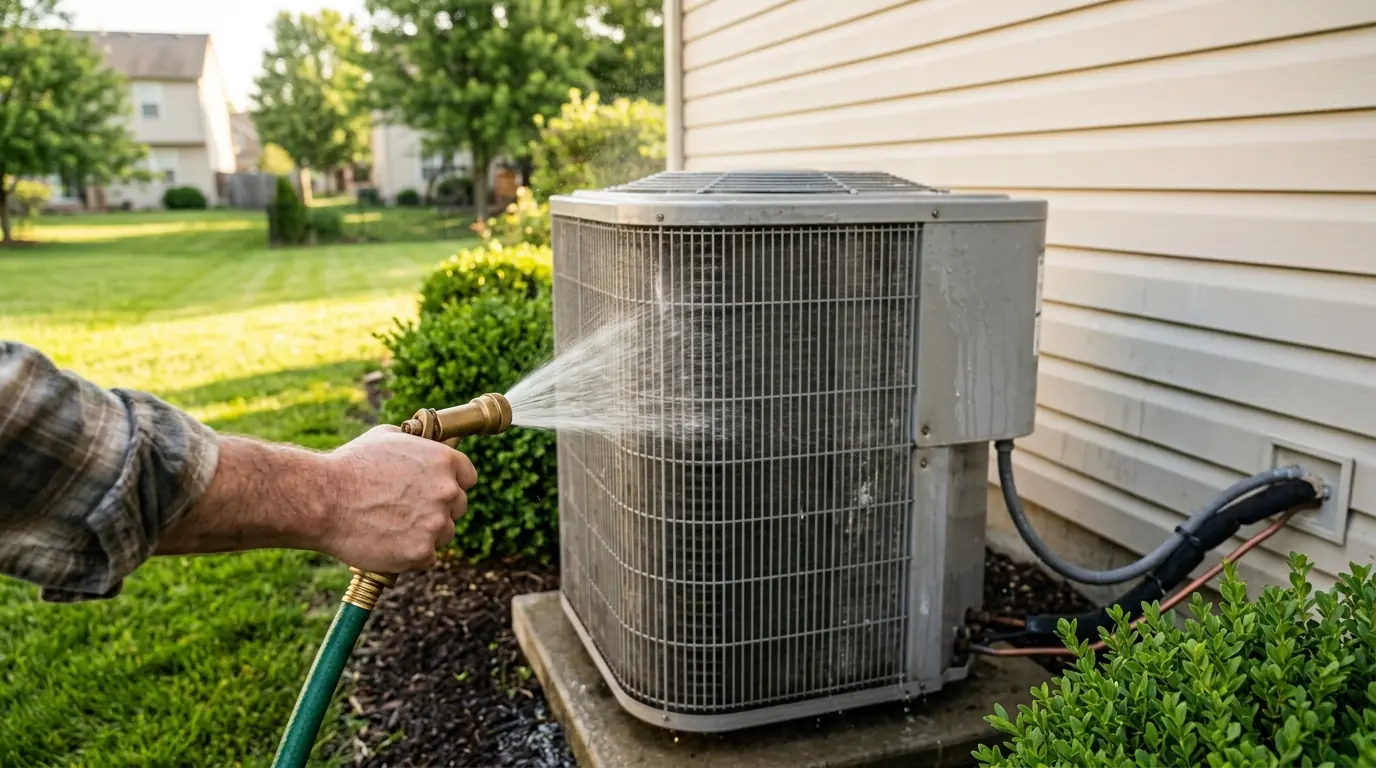
Rinsing the coil with a garden hose on gentle spray, with power off at the disconnect, is a reasonable homeowner task and helps. It won't test the capacitor, read the charge, check amp draw or flush the drain, which are the checks that predict breakdowns. Avoid pressure washers, which fold the aluminum fins flat and block airflow.
Does an AC tune-up include adding refrigerant?
A tune-up includes checking the charge, not topping it off by habit. A sealed system doesn't use refrigerant, so a low reading means a leak. If we find the charge low, we'll show you the superheat or subcooling reading and recommend a leak search. Adding refrigerant without finding the leak means paying for the same problem again next summer.
What does a weak AC capacitor reading look like during a tune-up?
Each capacitor has a printed rating such as 45 plus 5 microfarads, meaning 45 for the compressor and 5 for the fan. Most have a tolerance of about 6 percent. If the compressor side tests at 42 or lower, it's on the way out. We'll show you the meter reading and the printed rating side by side so the call is clear.
Ready to talk about AC tune-ups?
A person answers (859) 377-8167 day and night. Tell us what you are seeing and a technician takes it from there.