Emergency & Projects · Lexington, KY
Home buyer HVAC inspection in Lexington before you close
You're under contract on a house and the general home inspection said the HVAC is 'functional' with a note to have it evaluated. You need to know what you're actually buying before the inspection window closes.
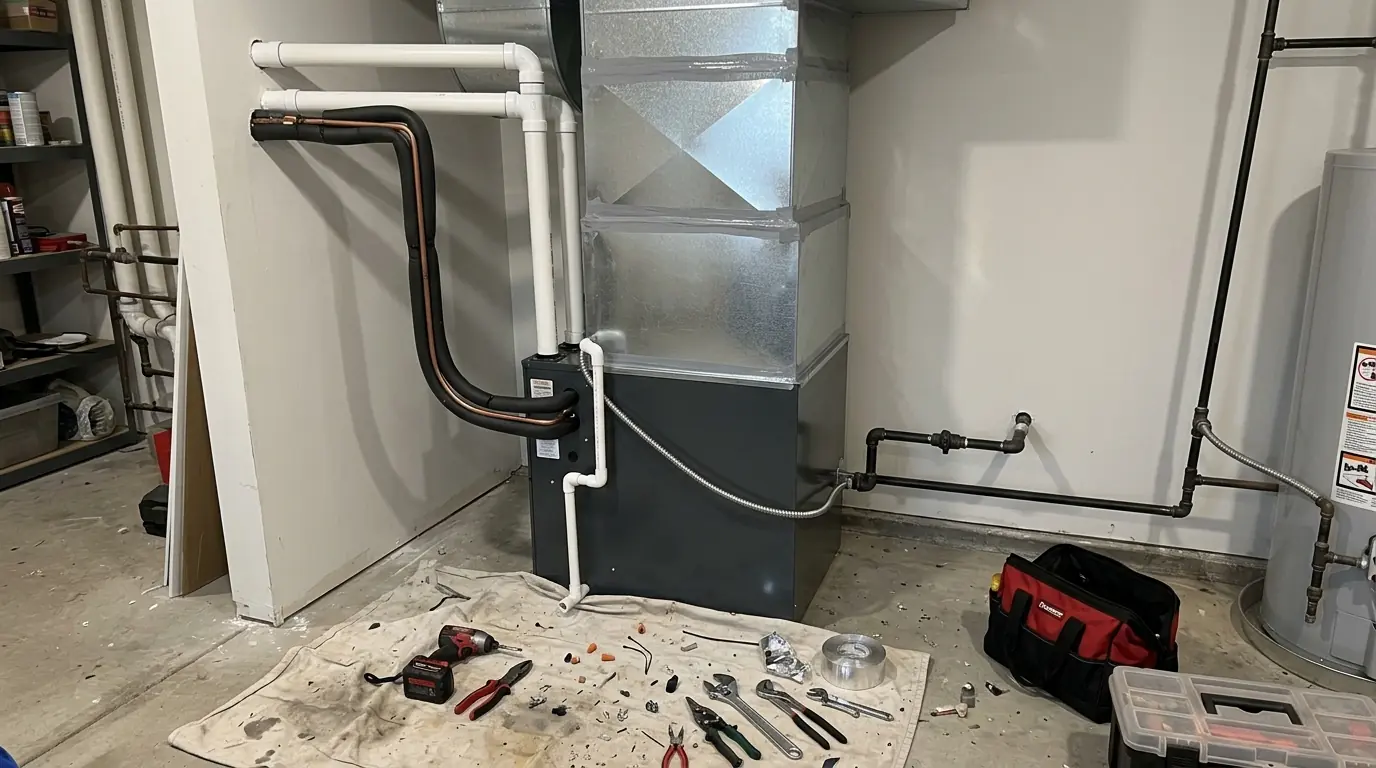
Lexington and nearby counties
Line open 24/7Short answer: Home Buyer HVAC Inspection in Lexington, KY
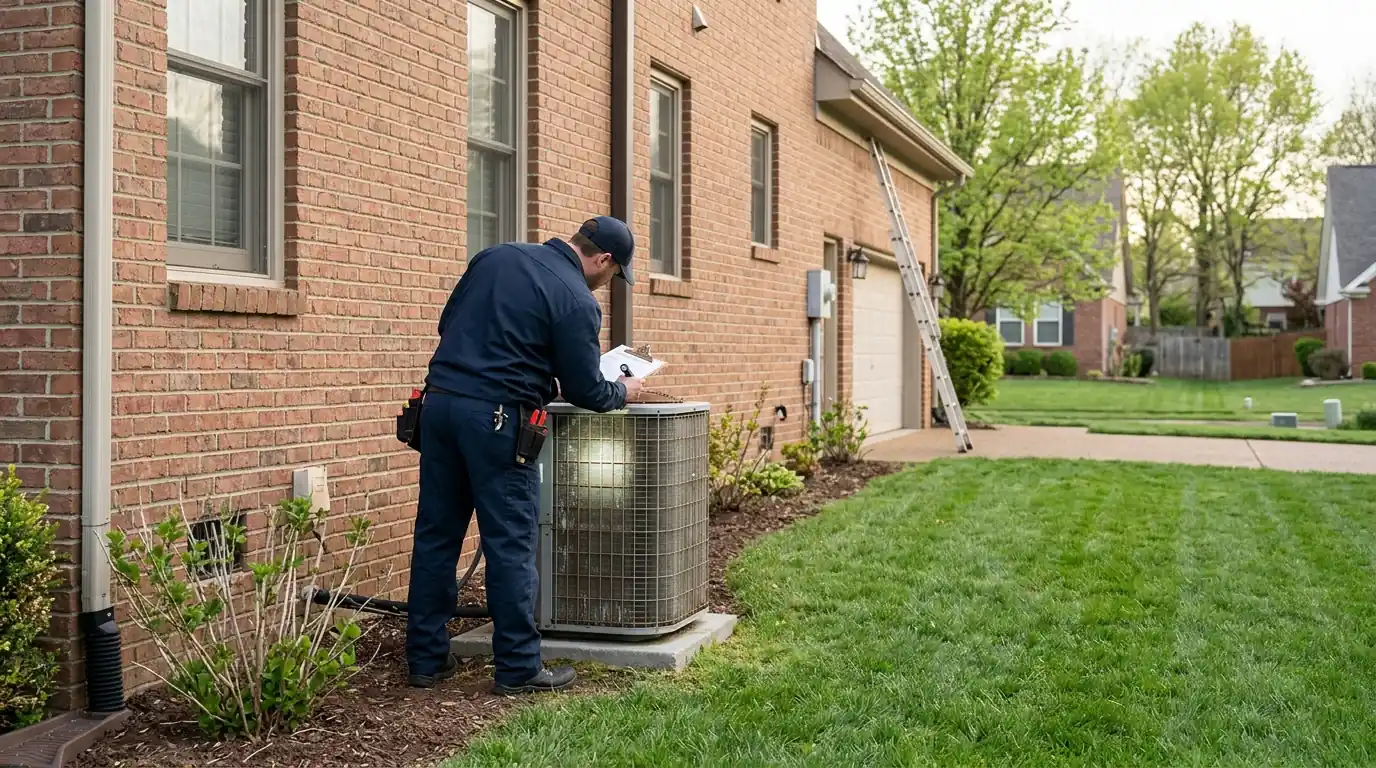
A home buyer HVAC inspection goes deeper than a general home inspection. A technician dates each unit from its data plate, identifies the refrigerant, and tests heating and cooling under load. We also check the furnace heat exchanger and venting for carbon monoxide risk, measure static pressure and look for duct leaks. You get written findings with repair or replacement price ranges to use in negotiation.
Everything we test in a pre-purchase HVAC visit
The visit covers heating, cooling, air movement and safety. Each line below gets a reading or a photo in your report.
- Manufacture dates and model numbers from each data plate
- Refrigerant type, flagging R-22 systems that are costly to recharge
- Cooling temperature split, superheat or subcooling, and compressor amp draw
- Furnace temperature rise, burner flame and flue draft
- Heat exchanger visual inspection with a camera where access allows
- Carbon monoxide readings near the furnace and in living space
- Total external static pressure and filter setup
- Condensate drains, float switches and signs of past water damage
- Duct condition in the basement, crawlspace or attic where reachable
Why a general home inspection isn't enough for HVAC
General home inspectors cover the whole house in a few hours, so their HVAC check is usually a quick look: does the system turn on, does air come out warm or cold, is there visible rust. That's useful, but it doesn't tell you whether the compressor is drawing high amps, whether the charge is low from a leak, or whether a furnace has a cracked heat exchanger.
Those hidden problems are where the money is. A failing compressor or a leaking R-22 system can mean a full replacement within a season. A heat exchanger crack is a safety issue that makes a furnace unusable. Knowing about either before closing gives you room to ask for a repair, a credit or a price adjustment.
Timing also matters. Many purchase contracts set an inspection period of only a week or two, and HVAC findings need to land inside that window. Call (859) 377-8167 as soon as your offer is accepted so the visit and the written findings fit your deadline. A few extra days also leave time for a second opinion or a follow-up test if something looks borderline.
Red flags that change what a house is worth
These findings carry the biggest price tags. When one shows up, we explain the likely cost so you can take it to the negotiating table.
R-22 air conditioner
Systems built before about 2010 often run R-22. They can still work, but any leak means expensive reclaimed refrigerant, and replacement is usually close.
Cracked heat exchanger
A crack or hole in the furnace heat exchanger can let combustion gases mix with house air. A furnace with this problem should not run.
Equipment at or past life expectancy
A 17-year-old air conditioner or a 24-year-old furnace may run fine during the visit but is near the point where major repairs stop making sense.
Mismatched indoor and outdoor units
A new condenser paired with an old coil, or a heat pump on an undersized air handler, often means poor performance and possible maker coverage issues.
Crawlspace duct problems
Disconnected, crushed or uninsulated ducts in a damp crawlspace waste conditioned air and can pull moisture and odors into the house.
Water damage around equipment
Rust lines, stained subfloors or a rotted wood base under the furnace point to past drain failures or condensate overflows that may still recur.
How the inspection fits your closing timeline
Most visits take 90 minutes to two hours for one system, longer for homes with two systems or a boiler.
Schedule early in the window
Call as soon as the contract is signed. Tell us the inspection deadline, how to get access, and whether utilities are on.
On-site testing
We run heating and cooling, take readings, inspect the furnace and coil, and photograph data plates, drains and duct sections we can reach.
Written findings
You get a plain summary: age and condition of each unit, problems found, safety concerns, and typical price ranges for any repair or replacement.
Questions and negotiation
We'll talk through the findings by phone with you or your agent, so you can decide whether to ask for repairs, a credit or a lower price.
Pre-purchase HVAC inspection cost in Lexington
This covers a full inspection of one heating and cooling system with written findings. Additional systems and boilers add time.
- Number of systems. Many larger Lexington homes have separate systems for upstairs and downstairs, and each one needs its own full set of tests.
- System type. Boilers, geothermal heat pumps and dual fuel systems take longer to test fully than a standard furnace with central air.
- Heat exchanger camera inspection. Running a camera into the heat exchanger adds time, especially on older furnaces where access panels are tight.
- Equipment access. Attic air handlers and low crawlspaces take more time to reach than basement equipment in an open utility room.
- Season of the visit. In cold weather, we may not be able to run AC fully, and in hot weather heating tests are shorter; we note any limits.
The written price comes after we look at the system details you describe on the phone. Any repairs found are priced separately, never bundled into the inspection. Compare typical prices for every service.
What Lexington housing eras tell us before we arrive
The age of the neighborhood often predicts the system. Homes from the 1950s and 1960s in areas like the Stonewall neighborhood and Lansdowne often have their second or third air conditioner by now, sometimes with original ducts in a crawlspace. We look closely at duct connections and insulation there, since that's where conditioned air disappears.
Houses built in the 1990s and 2000s in places like Masterson Station or Hartland are usually on their first or second system. Many of those original units are R-22 or early R-410A and are reaching the end of their life. A buyer should plan for replacement within a few years even if the system runs well at inspection.
Older homes near downtown can have boilers, radiators, or central air added much later. We test what's there and explain the options, including ductless mini splits where ducts are missing. If a furnace looks borderline, a carbon monoxide safety check is part of our report. Boilers get their own checks of pressure, relief valve and circulator.
We work on Carrier, Trane, Lennox, Rheem and Goodman equipment along with every other major brand found in Lexington homes, and the same testing comes first on all of them.
Where we handle home buyer HVAC inspection most often
We cover every Lexington neighborhood and the towns around it. These are the places we visit most for this work; the full list is on our Fayette County page and the service area page.
Common questions on home buyer HVAC inspection around Lexington
How do I find out how old the HVAC system is in a house I'm buying?
The manufacture date is coded into the serial number on each unit's data plate, and each brand uses a different format. Carrier, Trane, Lennox, Goodman and others put the year and week in different positions. We decode the serial numbers for the furnace, coil and outdoor unit during the inspection and list each date in your findings, since the three parts are sometimes different ages.
Can a home buyer HVAC inspection find a cracked heat exchanger?
Often, yes. We look at the heat exchanger with a light and a camera where access allows, watch the burner flame for disturbance when the blower starts, and measure carbon monoxide in the flue and near the furnace. Some cracks hide in areas no camera can reach, so we note any limits and recommend further testing if readings look suspicious.
Should I ask the seller to replace an old AC unit after the inspection?
That depends on your negotiation strategy and the market. Asking for a credit or price reduction is often better than asking the seller to replace it, because you then choose the equipment, size and installer. Our written findings include typical price ranges, which gives you and your agent real numbers to work with instead of guesses.
Is a pre-purchase HVAC inspection worth it on a newer Lexington home?
Usually, yes. A five-year-old system can still have installation problems such as oversized equipment, a low charge, poor drainage or high static pressure that shorten its life. A newer home also may still have some manufacturer parts coverage, and we can note model and serial details for registration. The inspection costs little compared to a single compressor or coil failure.
Need home buyer HVAC inspection today?
A person answers (859) 377-8167 day and night. Tell us what you are seeing and a technician takes it from there.