Ductless & Controls · Lexington, KY
High-velocity central air for older Lexington homes
You own an older home with plaster walls, radiators and no ductwork, you are tired of window units every summer, and you would rather not have mini split heads hanging in every room.
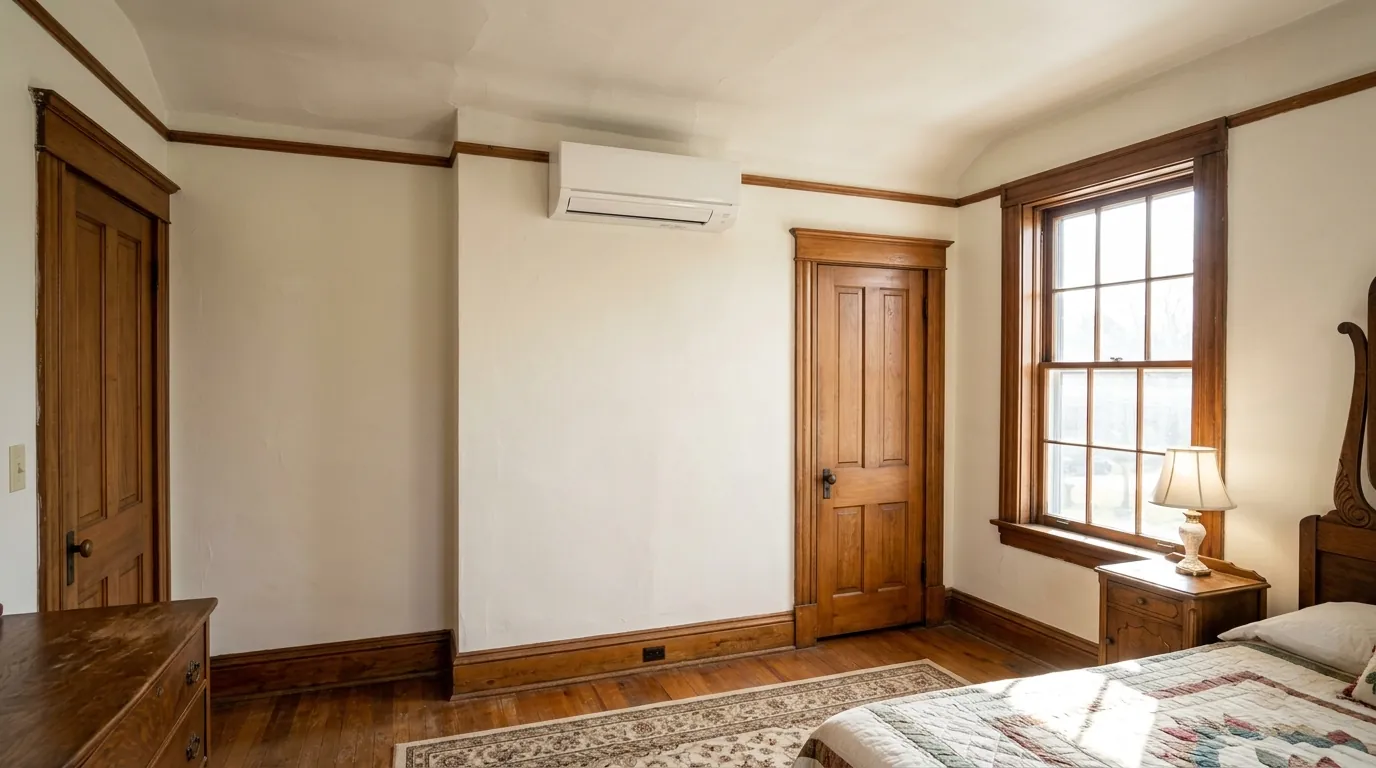
Lexington and nearby counties
Line open 24/7Short answer: High-Velocity Central Air in Lexington, KY
High-velocity central air uses an attic or basement air handler and flexible two-inch tubing snaked through walls and floors to small round outlets, so older homes get central cooling without large ducts. It removes more moisture than standard systems, which helps in humid Lexington summers. Installed costs in central Kentucky typically range from $13,760 to $27,480, depending on outlets, floors and heat source.
How to tell if a small-duct system suits your house
High-velocity systems shine in a specific kind of house: one with plaster walls, original trim and hardwood you want to protect, built before central air was common. Lexington has plenty of them in Chevy Chase, Ashland Park, Bell Court and the older blocks near downtown. If the house has a usable attic or basement and you want the look of central air, with no equipment on the walls, this approach deserves a serious look.
It is less of a fit when the attic is too short to hold an air handler, when the budget is tight and a couple of ductless heads would cover the rooms you actually use, or when the house already has conventional ducts that just need repair. In those cases, ductless mini splits or fixing the existing duct system usually cost less.
We look at three things during the first visit: where the air handler can live, how the tubing can reach each room without opening finished walls, and what will provide heat. Many owners keep the boiler and add cooling only. Others pair the air handler with a heat pump so it heats and cools.
Cooling Lexington's plaster-and-lath houses without the damage
Many of Lexington's older homes were built with balloon framing, which leaves open stud cavities running from basement to attic. That framing helps us fish tubing between floors with minimal openings. Other homes have fire blocking or later renovations that require a different route, so we probe carefully before deciding where outlets go.
Humidity is the other reason these systems fit central Kentucky. The coil runs colder than a standard system, so it pulls more moisture out of thick July air. Older homes with damp basements and limited insulation feel noticeably drier. If you are still comparing options, our post on central air for older homes lays out the choices, and a call to (859) 377-8167 sets up a walk-through.
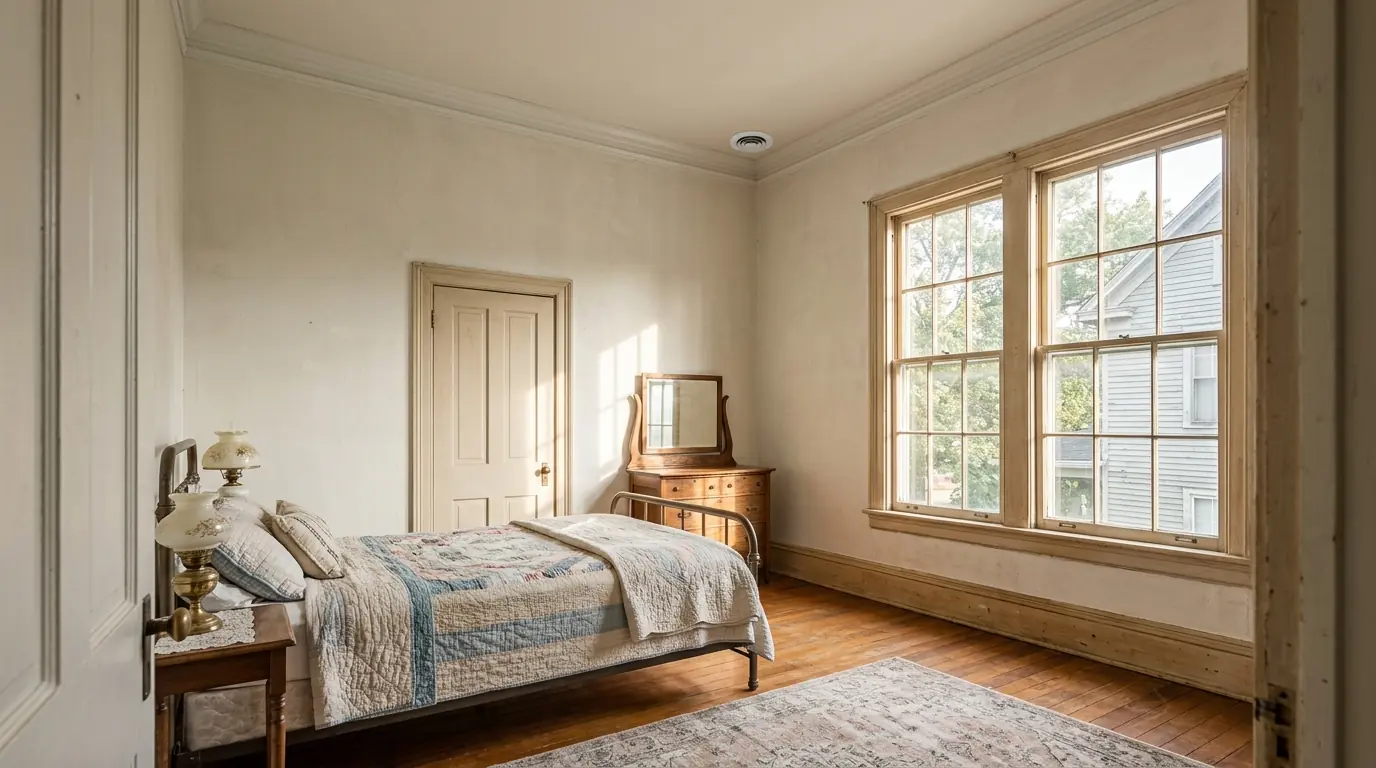
High-velocity, ductless and conventional ducts compared
These are the three routes we usually discuss for an older home that never had central air.
| Feature | High-velocity | Ductless mini split | Conventional ducts |
|---|---|---|---|
| What you see in rooms | Small round outlets | A head in each zone | Standard floor or ceiling registers |
| Wall disruption | Small holes, tubing fished through | One small hole per head | Chases, soffits or lost closet space |
| Summer humidity removal | Strong, coil runs very cold | Good with inverter models | Depends on sizing and staging |
| Typical sound | Gentle air rush near outlets | Very quiet fan at the head | Quiet when ducts are sized right |
| Heat options | Boiler water coil or heat pump | Heat pump in every head | Furnace, heat pump or dual fuel |
Parts of a high-velocity system and what each does
The equipment looks different from a conventional system, and each part plays a specific role in moving air through small tubing quietly.
Compact air handler
A modular cabinet small enough to fit in many attics, crawlspaces or closets. Its blower is built to push air at higher pressure through small tubing.
Plenum and branch takeoffs
A main trunk, often seven to nine inches round, runs through the attic or basement. Small branches tap off it toward each room.
Insulated flexible tubing
Two-inch tubing with a sound-dampening liner runs from the plenum into wall and floor cavities, bending around framing without major demolition.
Round outlets
Each outlet is a small round grille, usually placed in a ceiling or floor corner. The air mixes the whole room through aspiration rather than blasting at you.
Outdoor heat pump or condenser
Matched to the air handler coil. A heat pump adds heating, while a condenser provides cooling only and leaves heat to the boiler.
Optional hot water coil
Homes with a boiler can add a hydronic coil to the air handler, so the same outlets deliver warm air in winter using the existing boiler.
Installing small-duct air in a finished home
Careful routing is what keeps plaster intact, so most of the planning happens before any tubing goes in. A typical two-story install takes four to eight working days.
Map rooms and routes
We run a load calculation, decide how many outlets each room needs and trace how tubing can reach each spot through closets, chases and floor cavities.
Set the air handler
The air handler goes in the attic, basement or a closet, with a secondary drain pan and float switch wherever it sits above living space.
Run trunk and tubing
The main plenum goes in, then tubing is fished to each outlet location. Most openings are small enough to patch cleanly.
Connect outdoor equipment
The heat pump or condenser is set, the line set is brazed and pressure-tested, and the system is evacuated and charged.
Balance outlets and test
We measure airflow at each outlet, adjust balancing and confirm the system is quiet and moving the right air to each room.
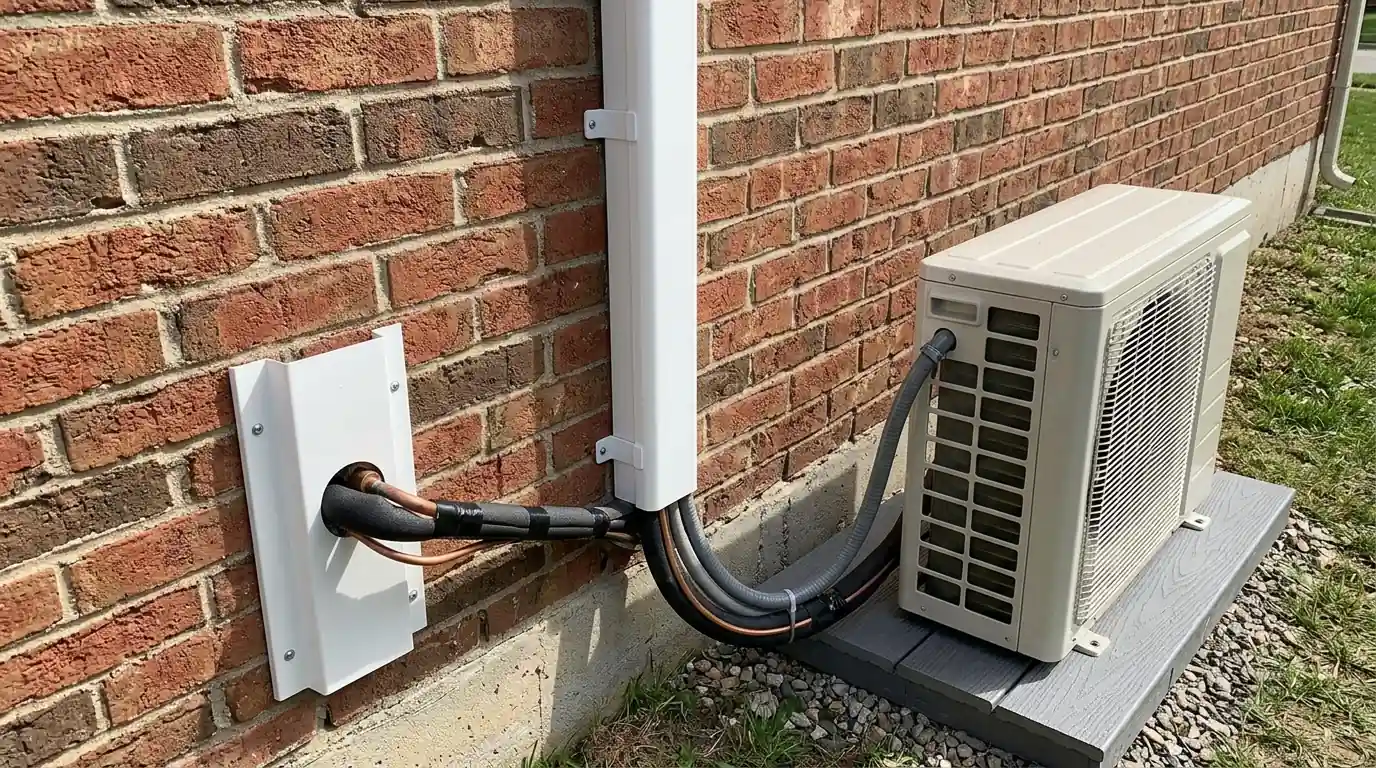
Small-duct central air pricing in the Lexington area
High-velocity systems cost more than conventional central air because of the specialized equipment and careful labor. This range covers most older Lexington homes.
- Number of outlets. A typical room needs two to four outlets. A larger home with many rooms simply needs more tubing, outlets and labor.
- Floors served. A two-story home with a third-floor attic room may need two air handlers or a longer trunk, raising the cost.
- Air handler location. A roomy basement or walk-up attic is easier to work in than a tight attic with limited headroom or access.
- Heat source. Cooling only with a condenser costs less. Adding a heat pump or a hydronic coil tied to the boiler raises the price.
- Plaster and finish work. Most openings are small, but some routes need extra cutting and patching, especially through older plaster and lath.
These are typical ranges. You get a written price after we walk the house, check the attic and basement, and map the tubing routes. Compare typical prices for every service.
We work on Carrier, Trane, Lennox, Rheem and Goodman equipment along with every other major brand found in Lexington homes, and the same testing comes first on all of them.
Lexington-area places we cover for high-velocity central air
We cover every Lexington neighborhood and the towns around it. These are the places we visit most for this work; the full list is on our Fayette County page and the service area page.
Further reading from our Comfort Blog
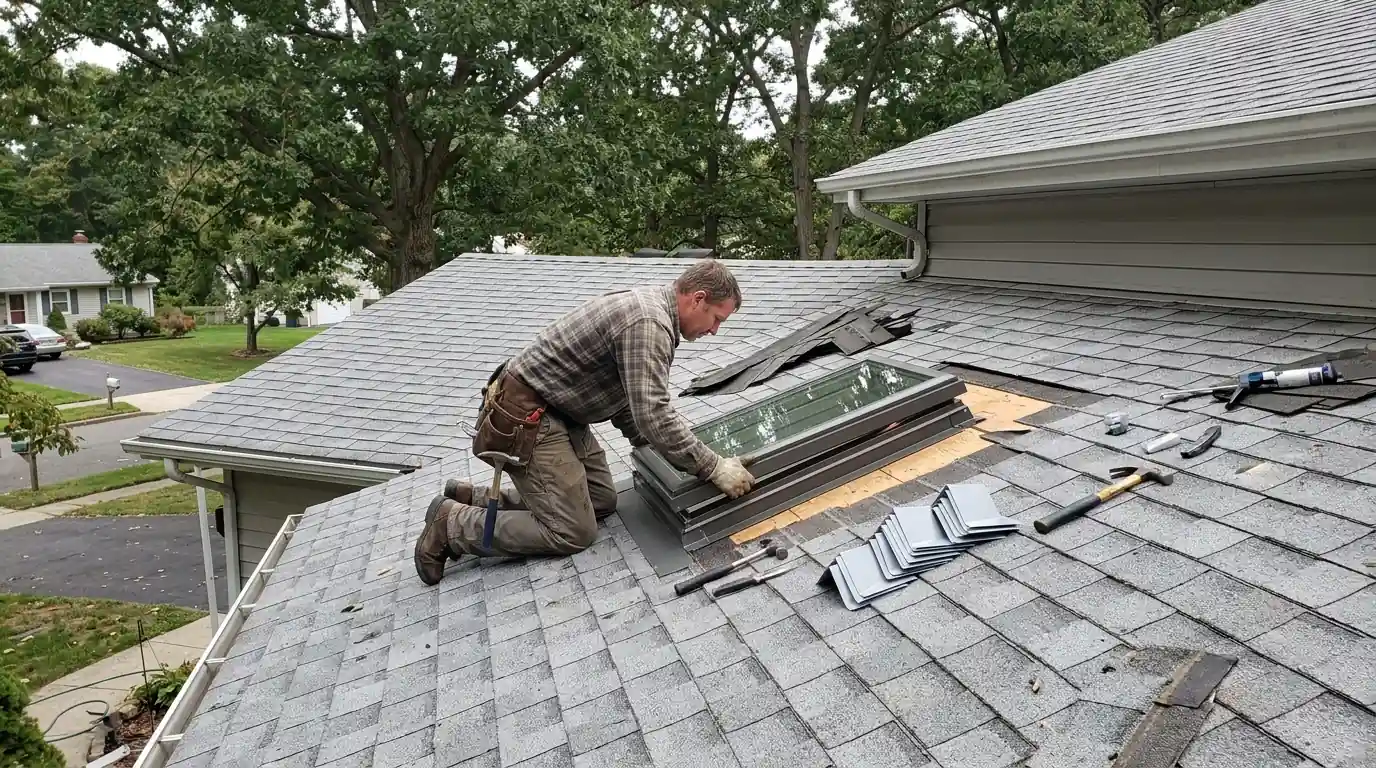
Central air for older Lexington homes without ducts
Plaster walls, radiators and tight attics make conventional ductwork hard to fit in Lexington houses from the 1910s to the 1940s. These are the cooling options that actually work in them.
Common questions on high-velocity central air around Lexington
Is high-velocity central air noisy in an older home?
A properly designed system is quiet. You will hear a soft rush of air near the outlet, especially the first few days, and that usually fades into the background. Noise problems come from too few outlets, tubing without sound liners or an air handler set to run faster than it should. We size outlets and use insulated tubing so the air moves without whistling.
Can I keep my boiler and radiators with a high-velocity system?
Yes, and many Lexington homeowners do. The high-velocity system can provide cooling only while the boiler keeps heating through the radiators. Or we can add a hot water coil to the air handler so the boiler supplies warm air through the same outlets. Keeping radiators avoids changing a heating system that already works well.
How long does it take to install high-velocity air in a two-story house?
Most two-story homes take four to eight working days, depending on the number of outlets, the attic and basement layout and how easily the tubing can reach each room. We plan the routes before work starts, so the day-by-day schedule is predictable and the house stays livable while we work.
Does high-velocity central air need special maintenance?
It needs the same routine care as other systems, plus attention to its filter and drain. Filters are smaller and may need changing more often in pollen season. The air handler drain pan and float switch should be checked every year, especially if the unit sits in an attic over finished rooms. We also check outlet airflow and the blower settings at each annual cooling tune-up.
Ready to talk about high-velocity central air?
A person answers (859) 377-8167 day and night. Tell us what you are seeing and a technician takes it from there.