Heat Pumps · Lexington, KY
Geothermal heat pumps in Lexington: installs, loops and repairs
You are weighing a geothermal system for a new or existing home, or the one you have is throwing lockout codes and you are not sure whether the problem is inside the unit or out in the loop.
Lexington and nearby counties
Line open 24/7Short answer: Geothermal Heat Pumps in Lexington, KY
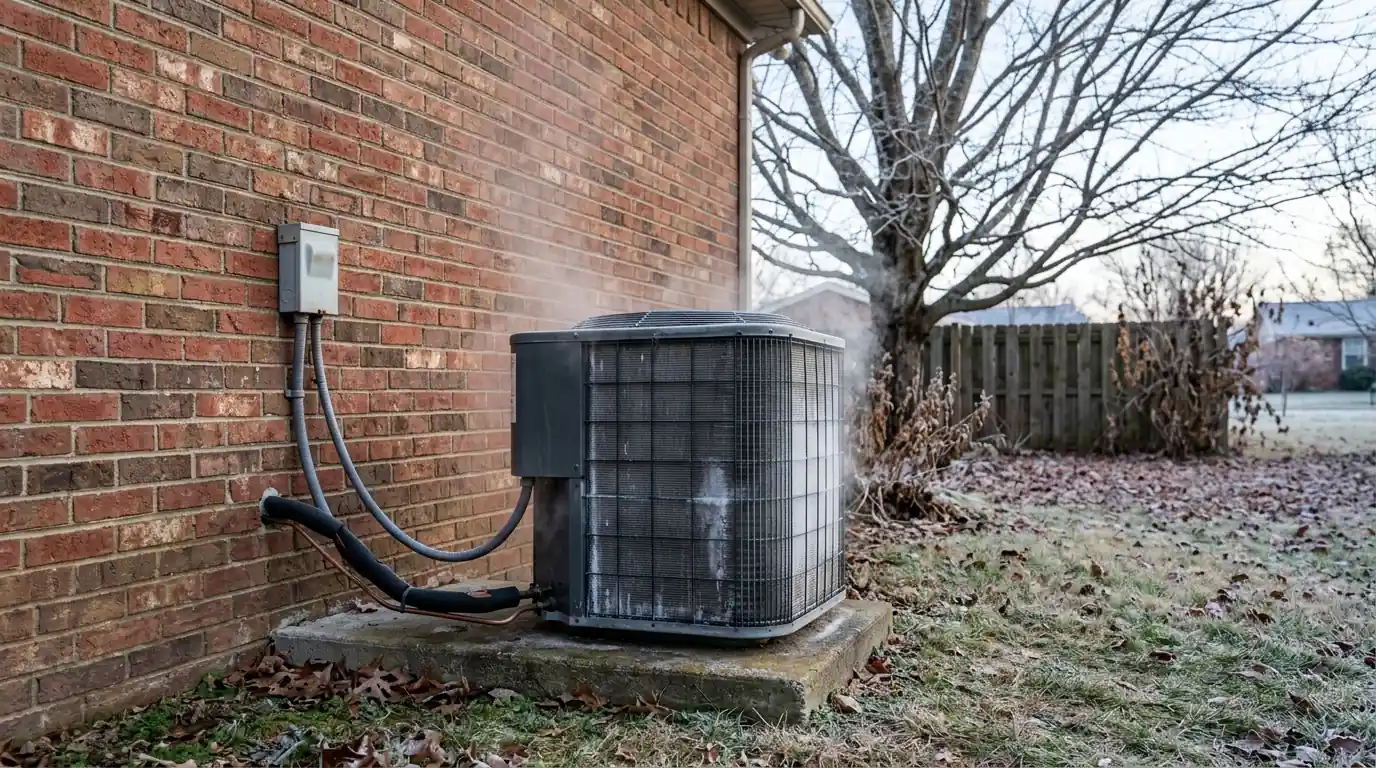
A geothermal heat pump moves heat between your house and fluid circulating through buried pipe, where the ground stays in the mid 50s year round in central Kentucky. It heats without outdoor coil frost and cools without an outdoor unit. A complete system with a vertical or horizontal loop typically costs $23,870 to $41,460 in the Lexington area, while the indoor unit alone runs much less when a sound loop already exists.
Is geothermal the right choice for your property
Geothermal works almost anywhere, but it pays back best in certain situations. You plan to stay in the home a long time. The house is all-electric or on propane, so there is no cheap gas to compete with. You have room for a loop field, either a yard where a drill rig can reach or several acres for horizontal trenches. And the home is new construction or due for a full replacement, so the loop cost is not stacked on top of a system that still has years left.
If those boxes are not checked, a high-efficiency air-source heat pump or a heat pump paired with gas often delivers most of the comfort at a fraction of the price. We will tell you which way the numbers point for your house instead of steering everyone toward the same answer. For homes that already have geothermal, the question is usually simpler. If the loop holds pressure and moves fluid properly, replacing only the indoor unit keeps the most expensive part of the system working for many more years.
Comparing ground loop types for central Kentucky lots
The loop is the biggest cost and the longest-lived part of the system. Which one fits depends on your land, not on preference.
| Loop type | Space it needs | Typical fit |
|---|---|---|
| Vertical closed loop | Small yard, room for a drill rig | Suburban Lexington lots and retrofits |
| Horizontal closed loop | A large open area for trenches | Farms and rural acreage in surrounding counties |
| Pond loop | A pond of enough depth and size | Rural properties with a suitable pond |
| Open loop | A productive well and a place to return water | Limited use where water quality allows |
Limestone, karst and clay under Lexington yards
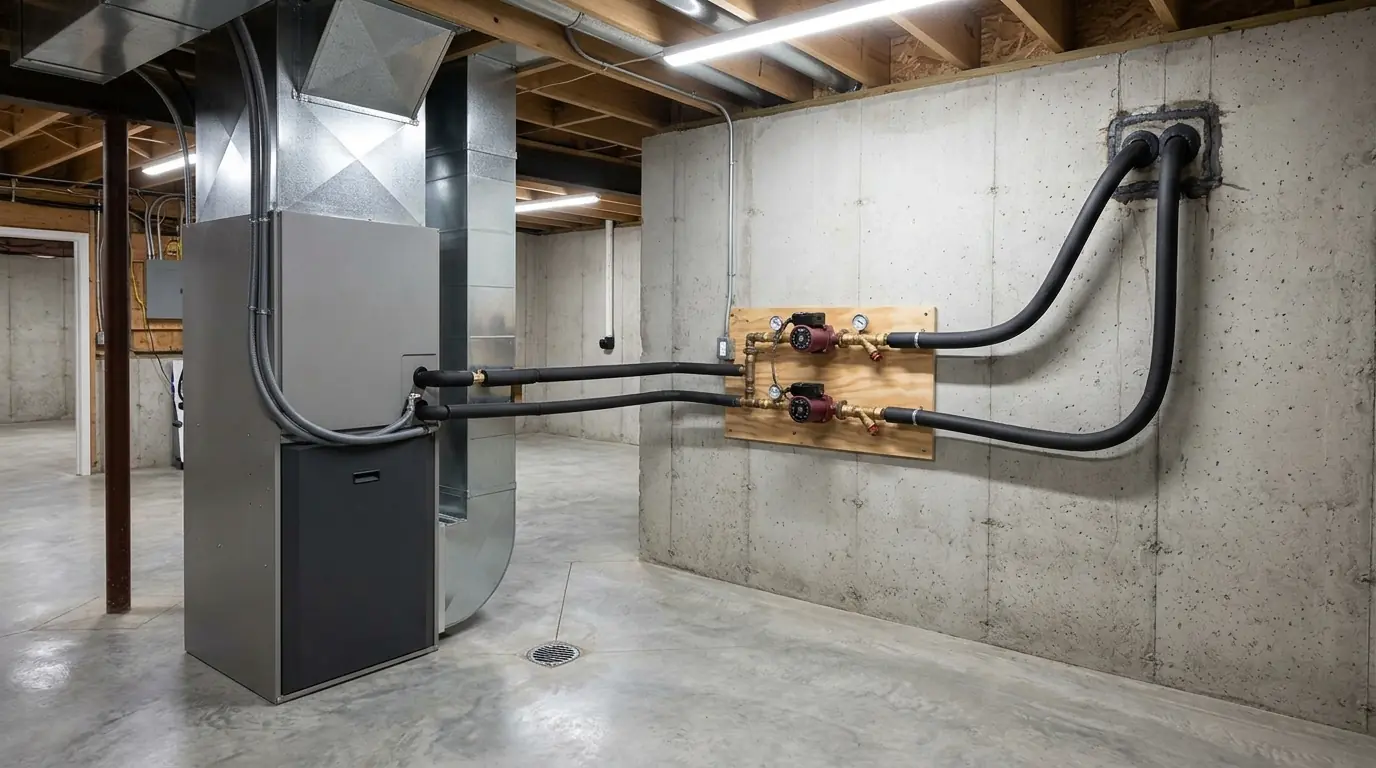
The Inner Bluegrass sits on limestone, usually under a layer of red or brown clay soil. That rock is good news for heat transfer, since limestone moves heat well, but it shapes how a loop gets built. Vertical bores go through the clay and into rock, and drilling crews watch for karst features: voids, solution channels and soft zones that can swallow grout or let a bore wander. Each bore is grouted from the bottom up so the pipe stays in solid contact with the ground and surface water cannot travel down the hole.
Horizontal loops in clay have their own challenges. Clay holds moisture well, which helps, but it shrinks and cracks in a dry August, which can reduce contact with the pipe in shallow trenches. That is why horizontal loops here are typically buried around five to six feet deep. On homes with older loops, we sometimes find the original design was undersized for the house after additions or finished basements, and entering water temperatures drift too low by late January.
Geothermal faults we diagnose and repair
Geothermal systems are reliable, but when one stops it can be inside the cabinet or out in the loop. These are the problems behind most service calls.
Loop pump or flow center failure
The circulating pumps that push fluid through the loop wear out over time. A failed pump drops flow, the unit trips on low water temperature or high pressure and the house loses heat.
Loss of loop pressure
A closed loop should hold steady pressure. A slow drop points to a leak at the flow center, header or a fitting inside the house, and occasionally out in the field.
Air trapped in the loop
Air pockets reduce flow and make the pumps noisy. Purging the loop with a flush cart and restoring the antifreeze mix usually fixes it.
Low entering water temperature
If fluid comes back from the ground too cold in winter, the unit locks out to protect itself. Causes include low antifreeze, low flow or a loop that is too small.
Refrigerant circuit problems
The heat pump inside still has a compressor, reversing valve and expansion device, so it shares many failure modes with air-source units, minus the outdoor coil.
Scaled water coil on open loops
Mineral-heavy well water slowly coats the heat exchanger. Flow drops, performance falls off and the coil needs descaling or replacement.
From site visit to a running geothermal system
A new geothermal install takes more planning than other systems, mostly because the loop has to be designed before anything is dug or drilled.
Measure the house
We run a room-by-room load calculation. The loop is sized from that number, so getting it right matters more here than with any other system.
Design the loop
Based on your lot and soil, we choose vertical, horizontal or pond and set the bore depth or trench length needed.
Drill or trench
The loop field goes in, the pipe is pressure-tested, bores are grouted and the lines are brought into the house through a sealed entry.
Set the indoor unit
The geothermal heat pump, flow center and ductwork connections go in. A desuperheater can be tied to the water heater if you want it.
Flush, fill and commission
We purge air, fill with the correct antifreeze mix, check flow and pressure drop, then confirm heating and cooling performance before handing over.
Geothermal installation and repair price ranges
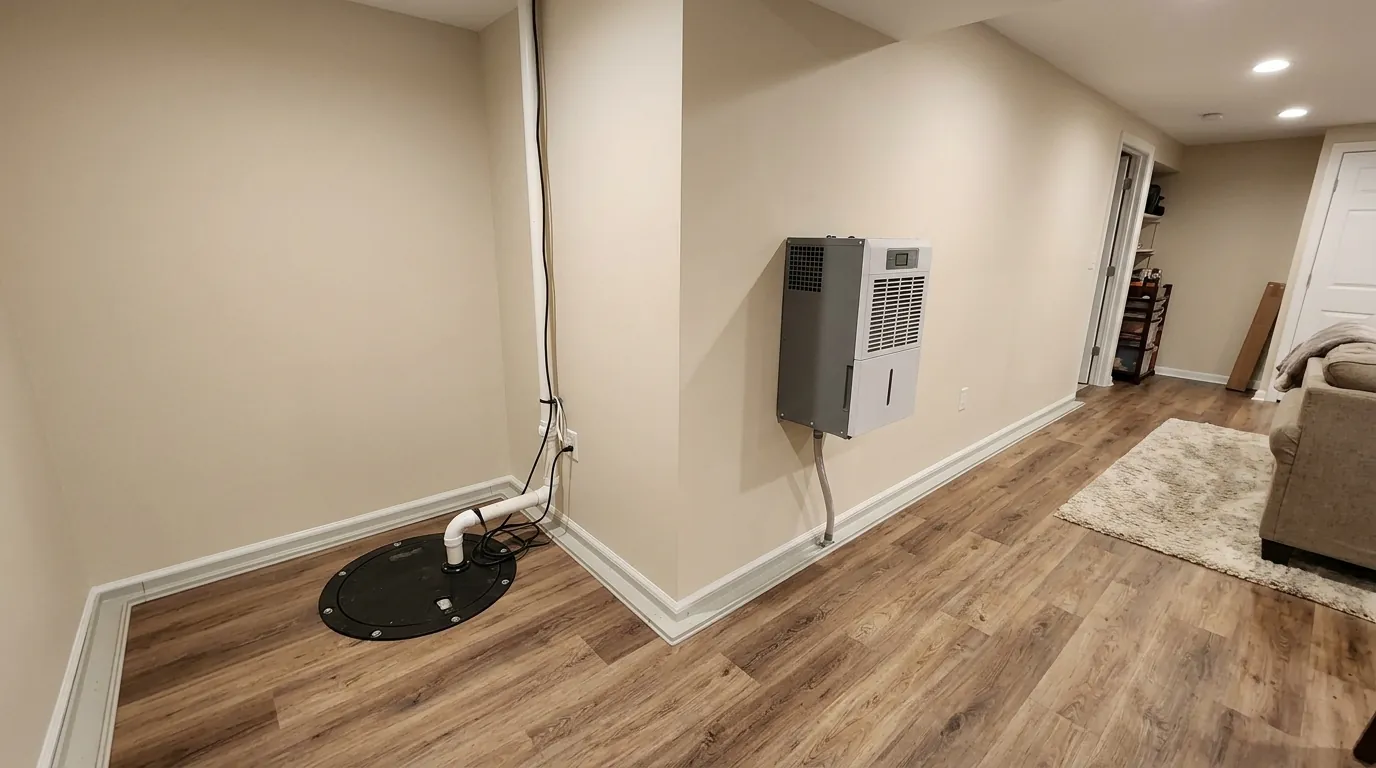
Complete systems land in this range in central Kentucky. The loop is often half or more of the total, which is why existing loops change the math so much.
- Loop type and length. Vertical bores cost more per ton than horizontal trenches. Rock conditions and the number of bores needed drive the drilling portion.
- System capacity. Every added ton of capacity means more loop and a larger indoor unit, so house size and insulation directly move the price.
- Indoor unit only. Replacing just the heat pump on a sound existing loop typically runs $9,870 to $16,240, depending on size and staging.
- Ductwork condition. Geothermal delivers steady, moderate supply air and needs good airflow. Undersized or leaky ducts may need work for the system to perform.
- Loop service repairs. Flow center pump replacement typically runs $760 to $1,640, and loop flushing and recharging lands near $430 to $890.
These are typical ranges. We give you a written price after we see the property, look at the existing equipment or loop and confirm what the house needs. Compare typical prices for every service.
We work on Carrier, Trane, Lennox, Rheem and Goodman equipment along with every other major brand found in Lexington homes, and the same testing comes first on all of them.
Neighborhoods and towns that call us for geothermal heat pumps
We cover every Lexington neighborhood and the towns around it. These are the places we visit most for this work; the full list is on our Fayette County page and the service area page.
Common questions on geothermal heat pumps around Lexington
How long does a geothermal ground loop last in Kentucky?
A properly installed closed loop of high-density polyethylene pipe is commonly expected to last 50 years or more. The indoor heat pump typically lasts 20 to 25 years, longer than an air-source unit because it sits indoors and never faces ice, pollen or summer heat. That gap is why replacing the indoor unit on an existing loop is often a strong value.
Why does my geothermal heat pump lock out on cold mornings?
Most winter lockouts come from low fluid temperature or low flow in the loop. A weak loop pump, air in the loop, low antifreeze concentration or a loop that was undersized for the house can all cause it. The unit shuts down to protect the water coil from freezing. We read the entering and leaving water temperatures and pressures to find which one it is.
Can a geothermal system go in an existing Lexington home?
Yes, as long as there is space for the loop and access for equipment. A vertical loop needs room for a drill rig to reach the yard, which works on many suburban lots. Indoors, the unit connects to existing ductwork, which we check first. Older homes without ducts may pair geothermal with new ductwork or look at ductless systems instead.
Does a geothermal heat pump also heat water?
Many models include a desuperheater, which uses extra heat from the compressor to preheat water going into your tank water heater. It works best in summer when the system is cooling and rejecting heat. In winter it contributes less. It reduces water heating costs without replacing the water heater itself.
What maintenance does a geothermal system need?
Less than an air-source system, but not none. We check loop pressure and flow, entering and leaving water temperatures, antifreeze strength, the blower and filter, condensate drain and electrical parts. An annual visit catches a weakening loop pump or a slow pressure loss early. A call to (859) 377-8167 sets one up whenever it suits you.
Call and describe what the system is doing
A person answers (859) 377-8167 day and night. Tell us what you are seeing and a technician takes it from there.