Cooling · Lexington, KY
Refrigerant leak repair in Lexington, found and fixed properly
The air conditioner keeps losing its cool, the copper line frosts over, or someone already topped it off last summer and it's warm again. That pattern almost always means a leak that was never found.
Lexington and nearby counties
Line open 24/7Short answer: Refrigerant Leak Repair in Lexington, KY
If you suspect a refrigerant leak, turn cooling off and run the fan to thaw any ice, then call for service. A proper repair locates the leak with an electronic detector, bubble solution or a nitrogen pressure test, repairs or replaces the leaking part, pulls a vacuum below 500 microns, and weighs in the correct charge. Topping off without finding the leak only delays the next failure.
What to do the moment you suspect a leak
These steps protect the compressor, which is the most expensive part of the system and the one most at risk when the charge runs low.
Turn cooling off
Set the thermostat to Off. Running an undercharged system can overheat the compressor, since cool returning refrigerant is what keeps its motor windings from cooking.
Run the fan to thaw
Switch the fan to On so room air melts any ice on the indoor coil. Expect a few hours and extra water in the drain pan, so set towels nearby.
Do not chip ice
Never scrape ice from the coil or copper lines. Aluminum fins and thin copper tubing puncture easily, which turns a small leak into a large one.
Note what you saw
Write down any hissing, oily spots on fittings, ice location and how long cooling has been weak. These details help us search the right places first.
Call for a leak search
Call (859) 377-8167 any hour. A refrigerant leak won't seal itself, and every day of running low adds wear to the compressor.
Signs your air conditioner is losing refrigerant
A sealed system should hold the same charge for its whole life, so any of these signs means refrigerant is escaping somewhere.
Ice on the suction line
Frost on the large insulated copper line at the outdoor unit, or on the indoor coil, shows the evaporator is running colder than it should because of low charge.
Warm air with long runs
The system runs for hours and the house drifts past the setpoint on hot afternoons. Supply air may feel only a few degrees cooler than the room.
Hissing or bubbling sounds
A larger leak can make a faint hiss near the indoor coil or a gurgle in the lines. Small leaks are usually silent, which is why testing matters.
Oily residue on fittings
Refrigerant carries compressor oil with it. A dark, oily film on a flare nut, Schrader valve or coil joint often marks the leak spot.
Needed a top-off before
If someone added refrigerant last summer and cooling faded again, the leak is still there. Recharging without a repair simply restarts the countdown.
Where AC refrigerant leaks usually turn up
These locations account for most of the leaks we find. Each has a different repair, which is why we confirm the exact spot before pricing anything.
| Leak location | Typical cause | Usual repair |
|---|---|---|
| Indoor evaporator coil | Formicary corrosion in copper tubes | Coil replacement in most cases |
| Schrader service valve cores | Worn seals or missing caps | Replace cores and caps |
| Flare or brazed fittings | Vibration and age | Re-braze or remake the joint |
| Outdoor condenser coil | Rubbing tubes or fin damage | Braze repair or condenser coil swap |
| Line set through walls or crawlspace | Kinks, rubbing on framing, rodent damage | Section repair or new line set |
How we find a leak instead of guessing
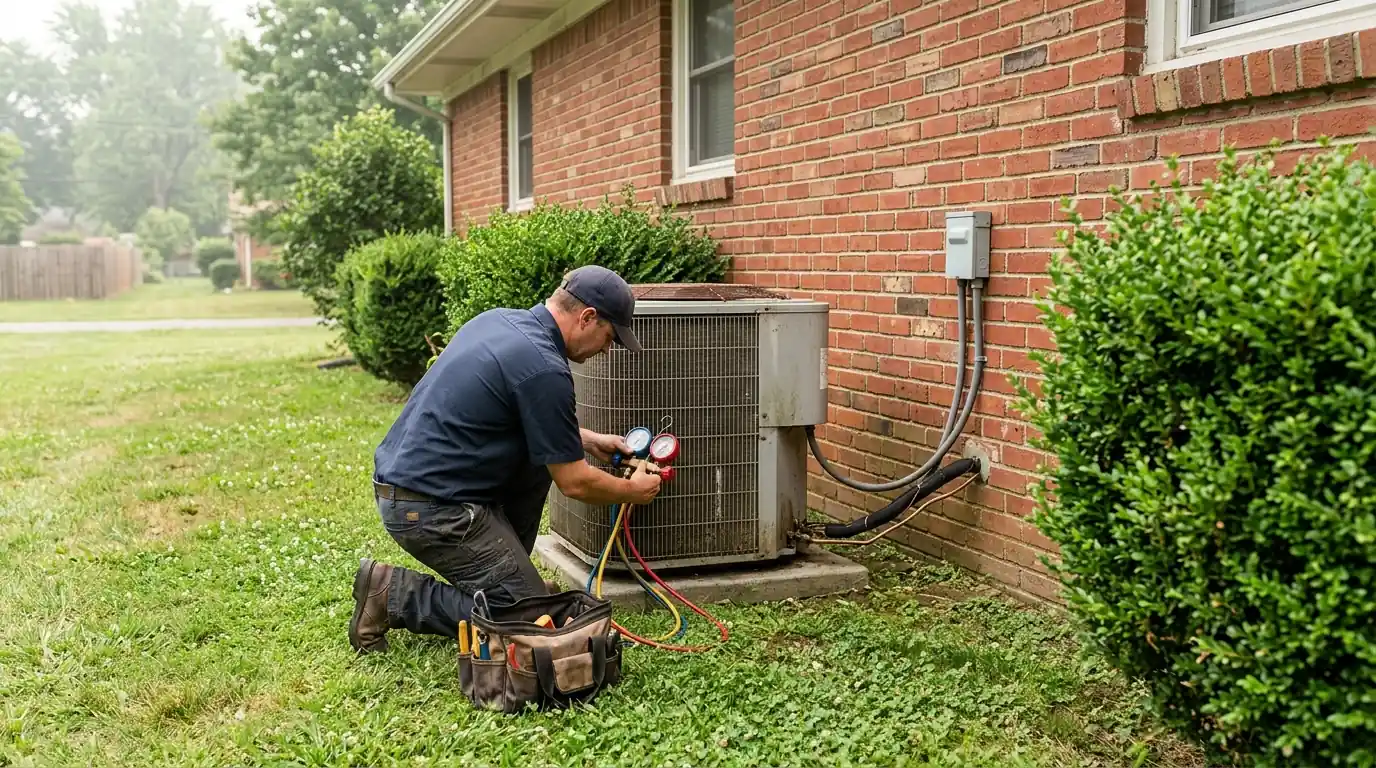
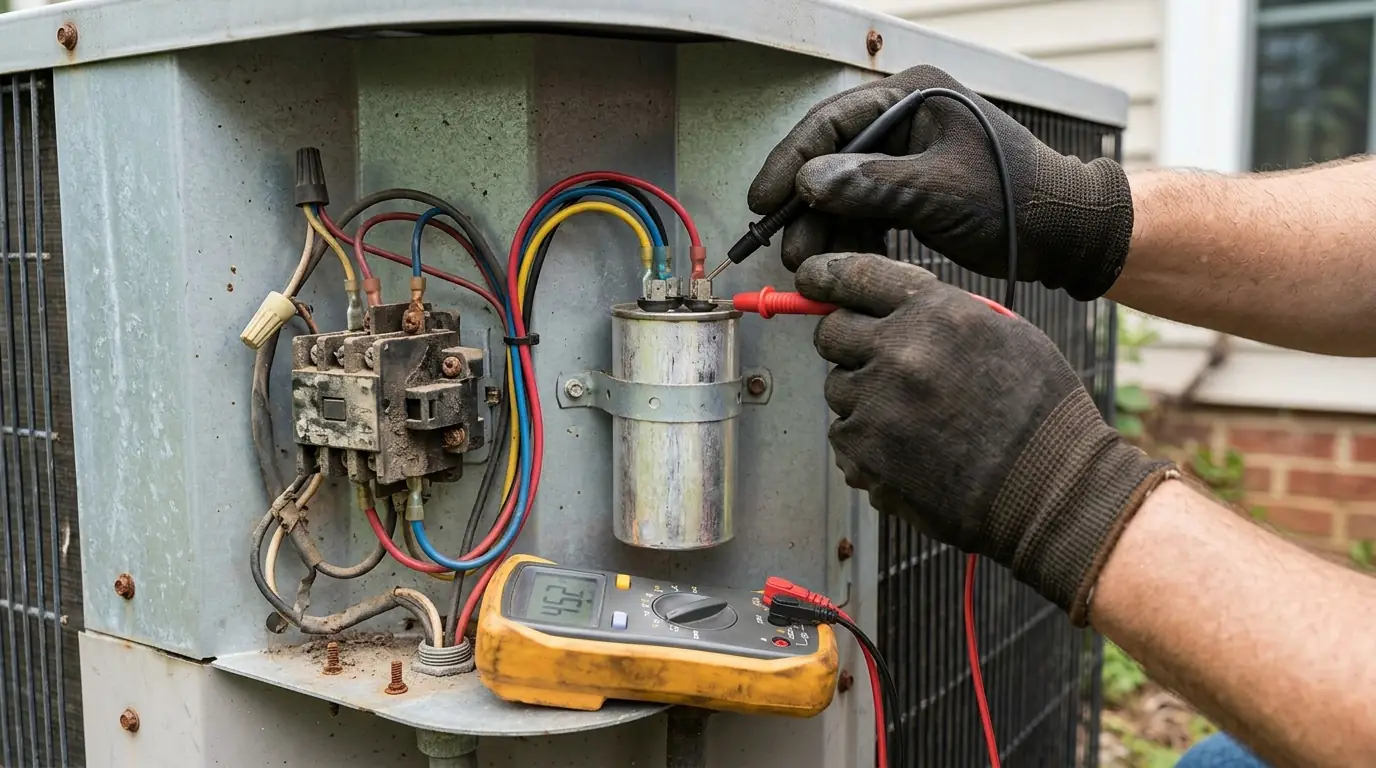
First we read pressures and superheat to confirm low charge, since a dirty coil or weak blower can mimic some of the same symptoms. Then we search with a heated-diode electronic detector, working slowly along the coil, fittings and service valves. It picks up very small leaks, but drafts and cleaning chemicals can confuse it, so every hit gets confirmed with bubble solution.
When the leak hides inside the coil or under insulation, we recover the remaining refrigerant and pressurize the system with dry nitrogen, often to about 150 psi or the pressure the manufacturer lists. A gauge that drops over 15 to 30 minutes confirms a leak, and we isolate sections to narrow it down. Nitrogen is cheap and inert, so this test costs far less than losing a fresh charge.
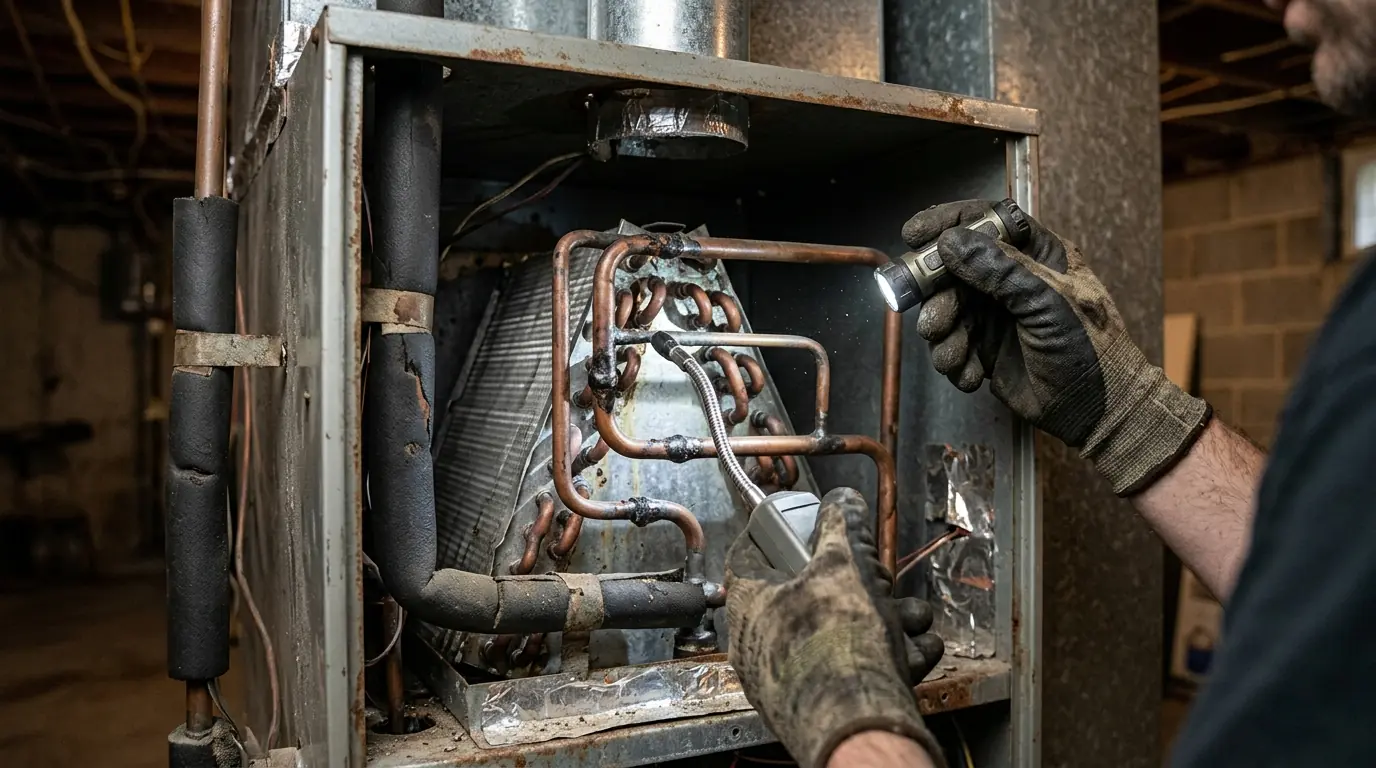
Indoor coils are the most common source in Lexington homes. Many copper evaporator coils develop pinhole leaks from formicary corrosion, which comes from acids that form when household chemicals and moisture meet copper. If that's the cause, the fix is replacing the evaporator coil, and we'll explain why a patch won't hold.
Refrigerant leak repair pricing in Lexington
Leak repairs range widely because the location and refrigerant type change the work. Valve cores and fittings sit at the low end, coils at the high end.
- Leak location. A leaking Schrader core is a short fix, while a corroded evaporator coil means recovering the charge, swapping the coil and recharging.
- Refrigerant type. R-410A costs more each year under the federal phasedown. R-22 comes only from reclaimed supply, so recharging an older system is the most expensive.
- Pounds of refrigerant needed. A typical 3-ton system holds roughly 7 to 10 pounds. Long line sets need more, and the charge is weighed in by the ounce.
- Access to the leak. Coils in tight crawlspaces or attics, or line sets hidden in finished walls, take more labor to reach and repair.
- Manufacturer parts coverage. If the coil or condenser is still covered by the equipment maker, the part may be covered, leaving labor and refrigerant.
The written price comes after we look at the system and confirm where the leak is. On an aging R-22 system, we'll show the repair and replacement numbers side by side. Compare typical prices for every service.
Leak repairs on older Lexington systems
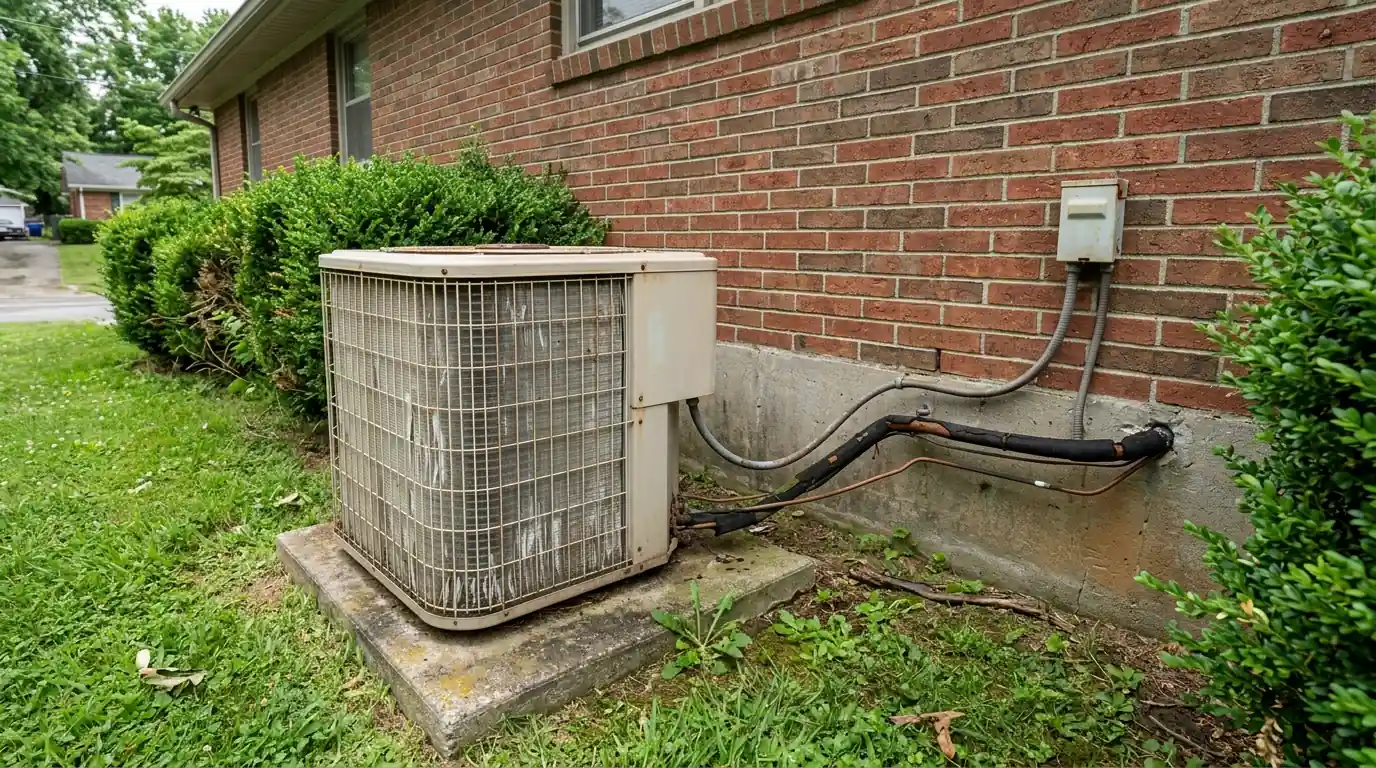
Plenty of central air systems in Lexington's 1980s and 1990s neighborhoods still run R-22. Those systems can be repaired, but the refrigerant now comes only from reclaimed supply and costs far more per pound than it did a decade ago. A coil leak on a 20-year-old R-22 system often pushes the decision toward a new central air system instead.
Crawlspace installs in older ranches have their own pattern. Line sets resting on dirt or rubbing a floor joist wear through slowly, and rodents sometimes chew the insulation down to bare copper. We check the full line set path with a light when the equipment sits low, and we support and insulate any section we repair.
After any leak repair, we pull a deep vacuum to remove air and moisture, then weigh in the factory charge plus whatever the line length requires. Final adjustment uses subcooling or superheat. That last step is what returns full cooling, and it's the difference between a lasting repair and next August's service call.
We work on Carrier, Trane, Lennox, Rheem and Goodman equipment along with every other major brand found in Lexington homes, and the same testing comes first on all of them.
Where we handle refrigerant leak repair most often
We cover every Lexington neighborhood and the towns around it. These are the places we visit most for this work; the full list is on our Fayette County page and the service area page.
Further reading from our Comfort Blog
Owning an R-22 AC or heat pump in Kentucky
R-22 systems can still run for years, but every repair now carries a refrigerant question. Here is how to tell what you have, what a leak means, and how to plan the switch on your terms.
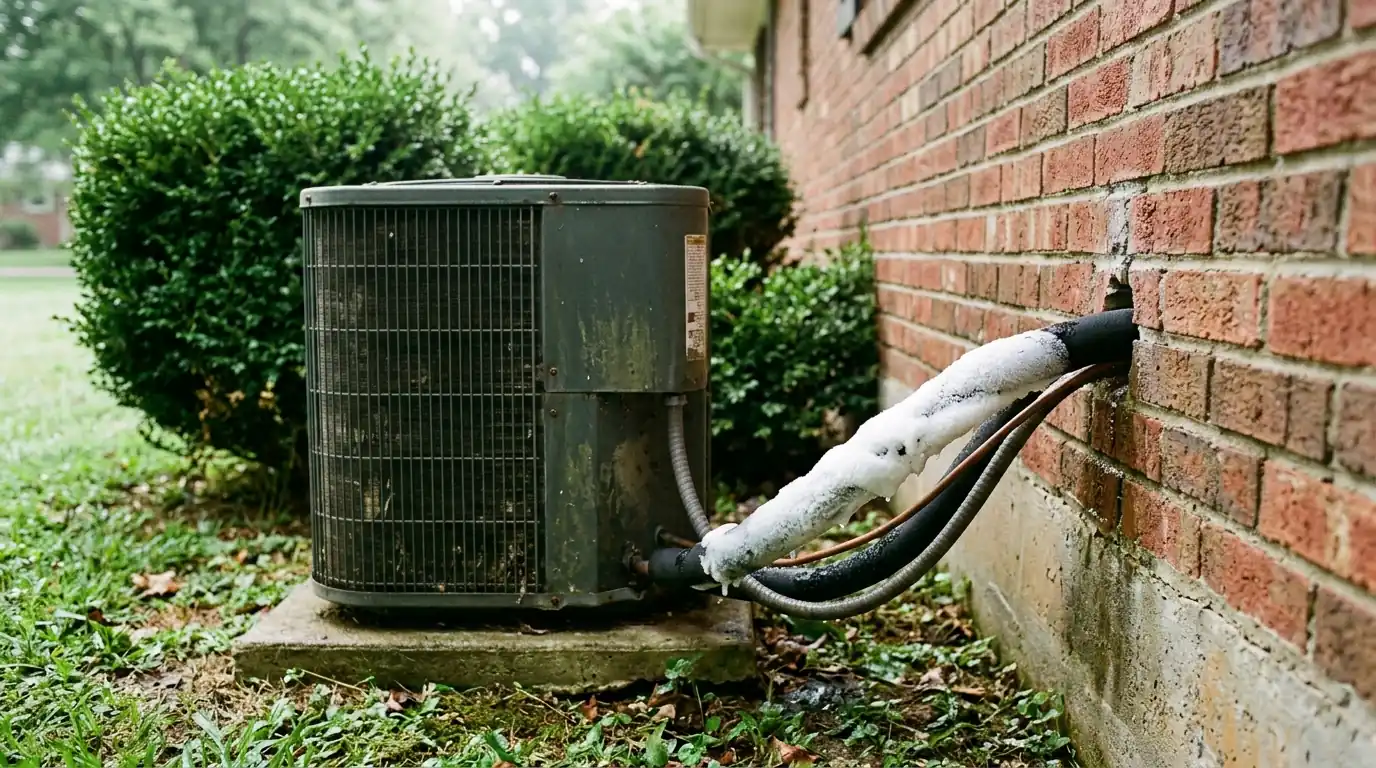
Ice on AC lines: causes and what to do first
A frosted copper line looks alarming, but it is a symptom rather than the problem. Here is what usually causes it, how to thaw the system safely, and what to leave alone.
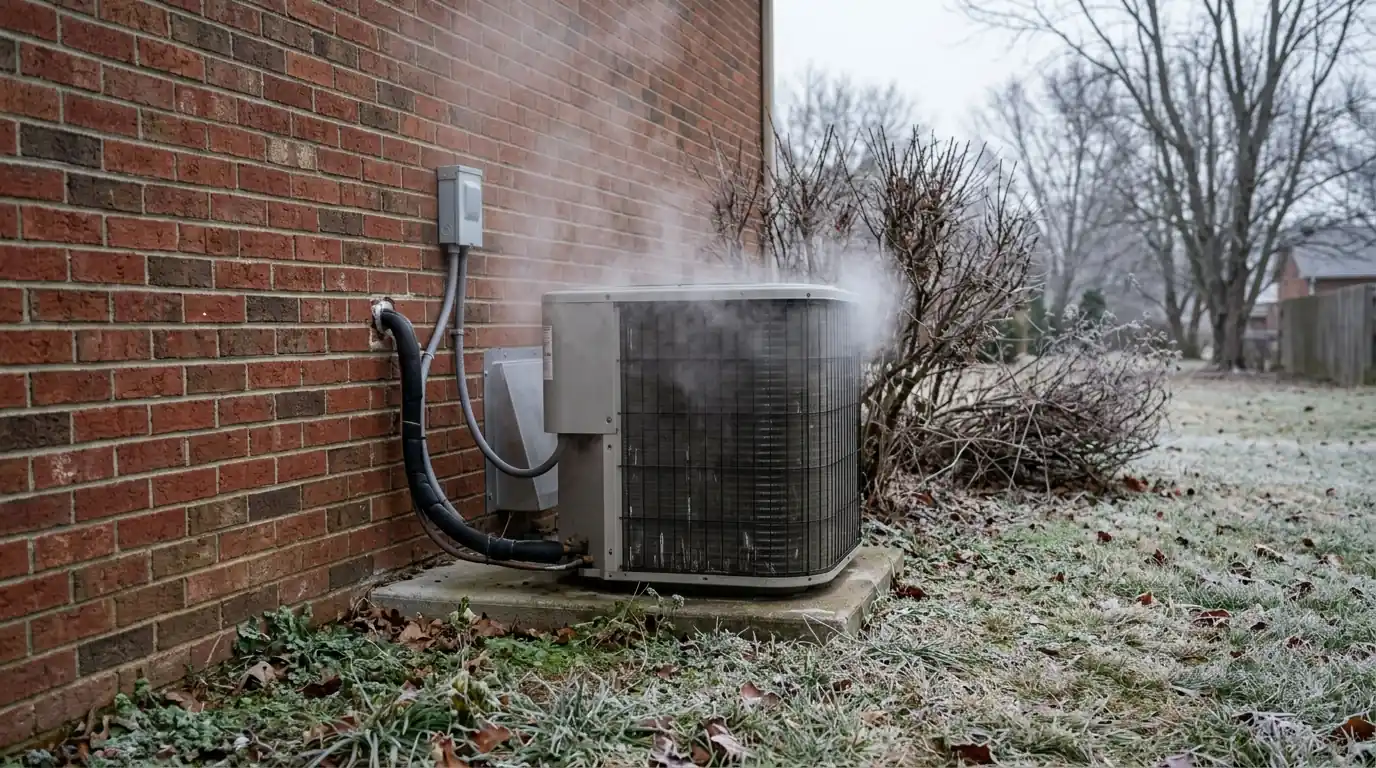
Why your heat pump blows air that feels cool
Lukewarm air from a heat pump is usually normal, and steam rising off the outdoor unit usually is too. Here is how to tell normal operation from a problem worth a service call.
Common questions on refrigerant leak repair around Lexington
Is AC refrigerant leaking into my house dangerous?
R-410A and R-22 are not toxic at the small amounts a home system holds, but they displace oxygen in a closed space, so ventilate the room if you smell a sweet or chemical odor near the indoor unit. Newer A2L refrigerants are mildly flammable, which is why those systems include leak sensors. Shut the system off, open a window, and call for service.
Can a stop-leak sealant fix my AC refrigerant leak?
Sealants are a poor fix. These products can only close very small pinholes, and they can also coat the metering device, the TXV or the inside of the compressor. Many manufacturers will deny parts coverage if sealant is found. A located and repaired leak, followed by a proper evacuation and charge, holds far longer than any product in a can.
How fast can a refrigerant leak drain a central air system?
It varies. Some slow leaks lose a pound or two over a full season, so cooling fades gradually. A cracked fitting or rubbed-through line can empty the system in days. If you need a recharge more than once, or you see ice soon after a recharge, the leak is significant and finding it should come before buying more refrigerant.
Will a refrigerant leak repair on my AC also help the heat pump side?
Yes. A heat pump uses the same refrigerant circuit for heating and cooling, just reversed. A leak that hurts cooling in summer will also cut heating capacity in winter and push the system onto expensive backup strip heat sooner. Repairing it in summer means the heat pump starts the cold season with a full, correct charge.
Should I repair a refrigerant leak on a 15-year-old air conditioner?
It depends on where the leak is. A leaking service valve core on an older system is a small repair worth doing. A corroded evaporator coil on a 15-year-old R-22 system usually isn't, because the coil and reclaimed refrigerant cost a large share of a new system. We'll price both paths so you can compare.
Ready to talk about refrigerant leak repair?
A person answers (859) 377-8167 day and night. Tell us what you are seeing and a technician takes it from there.