Comfort Blog
Owning an older R-22 air conditioner or heat pump in Kentucky
R-22 systems can still run for years, but every repair now carries a refrigerant question. Here is how to tell what you have, what a leak means, and how to plan the switch on your terms.
By Alton Gilley, Comfort Blog EditorPublished Answered 24/7 at (859) 377-8167
Short answer: Owning an older R-22 air conditioner or heat pump in Kentucky
An R-22 air conditioner or heat pump can legally keep running and can still be repaired, but R-22 production and import ended in the US at the start of 2020. Recharges use reclaimed or stockpiled refrigerant that is expensive and getting more so. A leak-free R-22 system is worth maintaining, while one with a leak is usually the signal to plan a matched replacement.
How the R-22 phaseout played out, year by year
The rules changed in stages, and each stage raised the cost of keeping an older system running.
| When | What changed | What it means for you |
|---|---|---|
| 2010 | New equipment stopped leaving the factory charged with R-22 | Units from the next few years may still use it |
| 2020 | US production and import of R-22 ended | Service relies on reclaimed and stockpiled R-22 |
| 2025 | New home systems began moving to A2L refrigerants | Replacements now use R-454B or R-32 |
| Today | The R-22 supply keeps shrinking | Refrigerant cost is high and still rising |
Finding out whether your system uses R-22
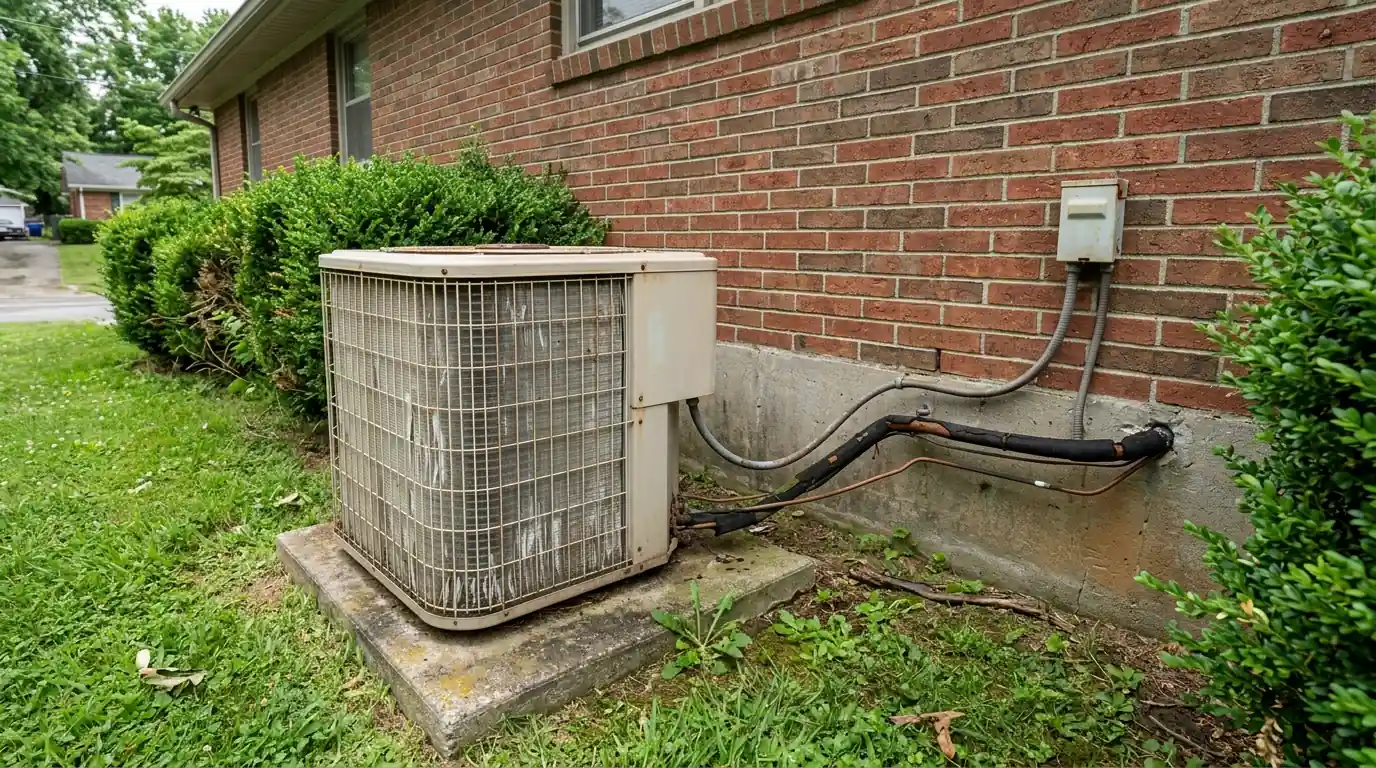
Walk out to the outdoor unit and find the metal data plate, usually on the side near the electrical panel. Look for a line marked refrigerant, or a factory charge listed in pounds and ounces. If it says R-22 or HCFC-22, you have your answer. Most central air conditioners and heat pumps installed in Kentucky before 2010 use it, and so do some installed a few years later.
That overlap exists because equipment built from 2010 on could not ship precharged with R-22, but some outdoor units were sold empty and charged with R-22 on site. If the plate is faded, the serial number tells us the manufacture date and our gauges confirm the rest. We read data plates on every brand we service, from Carrier and Lennox to Goodman and York.
Why a leak rewrites the repair math
A sealed R-22 system that holds its charge does not use up refrigerant. If it cools well, keeps the house dry through a Lexington July and passes a yearly check, there is no refrigerant reason to replace it early. The R-22 question only comes up when something opens the system: a leak, a failed compressor or a coil that needs replacing.
Leaks are where the costs climb. A slow leak at a valve core or a flare fitting is often a reasonable repair with a few pounds of recharge. A leak in a corroded indoor coil is a bigger job. Replacement coils for R-22 systems are harder to find every year, and refilling the whole system afterward takes a full charge of reclaimed refrigerant at a price that is high and rising.
Topping off a leaking system without finding the leak is the worst option. You pay for scarce refrigerant that drains out again by the next hot spell, and the compressor runs short of charge in between. Our refrigerant leak repair visits start by locating the leak, so you decide with the real repair cost in hand instead of a guess.
Why drop-in refrigerant substitutes carry real risk
Several blends are sold as replacements for R-22 in existing equipment. They can work in narrow cases, but they come with tradeoffs most homeowners never hear about.
Less capacity on hot afternoons
Most substitutes move less heat than R-22 in the same equipment. A system that barely kept up in August can fall further behind once it has been converted.
Oil that may not return
R-22 compressors run on mineral oil. Some blends do not carry that oil back to the compressor well, so a conversion may need an oil change or the compressor wears early.
Different charging rules
Many blends separate slightly as they boil, so they must be charged as a liquid and set to different targets. A conversion done like an R-22 top-off rarely performs right.
A mixture nobody can reclaim
Adding a substitute on top of leftover R-22 creates a blend that cannot be recycled or charged reliably. The next technician has to recover all of it and start over.
R-410A is never a substitute
R-410A runs at far higher pressures than R-22 and needs a different oil. Charging it into an R-22 system is unsafe and damages parts, whatever a video online suggests.
The leak is still there
A conversion does nothing about the hole that let the R-22 escape. Unless the leak is found and fixed first, the new refrigerant drains away just as fast.
A plain plan for moving off R-22 on your schedule
The goal is to replace the system before a midsummer breakdown makes the decision for you. Most owners can follow this order.
Confirm the refrigerant and age
Check the data plate or have us read the serial number. Write down the year for both the outdoor unit and the indoor coil, since they are not always the same age.
Get a leak and condition check
At the next tune-up, ask for pressure and temperature readings and a look at both coils. A system that holds its charge can keep running while you plan.
Set a repair ceiling now
Decide ahead of time what you will spend on any single repair, such as a third of the cost of a new system. When a big failure comes, the decision is already made.
Have the house sized
Before choosing equipment, get a load calculation and a duct check. Many R-22 systems were sized by rule of thumb, and the replacement does not have to match their tonnage.
Replace as a matched set
Plan to replace the outdoor unit and indoor coil together, and decide whether the furnace or air handler stays. Spring and fall give you the widest choice of install dates.
What changes with a new A2L refrigerant system
New central air conditioners and heat pumps use A2L refrigerants such as R-454B and R-32. They run at pressures close to R-410A and are classed as mildly flammable, so many systems include a refrigerant sensor in the indoor unit, and installations follow updated code requirements. Day to day, nothing changes for you: a thermostat, a filter to change and a yearly check.
An R-22 outdoor unit cannot be paired with a new A2L coil, or the other way around, so both sides get replaced together. The copper line set can sometimes stay if it is the right size and in good shape, but old R-22 lines carry mineral oil residue and often run inside walls, so we evaluate them before deciding. A young, healthy furnace can usually stay with a new coil on top, though it may need a compatible control.
This is also the moment to rethink the system type. An aging R-22 air conditioner on a gas furnace can become a heat pump with the furnace as backup, and an old R-22 heat pump can give way to a variable-speed model that handles Kentucky cold snaps better. Our post on deciding between repair and replacement walks through the bigger choice, and full system replacement covers the work itself.
When to call about an aging R-22 system
If your R-22 equipment still runs well, there is no rush. Use the mild months to get a leak check, settle on your repair ceiling and read up on sizing the replacement properly. When the time comes, the switch happens on your schedule instead of during the hottest week of the year.
Call (859) 377-8167 if your R-22 system needs refrigerant for the second summer in a row, if oily spots have appeared on the coil or copper fittings, or if the compressor struggles to start on hot afternoons. Those are the signs that repair money is going into a shrinking supply. We answer 24/7, and if the system quits in a July heat wave, we will tell you plainly whether a repair is worth it.
A few quick follow-up questions
Can R-410A or an A2L refrigerant be added to an R-22 system?
No. R-410A and the newer A2L refrigerants run at much higher pressures than R-22 and use different oils, so charging them into an R-22 system is unsafe and damages components. Mixing refrigerants also contaminates the whole charge, which then has to be recovered and sent off for disposal. An R-22 system takes R-22, or in limited cases a carefully done conversion to a substitute designed for it.
Is it legal to keep using an R-22 air conditioner in Kentucky?
Yes. The phaseout ended production and import of R-22, not its use. You can keep running and repairing an R-22 air conditioner or heat pump for as long as it works, and it can still be charged with reclaimed or stockpiled refrigerant. Nothing requires replacement until you decide the repair costs no longer make sense.
What happens to the old R-22 when the system is replaced?
Before the old equipment is disconnected, we pump the refrigerant out with a recovery machine into a dedicated cylinder. Venting it into the air is against federal rules. Recovered R-22 goes off to be reclaimed, cleaned to purity standards and returned to the supply that keeps other older systems running. The old units can then be hauled away and recycled for their metal.
More from the Comfort Blog
Furnace smells and carbon monoxide: when to leave
Some furnace smells are harmless and fade within the hour. Others mean shut the system off, and a few mean get everyone out of the house first and ask questions later.
Get your AC ready before the first hot, humid week
The first stretch of 85-degree, sticky days is when weak capacitors, clogged drains and dirty coils give out. A short homeowner checklist and one test run catch most of it early.
Central air for older Lexington homes without ducts
Plaster walls, radiators and tight attics make conventional ductwork hard to fit in Lexington houses from the 1910s to the 1940s. These are the cooling options that actually work in them.
Want a technician to look at it?
Call (859) 377-8167 any hour and describe what you are seeing. We will tell you what to check now and what needs a visit.