Ductwork & Airflow · Lexington, KY
Airflow balancing in Lexington for rooms that never feel right
One bedroom is always stuffy, the room over the garage swings with the weather, and closing vents in other rooms only made the system louder without fixing anything.
Lexington and nearby counties
Line open 24/7Short answer: Airflow Balancing in Lexington, KY
Airflow balancing measures how much air reaches each room, compares it with what the room needs, then adjusts dampers, blower speed and sometimes duct sizes to close the gap. A technician reads static pressure and measures each register with a flow hood. In Lexington, a balancing visit on an existing system typically runs $264 to $715, with duct corrections priced separately.
Deciding whether balancing will fix your comfort problem
Balancing fixes problems caused by air going to the wrong places. If a bedroom gets 40 cubic feet per minute of air when it needs 110, adjusting dampers and blower speed can move that number. Balancing cannot fix a system that is undersized for the house, a room with no return path, or ducts so leaky that half the air ends up in the crawlspace. That is why we measure first and recommend second.
A good rule: if the house was comfortable once and drifted, or a renovation changed the layout, balancing alone often helps a lot. If the problem has existed since the day the house was built, the ducts may need changes, and balancing is the last step after those are made. If different floors need different temperatures at different times, a zoned system may be the better fit, and we will tell you so. Balancing also makes sense right after a new furnace, heat pump or air conditioner goes in, since new equipment rarely moves air exactly like the old unit did.
What throws airflow off in a typical house
These are the causes we find most often when we measure room-by-room airflow in Lexington homes.
Closed or blocked registers
Closing vents in unused rooms raises static pressure and can starve rooms farther down the line. Furniture and rugs over floor registers do the same thing.
Undersized returns
Many homes have one central return. Bedrooms with doors closed cannot push air back, so less air goes in and the room stays warm or cool.
Crushed or kinked flex duct
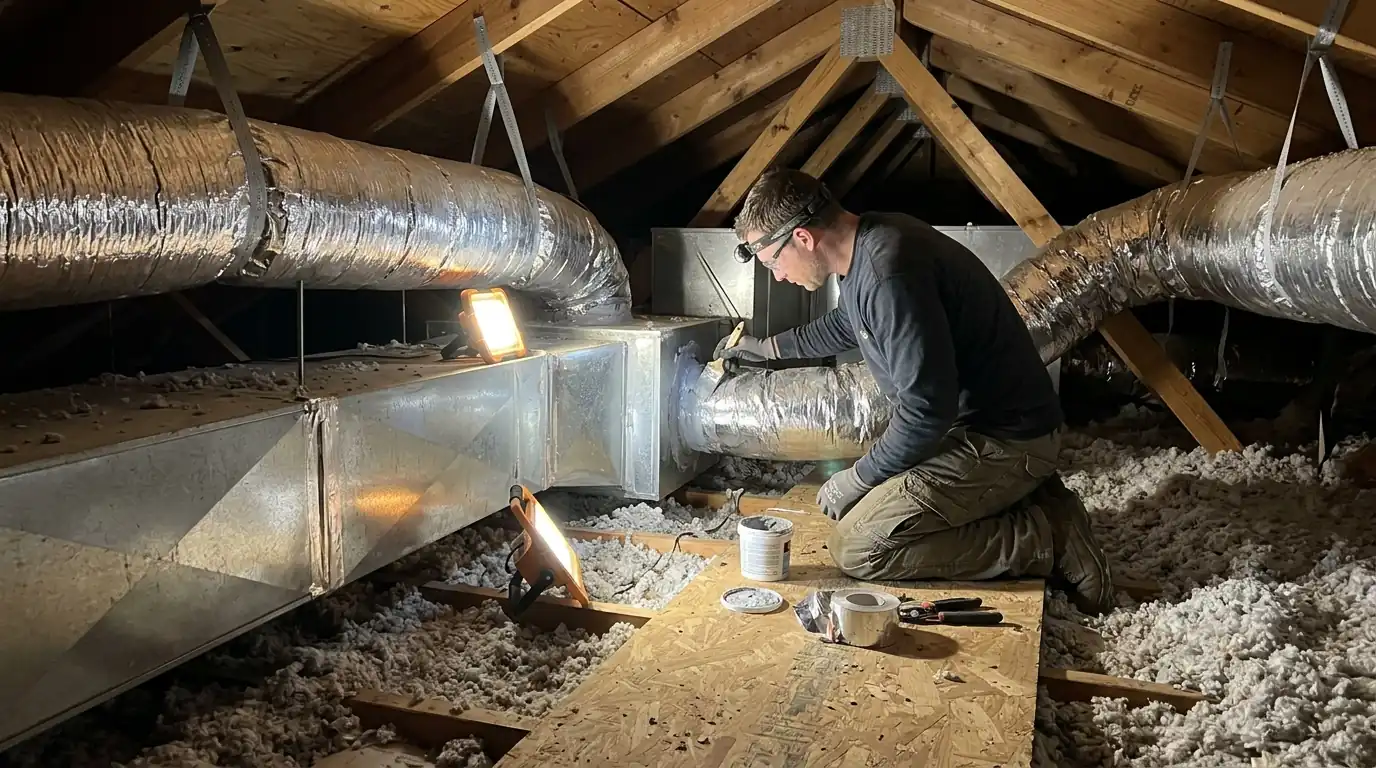
Flex duct in attics and crawlspaces gets stepped on, sags or kinks around framing. One bad bend can cut a run to a fraction of its design flow.
Leaky duct joints
Unsealed seams in crawlspace and attic ducts leak air before it reaches rooms at the end of the run, often the ones farthest from the equipment.
Wrong blower speed
Blowers are often left at factory settings that do not match the installed ductwork or equipment, delivering too little air or too much noise.
Missing or stuck dampers
Many systems were built without balancing dampers, or the dampers that exist were never set and have rusted in place.
Airflow quirks in Lexington's ranches, splits and two-stories
Each era of Lexington housing has its own airflow pattern. 1950s and 1960s ranches in neighborhoods like Gardenside or Stonewall often have crawlspace ducts with long runs to bedroom wings, and the farthest bedroom is usually short of air. Split-levels from the same era mix upper rooms fed through tight floor joists with lower levels that stay cool. Two-story homes from the 1990s and 2000s often have attic ducts feeding the second floor, which gain heat all summer and lose it all winter.
Humid summers add pressure. If airflow across the cooling coil is too high, the system cools without pulling out enough moisture. If it is too low, the coil can freeze. Balancing the total airflow to the equipment helps humidity control as much as room comfort. When we find duct problems along the way, replacing failed duct runs may be part of the recommendation, and you can call (859) 377-8167 to set up a measurement visit.
How a balancing visit actually goes
Most visits take two to four hours on one system. Larger homes or systems that need duct corrections can take longer or need a follow-up visit.
Talk about the rooms
We ask which rooms are uncomfortable, in which seasons and at what times. That focuses the measurements on the real problem.
Measure the system
We read static pressure at the equipment, check blower settings and filter condition, and measure temperature rise or drop across the coil or furnace.
Measure every room
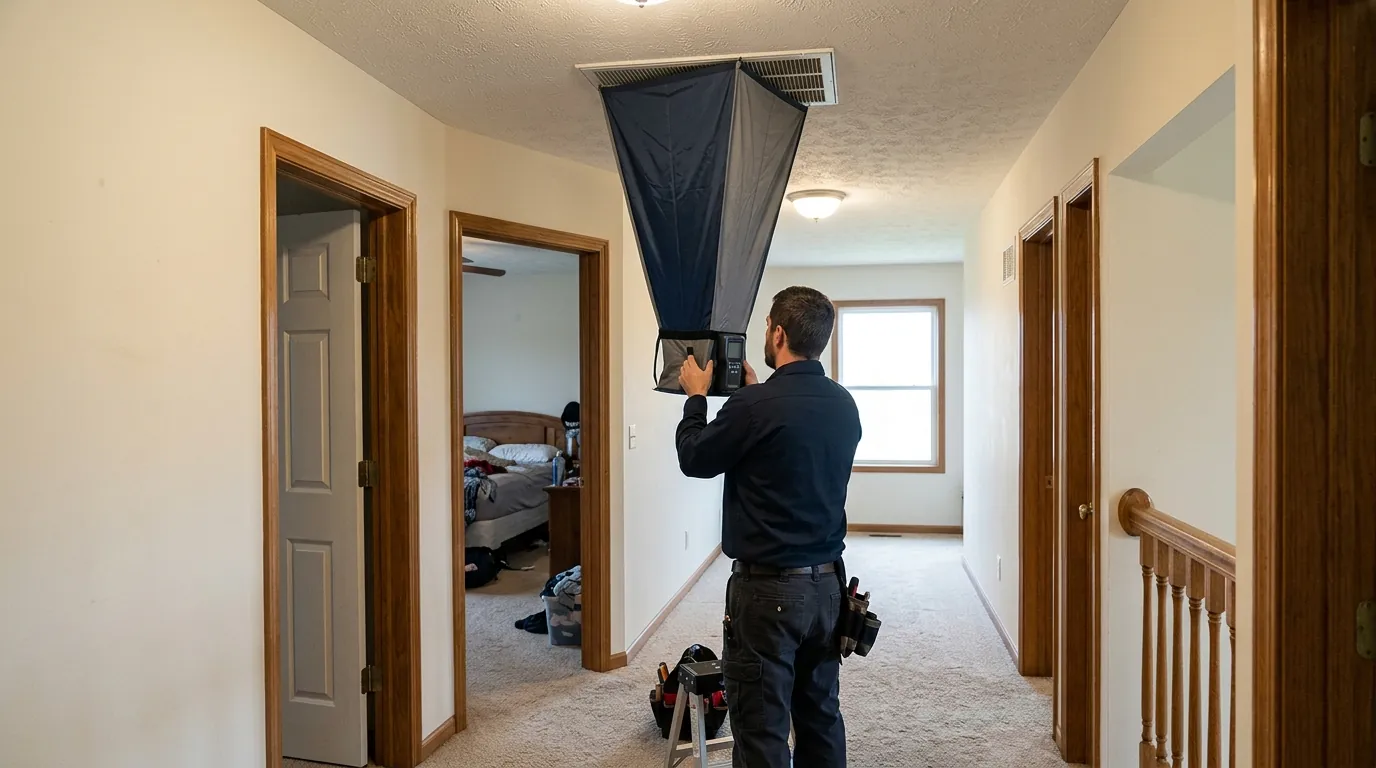
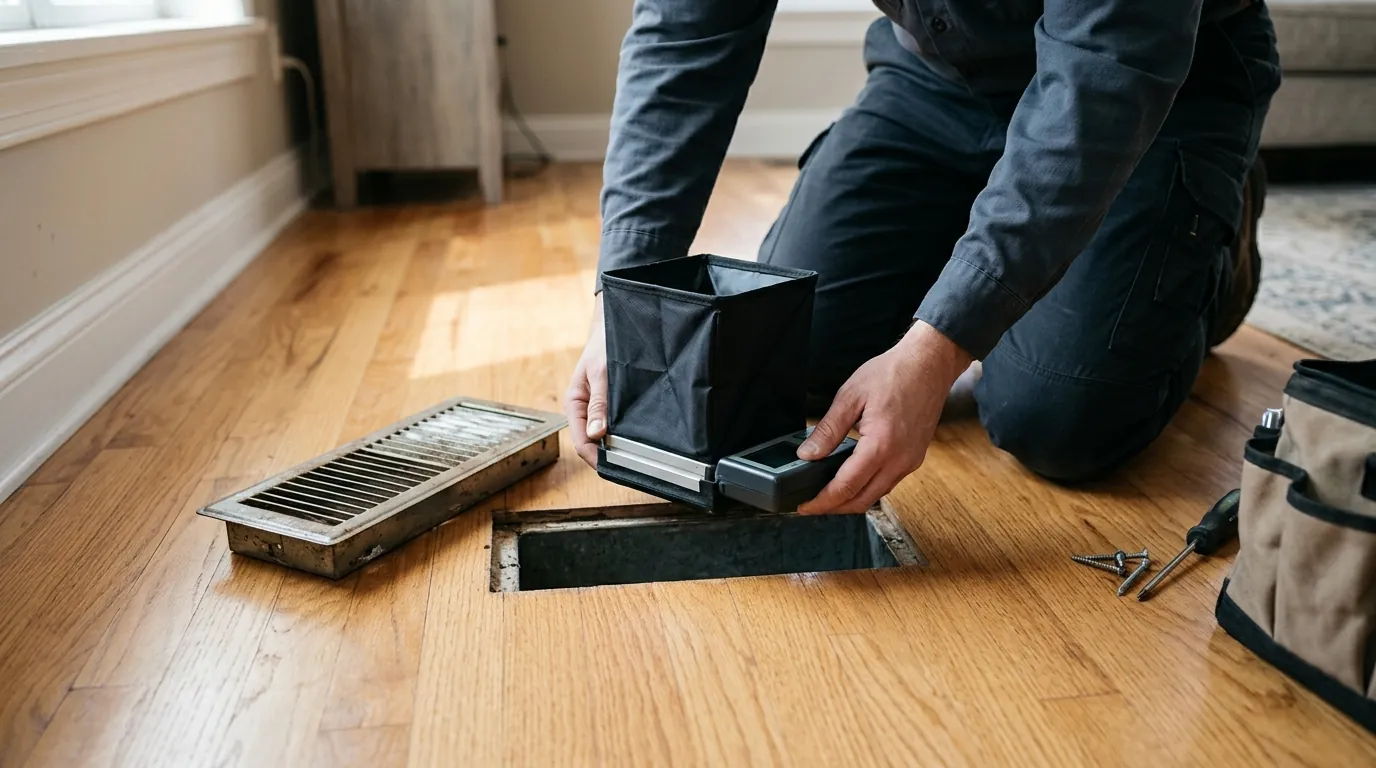
A flow hood over each register gives airflow in cubic feet per minute. We compare each reading to what the room needs.
Adjust and re-measure
We set dampers, change blower speed if needed and re-measure until rooms are as close to their targets as the ducts allow.
Write it up
You get before and after numbers and a plain list of duct changes that would help further, each with its own written price.
Readings we take and what they reveal
Balancing is measurement work. These are the numbers we gather and what each tells us about the system.
| Measurement | What it tells us | Typical target |
|---|---|---|
| Total external static pressure | How hard the blower is working against the ducts | Often under 0.5 or 0.8 inches of water column |
| Room airflow in CFM | How much air each register delivers | Close to the room load calculation |
| Temperature rise or drop | Whether total airflow suits the equipment | Within the equipment data plate range |
| Return airflow by room | Whether closed doors choke the system | A clear path back from every bedroom |
| Room-to-room temperature spread | How far rooms drift from the thermostat area | Within about 2 to 3 degrees of each other |
Balancing costs for an existing Lexington system
This range covers measuring and balancing one system. Duct corrections found during the visit are priced separately so you can choose what to do.
- House size and register count. More rooms and more registers mean more measurements and adjustments, which takes longer.
- Damper access. Dampers in an open basement are simple to set. Dampers in tight attics or crawlspaces take more time, and missing dampers have to be added.
- Blower adjustment. Changing a blower speed tap is quick. Programming a variable-speed motor or communicating system takes extra setup time.
- Duct corrections. Adding a return, replacing crushed flex or adding balancing dampers is quoted separately, typically $340 to $1,860 depending on the work.
- Number of systems. Homes with separate upstairs and downstairs systems need both measured and balanced.
These are typical ranges. We give you a written price after we look at the system, measure it and know what corrections, if any, the ductwork needs. Compare typical prices for every service.
We work on Carrier, Trane, Lennox, Rheem and Goodman equipment along with every other major brand found in Lexington homes, and the same testing comes first on all of them.
Where we handle airflow balancing most often
We cover every Lexington neighborhood and the towns around it. These are the places we visit most for this work; the full list is on our Fayette County page and the service area page.
Further reading from our Comfort Blog
Why the upstairs stays hotter than the downstairs
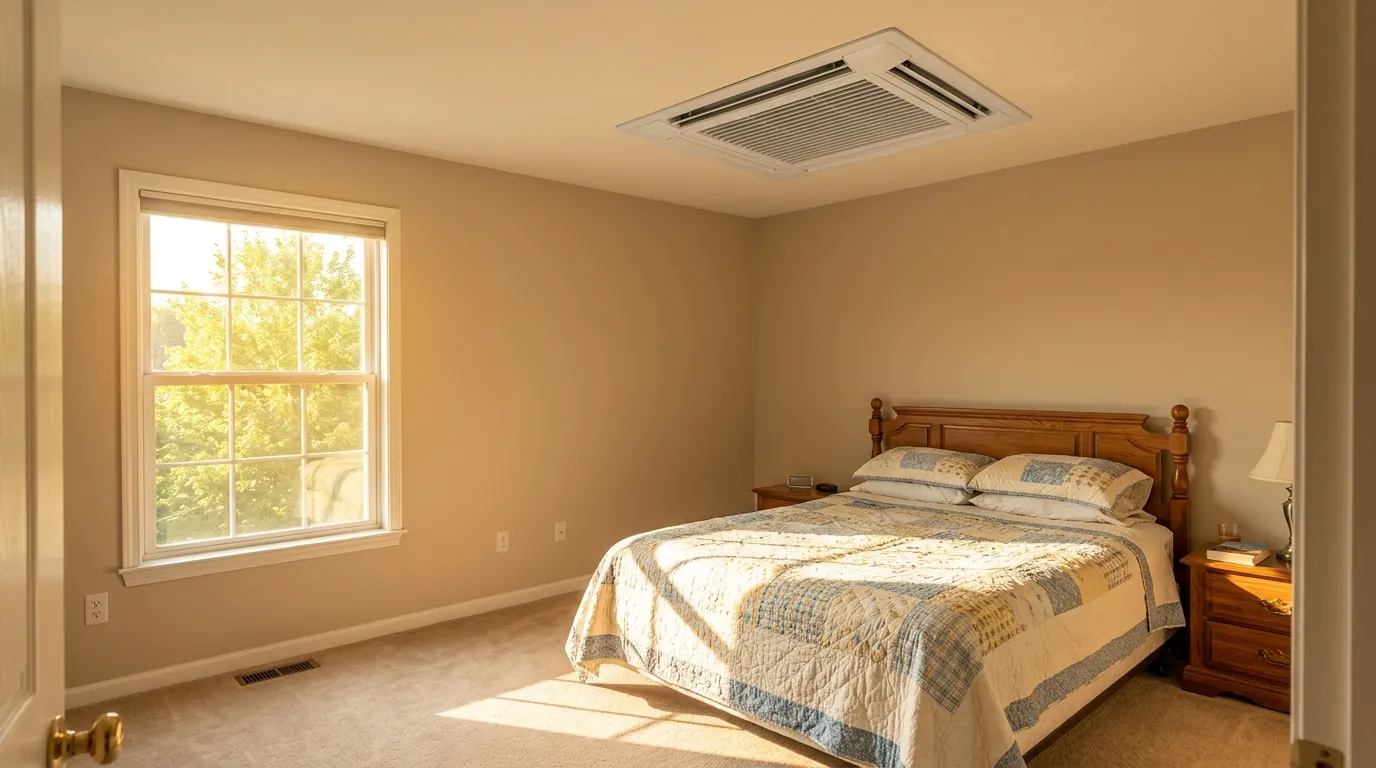
A two-story house with one system and attic ducts has the odds stacked against its second floor. Here is how to measure the problem and which fixes actually close the gap.
Airflow Balancing: what Lexington homeowners ask
Should I close vents in unused rooms to balance my airflow?
Usually not. Closing more than a couple of supply vents raises static pressure, which makes the blower work harder and can push air out of leaky ducts. In cooling mode, it can even freeze the coil. Proper airflow balancing uses dampers in the ductwork and blower adjustments, measured with instruments, rather than closing room registers.
Why is my upstairs always hotter even after airflow balancing?
Balancing can only move air the ducts are able to carry. If upstairs ducts are undersized, run through a hot attic or lack a return, there may not be enough air to fix it. In those cases we recommend changes like adding a return, sealing attic ducts or zoning. We show you the measurements so you see why before deciding.
Does airflow balancing help a heat pump in Lexington winters?
It can. Heat pumps deliver lower-temperature air than furnaces and depend on good airflow to heat rooms evenly. Rooms that get too little air feel cool, and the system runs longer and leans on heat strips. Balancing helps rooms get their share, and correct total airflow keeps the heat pump in its efficient range on cold mornings.
Can airflow balancing reduce noisy vents?
Often, yes. Whistling or rushing vents usually come from high static pressure or too much air going to one register. Balancing lowers the pressure, adjusts dampers and may slow the blower. If noise comes from undersized ducts or a single return, we explain what duct changes would quiet it and give you a written price for each.
Call and describe what the system is doing
A person answers (859) 377-8167 day and night. Tell us what you are seeing and a technician takes it from there.