Bourbon County, KY
Boiler and furnace repair in Paris, Kentucky (40361)
Many Paris homes are well over a century old, and the boilers, radiators and patched-together furnaces that heat them need a technician who is comfortable with older equipment as well as new.
Short answer: HVAC service in Paris
Yes, we repair boilers, gas furnaces, heat pumps and central air in Paris and the 40361 ZIP. Paris is about 18 miles northeast of Lexington along Paris Pike (US 27 and US 68). Columbia Gas of Kentucky serves the city, so gas boilers and furnaces heat many older homes. We also add cooling to houses that were built long before air conditioning existed.
Heating a Paris house built before the furnace era
The Downtown Paris Historic District covers about 96 acres around High, Main and Pleasant Streets, with 222 contributing buildings dating from 1788 to 1939. Italianate, Queen Anne and Romanesque Revival houses sit near commercial blocks and the 1902 Beaux-Arts Bourbon County Courthouse. Many of these homes were first heated by fireplaces and stoves, then by coal and later gas boilers feeding cast iron radiators.
Some of those boilers are still running, now on Columbia Gas of Kentucky lines. Others were replaced by forced-air furnaces, with ductwork threaded through basements, closets and old chimney chases. Either way, the systems in older Paris houses are rarely textbook, and repairs start with figuring out what was added when. For homes that still use radiators, our boiler repair service covers circulator pumps, expansion tanks, zone valves and controls.
Away from downtown, Paris has mid-century ranches and newer subdivisions with standard gas furnaces or heat pumps. Out in Bourbon County, among the horse farms, many homes have no gas line and rely on heat pumps or propane, with power from Kentucky Utilities across much of the county.
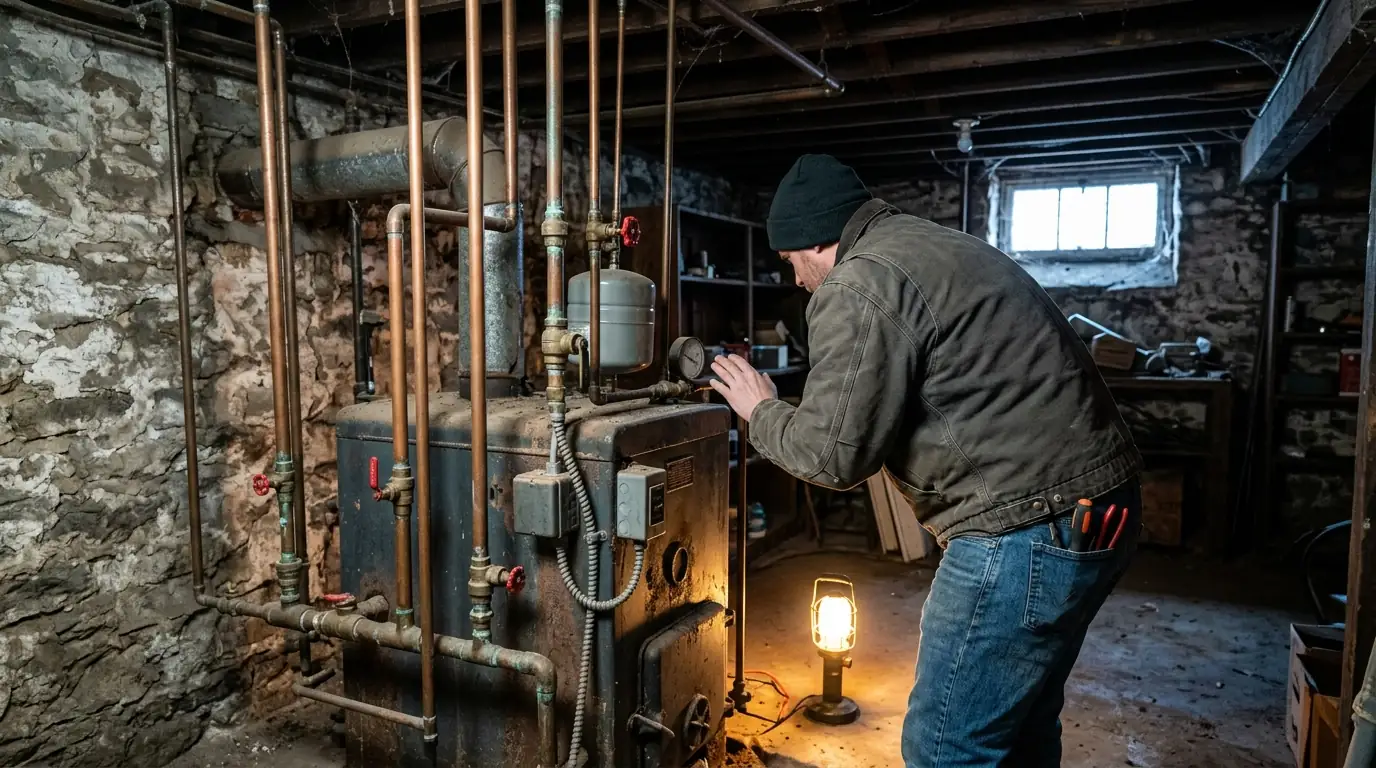
Boiler and furnace faults common in older Paris homes
Old systems fail in their own ways. Here is what we find most often in Bourbon County's older houses.
Radiators that stay cold
Air trapped at the top of a hot water radiator blocks circulation. Bleeding the radiator fixes it, but repeat air points to a leak or a failing fill valve.
Waterlogged expansion tanks
When the expansion tank loses its air charge, boiler pressure swings high and the relief valve drips. We test the tank and recharge or replace it.
Worn circulator pumps
A circulator that hums but does not move water leaves the whole house cold. Bearings and couplers wear out on older pumps with constant use.
Chimney venting problems
Older gas appliances often vent into masonry chimneys. Deteriorated liners and blockages from debris or nests can push exhaust back into the house.
Furnaces added in tight spaces
Forced-air furnaces squeezed into old basements or closets often lack combustion air and service room, which shortens their life and complicates repairs.
Keeping a Paris boiler or switching to forced air
Homeowners with working boilers often ask whether to keep them. This comparison shows how the choice usually breaks down.
| Option | Best when | What it involves |
|---|---|---|
| Repair the boiler | Radiators and piping are sound | Pump, tank or control work, then a safety check |
| New boiler, same radiators | Boiler is aged but piping is good | Replace the boiler, keep the radiators |
| Boiler heat plus added cooling | You want central air too | Keep boiler, add ductless or small-duct AC |
| Switch to forced air | Radiators leak or were removed | New furnace, AC and ductwork |
Getting a Paris home ready for heating season
A few checks before the first cold night prevent most no-heat calls in older homes.
- Bleed radiators on upper floors before turning the boiler on.
- Check the boiler pressure gauge; most read 12 to 20 psi cold.
- Look for drips at the relief valve and along exposed piping.
- Clear storage from around the boiler or basement furnace.
- Have the chimney or flue checked if it has not been looked at recently.
- Test carbon monoxide detectors on every floor with sleeping rooms.
- Call (859) 377-8167 if the boiler short cycles or the gauge climbs.
What Paris homes call us for
Boiler Repair
Older Paris homes downtown still heat with gas boilers and radiators, which need circulator, tank and control repairs that newer systems never do.
Boiler Replacement
When a cast iron boiler finally fails, a new one can often reuse the existing radiators and most of the piping.
Carbon Monoxide Safety Check
Gas boilers and furnaces venting into old masonry chimneys are a real carbon monoxide concern in historic homes.
Ductless Mini Split Installation
Homes heated by radiators have no ducts, and mini splits add cooling without cutting into original plaster and trim.
Furnace Repair
Mid-century and newer Paris homes rely on gas furnaces fed by Columbia Gas lines, with ignition and venting faults leading winter calls.

Asked by homeowners in Paris
Can a Paris home keep its boiler and still get central air?
Yes, and many do. The boiler and radiators keep heating the house, and cooling comes from ductless mini splits or a small-duct high-velocity system run through closets and the attic. This avoids tearing out radiators that still work. Our central air guide for older homes explains each option in more detail.
What should a Paris boiler pressure gauge read?
Most residential hot water boilers run at about 12 to 20 psi when cold, rising a few pounds when hot. If the pressure climbs near 30 psi and the relief valve opens, the expansion tank or fill valve is often the cause. If pressure keeps dropping, there may be a leak. Either way, call us and we will check it.
Do you work on heating systems at Bourbon County farm homes outside Paris?
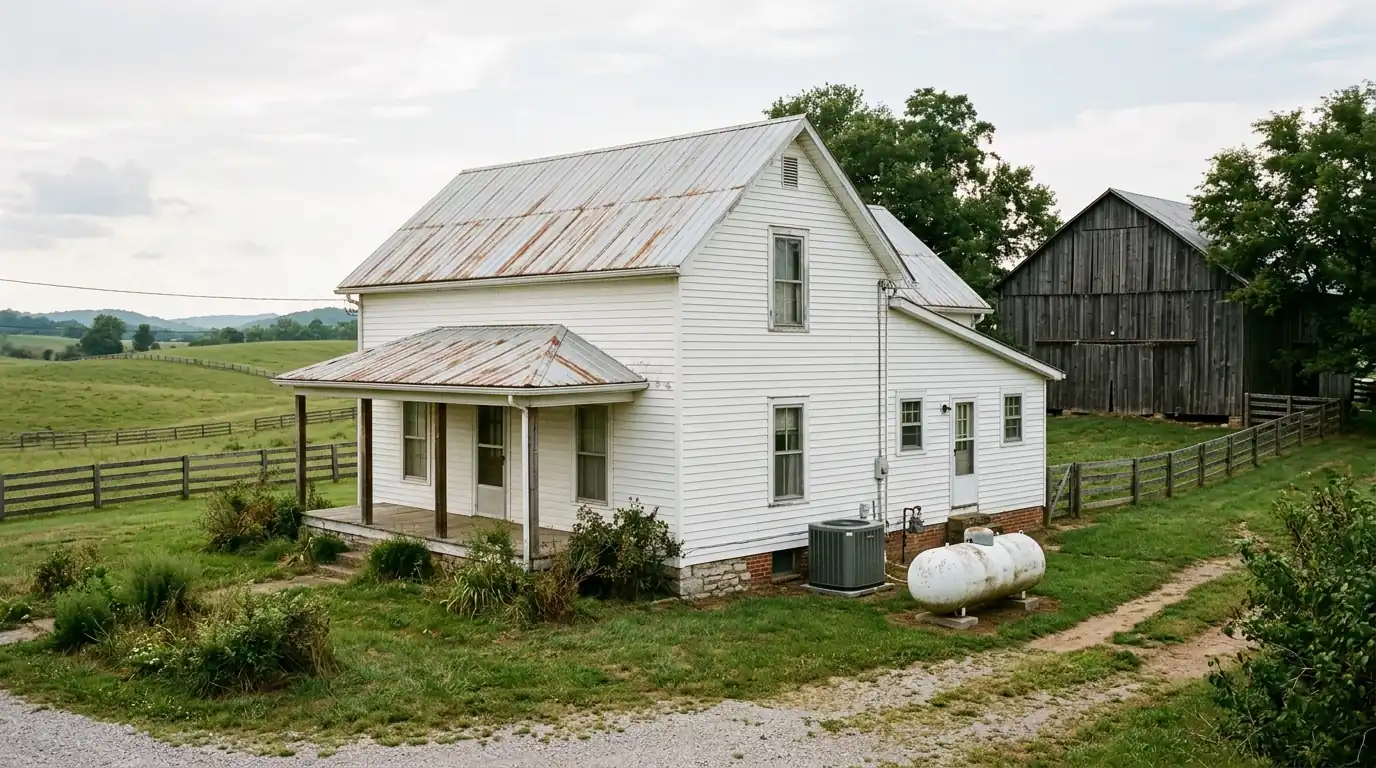
Yes. Many farm homes around Paris use heat pumps or propane furnaces because they sit beyond the gas mains. Some older farmhouses still have boilers, too. We service all of these and can reach properties along Paris Pike, US 460 and the county roads around town.
Heating or cooling trouble in Paris?
Call (859) 377-8167 any hour. Tell us what the system is doing and where you are, and we will take it from there.