Indoor Air Quality · Lexington, KY
UV air purifiers in Lexington that keep the coil clean
A musty smell when the AC kicks on, slime in the drain pan or a coil that keeps going green in humid weather are the problems a coil-mounted UV light is actually good at solving.
Lexington and nearby counties
Line open 24/7Short answer: UV Air Purifiers in Lexington, KY
A UV air purifier in an HVAC system is a UV-C lamp mounted near the indoor coil or in the duct. Its proven job is keeping the coil and drain pan free of mold and bacterial slime, which helps airflow and cuts musty odors. It is weaker at cleaning moving air, because particles pass the lamp in a fraction of a second. It doesn't remove dust, pollen or dander, so pair it with good filtration.
Picking the right UV setup for what you want fixed
UV lights come in a few forms, and each one fits a different problem. Start with the problem, then choose the lamp.
Coil-irradiating stick lamp
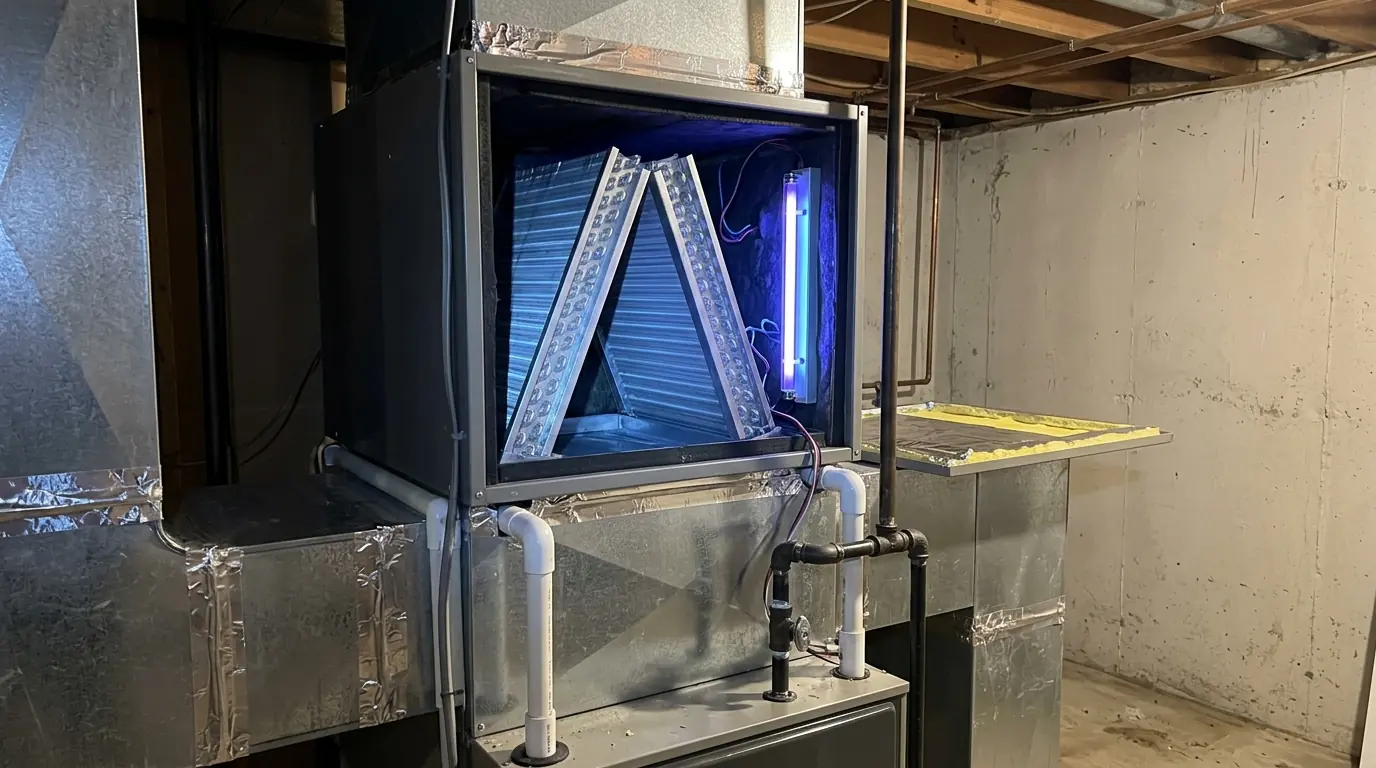
A single or double lamp shining on the coil face and drain pan. This is the most useful setup for most homes and keeps surfaces clean around the clock.
Dual-lamp for large coils
Wide A-coils and slab coils on 4 and 5-ton systems often need two lamps to cover the whole face, or the far edges keep growing.
In-duct air treatment
Lamps in the supply or return treat moving air. Exposure time is short, so the effect on airborne germs is modest compared with what marketing suggests.
Non-ozone lamp choice
Lamps at 254 nanometers don't make ozone. Lamps that also emit 185 nanometers produce ozone, which irritates lungs, so we install non-ozone lamps.
Interlock and viewing port
A switch that kills the lamp when the panel opens, plus a small window to confirm it's lit, protects eyes and skin during filter changes.
Pairing with filtration
UV does nothing for particles. If pollen and dander are the complaint, a media filter does the heavy lifting and the UV lamp handles the coil.
What a UV lamp can and can't do for your air
UV-C light damages the genetic material of mold, bacteria and viruses, but it needs time. On a coil that sits under the lamp all day, the dose builds up hour after hour, and growth stops. That's why coil irradiation works well: the coil stays clean, the drain pan stops growing slime, and the coil keeps moving the air it was designed for.
Moving air is a different story. Air crosses the lamp in well under a second, so a single pass only treats part of what's floating by. Over many passes there's some benefit, but it's far smaller than the claims on many boxes. A UV light won't stop a cold from moving through the house, and it won't help with dust or pollen at all. In-duct models that promise whole-house germ control are the ones where we'd temper your expectations most.
We're direct about this because people get sold UV as a cure-all. If the goal is fewer allergy symptoms, a media filter upgrade does more. If the goal is a coil that stays clean and a system that stops smelling musty in July, UV is a good, inexpensive fit.
Signs your indoor coil would benefit from UV
If two or more of these sound familiar, the coil is probably staying wet and dirty long enough to grow something.
- A musty or dirty-sock smell for the first few minutes of cooling
- The condensate drain clogs or the float switch trips most summers
- Black or green film visible on the coil face through the access panel
- Slime or standing water in the drain pan under the coil
- The coil sits in a crawlspace, attic or damp unfinished basement
- Temperature split across the coil drops a little more each summer
- Coil cleaning has been needed more than once in a few years
Adding a coil-mounted UV light to your system
Most UV installs take one to two hours. If the coil is already dirty, cleaning it comes first, because UV prevents new growth far better than it removes old buildup.
Inspect the coil and pan
We look at the coil face and drain pan for existing growth, rust and standing water, and check that the drain line flows freely.
Clean if needed
A coil already matted with growth gets cleaned with a coil cleaner so the lamp starts on clean surfaces. The drain pan gets scrubbed and the line flushed.
Mount the lamp
We drill a small opening in the plenum above or beside the coil and set the lamp so it covers the coil face and drain pan.
Wire and interlock
The lamp gets power through the equipment, and a door switch turns it off when the cabinet opens. A viewing port shows it's running.
Shield nearby plastics
UV-C breaks down plastics and wire insulation over time. We shield drain pans, wiring and flex duct collars within the lamp's line of sight.
Muggy Lexington summers and coils that grow mold
From June through September, Lexington's dew points often sit in the upper 60s and low 70s. An indoor AC coil running at 40 to 45 degrees pulls a lot of water out of that air, and the coil stays wet for hours each day. Add a little dust, and you have exactly what mold and bacteria need. Coils in crawlspaces and humid basements get it worst because the surrounding air is damp even when the system is off.
The early signs are a musty or dirty-sock smell for the first few minutes after the AC starts, a drain line that clogs every summer, and a rising temperature split as the coil gets coated. Those are the homes where a UV lamp pays for itself in avoided coil cleanings and drain calls. If your drain keeps backing up, our AC drain line repair page explains what else to check.
Heat pumps run the indoor coil year-round, wet in summer and warm in winter, so UV keeps working through both seasons. Gas furnace homes with a cased coil above the furnace see most of the benefit in the cooling months. If you're not sure whether your coil is growing anything, call (859) 377-8167 and we'll look before suggesting a lamp.

UV light pricing for central Kentucky homes
A single coil lamp on an accessible system falls at the low end. Dual lamps, in-duct units and installs that include a full coil cleaning land higher.
- Single or dual lamp. Larger coils and wide A-coils need two lamps to cover the face, which adds to both the unit cost and the installation time.
- Coil cleaning first. A coil that's already coated needs cleaning before the lamp goes in. That adds labor but makes the UV far more effective from day one.
- Access to the plenum. Basement furnaces are easy to reach. Attic air handlers and tight closets take longer to mount the lamp, wire it and shield nearby parts.
- Electrical supply. Most lamps run on 24 or 120 volts from the equipment. Systems without a convenient source need a little more wiring work.
- Yearly lamp replacement. UV-C output drops over time even while the lamp still glows. Plan on a replacement lamp about once a year to keep it effective.
The written price comes after we look at the system and the coil, so you know whether a cleaning is part of the job before we start. Compare typical prices for every service.
We work on Carrier, Trane, Lennox, Rheem and Goodman equipment along with every other major brand found in Lexington homes, and the same testing comes first on all of them.
Neighborhoods and towns that call us for UV air purifiers
We cover every Lexington neighborhood and the towns around it. These are the places we visit most for this work; the full list is on our Fayette County page and the service area page.
Questions about UV air purifiers in Lexington
How long does an HVAC UV light bulb last before replacement?
Most UV-C lamps are rated around 9,000 hours, which is about a year of continuous running. The lamp keeps glowing blue after that, but its germicidal output has dropped a lot. Replacing it once a year, often at a tune-up, keeps it doing its job. Turn the system off and let the lamp cool before handling it.
Can a UV air purifier in the ductwork damage my system?
UV-C slowly breaks down many plastics, rubber and wire insulation. Drain pans, filter frames and flex duct close to the lamp can turn brittle over a few years. Positioning the lamp carefully and shielding nearby materials prevents that. It's one of the main reasons UV should be installed by someone who knows where to aim it.
Does a UV light help with allergies in a Lexington home?
Not much on its own. Pollen, dander and dust are particles that UV doesn't remove, and those drive most allergy symptoms. UV helps if mold growing on your coil is part of the problem, because it stops that growth. For allergies, a good media filter does the main work, with UV as a supporting piece.
Is a UV coil light worth it on a brand new air conditioner?
It's worth considering if the coil sits in a crawlspace, damp basement or attic, or if your old system had musty smells or drain clogs. A new coil starts clean, and UV keeps it that way. In a dry, conditioned basement with a good filter, many coils stay clean enough without it.
Call and describe what the system is doing
A person answers (859) 377-8167 day and night. Tell us what you are seeing and a technician takes it from there.