Indoor Air Quality · Lexington, KY
Indoor air quality testing in Lexington with real readings
Stuffy bedrooms in the morning, headaches that ease when you leave the house, or a smell nobody can place. Measuring the air first tells you what's actually wrong before you spend money on equipment.
Lexington and nearby counties
Line open 24/7Short answer: Indoor Air Quality Testing in Lexington, KY
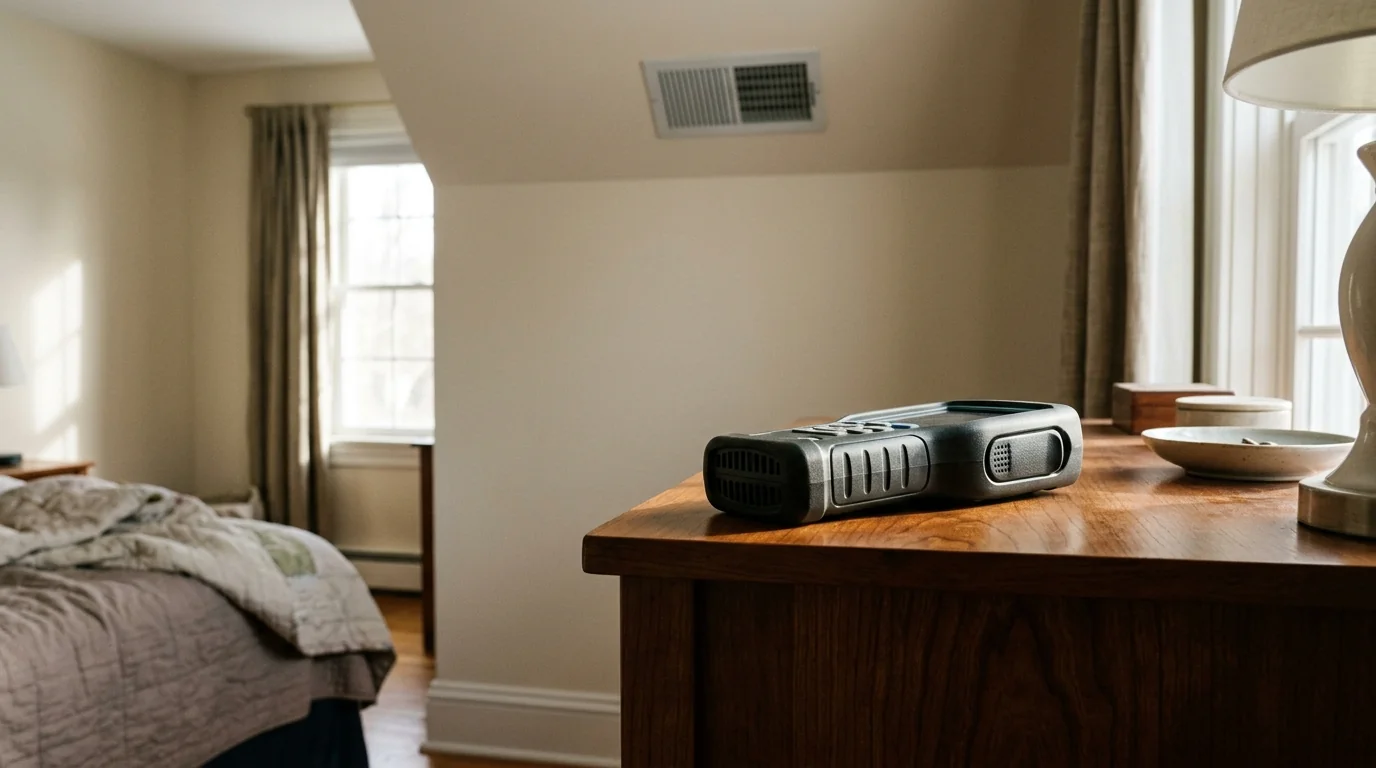
Indoor air quality testing measures what's in your air with calibrated meters: carbon dioxide for ventilation, VOCs for chemical sources, relative humidity, fine particles (PM2.5), and carbon monoxide near fuel-burning equipment. We also check airflow, duct leakage and the HVAC system. The readings point to the fix, whether that's fresh air, filtration, humidity control or simply removing a source.
Readings we take room by room during an air quality visit
Every reading is logged with the room, time and what the HVAC system was doing, so the numbers can be compared fairly.
- Carbon dioxide in bedrooms, living areas and near the return
- Total VOCs near new furniture, flooring, garages and storage areas
- Relative humidity and temperature on each floor and in the basement
- Fine particle counts at PM2.5 and PM10, indoors compared with outdoors
- Carbon monoxide near the furnace, water heater and attached garage door
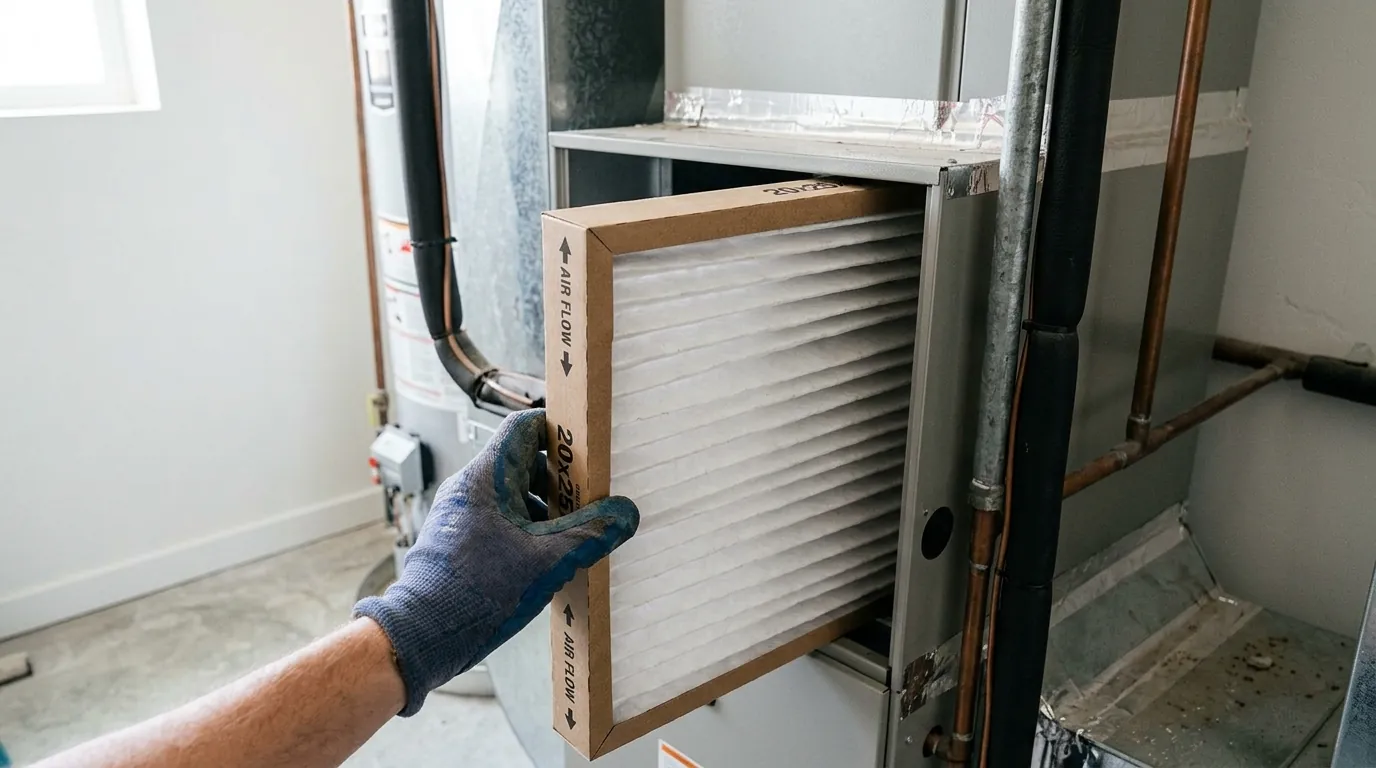
- Filter fit and pressure drop at the return
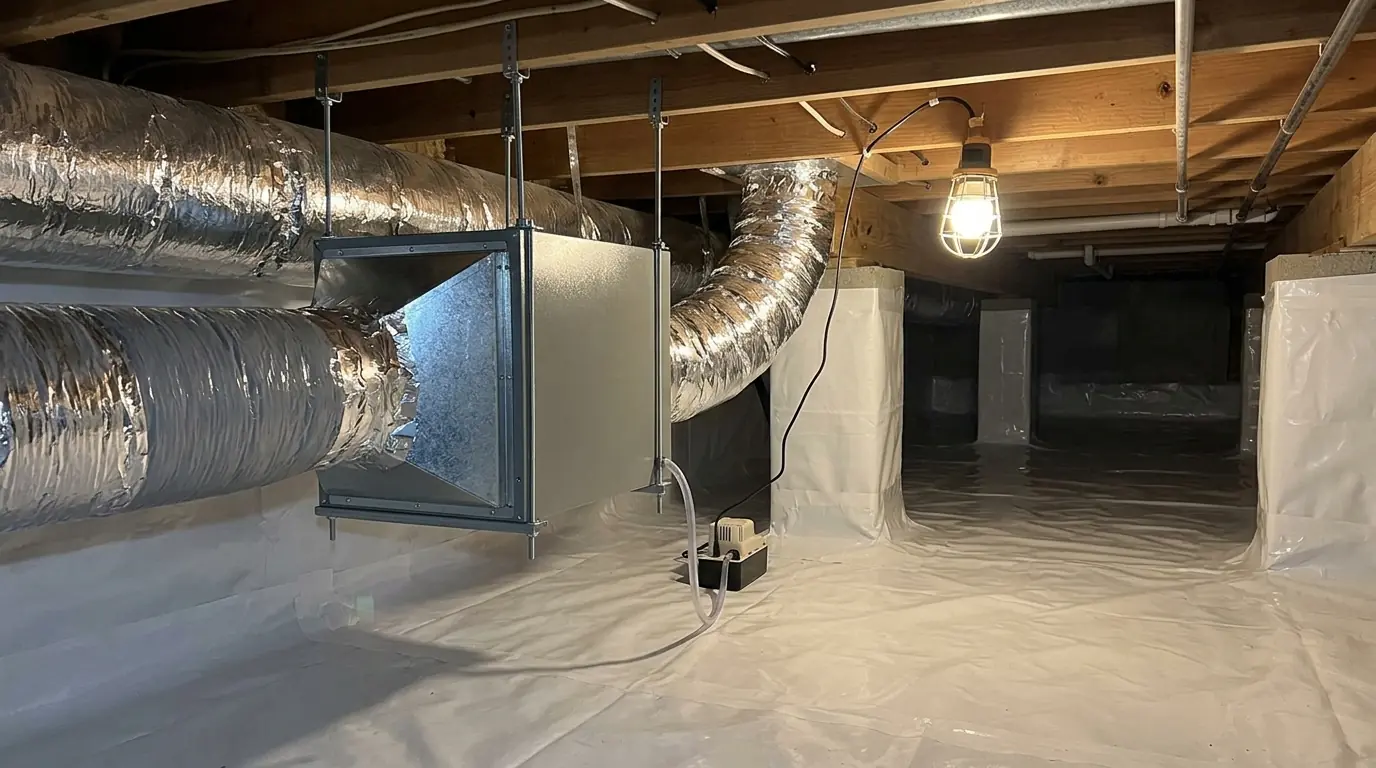
- Return duct leakage paths from the crawlspace, attic or garage
- Moisture or visible growth at the coil, drain pan and supply boots
What CO2 and VOC numbers actually mean
Outdoor air in central Kentucky usually runs around 420 parts per million of carbon dioxide. Inside a well-ventilated home, readings under about 800 ppm are typical while people are home. In a closed bedroom with two adults overnight, we regularly see 1,400 to 2,000 ppm by morning in tight newer houses. CO2 at those levels isn't toxic, but it's a clear sign that stale air isn't being replaced, and many people feel groggy or stuffy at those numbers.
VOC meters read a total of volatile organic compounds, the gases given off by paint, adhesives, new cabinets, cleaning products, air fresheners and stored fuel. A spike near a new mattress or a fresh coat of paint is expected and fades over weeks. Readings that stay high in one area usually point to a source we can find, such as a garage sharing air with the house through a leaky return.
Neither meter gives a lab-grade breakdown. They're screening tools that show patterns and point to causes. When results suggest something specific, such as radon in a basement or confirmed mold growth, we'll tell you so and explain what kind of dedicated test answers that question. Most of the time, though, the meters and the system inspection together explain the problem well enough to act on.
Common causes our air quality tests turn up
Most Lexington homes we test show one or two of these. Each points to a different fix, which is why measuring first saves money.
Too little fresh air
High CO2 in bedrooms and living areas means the house is tight and stale. The fix is controlled ventilation, not a better filter or a purifier.
Crawlspace air in the return
Musty smells, high humidity and dust that returns quickly often trace to return ducts pulling air off the crawlspace floor.
Garage air in the house
VOC or CO readings near a door or return connected to the garage show exhaust and fumes getting in. Sealing that path is the fix.
Humidity above 55 percent
High summer humidity feeds dust mites and mold and feels sticky. Dehumidification or a change in AC settings brings it down.
Filter bypass
A filter that doesn't fit its slot lets unfiltered air go around it. Particle counts stay high even with a good filter in place.
Combustion spillage
CO near a furnace or water heater points to a venting or draft problem. That gets fixed right away, before anything else on the list.
How an indoor air quality visit runs
A typical test visit takes two to three hours for a single-system house. It goes best when the house is lived in normally the day before.
Talk through symptoms
We start by asking what bothers you, which rooms, what time of day and since when, because the pattern often narrows down the cause.
Baseline readings
We take outdoor readings for comparison, then measure each main room with the HVAC system off and doors in their usual positions.
System-on readings
We run the blower and repeat key measurements, watching how CO2, particles and humidity shift when air is circulating.
Inspect the system
We check the filter, coil, drain pan, return ducts and fuel-burning appliances, and look for leakage paths from the crawlspace, attic or garage.
Explain findings
You get the readings in writing with plain explanations, the likely causes and a ranked list of fixes, starting with the least expensive.
Air quality testing cost for a Lexington home
A standard screening visit on a single-system home sits at the low end. Larger homes, multiple systems and multi-day CO2 logging run higher.
- Home size and floors. More rooms and floors mean more readings. A three-story home with a finished basement takes noticeably longer than a ranch.
- Number of systems. Each HVAC system gets its own inspection of the filter, coil, drain and ducts, which adds time in two-system homes.
- Data logging. Leaving a CO2 and humidity logger for several days shows overnight and weekly patterns that a single visit can miss.
- Crawlspace or attic inspection. Checking for return leaks and moisture in a tight crawlspace or hot attic takes extra time but often explains the readings.
- Combustion testing. Homes with gas furnaces, water heaters and attached garages get added CO and draft checks, which take a little more time.
The written price comes after we look at the system and hear what's going on, so the visit covers what your house needs. Compare typical prices for every service.
Tight new builds, older homes and Lexington air
Air quality problems split along house age here. Homes built in the last fifteen years in subdivisions like Hamburg and Masterson Station are much tighter than older houses. They hold heat well, but without mechanical ventilation, CO2 and VOCs from new materials build up. Many of these homes test well on particles and poorly on CO2, which points toward adding controlled fresh air.
Older ranches and split-levels tend to have the opposite pattern. They leak plenty of outdoor air, so CO2 stays low, but they pull it through crawlspaces, attics and wall cavities. Those homes often test high on humidity and particles, and the fix is usually sealing return ducts and managing crawlspace moisture rather than adding ventilation.
Seasons matter too. Summer readings show humidity problems; winter readings show stale air and dryness, when windows stay shut for months. Pollen season can push outdoor particle counts above indoor ones. If you already know dust and dander are the issue, better whole-house filtration may be all you need. If you're not sure, call (859) 377-8167 and we'll measure first.
We work on Carrier, Trane, Lennox, Rheem and Goodman equipment along with every other major brand found in Lexington homes, and the same testing comes first on all of them.
Where we handle indoor air quality testing most often
We cover every Lexington neighborhood and the towns around it. These are the places we visit most for this work; the full list is on our Fayette County page and the service area page.
Common questions on indoor air quality testing around Lexington
Does indoor air quality testing include mold testing?
Our visit looks for the conditions that grow mold, such as high humidity, wet coils, sweating ducts and crawlspace moisture, and for visible growth on HVAC parts. It isn't a lab mold test. If we see signs that call for spore sampling or species identification, we'll explain what that kind of test involves and why it might be worth doing.
What is a healthy CO2 level for a bedroom at night?
Under about 1,000 ppm is a reasonable target overnight, and under 800 is better. Many tight homes reach 1,500 to 2,000 ppm in closed bedrooms by morning. Cracking a door, running the blower on a low circulate setting or adding mechanical fresh air are the usual ways to bring that number down.
Can indoor air quality testing find a carbon monoxide problem?
Yes, CO readings are part of every visit in homes with gas or propane appliances or an attached garage. If we find CO, finding its source comes before anything else. Every home with fuel-burning equipment should also have working CO alarms on each level, and a separate carbon monoxide safety check goes deeper into the furnace itself.
Should I test my indoor air before buying an air purifier?
It's a good idea. A purifier only removes particles, and many indoor air complaints come from stale air, humidity or a chemical source that a purifier won't touch. Measuring first tells you whether filtration is the right spend or whether fresh air, humidity control or sealing a leak would help more.
When is the best season to schedule indoor air quality testing?
Test in the season when the problem bothers you most. Stuffy, stale air shows up best in winter when windows stay closed. Humidity and musty smells show up best in summer. If you have complaints year-round, a winter visit and a summer follow-up give the fullest picture.
Need indoor air quality testing today?
A person answers (859) 377-8167 day and night. Tell us what you are seeing and a technician takes it from there.