Cooling · Lexington, KY
AC installation in Lexington sized for your actual house
Your old air conditioner is near the end, or the house never had central air, and you're weighing tonnage, efficiency and price. We size the system from your house, not a guess, and install it so it performs.
Lexington and nearby counties
Line open 24/7Short answer: AC Installation in Lexington, KY
A good central air installation starts with a room-by-room load calculation, not a square-foot rule. The outdoor unit and indoor coil must be a matched pair for the same refrigerant, the ductwork must handle the airflow, and the charge must be verified with subcooling after a deep vacuum. A typical Lexington replacement takes one day and uses an A2L refrigerant such as R-454B.
How to size new central air without guessing
The old rule of one ton per 500 square feet oversizes most houses. An oversized unit cools the air fast, satisfies the thermostat in eight or ten minutes, and shuts off before the coil has pulled much moisture out. In a humid Kentucky July, that leaves rooms at 74 degrees that still feel sticky. Short cycling also wears the compressor and contactor faster.
We run a Manual J load calculation using your actual square footage, window area and direction, insulation levels and air leakage. A 2,000 square foot two-story built in the 1990s often lands somewhere near 2.5 to 3 tons, while a drafty 1950s ranch of the same size can need more. The calculation, not the old nameplate, decides the size.
We also measure what the ducts can carry. Each ton of cooling needs roughly 350 to 400 cubic feet per minute of airflow. If the existing return is one undersized grille, a bigger system will just be louder. Sometimes the right move is a smaller unit paired with an added return.
Single-stage, two-stage or variable-speed for humid summers
Compressor type affects comfort and humidity more than the efficiency number does. All three are sold at or above the Southeast regional minimum that applies in Kentucky.
| Compressor type | How it runs | Best fit |
|---|---|---|
| Single-stage | Full capacity every cycle | Tight budgets, correctly sized ranch homes |
| Two-stage | Low stage near 65 to 70 percent most days | Most two-story homes, better moisture removal |
| Variable-speed inverter | Modulates in small steps all summer | Hot upstairs rooms, long humid seasons |
| Any type, oversized | Short cycles, leaves humidity behind | Not a good fit anywhere |
Choices to settle before installation day
These details decide how the new system performs for the next 15 years, so we go over each one during the estimate visit.
Matched indoor coil
The outdoor unit is rated only with specific coils. New A2L systems need a coil built for that refrigerant, so pairing a new condenser with your old coil isn't an option.
Furnace or air handler fit
The blower must deliver the airflow the new system needs. An older furnace with a weak PSC motor may limit a two-stage or variable-speed condenser.
Line set condition
Copper lines inside finished walls can often be reused after a pressure test and flush. Lines left from an R-22 system with mineral oil usually get replaced.
Static pressure of the ducts
We measure total external static pressure. Most residential blowers are designed around 0.5 inches of water column, and readings near 0.9 mean the ducts need work first.
Outdoor unit placement
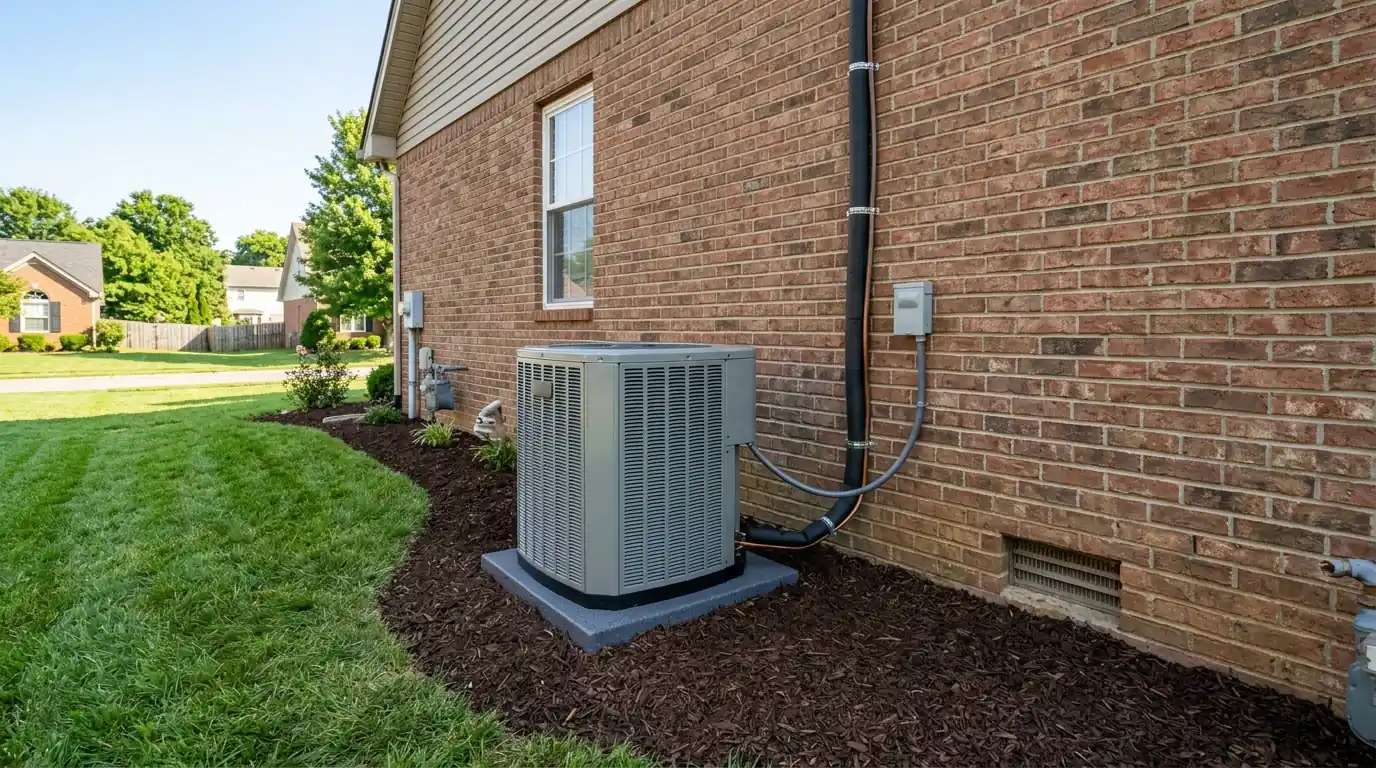
The condenser needs clearance for airflow, a level pad on firm ground, and distance from bedroom windows. Moving it farther away adds line length and cost.
Electrical capacity
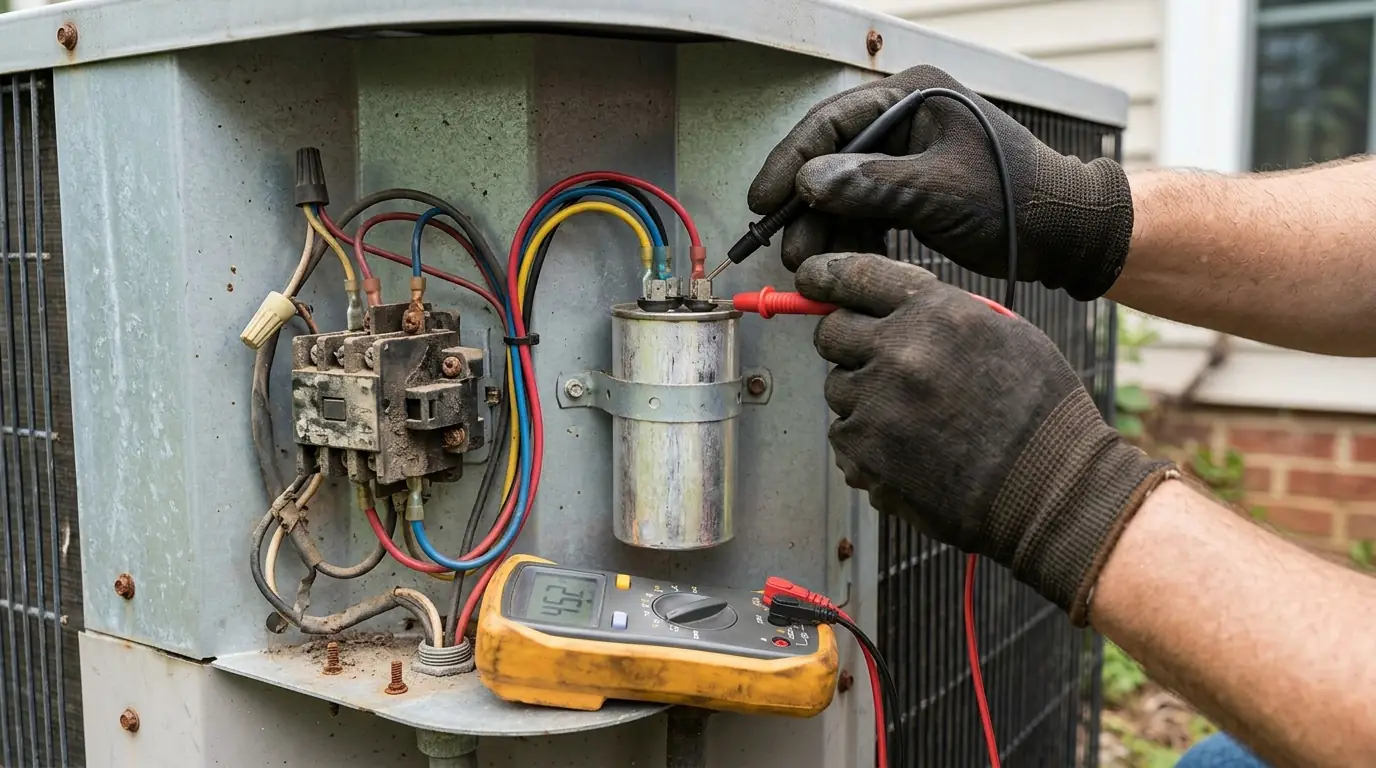
We check the breaker against the nameplate maximum overcurrent rating, confirm the disconnect and whip are sound, and look for room in the panel if a circuit changes.
Installed price range for new central air in 2026
This covers replacing an outdoor condenser and matched indoor coil on existing ductwork, with a new pad, line set work, disconnect, startup and commissioning.
- Tonnage from the load calculation. A 2-ton system for a smaller ranch costs noticeably less than a 4-ton system for a large two-story home.
- Compressor type. Single-stage equipment sits at the low end. Two-stage adds roughly 15 to 25 percent, and variable-speed inverter systems sit near the top.
- A2L refrigerant requirements. New systems using R-454B or R-32 often include a leak sensor and control wiring at the indoor unit, which adds parts and labor.
- Line set and access. Reusing an accessible line set saves money. Running new copper through a finished basement ceiling or a tight crawlspace adds hours.
- Duct and return changes. Adding a return or resizing a plenum to bring static pressure down is priced separately, but it often decides whether the new system performs.
The written price comes after we look at the system, measure the house and run the load numbers. You'll see each line before anything is ordered. Compare typical prices for every service.
How a central air installation day runs
A straight replacement on existing ducts usually finishes in one long day. New ductwork adds one to three days.
Protect and recover
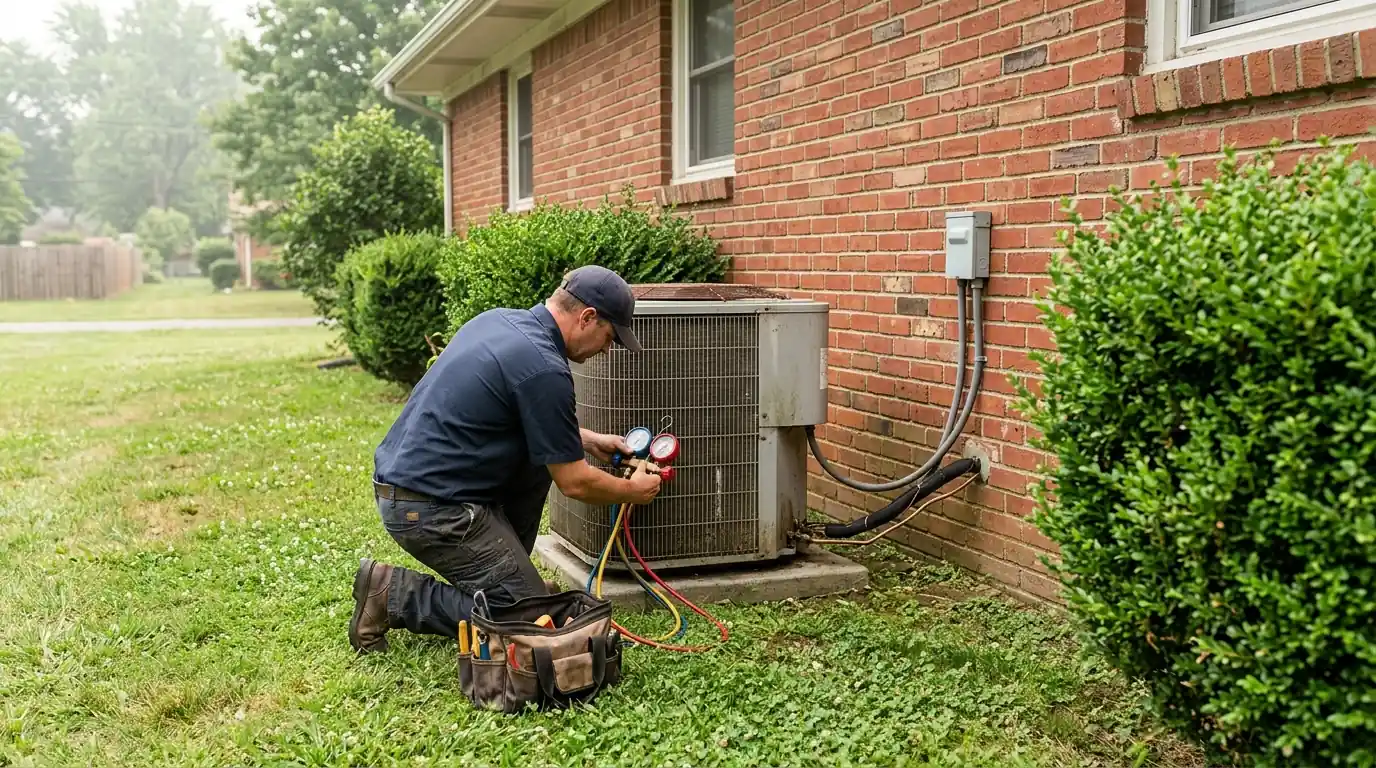
We lay floor runners, shut off power, and recover refrigerant from the old system into a recovery cylinder. Refrigerant is never vented to the air.
Set the new equipment
The old coil and condenser come out. The new coil goes on the furnace or air handler, and the condenser goes on a level pad with proper clearance.
Braze, test and evacuate
Joints are brazed with nitrogen flowing to prevent internal scale. We pressure test with dry nitrogen, then pull a vacuum below 500 microns and confirm it holds.
Wire and drain
We connect the disconnect, low-voltage wiring and any leak sensor, then run the condensate drain with a trap and a float switch.
Charge and commission
We adjust the charge to the manufacturer's target subcooling, set blower speed for correct airflow, and record static pressure, temperature split and amp draw.
Lexington houses that change how central air goes in
Much of our installation work depends on the era of the house. The 1990s and 2000s subdivisions in Hartland, Masterson Station and Beaumont usually have a gas furnace or air handler in a basement or utility closet, accessible ducts, and a clear path for the line set. Those replacements are the most predictable.
The 1950s and 1960s ranches in Gardenside and the Southland area often have air handlers or furnaces in crawlspaces where the ground holds moisture. There we raise the equipment, fully insulate the suction line, and pay close attention to the drain. Older homes near downtown and in Chevy Chase sometimes have no ducts at all. Our guide to central air for older homes covers the ductless and small-duct options.
Electrical service is the other variable. Lexington homes get power from KU, and some older houses still have 100 amp panels crowded with circuits. A condenser draws far less than the strip heat in a heat pump air handler, but we still confirm breaker size and wire gauge against the new nameplate. When the furnace is near its end or the house is all-electric, it's worth comparing a heat pump installation before committing.
We work on Carrier, Trane, Lennox, Rheem and Goodman equipment along with every other major brand found in Lexington homes, and the same testing comes first on all of them.
Lexington-area places we cover for AC installation
We cover every Lexington neighborhood and the towns around it. These are the places we visit most for this work; the full list is on our Fayette County page and the service area page.
Further reading from our Comfort Blog
Owning an R-22 AC or heat pump in Kentucky
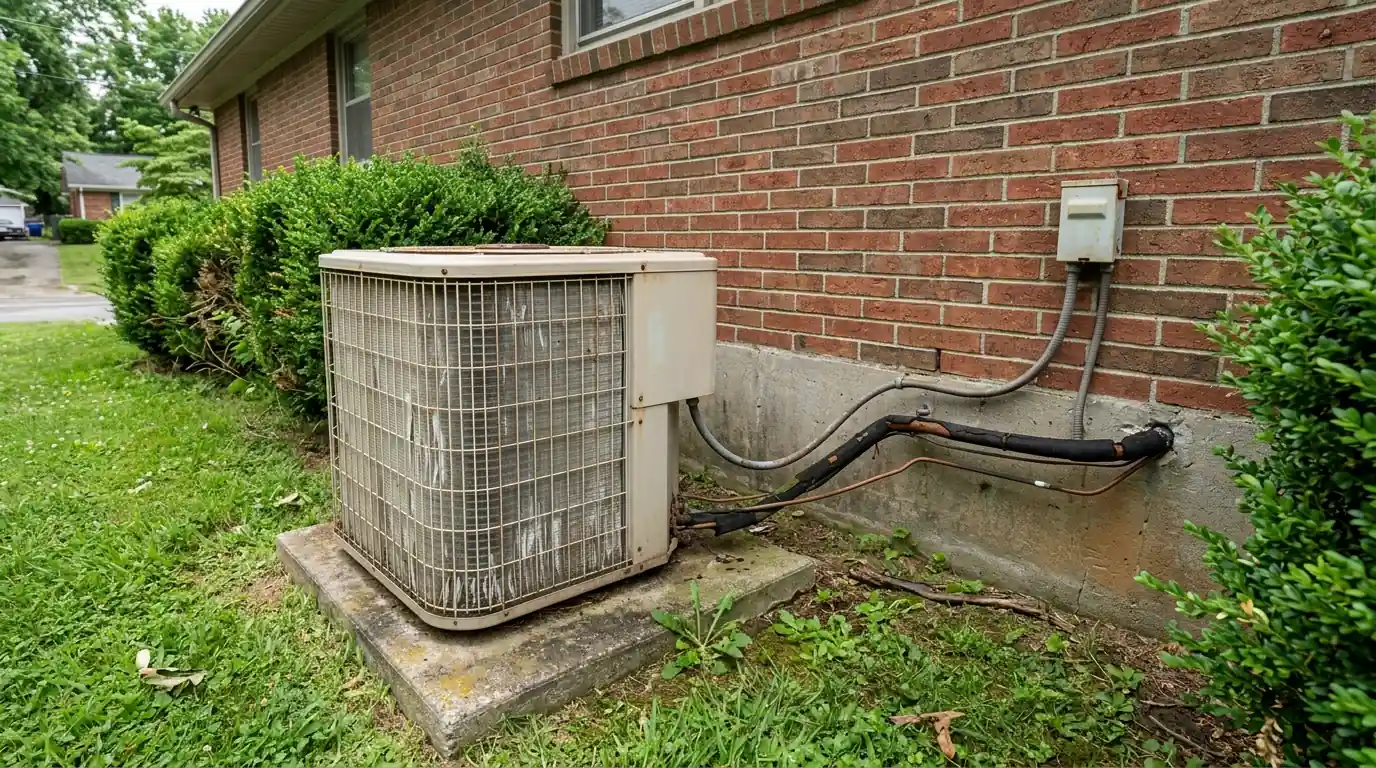
R-22 systems can still run for years, but every repair now carries a refrigerant question. Here is how to tell what you have, what a leak means, and how to plan the switch on your terms.
What size AC or heat pump your Lexington home needs
Most sizing mistakes start with a quick square-footage guess. Here is what a real load calculation looks at, why bigger equipment often feels worse, and how ducts and floor plans change the answer.
Common questions on AC installation around Lexington
Can I replace just the outdoor AC unit and keep my old indoor coil?
With new equipment, usually not. Current outdoor units use A2L refrigerants such as R-454B, and the indoor coil must be rated for that refrigerant and matched to the condenser for the system to perform and qualify for manufacturer parts coverage. An old R-410A or R-22 coil also has a metering device sized for different pressures. We replace the condenser and coil together as a matched pair.
What size air conditioner does a 2,000 square foot Lexington house need?
It depends on the house more than the footage. A tight, well-insulated home from the 2000s may need 2.5 tons, while an older two-story with single-pane windows and leaky ducts can need 3.5. That spread is why we run a Manual J load calculation. Sizing by square feet alone is how many homes end up with clammy, short-cycling systems.
How long does an AC installation take in an existing Lexington home?
A straight replacement of the condenser and coil on existing ducts usually takes one day, start to finish, including vacuum, charge and commissioning. Adding a return, replacing a line set through finished space, or moving the outdoor unit can add a second day. New ductwork in a home that never had central air typically takes two to four days.
Should I replace my furnace at the same time as a new air conditioner?
If the furnace is over 15 years old, has a cracked or rusted heat exchanger, or its blower can't deliver the airflow a new two-stage system needs, replacing both at once often costs less than two separate jobs. If the furnace is newer and its blower is compatible, keeping it is reasonable. Call (859) 377-8167 and we'll check the furnace during the estimate visit.
Do A2L refrigerant air conditioners need anything different in my house?
Many R-454B and R-32 systems include a refrigerant detection sensor in the indoor coil cabinet, wired to the furnace or air handler so the blower runs if a leak is sensed. We install and test that wiring at startup. Otherwise the system looks and runs like any split air conditioner, and normal service and filter changes stay the same.
Call and describe what the system is doing
A person answers (859) 377-8167 day and night. Tell us what you are seeing and a technician takes it from there.