Lexington neighborhood · Fayette County
HVAC replacement and repair in Palomar (40513)
Palomar Hills has slab ranches, crawlspace homes and basement two-stories side by side, and each one puts the equipment and ducts somewhere different. We start by finding where your system lives and what it has been through.
Short answer: HVAC service in Palomar
Palomar Hills (40513) was established in 1986 between Harrodsburg Road, Man o' War Boulevard and Bowman Mill Road, and most homes went up from the late 1980s through 2000, with newer homes nearby in Palomar Trace. Foundations vary from slab ranches to crawlspaces and full basements. Many original systems are 25 to 35 years old, so replacement planning is a common reason homeowners call.
Slab, crawlspace or basement in Palomar Hills
Palomar Hills was established in 1986 at the southwest edge of Lexington, with Man o' War Boulevard to the north, Harrodsburg Road to the east, Bowman Mill Road to the south and the urban growth boundary to the west. Streets such as Palomar Boulevard, Valencia Drive, Nutmeg Drive, Stone Garden Lane, Glade Lane and Peppertree Drive hold houses mostly built from 1989 to 2000. Residents share three pools, a clubhouse, tennis and pickleball courts and walking paths, with restaurants at the Palomar shopping center close by.
Foundations vary from street to street. A 1993 ranch in the Glade section sits on a slab with gas heat, and a 2000 story-and-a-half on Valencia Drive rests over a crawl space. Many two-story homes have full walk-out basements, and newer Craftsman homes nearby in Palomar Trace include dual fuel systems. Where your furnace sits shapes nearly every repair and replacement decision.
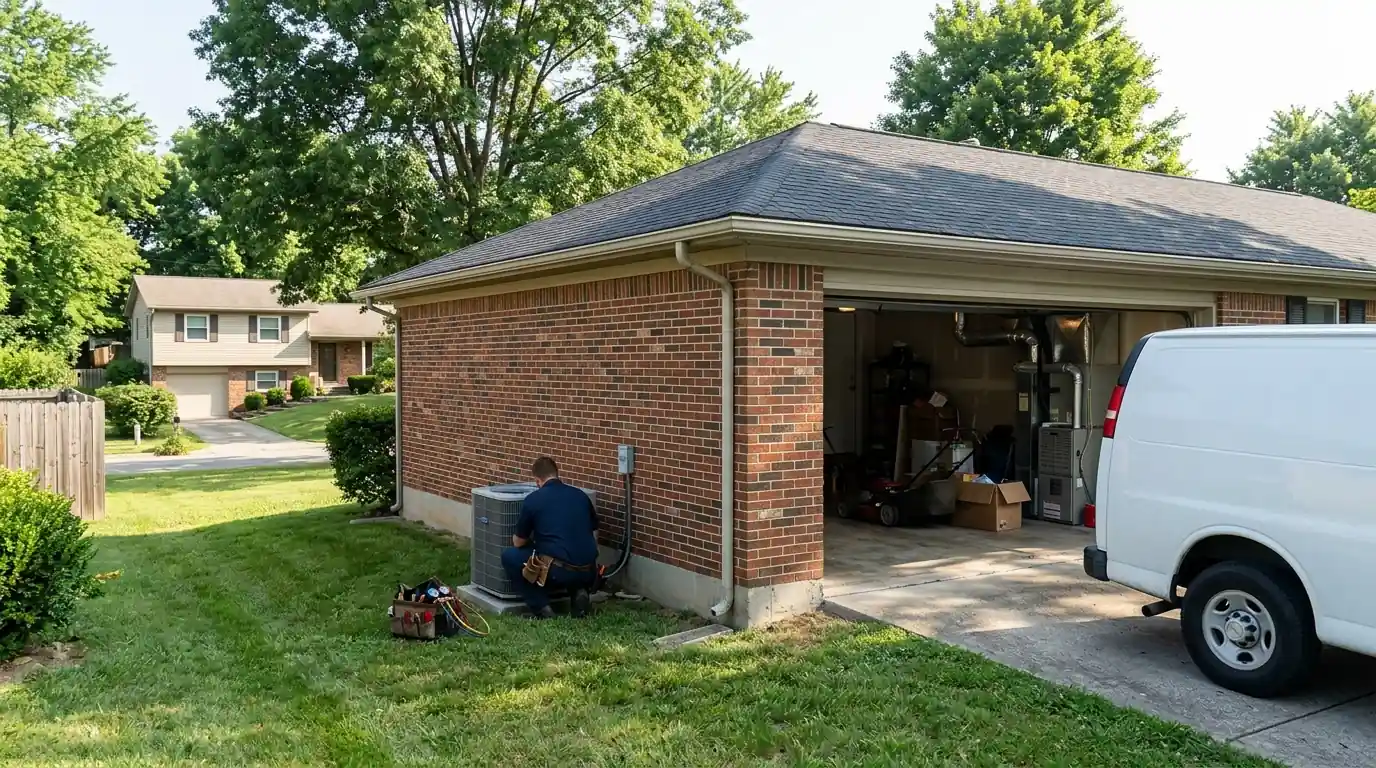
Where Palomar systems sit and what we check first
The foundation decides where the equipment and ducts go, and each spot has its own weak points.
| Foundation | Where the system sits | What we check first |
|---|---|---|
| Slab ranch | Closet, garage or attic, ducts overhead | Attic duct leaks and insulation |
| Crawl space | Closet or crawl, ducts under the floor | Duct sweating, drain and moisture |
| Full basement | Basement utility room | Return path and lower-level humidity |
| Townhome | Interior closet | Combustion air and condensate line |
Palomar problems that depend on where the ducts run
These faults come from the location of the ducts as much as from the age of the equipment.
Attic ducts on slab ranches
Ducts above the ceiling sit in attic air that can pass 130 degrees in July. Leaky joints and thin insulation there waste cooling before air reaches a room.
Sweating crawlspace ducts
Under-floor ducts in a humid crawl space sweat in summer. Wet insulation sags, joints separate, and musty air finds its way into the house.
Original late 1980s equipment
A system from 1989 or the early 1990s has run more than 30 seasons. Heat exchangers, compressors and coils are often near the end at the same time.
Mismatched replacement halves
Some homes got a new outdoor unit on the original indoor coil. A mismatched coil lowers efficiency and can cause icing or poor moisture removal.
Closet furnaces short on air
A gas furnace in a slab ranch closet needs enough combustion air. Swapping a louvered door for a solid one can starve it and cause flame problems.
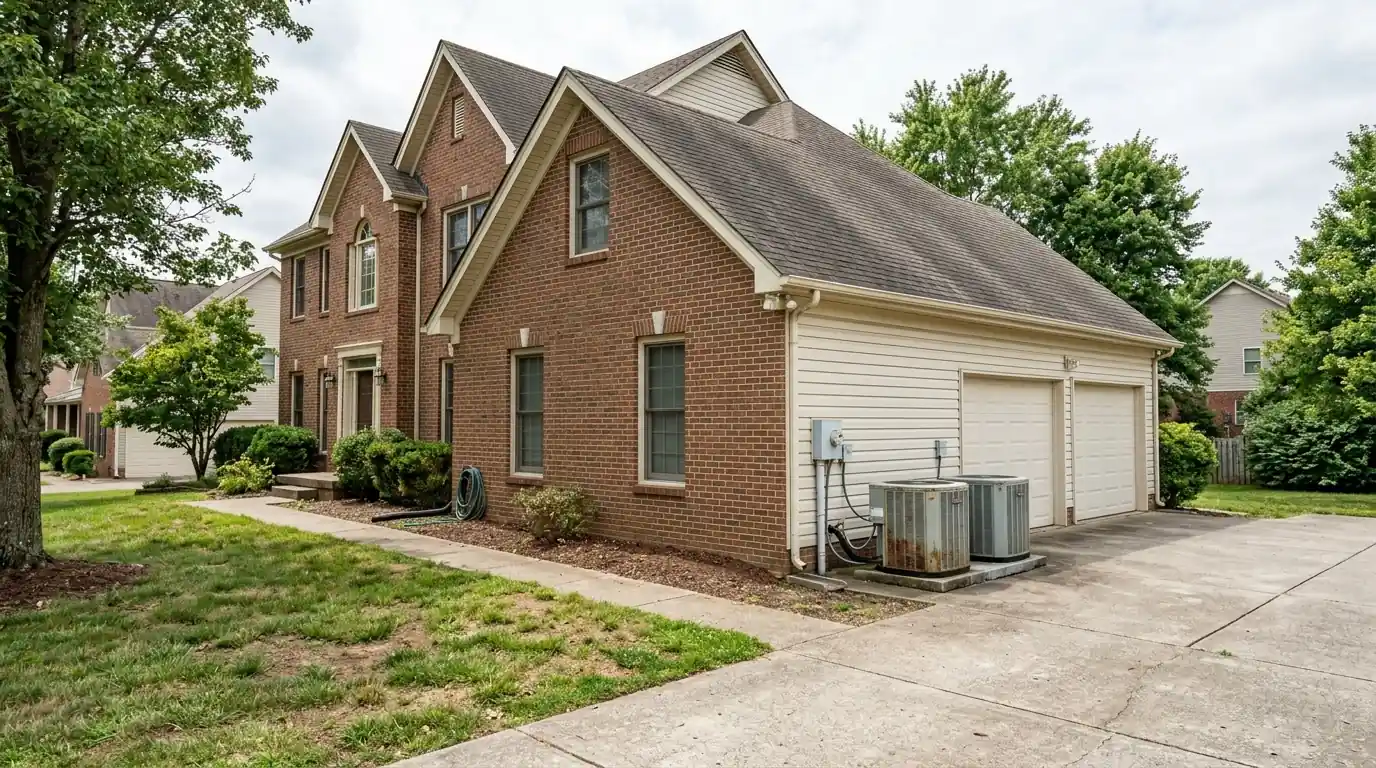
Replacing an aging Palomar system, start to finish
A replacement here starts with the house and the ducts, not the old nameplate.
Load calculation and duct check
We measure the house, check insulation and windows, and inspect the ducts wherever they run, whether in the attic, crawl space or basement ceiling.
Options with written prices
You see gas furnace, heat pump and dual fuel options sized for your home, each with a written price and what it means for your bills.
Recover refrigerant and remove
We recover the old refrigerant properly, disconnect gas and power safely, and take out the old furnace, coil and condenser.
Set matched equipment
The new indoor coil, furnace or air handler and outdoor unit are installed as a matched set, with new drains, pads and line connections.
Start-up and measurements
We check refrigerant charge, airflow, gas pressure and temperature rise, then show you the thermostat and filter.
Practical notes for Palomar attics, crawl spaces and closets
Where the equipment sits decides what you can safely check yourself.
- Clear the pull-down attic stair and the path to an attic air handler.
- Look for water in the secondary pan under an attic unit after humid days.
- Keep crawlspace access doors closed and latched through the summer.
- Do not store boxes, paint or cleaners inside a furnace closet.
- Keep garage furnaces clear of bikes, mowers and gas cans.
- Tell us whether your supply registers sit in the ceiling or the floor.
Why Palomar replacements start below the floor or above the ceiling
A new system cannot make up for ducts that leak into an attic or sweat in a crawl space. On many Palomar homes, sealing attic and crawlspace ducts is the step that makes a full system replacement pay off. If ice ever formed on your lines after a past outdoor-unit swap, our article on ice on refrigerant lines explains why a mismatched coil is a common cause.
Neighbors in Beaumont, across Man o' War, tend to have basements and zoned systems, so their priorities differ. In Palomar, we start with your foundation type and duct location. Call (859) 377-8167 and we will set a time to look at your system and lay out the options.
What Palomar homes call us for
HVAC System Replacement
Many Palomar systems date from 1989 to 2000, and replacing the furnace, coil and condenser together avoids a mismatched setup.
Duct Sealing
Attic ducts on slab ranches and under-floor ducts in crawlspace homes leak and sweat, wasting much of what the system produces.
Evaporator Coil Replacement
Original indoor coils left in place after a condenser swap cause icing and poor humidity control in Palomar homes.
Furnace Installation
Gas furnaces in Palomar closets, crawl spaces and basements each need proper combustion air, venting and drain routing when replaced.
AC Repair
Older condensers in Palomar fail on the first hot week of summer, and a quick diagnosis tells you whether repair still makes sense.
Heat Pump Installation
Slab ranches with attic ducts are often a good fit for a heat pump, especially when the furnace and condenser are both near the end.
Neighboring areas around Palomar
Questions we hear from Palomar
Where is the furnace in a Palomar slab ranch?
In a slab home there is no basement to hold equipment, so the furnace or air handler usually sits in a hall closet, a garage corner or the attic, with ducts running through the attic to ceiling registers. Knowing the location tells us what to check, since attic equipment and ducts face extreme summer heat and closet furnaces need enough combustion air.
Should I replace both units in my 1990s Palomar home at once?
In most cases, yes. The indoor coil and outdoor unit are designed to work as a matched pair, and a new condenser on a 30-year-old coil loses efficiency and can ice up. Replacing the furnace or air handler at the same time avoids a second project in a few years. We will tell you if one half is truly in good enough shape to keep.
Do Palomar crawlspace ducts need sealing?
Often they do. Ducts in a crawl space sit in humid air most of the summer, and leaky joints pull that damp, musty air into the return side. Sweating ducts also soak their insulation, which then sags and pulls joints apart. We inspect the crawl space, seal the joints, replace damaged insulation and check that the drain and vapor barrier are in order.
Heating or cooling trouble in Palomar?
Call (859) 377-8167 any hour. Tell us what the system is doing and where you are, and we will take it from there.