Lexington neighborhood · Fayette County
Geothermal and heat pump repair in Greenbrier (40509)
Greenbrier homes sit on generous lots off Winchester Road, from 1960s originals to new houses beside the golf course. When a ground loop, a large heat pump or a zone panel acts up, the fix depends on what was built when.
Short answer: HVAC service in Greenbrier
We service geothermal systems, air-source heat pumps and zoned equipment in Greenbrier (40509), the 1960s subdivision off Winchester Road that grew around the private Greenbrier Golf and Country Club. Homes range from older houses on lots near an acre to new gated homes beside the fairways with ground-source heat, walkout basements and tall great rooms.
A 1960s rural subdivision that grew up around a golf course
Greenbrier began in the 1960s as a rural subdivision on the eastern edge of Lexington, bounded by Winchester Road on the north and Walnut Grove Lane on the east, with old farm land to the west that later became the Hamburg area. The Greenbrier Golf and Country Club was organized in 1970, and its 18-hole course, designed by Bill Newcomb, was built in 1971.
Streets like Bahama Road carry the neighborhood's larger lots, many close to an acre, with two-story homes and walkout lower levels facing the fairways. Some 1970s houses here are large all-electric two-stories with finished walkout basements that open onto the course. On lots this wide, the outdoor unit can sit well away from the driveway and the air handler, which affects service access and refrigerant line length.
The newest homes are on gated streets beside the course, such as Ashford Oaks along Bobwhite Trail and the gated section off Briercroft Way. Recent builds there include geothermal heat pumps with zoned air, two-story great rooms and full walkout basements. That range, from 1960s originals to brand-new ground-source systems, is why we ask what year your house was built when you call.
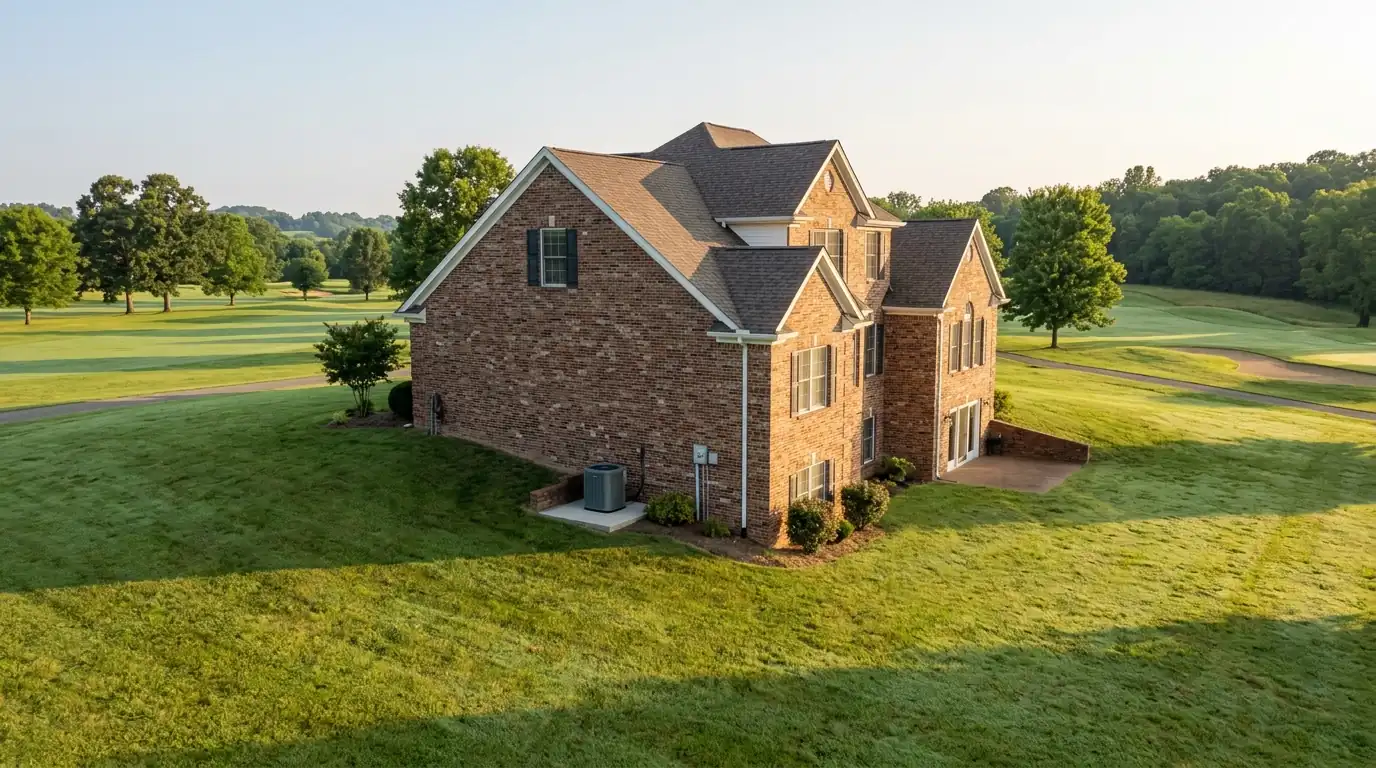
Greenbrier homes by era and the heat they run on
What we expect to find depends heavily on when the house went up and how it has been updated.
| Era | Common setup | What we watch for |
|---|---|---|
| Original 1960s houses | Depends on past updates | Duct size, older wiring, R-22 units |
| 1970s and 1980s two-stories | Heat pump, electric furnace or gas furnace | Strip heat use, aging air handlers |
| New gated homes by the course | Geothermal or air-source, often zoned | Loop pressure, pump flow, zone control |
Where large Greenbrier systems lose efficiency
Big houses on big lots come with their own set of weak points.
Ground loop pressure loss
A closed geothermal loop holds water and antifreeze under light pressure. Slow loss at a fitting or flow center shows up as weak heat and low-pressure lockouts on cold mornings.
Worn flow center pumps
The pumps that move fluid through the loop run nearly every hour the system does. A noisy or failed pump stops heat transfer even when the compressor itself is fine.
Heat stuck at the ceiling
Twenty-foot great room ceilings trap warm air high in winter and let the floor run cool. Return placement and fan direction matter as much as equipment size.
Long runs to distant condensers
On wide lots, an air-source outdoor unit can sit far from the air handler. Long refrigerant lines need correct charge and oil return, or capacity drops quietly over the years.
Walkout levels with their own climate
A walkout basement gets sun on one side and earth on three. Without its own zone or dehumidification, it runs damp in summer and cool in winter.
Zone boards and dampers aging out
Multi-zone systems depend on a control board and motorized dampers. A stuck damper starves one floor of air and pushes too much pressure into the rest of the ducts.
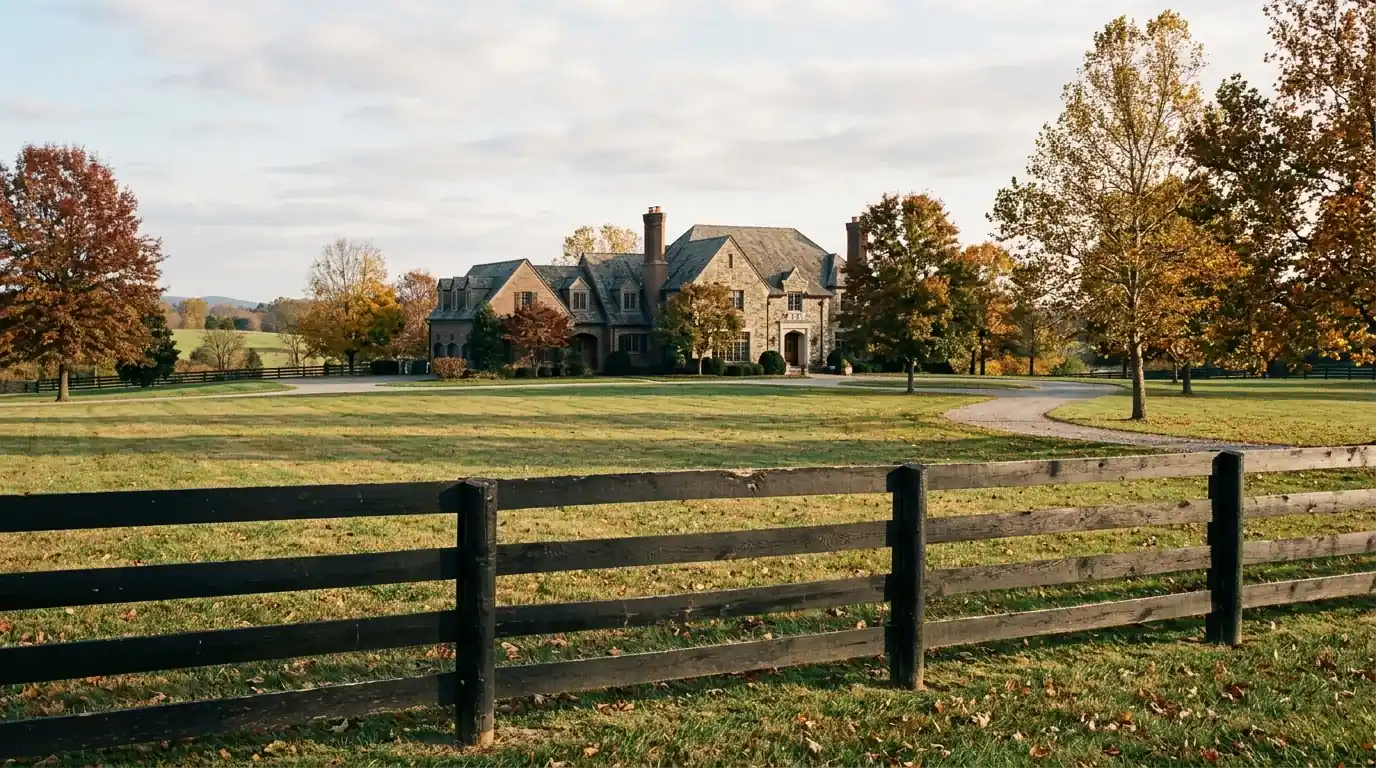
Ground loops, walkout basements and tall great rooms
A geothermal heat pump moves heat through buried pipe instead of outdoor air, so it holds steady output in a January cold snap that would push an air-source unit onto strip heat. The trade-off is that problems hide underground or inside the cabinet. We read entering and leaving loop temperatures, check pressure and flow, and compare them to the unit's design before blaming the compressor.
Inner Bluegrass ground sits on limestone, and loop fields are drilled or trenched to suit each lot. Most loop issues can be diagnosed at the flow center without digging, but it helps to know whether your loop is vertical, horizontal or open, so keep any paperwork from the original installation where we can see it.
For a walkout lower level, the usual fix is a dedicated zone or a whole-house dehumidifier tied into the return, which dries the air without chilling the room. For great rooms, we look at where the returns sit and whether a high return could pull warm air back down to the living space in winter.
Gate codes, long driveways and other Greenbrier visit details
A few details help us reach and work on a Greenbrier system quickly.
- If your street is gated, share the gate code or plan to open it for us.
- Tell us if the outdoor unit or loop flow center sits far from the driveway.
- Let us know whether the system is geothermal, air-source or both.
- Point out which thermostat controls which zone before we start.
- If the outdoor unit sits on the fairway side, leave that gate open.
- Clear stored items away from the basement mechanical room door.
Service calls we take most in Greenbrier
Geothermal Heat Pumps
Newer gated homes beside the course use ground-source heat pumps, and loop pressure, flow and pump health need regular attention.
Heat Pump Repair
Older all-electric homes here rely on air-source heat pumps whose strip heat runs up KU bills when the outdoor unit falters.
HVAC Zoning Systems
Large two-stories with walkouts and great rooms depend on zone dampers and control boards that wear out with age.
Whole-House Dehumidifiers
Walkout basements on sloped lots run damp in humid summers, and a ducted dehumidifier keeps them dry without overcooling.
Heat Pump Maintenance
Big systems on big houses lose efficiency quietly, so twice-yearly checks of charge, coils and airflow catch the slide early.
Neighboring areas around Greenbrier

Questions we hear from Greenbrier
Is a geothermal system in a Greenbrier home worth repairing, or should it be replaced?
Most geothermal problems are repairable. A well-built loop lasts far longer than the heat pump inside, so even when the indoor unit reaches the end, the buried pipe usually stays in service. We check loop pressure, flow and temperatures first, then price the repair against a new indoor unit connected to your existing loop. Our geothermal heat pump service page explains more.
Why is the great room in my Greenbrier house cold in winter but hot in summer?
Tall ceilings let warm air rise out of reach in winter and collect heat from upper windows in summer. If the returns sit low, the system keeps reconditioning the coolest air in the room. A high return, ceiling fans on the right setting and sometimes a separate zone even the room out without oversizing the equipment.
Do you work on the older 1960s and 1970s houses in Greenbrier too?
Yes. Older Greenbrier houses may run a heat pump, an electric furnace or a gas furnace with central air added later, depending on how they have been updated. Some may still have original ductwork or R-22 outdoor units. We repair what makes sense, and when replacement is the better path, we size new equipment to the house as it stands today, additions included.
Heating or cooling trouble in Greenbrier?
Call (859) 377-8167 any hour. Tell us what the system is doing and where you are, and we will take it from there.