Heating · Lexington, KY
Furnace repair in Lexington when the heat quits
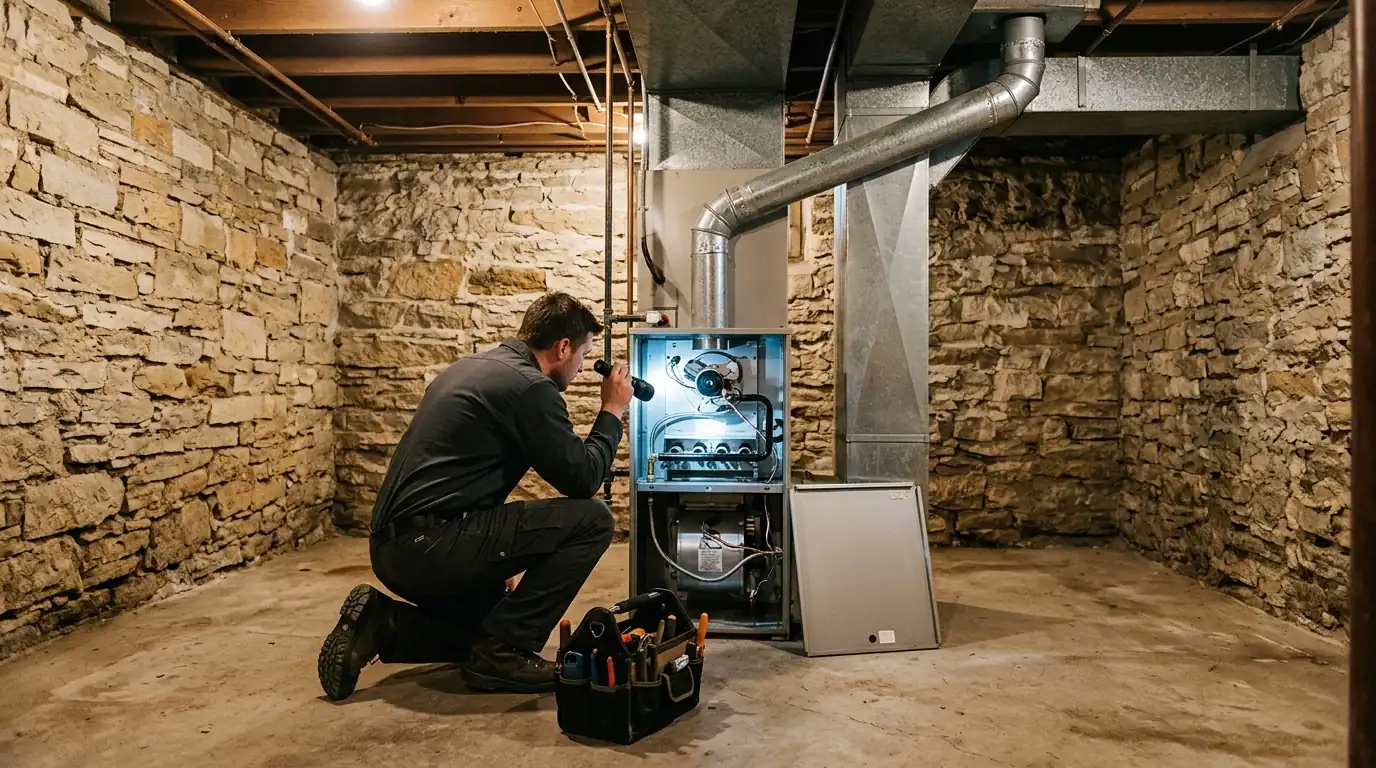
Your furnace is running but blowing cold air, clicking without lighting, or sitting dark on a freezing night, and you need to know what is safe to try before a technician gets there.
Lexington and nearby counties
Line open 24/7Short answer: Furnace Repair in Lexington, KY
When a gas furnace stops heating, confirm the thermostat is on heat, replace a clogged filter, check the furnace switch and breaker, and read the blinking code through the door window. If it still will not run, or you smell gas, stop there. Most no-heat calls we answer in Lexington trace back to a dirty flame sensor, a cracked igniter, a pressure switch fault or a worn inducer motor.
Five minutes of checks before you call for heat
Work through these in order. None of them needs tools, and none involves opening the burner compartment or touching the gas valve.
- Set the thermostat to heat and three degrees above the room temperature.
- Replace thermostat batteries if the screen is blank, dim or flashing a low battery icon.
- Pull the filter; a matted, gray filter can trip the high limit switch.
- Find the furnace service switch, which looks like a light switch, and make sure it is on.
- Reset a tripped furnace breaker once, and leave it off if it trips again.
- Read the blinking light through the small window in the lower door and write the pattern down.
- Clear snow, leaves or nests away from the white PVC pipes where they leave the house.
- If you smell gas, leave now and call Columbia Gas or 911 from outside.
The six parts behind most no-heat calls we answer
A gas furnace lights in a fixed order, and each part has to prove itself before the next one starts. These are the links that break most often.
Dirty flame sensor
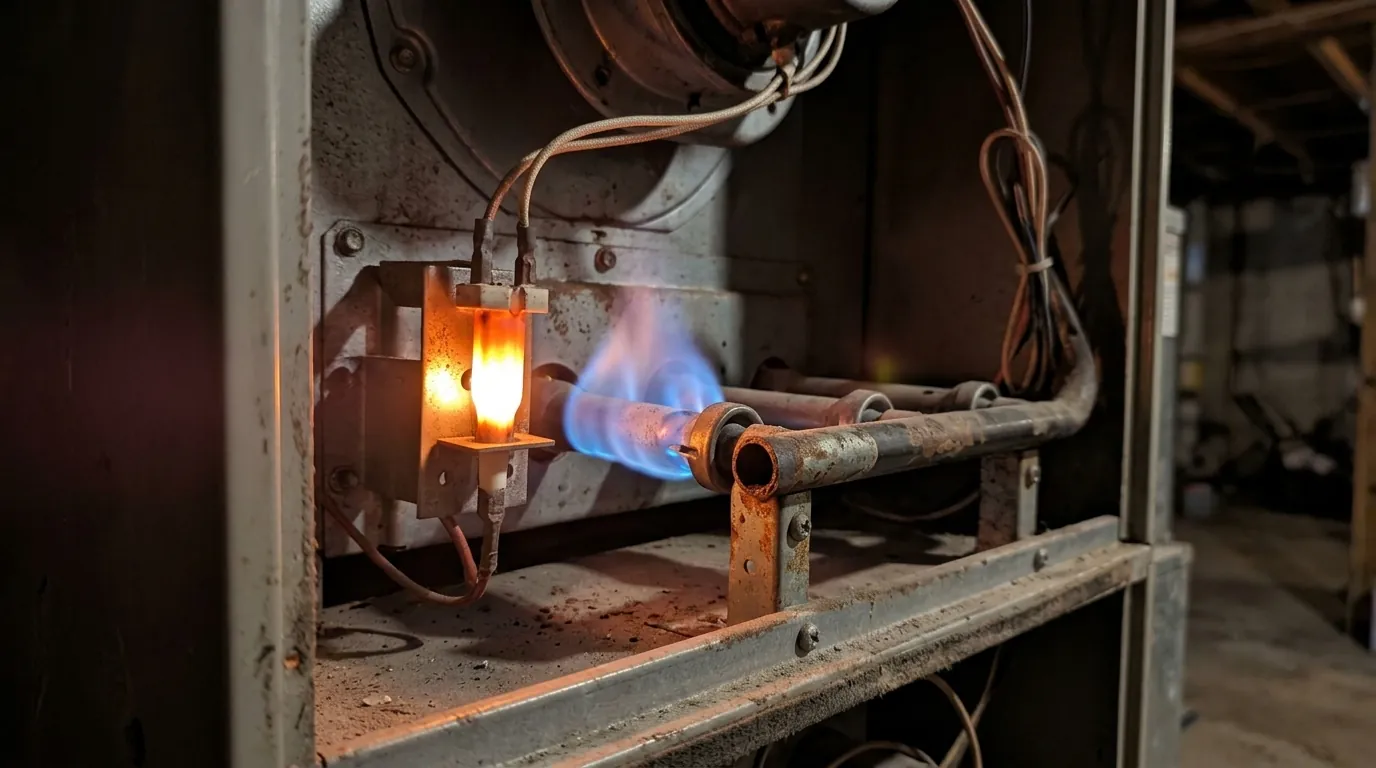
Burners light for three to eight seconds, then shut off. Oxide on the sensor rod drops the flame signal below roughly one microamp, so the control board assumes there is no flame and closes the gas valve.
Cracked hot surface igniter
Igniters harden and crack a little with every heat cycle. The inducer runs, the igniter never glows orange, and after three failed tries the board locks the furnace out for about an hour.
Pressure switch stays open
This switch proves the vent is drafting before ignition. A split hose, a plugged condensate trap or a blocked vent keeps it open, and the furnace never tries to light.
Worn inducer motor
A howl or grind at startup usually means dry bearings. As the motor slows, draft falls below the pressure switch setpoint and the furnace stalls before the igniter ever gets power.
High limit switch tripping
When air cannot move across the heat exchanger, it overheats and the limit opens. A choked filter, closed registers, a dirty blower wheel or a failing blower motor is the usual cause.
Weak blower capacitor
On older PSC blower motors, a capacitor that has drifted below its rating lets the burners fire while the fan hums or crawls. The limit trips and the rooms never warm up.
What our technician does from the door to warm air
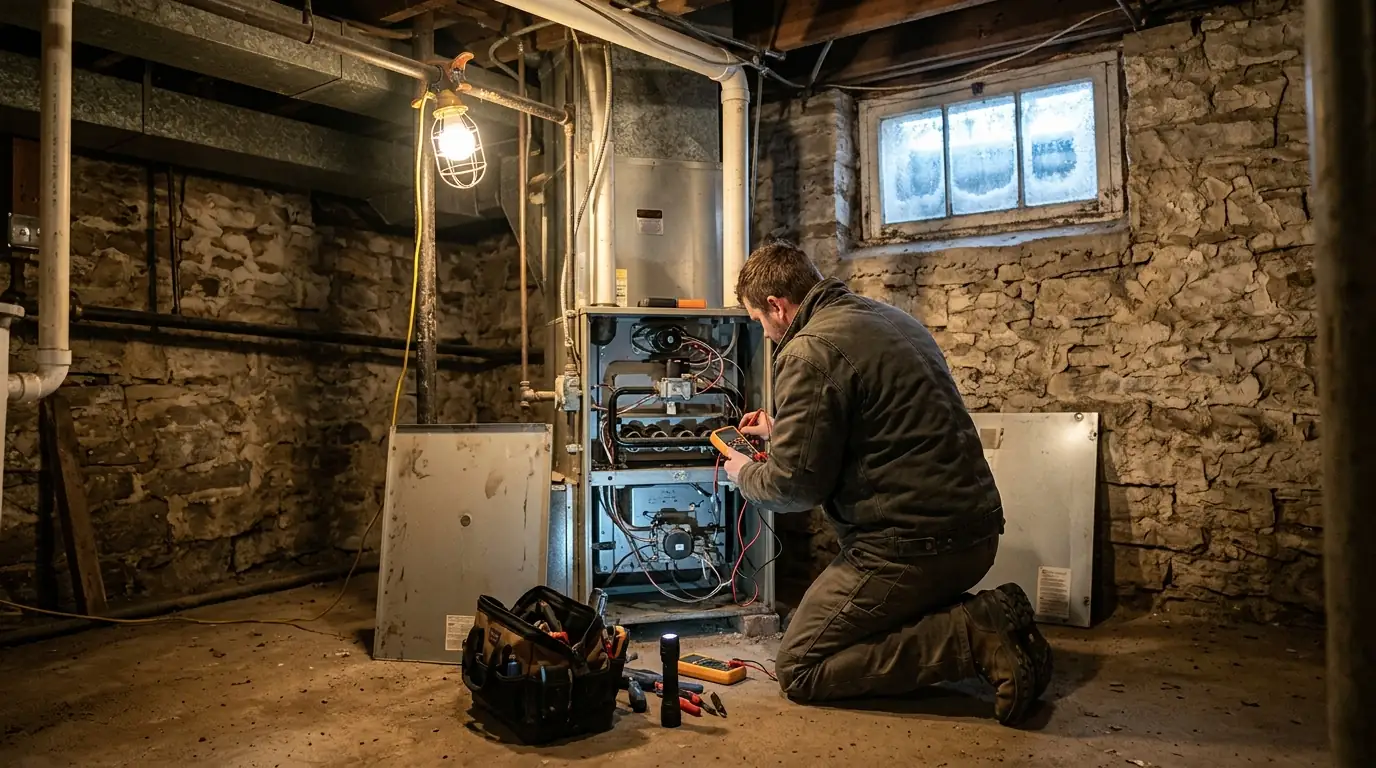
A furnace repair should be a measured diagnosis, not a parts swap. Here is the order we follow on a no-heat call.
Start with what you saw
We ask for the blink code, what the furnace did the last time it ran, and any noise or smell. That narrows the test sequence before the doors come off.
Watch one full start cycle
We call for heat and watch each stage: inducer, pressure switch, igniter, gas valve, flame proof and blower. Whichever stage fails tells us exactly where to put the meter.
Measure the suspect parts
Flame signal in microamps, igniter resistance in ohms, draft in inches of water column, manifold gas pressure and temperature rise across the heat exchanger. Numbers settle what a guess cannot.
Written price before work
You see the failed part, hear why it failed and get a written price before anything is replaced. If we find a cracked heat exchanger, we show you the crack or the readings.
Run it hot and test the flue
After the repair we run several complete cycles, check carbon monoxide at the flue and in the room, and confirm the limit and rollout switches hold under full fire.
What a furnace repair usually costs in Lexington
Most heating repairs we complete land inside this range. Cleaning and small parts sit near the bottom, while motors and control boards climb toward the top.
- Which part failed. Cleaning a flame sensor costs a fraction of an inducer assembly, a variable-speed blower motor or an integrated control board.
- Factory-only parts. Some Carrier, Trane and Lennox boards and ECM motors are only sold through the brand's distributors and cost more than universal replacements.
- Where the furnace sits. A horizontal furnace in a low crawlspace or a hot attic takes longer to reach and work on than one standing in a basement.
- Damage the failure caused. A dying inducer can melt a drain hose, and a shorted motor can take out the board, so each damaged part is priced separately.
- Drain and vent corrections. High-efficiency furnaces sometimes need a new condensate trap, heat tape on a drain line, or a vent section regraded so water runs back.
These are typical ranges, not quotes. Your written price comes after we look at the system, find the failed part and explain the fix. Compare typical prices for every service.
Cold snaps, crawlspaces and Columbia Gas furnaces in Lexington
Lexington winters swing between mild afternoons and nights in the 20s, and a few times each season a cold snap pushes into the single digits. Those are the nights furnaces fail. A part that limped through November now has to run long cycles back to back, so igniters crack, inducer bearings seize and tired capacitors finally quit. Most of the gas furnaces we repair inside the city run on Columbia Gas of Kentucky, while propane units turn up on farms and outlying lots.
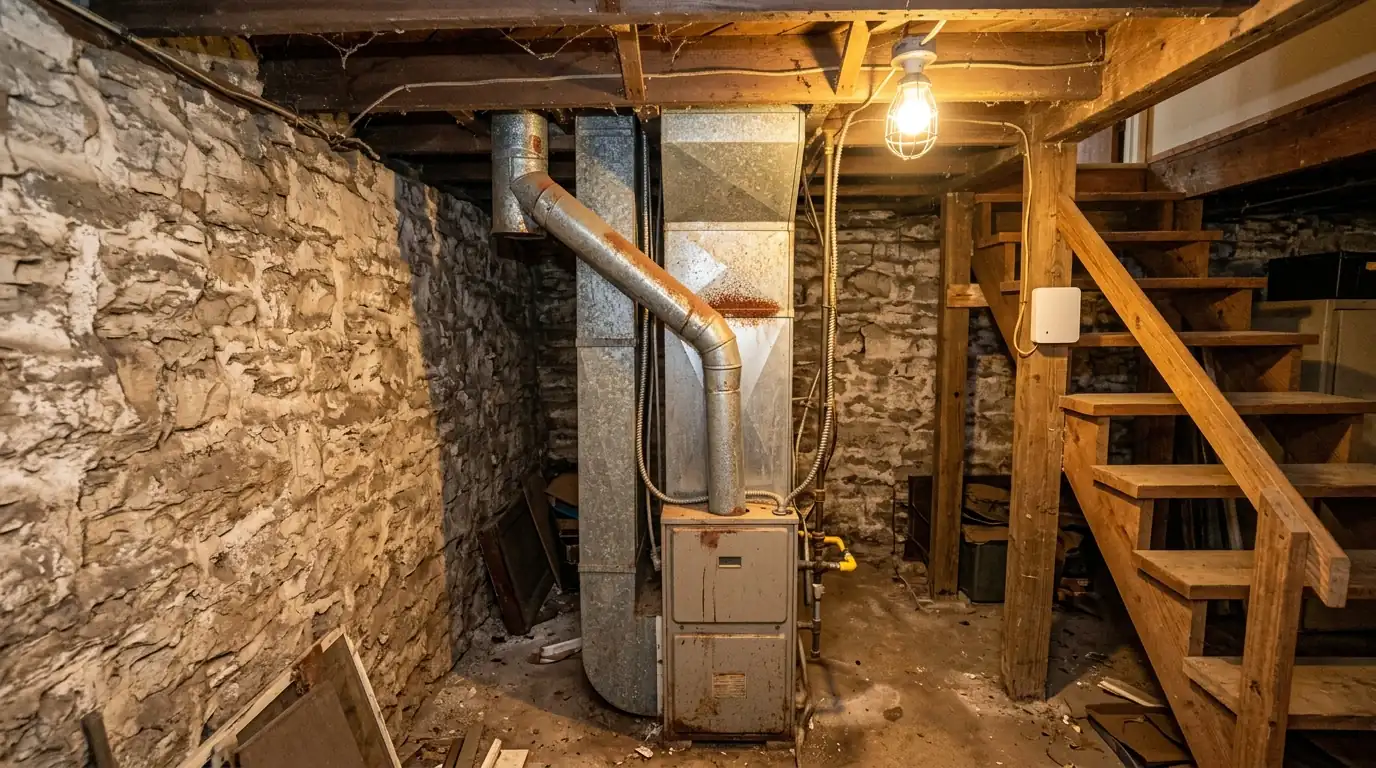
Where the furnace sits shapes the repair. Ranches from the 1950s and 1960s, like many in Gardenside and nearby streets, often tuck an upflow or downflow unit into a hall closet. Newer subdivisions put furnaces in basements or garages, and plenty of houses run a horizontal furnace in the crawlspace. On limestone ground, crawlspaces stay damp and sometimes hold standing water after heavy rain, so we find rusted burners, corroded igniter leads and condensate traps that freeze when vents stay open in January.
High-efficiency furnaces add one more cold-weather fault. Their white PVC condensate lines can freeze where they pass through an unheated garage or crawlspace, and once water backs up, the pressure switch keeps the burners off. We thaw the line, find where it froze and insulate or reroute it so the next cold snap does not bring the same call. If you would rather catch these problems in October, an annual furnace tune-up covers each one.
When a furnace repair makes sense and when it stops
Most no-heat calls end with a repair and a warm house. A few findings change the conversation, and we tell you plainly which side your furnace is on. Our repair or replace guide walks through the math.
| What we find | What it usually means | Typical next step |
|---|---|---|
| Dirty sensor or failed igniter | Normal wear on a sound furnace | Repair and keep running |
| Inducer or blower motor at 12 years | Larger repair on a healthy cabinet | Repair if the heat exchanger checks out |
| Cracked heat exchanger | Combustion gases can reach the airstream | Shut off, then price a replacement |
| Third major repair past 18 years | Parts and efficiency are both aging | Compare repair and replacement prices |
We work on Carrier, Trane, Lennox, Rheem and Goodman equipment along with every other major brand found in Lexington homes, and the same testing comes first on all of them.
Neighborhoods and towns that call us for furnace repair
We cover every Lexington neighborhood and the towns around it. These are the places we visit most for this work; the full list is on our Fayette County page and the service area page.
Further reading from our Comfort Blog
Furnace smells and carbon monoxide: when to leave
Some furnace smells are harmless and fade within the hour. Others mean shut the system off, and a few mean get everyone out of the house first and ask questions later.
Repair or replace your HVAC: a plain way to decide
A large repair quote on an old system forces a fast decision. These are the factors we weigh with Lexington homeowners, roughly in the order they matter.
Common questions on furnace repair around Lexington
Why does my furnace light and then shut off after a few seconds?
That pattern almost always points to the flame sensor. The burners light, the board looks for a flame signal through the sensor rod, and a coating of oxide keeps the reading too low. The board then closes the gas valve as a safety step. We clean or replace the sensor and check the ground path, because a loose ground wire causes the same symptom.
Is it safe to keep resetting a gas furnace that locks out?
One reset to see what happens is reasonable. Repeated resets are not. Each one sends gas to the burners again, and a weak igniter can light that gas late with a loud boom. A furnace may also be locked out because a rollout or limit switch opened for a real safety reason. Write down the blink code and call (859) 377-8167 instead.
What happens if the technician finds a cracked furnace heat exchanger?
A crack can let combustion gases, including carbon monoxide, mix with the air your blower sends through the house. We show you the crack on camera or the readings that point to it, shut the furnace off, and give you written prices for your options. We also test CO in the living space so you know whether the crack has been leaking.
How long should a furnace igniter last in a Lexington home?
Older silicon carbide igniters often last four to seven years, while newer silicon nitride igniters usually go longer. Short cycling, a furnace that fires many times an hour, and skin oils left on the element during installation all shorten that life. If your igniter is past five years, we check its resistance during service and tell you whether it is drifting.
Why does my high-efficiency furnace quit on the coldest nights?
On 90 percent and higher furnaces, the most common cold-night fault is a frozen condensate line or trap. Water backs up, the pressure switch opens and the furnace stops trying to light. Snow or frost can also block the intake and exhaust pipes outside. Clear the pipes if you can reach them safely, then call so we can find where the line is freezing.
Need furnace repair today?
A person answers (859) 377-8167 day and night. Tell us what you are seeing and a technician takes it from there.