Franklin County, KY
Furnace and central air service in Frankfort (40601)
Frankfort homes sit everywhere from the Kentucky River flats to steep hillside lots, and a furnace or air conditioner that quits needs someone who understands both the old capital houses and the newer streets above the valley.
Short answer: HVAC service in Frankfort
We repair and replace furnaces, central air, heat pumps and boilers throughout Frankfort and the 40601 ZIP, including houses near the river that took on water during floods. Our Lexington office is about 30 miles east by I-64. Electricity in most of Frankfort comes from the Frankfort Plant Board and gas from Columbia Gas of Kentucky, and we work on systems running on either.
Frankfort homes from the river flats to the hilltops
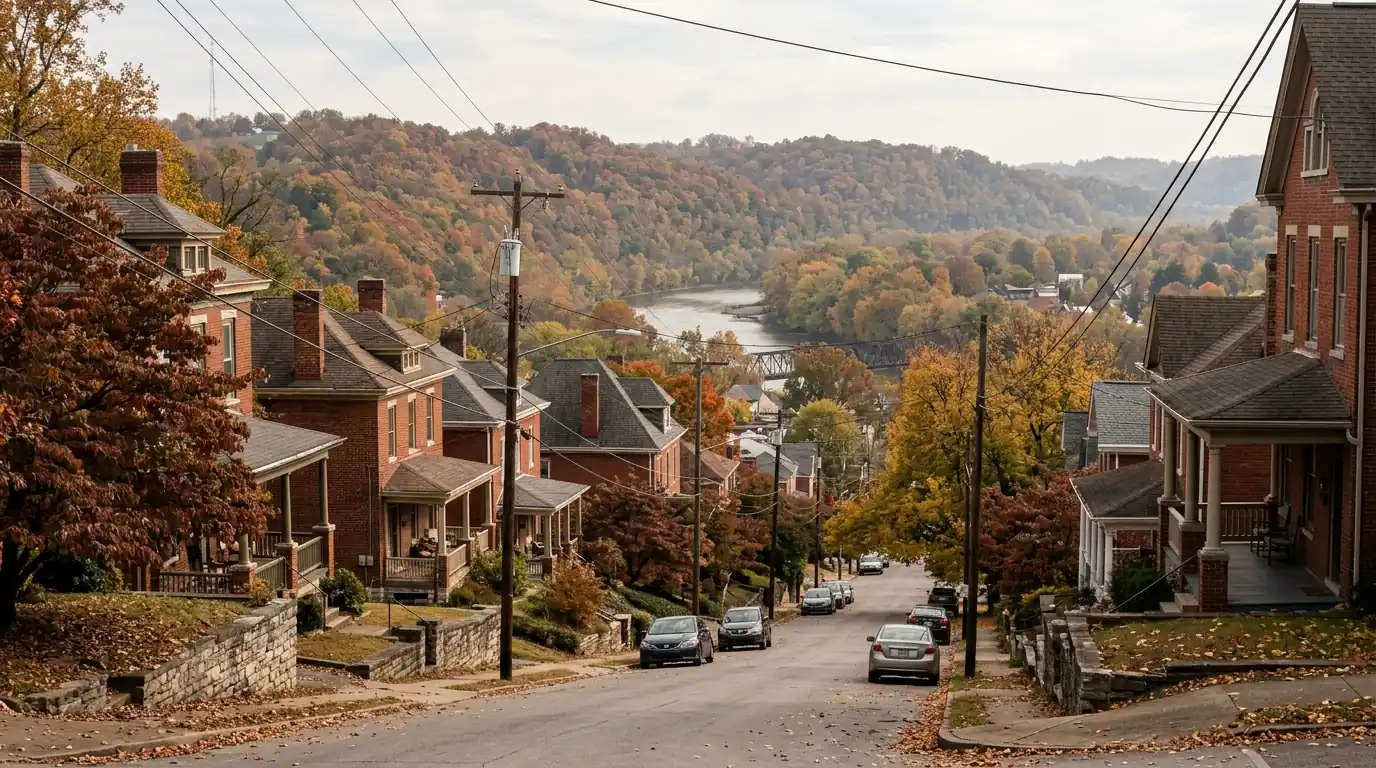
The Kentucky River bends right through the middle of Frankfort, with downtown on one bank and South Frankfort on the other, and Bellepoint across the water north of Benson Creek. The oldest houses near the Old State Capitol and the Corner in Celebrities Historic District were built long before central air, so the cooling in many of them was added later through attics, closets and low basements. Supply runs in those houses are often undersized for the rooms they feed.
Up on the East Side and West Side, the suburban edges of the river valley, the housing turns to ranches, split-levels and newer subdivisions with standard forced-air systems. Many of these homes use gas furnaces on Columbia Gas of Kentucky lines, while others rely on heat pumps powered by the Frankfort Plant Board, which serves roughly 21,000 electric meters in Franklin County. Out in the county and toward Lawrenceburg on US 127, propane and all-electric heat are common.
For older rooms that never had ductwork, we often suggest ductless mini split systems instead of cutting new chases through plaster walls. For newer homes, the usual work is repair, tune-ups and planned replacements on Carrier, Lennox, Rheem and Goodman equipment.
Heating and cooling trouble we see around the capital
Frankfort mixes river-bottom houses, hillside lots and older housing near the capital, and each brings its own set of failures.
Equipment that sat in floodwater
The Kentucky River crested at 48.3 feet in April 2025, just short of the 1978 record. Furnaces, water heaters and outdoor units that went under need inspection before anyone restarts them.
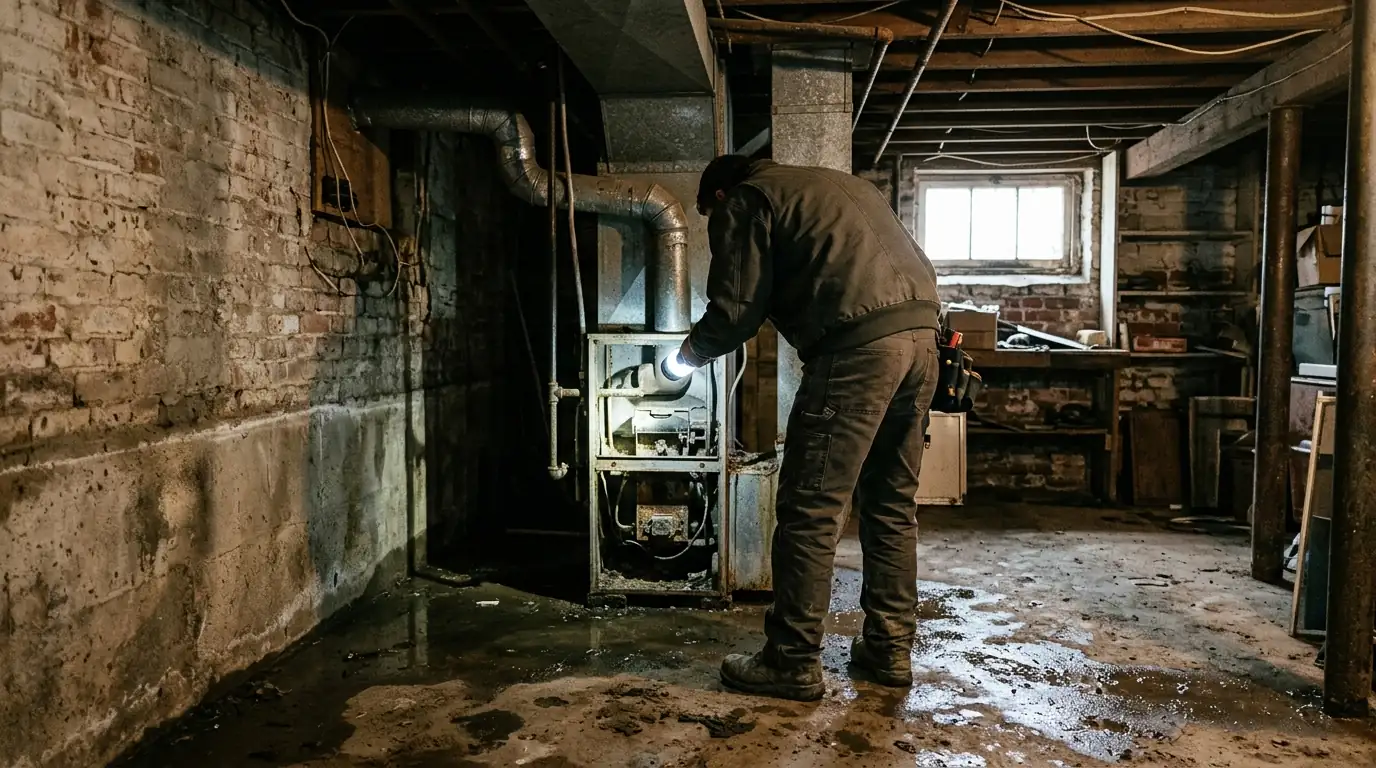
Basement furnaces in damp space
Low basements near the river stay humid. Rust forms on burners, blower housings and the bottom of the cabinet, and corroded wiring connections start causing intermittent lockouts.
Condensers on sloped lots
Hillside pads settle over time. A tilted outdoor unit can strain its refrigerant lines and trap water in the base pan, and we level or reset it during repairs.
Added-on air in older houses
Retrofit duct systems in pre-war homes often have one long trunk and too few returns. Upstairs rooms run several degrees warmer than the first floor all summer.
Heat pumps leaning on backup heat
On Plant Board power, a heat pump that has lost charge will run its electric strips for hours. You notice the bill before you notice the house is cooler, and cool supply air in winter is often the first clue.
Getting a Frankfort furnace safely running after high water
If water reached your furnace, air handler or outdoor unit, keep it switched off and call before restarting. This is how we handle a flood-exposed system.
Power and gas stay off
We confirm the electrical disconnect and gas supply are shut, then check for standing water, mud and debris inside the cabinet and the return plenum.
Controls under water get replaced
Any gas valve, control board or blower motor that sat in floodwater is replaced, not dried out and reused, because internal corrosion can cause unsafe operation later.
Ducts and insulation checked
Ductwork in a flooded crawlspace or basement often holds silt and wet insulation. We note which sections need cleaning and which need replacement.
Outdoor unit inspected
We look at the condenser fan motor, electrical connections and the coil for silt packed between the fins, and we test the compressor before running it hard.
Restart with safety tests
Once the parts are sound, we fire the system, measure gas pressure and temperature rise, and test for carbon monoxide before handing it back to you.
Small things that speed up a Frankfort service call
Frankfort streets can be tight near downtown and steep on the hills, so a little planning helps.
- Tell us if parking is on-street only, which is common near downtown.
- Mention steep driveways or hillside steps so we bring the right equipment.
- Say whether the house is on the river side of the floodwall or levee.
- Have your heat type ready: Columbia gas, propane or a Plant Board heat pump.
- Clear the area around the basement furnace or crawlspace hatch.
- Keep pets in another room while we work around the equipment.
What Frankfort homes call us for
Furnace Repair
Gas furnaces on Columbia Gas lines are common across Frankfort, and damp basements near the river shorten the life of burners and controls.
Emergency HVAC Repair
River flooding and winter cold snaps both bring urgent calls, and our phones are answered every hour of the day and night.
Heat Pump Repair
Many hillside homes run heat pumps on Frankfort Plant Board power, and a lost refrigerant charge pushes them into costly backup heat.
Ductless Mini Split Installation
Older houses near the capital rarely have room for full ductwork, and a mini split cools those rooms without opening walls.
Ductwork Replacement
Ducts in flooded basements and crawlspaces can hold silt and wet insulation that cleaning alone will not fix.
Carbon Monoxide Safety Check
After any flood or a long shutdown, a combustion and carbon monoxide test confirms the furnace vents safely before regular use.
Places near Frankfort we also cover
- Franklin County 40601
- Lawrenceburg 40342
- Versailles 40383
- Woodford County 40383
- Georgetown 40324
- All 52 areas

Questions we hear from Frankfort
Can I restart my Frankfort furnace myself after the basement flooded?
Please do not. Floodwater gets into gas valves, control boards and blower motors, and parts that look fine can fail in unsafe ways weeks later. Keep the power and gas off and call (859) 377-8167. We inspect the system, replace anything that went under water and test for carbon monoxide before it runs again.
Do you work on homes that get electricity from the Frankfort Plant Board?
Yes. The utility that supplies power makes no difference to the repair itself. We service heat pumps, electric furnaces and air conditioners on Plant Board power the same way we do on Kentucky Utilities lines elsewhere in the region. If your heat pump runs its backup strips too often, we can usually trace the cause in one visit.
What cooling options work in older Frankfort houses near downtown?
It depends on the floor plan. Ductless mini splits are often the least invasive choice for rooms with plaster walls and no ductwork. Small-duct high-velocity systems fit through closets and attic spaces. Where an older duct system already exists, we can often improve it with added returns and sealed joints before recommending new equipment.
Heating or cooling trouble in Frankfort?
Call (859) 377-8167 any hour. Tell us what the system is doing and where you are, and we will take it from there.