Heating · Lexington, KY
Boiler replacement in Lexington for radiator and baseboard homes
Your boiler is leaking, rusting through or burning more gas every winter, and you want to choose the right replacement for a house that heats with radiators or baseboard.
Lexington and nearby counties
Line open 24/7Short answer: Boiler Replacement in Lexington, KY
Choosing a new boiler starts with what you have: steam or hot water, cast iron radiators or baseboard, and how much heat the house actually loses. Hot water homes can pick a cast iron boiler or a high-efficiency condensing boiler, and smaller homes may suit a combi. Steam homes need a new steam boiler. Most installed boiler replacements around Lexington run about $6,870 to $16,430.
Comparing the three boiler types we install most
These are the options for a hot water system. Steam homes need a steam boiler, which we cover further down.
| Boiler type | Typical efficiency | Fits best |
|---|---|---|
| Cast iron, non-condensing | About 82 to 86 percent | Chimney venting, large old systems, tight budgets |
| Condensing mod-con | About 92 to 95 percent | Cast iron radiators, outdoor reset, long heating hours |
| Combi boiler | About 92 to 95 percent | Smaller homes, one or two baths, limited space |
| Mod-con with indirect tank | About 92 to 95 percent | Families who use a lot of hot water |
Decisions to make before choosing a new boiler
A new boiler only performs as well as the system around it. These are the choices we walk through with you at the survey.
Size from radiators and heat loss
Old boilers are often twice the size a house needs. We measure each radiator to total the connected radiation, run a heat loss calculation, and size the boiler to the smaller real load.
Outdoor reset control
An outdoor sensor lowers water temperature on mild days and raises it in a cold snap. With cast iron radiators, that keeps a condensing boiler in its efficient range most of the season.
Clean the old water
Aging cast iron systems carry sludge and rust. A condensing boiler has narrow passages, so we flush the system and add a magnetic dirt separator to protect it.
Domestic hot water plan
You can keep your current water heater, add an indirect tank heated by the boiler, or choose a combi boiler that heats water on demand. Each has different costs and space needs.
Venting path
Condensing boilers vent through PVC or polypropylene pipe and need a condensate drain. Cast iron boilers usually stay in the chimney, which may need a liner.
Zoning and circulators
Replacement is a good time to swap old circulators for variable-speed pumps and to fix zones that never heated evenly.
Steam systems in older Lexington houses
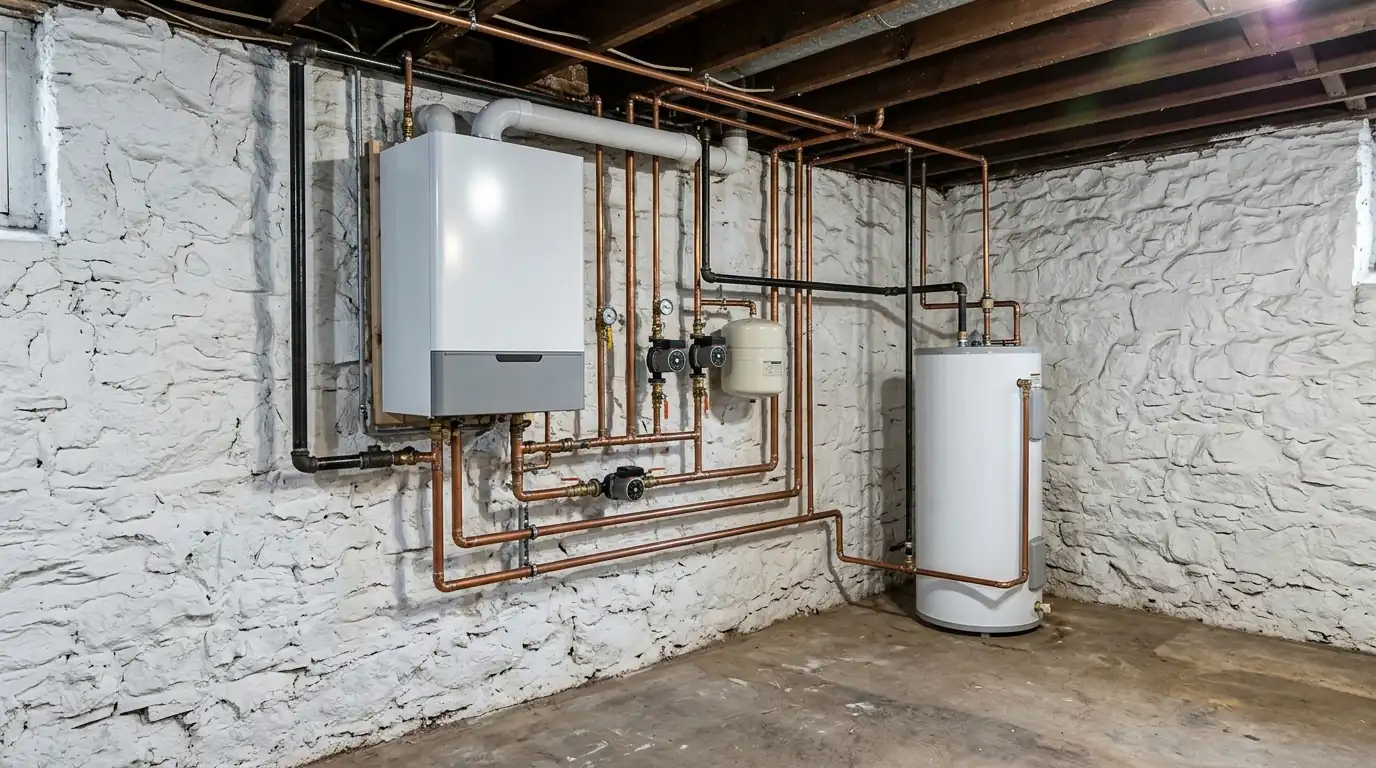
Steam heat still runs in a share of older Lexington homes, mostly in the pre-1940 houses near downtown and in neighborhoods like Ashland Park and Bell Court. Steam boilers do not come in condensing versions, so a replacement is a new cast iron steam boiler sized to the radiators, not to the heat loss. Measuring every radiator matters, because an oversized steam boiler short cycles and an undersized one never fills the far radiators.
A good steam install depends on more than the boiler. The near-boiler piping has to follow the manufacturer drawing, with a proper header and equalizer, or the boiler will push water up into the mains and bang. We check main vents and radiator vents, confirm the pipes still pitch back toward the boiler, and skim the new boiler after startup to remove oils that make the water level bounce.
Some owners use a replacement to change course entirely. If your steam or hot water boiler is failing and you also want central air, ducted or ductless heat pumps can carry most of the heating load. Our ductless mini split installs page explains how that works in homes without ductwork.
How a boiler changeout comes together
Most hot water boiler replacements take one to two days. Steam boilers and jobs with new venting or piping can take longer.
Survey the whole system
We measure radiators, run a heat loss, inspect the chimney, gas line, expansion tank, pumps and zone valves, and take water samples to see how dirty the system is.
Written options
You get two or three options with the boiler size, efficiency, venting, hot water plan and piping changes listed separately, so the tradeoffs are clear.
Drain and remove
We drain the system, cut out the old boiler and carry out the cast iron sections. Floors and stairs are protected for the heavy pieces.
Pipe, vent and wire
The new boiler is set, piped to the manufacturer layout, vented, and wired to the circulators, zone valves, outdoor sensor and thermostats.
Fill, purge and fire
We fill and purge air zone by zone, set pressure and the expansion tank, then measure gas pressure, flue CO and water temperatures as the system heats.
What a new boiler costs in central Kentucky this year
This range covers most residential boiler replacements we price in and around Lexington, from a cast iron swap to a condensing boiler with an indirect water heater.
- Steam or hot water. Steam boilers are heavy and need careful near-boiler piping, while a cast iron hot water boiler in the same basement is usually simpler.
- Condensing or not. A condensing mod-con costs more to buy and needs new venting and a condensate neutralizer, but burns noticeably less gas each winter.
- Hot water add-ons. An indirect water heater tank, or the choice of a combi boiler, changes both the equipment price and the piping.
- System cleaning. Flushing sludge from old radiators and adding a dirt separator adds labor but protects the new heat exchanger.
- Chimney and venting. Lining a chimney for a cast iron boiler, or running PVC to a side wall, can add a meaningful amount depending on distance.
These are typical installed ranges for 2026. Your written price comes after we look at the system and measure your radiators. Compare typical prices for every service.
Signs your boiler is ready to retire
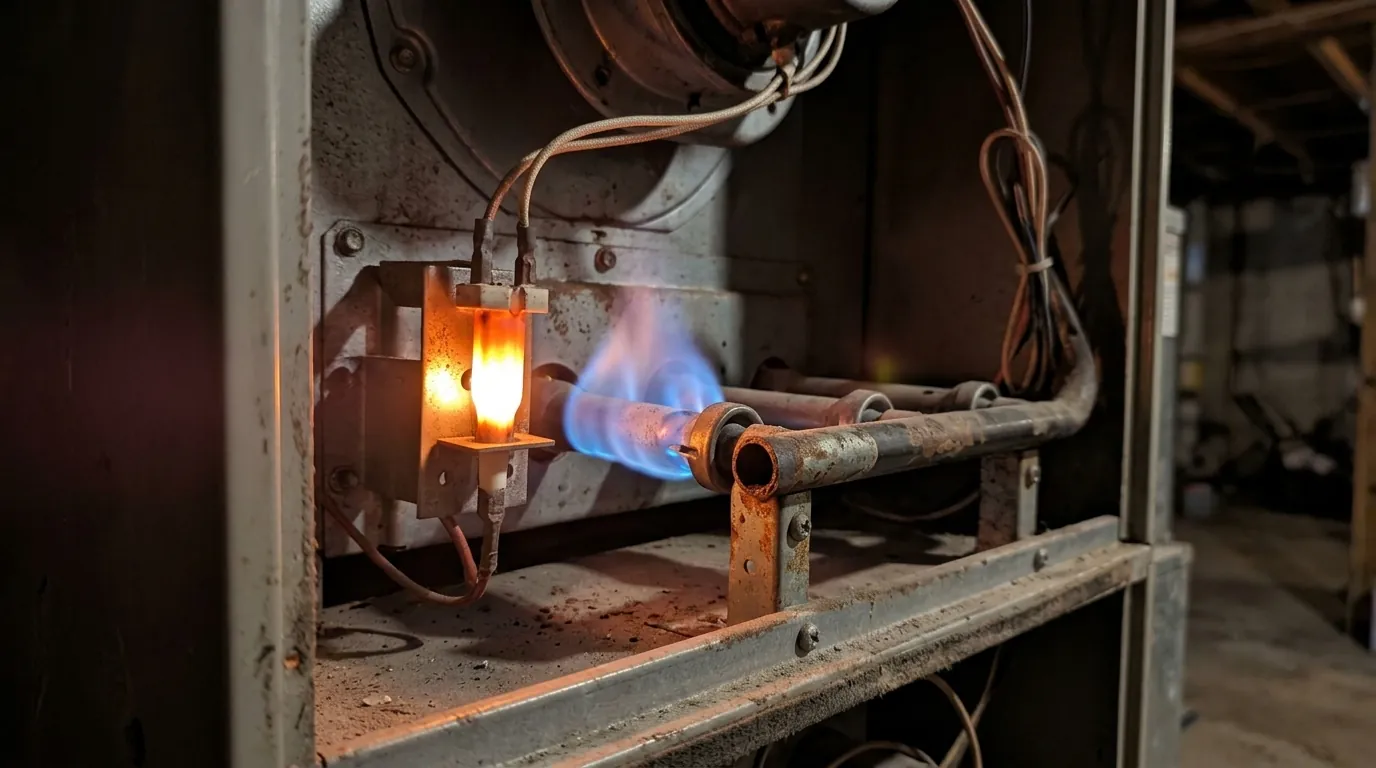
Most cast iron boilers we see in Lexington run 25 to 35 years before replacement, and some go longer. Age alone is not the deciding point. The signs that matter are water leaking from between sections or from the heat exchanger, rust flaking from the combustion chamber, a flue CO reading that stays high after adjustment, and gas bills that keep rising while the house heats no better.
Repairs also tell a story. A failed circulator or zone valve on a sound boiler is a normal fix, and our boiler repair service handles those daily. When the same boiler needs a gas valve, a control board and section repair within a couple of seasons, the money starts to favor replacement. We lay out both numbers side by side so the choice is yours. Call (859) 377-8167 to set up a survey before the next heating season.
We work on Carrier, Trane, Lennox, Rheem and Goodman equipment along with every other major brand found in Lexington homes, and the same testing comes first on all of them.
Lexington-area places we cover for boiler replacement
We cover every Lexington neighborhood and the towns around it. These are the places we visit most for this work; the full list is on our Fayette County page and the service area page.
Questions about boiler replacement in Lexington
Can a condensing boiler work with my old cast iron radiators?
Usually very well. Cast iron radiators have a lot of surface, so they heat rooms with cooler water than a baseboard system needs. That lets a condensing boiler run at the lower return temperatures where it is most efficient, especially with outdoor reset. We confirm it by measuring the radiators against the heat loss of each room.
How long does a new boiler last in a central Kentucky home?
Cast iron boilers commonly last 25 to 35 years with clean water and yearly service. Condensing boilers have more electronics and narrower passages, and typically run 15 to 20 years. Clean system water, a working expansion tank and annual combustion checks make the biggest difference in how long either type lasts.
Should I replace my boiler with a heat pump instead?
It depends on the house. A heat pump can heat well in Lexington winters, but a home with radiators and no ducts needs ductless heads or new duct runs, which changes the project. Some owners keep a new boiler for heat and add a ductless or small-duct system for cooling. We price both so you can compare.
Do I need a new chimney liner when I replace my boiler?
If the new boiler is a condensing model, it vents through plastic pipe and no longer uses the chimney, but a water heater left alone in that chimney may then need a liner. If the new boiler is a cast iron model staying in the chimney, we inspect the flue and liner and tell you if it needs repair first.
Can my steam heating system be converted to hot water during a boiler replacement?
Sometimes, but it is a bigger job than it sounds. Steam piping and some steam radiators are not built for hot water pressure, and one-pipe systems need new return piping. We inspect the radiators and piping and tell you plainly whether a conversion is practical or whether a new steam boiler is the better path.
Need boiler replacement today?
A person answers (859) 377-8167 day and night. Tell us what you are seeing and a technician takes it from there.