Lexington neighborhood · Fayette County
Furnace repair and replacement in Gainesway (40517)
Gainesway's brick ranches went up in the 1960s, and many still heat with natural gas from a basement or closet furnace. When yours short-cycles, smells hot or will not light, you want a straight answer on fixing or replacing it.
Short answer: HVAC service in Gainesway
We repair and replace gas furnaces in Gainesway (40517), the 1960s neighborhood bounded by New Circle Road, Tates Creek Road and Armstrong Mill Road. Common calls involve ranches on their third furnace or later, single hallway returns, venting changes when a high-efficiency unit goes in, and smaller systems in the area's condos and duplexes.
Gainesway ranches went up alongside the Tates Creek school campus
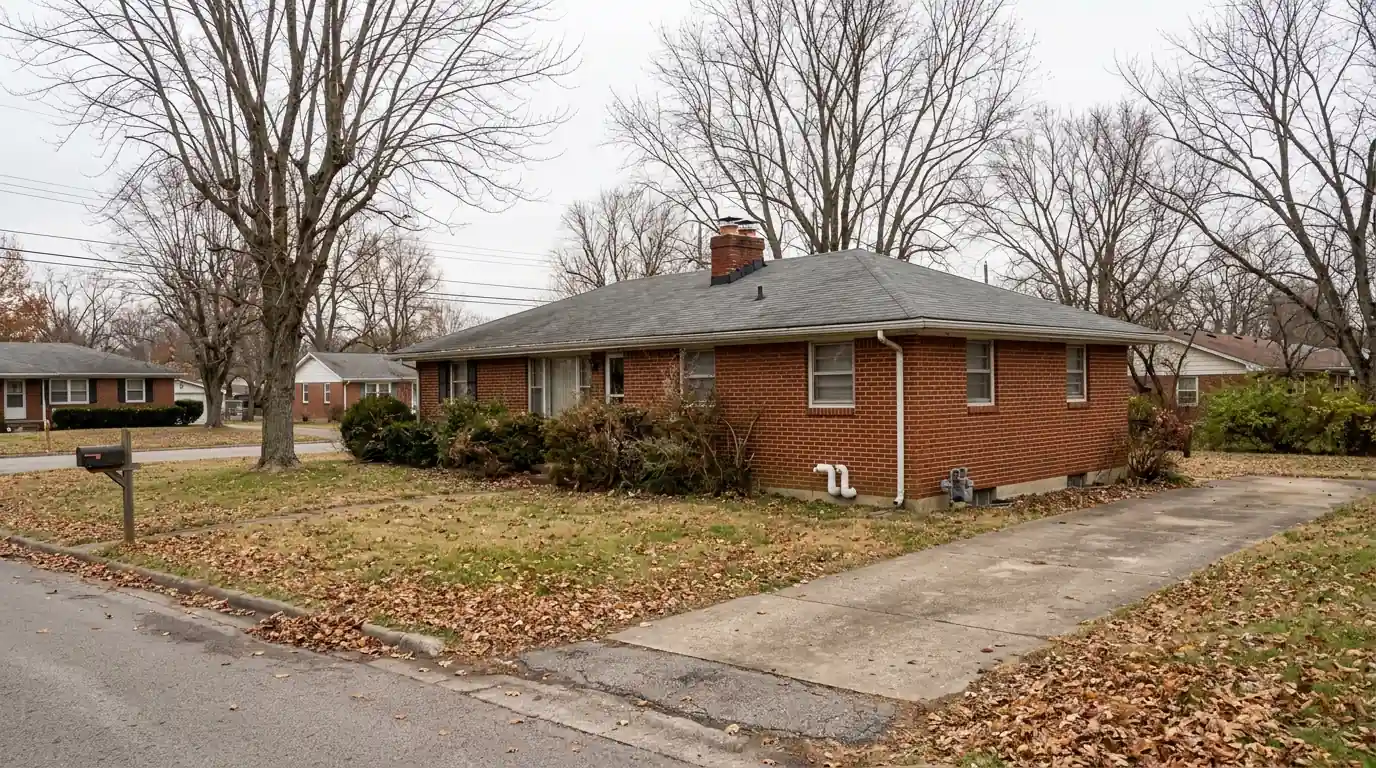
Gainesway fills the block between New Circle Road on the north, Tates Creek Road on the west, Armstrong Mill Road on the south, and Pimlico Parkway and Bold Bidder Drive on the east. Tates Creek Elementary opened inside the subdivision in 1963 as part of a three-school campus, and the high school followed in 1965. The city-owned Tates Creek Golf Course sits on Gainesway Drive.
Brick ranches from the early and mid 1960s line streets like Greentree Road, Crown Crest Road and Olympia Road, many on block foundations with full or partial basements. Gas forced air is common, with central air added along the way, though some homes have switched to heat pumps. Split foyers, duplexes and condos on Malabu Drive and Armstrong Mill Road fill in the rest. Across Tates Creek Road are the Tates Creek Road neighborhoods of Camelot and Belleau Wood.
A 1960s ranch was built around one furnace, one trunk line and often a single return in the hallway. Over 60 years, rooms got added, basements got finished and furnaces got bigger or smaller, but the ductwork rarely changed with them. That gap explains many of the heating complaints we hear in 40517.
Furnace faults we find in Gainesway basements and closets
These heating problems come up often in Gainesway's older ranches.
Flame sensor and igniter wear
A dirty flame sensor lets the burners light, then shuts them off seconds later. Hot surface igniters crack with age. Both are quick fixes, but they come back if the furnace keeps short-cycling.
Short-cycling on one return
One hallway return cannot feed a furnace sized for a house that grew. The heat exchanger overheats, the limit switch trips and the burners cycle on and off through the night.
Condensate drains that freeze
High-efficiency furnaces make water. A clogged trap or a drain line run outside can freeze or back up, and the furnace shuts itself off on the coldest morning of the week.
Cracked heat exchangers
On furnaces past about 20 years, we inspect the heat exchanger closely. A crack can let combustion gases into the house air, which calls for replacement rather than a patch.
Blowers choking on dust
Basement furnaces pull dusty air through thin filters, or none at all. Caked blower wheels move less air, run hotter and wear out motors.
Thermostat wiring from another era
Older two-wire thermostat runs cannot power a modern thermostat or a two-stage furnace. Adding a common wire fixes blank screens, random shutoffs and missed calls for heat.
Swapping out a worn gas furnace in a Gainesway ranch
A furnace swap in a Gainesway basement usually takes one working day, in this order.
Size from the house
We size the new furnace to the house as it stands, counting added rooms and finished basements, not from the old label.
Check the venting path
We check the chimney or vent, and any water heater sharing it, before choosing an 80 or 95 percent furnace.
Remove and set
We shut off gas and power, remove the old unit, set the new furnace and seal the sheet metal transitions.
Gas, drain and wiring
We connect and leak-test the gas line, run the condensate drain if needed and wire the thermostat with a common wire.
Start, test and measure
We fire the furnace, check gas pressure, temperature rise and static pressure, and test for carbon monoxide.
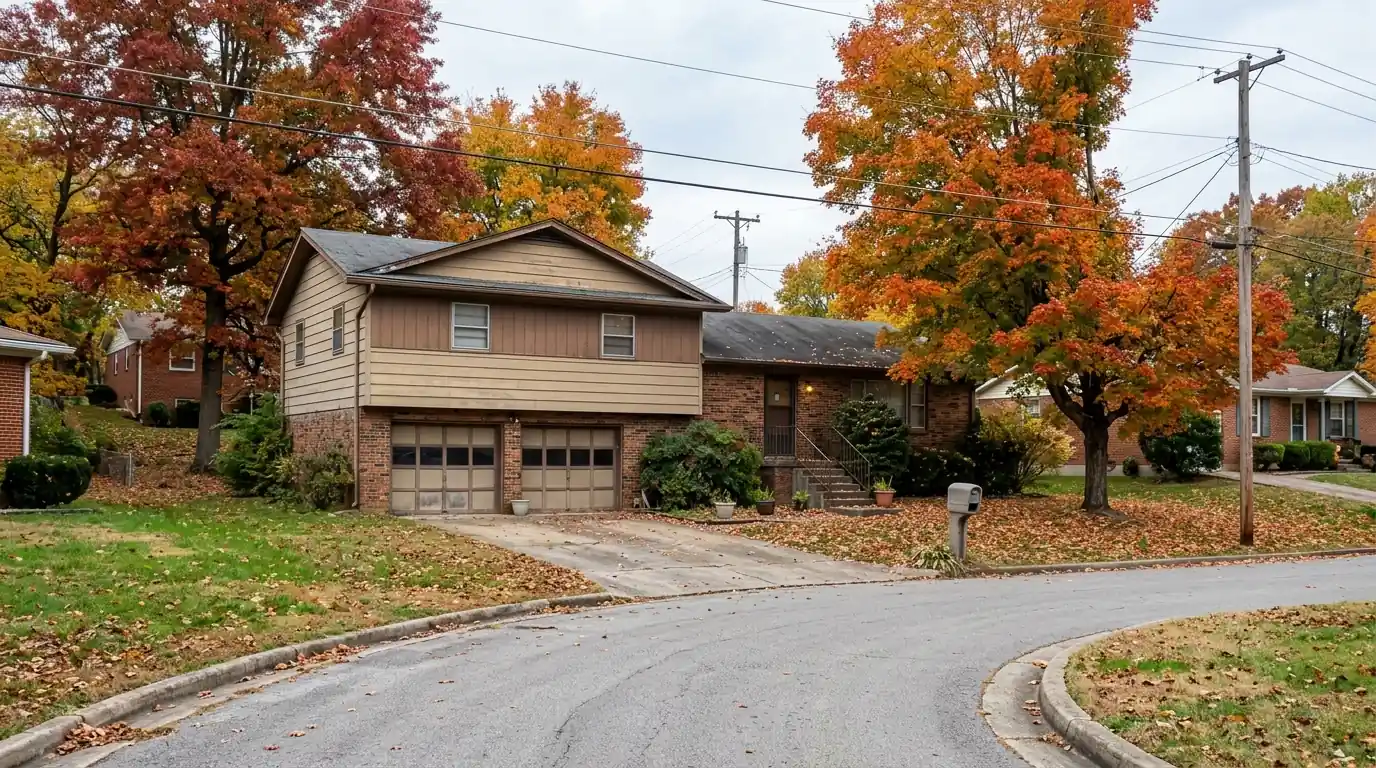
What happens to the chimney when a Gainesway furnace goes high-efficiency
Many 1960s furnaces vented up a chimney shared with a gas water heater. A 95 percent furnace vents through plastic pipe out a side wall instead, leaving the water heater alone in a flue sized for two appliances. A lone water heater does not always warm that flue enough to draft well, so exhaust can spill into the basement and moisture can condense inside the chimney.
The fix may be a liner sized for the water heater, a power-vent water heater or, in some houses, staying with an 80 percent furnace. We check the draft and lay out the options before any equipment is ordered, and our carbon monoxide safety check explains how we test it.
Visit notes for Gainesway houses, condos and duplexes
A little preparation saves time on a Gainesway call.
- Tell us whether you live in a house, a duplex unit or a condo.
- In a condo, know whether the furnace sits in a closet, attic or utility room.
- Clear the basement stairs and the space around the furnace before we arrive.
- If you rent, get the owner's go-ahead for a replacement before the visit.
- Leave the old filter beside the furnace so we can match its size.
- If you smell gas, leave the house first, then call Columbia Gas and us.
Service calls we take most in Gainesway
Furnace Repair
Aging igniters, flame sensors and controls cause most cold-night no-heat calls in Gainesway, and many are fixed in one visit.
Furnace Installation
Sixty-year-old ranches have changed since they were built, so a new furnace should be sized to the house as it is today.
Carbon Monoxide Safety Check
Older gas furnaces, shared chimneys and orphaned water heaters make a yearly combustion check worth doing here.
Airflow Balancing
Single-return ranches with finished basements often have rooms too hot or too cold, and balancing narrows the gap.
AC Repair
Central air added later to Gainesway ranches shares the furnace blower and ducts, so a weak blower hurts both seasons.
Places near Gainesway we also cover
Asked by homeowners in Gainesway
Should I replace my Gainesway furnace with an 80 or a 95 percent model?
A 95 percent furnace burns less gas, but it needs a side-wall vent and a condensate drain, and it can leave a water heater alone on the old chimney. In a basement with a clear outside wall and a floor drain nearby, it is usually the better choice. Where venting is difficult, an 80 percent unit on a sound or lined chimney can be the sensible call.
Why does my Gainesway furnace run but the bedrooms stay chilly?
Bedrooms usually sit at the end of the longest duct runs, and in many 1960s ranches those runs are small, leaky or pinched in the basement ceiling. Closed bedroom doors with no return path choke airflow too. Sealing joints, adding a return path and balancing the duct dampers usually brings those rooms within a couple of degrees of the living room.
Is a Gainesway furnace over 25 years old still safe to run?
Age alone does not make it unsafe, but wear adds up. We inspect the heat exchanger, test for carbon monoxide at the flue and in the living space, and check venting and gas pressure. If we find a crack or spillage, we shut the furnace off and show you why. If it checks out, a tune-up keeps it running while you plan a replacement.
Heating or cooling trouble in Gainesway?
Call (859) 377-8167 any hour. Tell us what the system is doing and where you are, and we will take it from there.