Heat Pumps · Lexington, KY
Heat pump installation in Lexington, sized for your house
Your old heat pump is near the end, or you want to stop paying for strip heat every January, and you need a straight answer on which system actually fits your house.
Lexington and nearby counties
Line open 24/7Short answer: Heat Pump Installation in Lexington, KY
The right heat pump for a Lexington home is sized from a room-by-room heat loss calculation, not the old unit's tonnage. Two-stage or variable-speed models handle humid summers and cold nights better than single-stage units. Cold-climate models keep most of their capacity near 5 degrees. A full system with a matched air handler typically costs $7,380 to $17,940 installed in central Kentucky.
Choosing a heat pump that matches how your house loses heat
Start with the house, not the equipment. A 1960s ranch in Gardenside with original single-pane windows loses heat very differently from a 2005 two-story in Hamburg with a sealed attic. We run a Manual J load calculation using your square footage, windows, insulation, ceiling heights and which way the house faces. That number, in BTUs, tells us the size you need. It is often half a ton or a full ton smaller than whatever is sitting outside now.
Next comes how the unit runs. A single-stage heat pump is either fully on or off, which works but can leave a muggy house in July and cool drafts in January. Two-stage and variable-speed models run longer at lower output, which pulls more moisture out of summer air and keeps supply air warmer in winter. For most Lexington homes, that step up is where the comfort difference shows.
Last is the backup. Every air-source heat pump needs help on the coldest nights, either electric heat strips in the air handler or a gas furnace. If Columbia Gas already runs to your house, keeping the furnace as backup through a dual fuel arrangement is often worth pricing alongside an all-electric system.
Single-stage, two-stage and variable-speed compared side by side
These are the main types we install. All of them work in central Kentucky; they differ in comfort, humidity control and how far into the cold they carry the house.
| Type | How it runs | Where it fits best |
|---|---|---|
| Single-stage | Full output or off | Tight budgets, smaller well-sealed homes |
| Two-stage | Low stage most days, high on extremes | Most Lexington homes with decent ductwork |
| Variable-speed inverter | Adjusts output in small steps | Humidity-sensitive homes, two-story houses |
| Cold-climate variable-speed | Holds most capacity near 5 degrees | All-electric homes with no gas service |
What we check before recommending a model
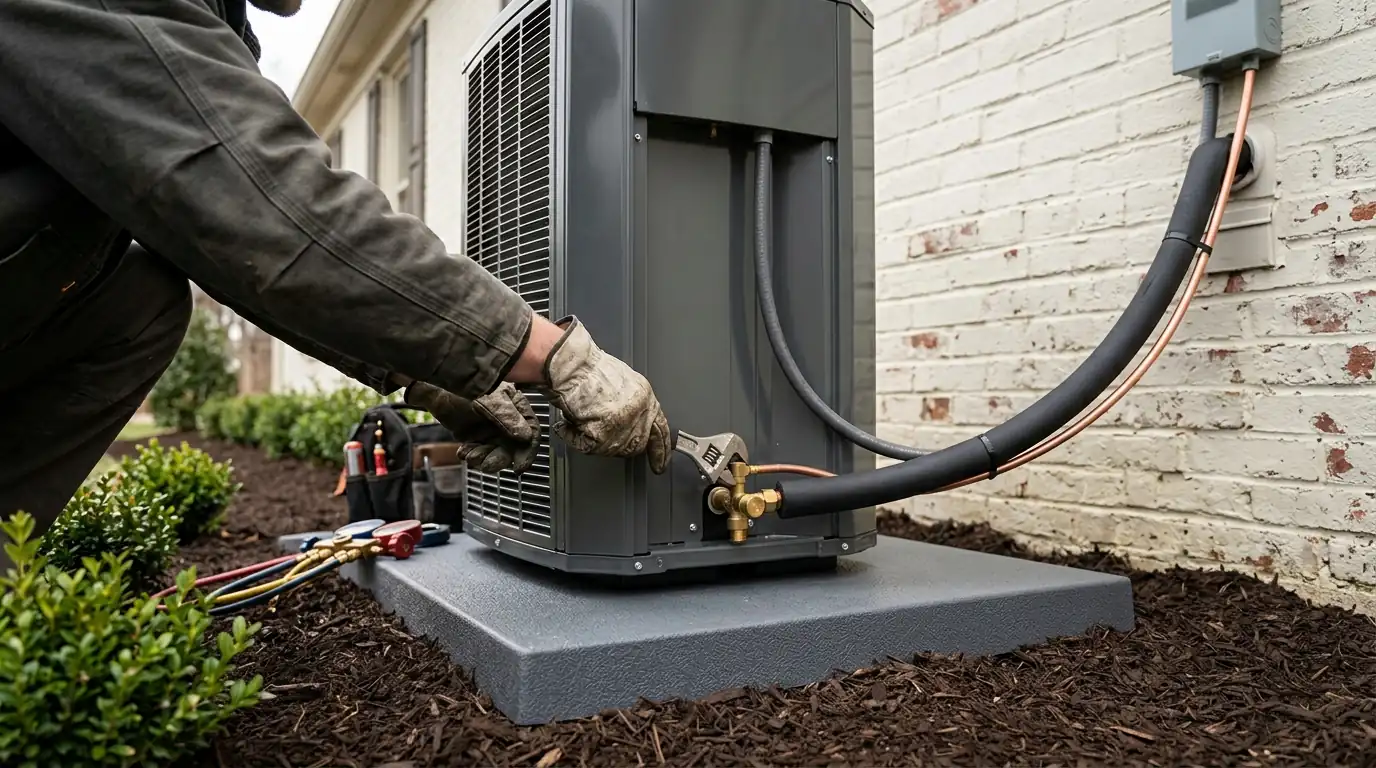
A heat pump only performs as well as the system around it. These are the measurements and inspections that shape the quote we hand you.
Room-by-room heat loss
The Manual J calculation sets the size. We also note which rooms run hot or cold now, since that usually points to duct problems a bigger unit would not fix.
Duct static pressure
We measure how hard the blower has to push. Undersized return ducts are common in Lexington homes, and variable-speed equipment needs that fixed to deliver its rated airflow quietly.
Electrical panel capacity
Heat strips draw serious current, often a 60-amp circuit for a 10 kW kit. Older homes on 100-amp service need a careful look before we add load to the panel.
Line set condition and size
Copper lines from an old R-22 or R-410A system may be the wrong diameter or contaminated. We decide whether to flush and reuse them or run new copper.
Air handler location
Crawlspace, basement, closet or attic each change the drain setup, access and condensate safety switch. We plan the condensate route before installation day, not during it.
Outdoor unit placement
The unit needs open air, a level raised pad above snow and splash, and a spot away from roof drip lines and bedroom windows.
What Lexington weather and housing mean for a new install
Our winters are mild most days and harsh for a few. Nights in the 20s are routine, and a cold snap into the single digits arrives most years. A standard heat pump might reach its balance point around 30 degrees and start leaning on backup heat. A cold-climate model pushes that point down into the teens or lower, which is the difference between a normal KU bill and a painful one in a cold January.
Summers matter just as much. Lexington's muggy nights reward a system that can run slowly and dry the air. Oversized single-stage units cool the house fast and shut off before removing moisture, leaving it feeling clammy at 74 degrees. Many homes here also have air handlers in vented crawlspaces sitting on clay over limestone, where we check for standing water, add a float switch and support the unit properly before we set new equipment on it.
How installation day runs from start to finish
Most replacements take one full day. Jobs with new ductwork, a relocated outdoor unit or electrical upgrades can stretch into a second.
Protect and recover
We lay floor protection, shut off power and recover the old refrigerant into a tank instead of venting it.
Remove the old equipment
The outdoor unit, air handler or coil come out and get hauled away. We clean the area and check the concrete pad or stand underneath.
Set and connect
New equipment goes in level. We braze the line set under flowing nitrogen, connect the condensate drain and wire the disconnect, heat strips and thermostat.
Pressure test and evacuate
The refrigerant circuit is pressure-tested for leaks, then pulled into a deep vacuum measured in microns before any refrigerant is released.
Charge and commission
We set the charge by superheat or subcooling, confirm airflow, test a forced defrost cycle and set the outdoor temperature lockouts for backup heat.
Walk you through it
We show you the thermostat, explain what AUX and EM heat mean on your model and point out the filter size and location.
What a new heat pump costs in central Kentucky this year
This range covers a matched outdoor unit and air handler installed in a typical Lexington home. A heat pump replacing only an outdoor unit, where the indoor equipment is still compatible, can come in lower.
- Capacity and staging. A 2-ton single-stage system sits at the low end. A 4 or 5-ton cold-climate variable-speed system with a communicating thermostat sits near the top.
- Air handler and coil. New A2L refrigerant units need a matched indoor coil, so most replacements include the air handler or at least a new coil and metering device.
- Backup heat size. A 5 kW strip kit costs less and draws less than a 15 kW kit. The heat loss calculation tells us how much backup the house really needs.
- Electrical and line set work. A new breaker, larger wire or a fresh copper line set adds cost, especially for runs through finished basements or tight crawlspaces.
- Ductwork corrections. Adding a return, resizing a trunk or sealing leaky crawlspace ducts adds to the job but often decides whether the new system feels right.
You get a written price for your house after we visit, measure and look at the existing system. The range above is a guide, not a quote. Compare typical prices for every service.
Questions worth asking any heat pump installer
Whoever you hire, these answers tell you whether the job is being sized and set up properly.
- Will you run a room-by-room load calculation or match the old tonnage?
- Is the indoor coil matched to the outdoor unit and its refrigerant?
- How will you measure static pressure and airflow after installation?
- Will you evacuate to a micron reading before releasing refrigerant?
- At what outdoor temperature will the backup heat be locked out?
- Are the old line set and drain being reused, flushed or replaced?
- How large is the heat strip kit, and does the panel handle it?
We work on Carrier, Trane, Lennox, Rheem and Goodman equipment along with every other major brand found in Lexington homes, and the same testing comes first on all of them.
Neighborhoods and towns that call us for heat pump installation
We cover every Lexington neighborhood and the towns around it. These are the places we visit most for this work; the full list is on our Fayette County page and the service area page.
Further reading from our Comfort Blog
Heat pump or gas furnace for a Lexington home
Both systems heat central Kentucky homes well. The better pick depends on your gas line, your ductwork, how your house handles a January cold snap and how hot you like the air at the registers.

What size AC or heat pump your Lexington home needs
Most sizing mistakes start with a quick square-footage guess. Here is what a real load calculation looks at, why bigger equipment often feels worse, and how ducts and floor plans change the answer.
Common questions on heat pump installation around Lexington
Can a new heat pump keep a Lexington house warm when it hits single digits?
A cold-climate variable-speed heat pump can carry most Lexington homes into the single digits, often with only light help from backup heat. A standard single-stage model will lean on heat strips once it drops into the 20s. If you have Columbia Gas service, a dual fuel system that hands the coldest hours to a furnace is another way to stay warm without a spike in your KU bill.
Do I need a new air handler when I install a new heat pump?
Usually, yes. New heat pumps use A2L refrigerants such as R-454B or R-32, and the indoor coil and metering device have to match. Older air handlers also tend to have single-speed blower motors and worn heat strips. In some cases a matched coil can be added to a newer air handler, and we check that option before quoting a full replacement.
How long does a heat pump installation take?
A straight replacement in the same location usually takes one day, with the house back on heat or cooling by evening. Moving the outdoor unit, adding a return duct, upgrading the electrical service or running a new line set through a finished basement can add a second day. We tell you the expected timeline when you get the written price.
Is a heat pump a good choice compared with a gas furnace in Lexington?
It depends on your rates, ductwork and how much you value summer dehumidification. Heat pumps heat efficiently through most of a central Kentucky winter and cool in summer with the same equipment. Our article comparing heat pumps and gas furnaces walks through the tradeoffs, and a call to (859) 377-8167 gets a recommendation for your specific house.
Can a heat pump work in an older Lexington home without ductwork?
Yes, just not a central ducted one. Older homes in Chevy Chase or Ashland Park that heat with radiators often add ductless mini split heads for heating and cooling, keeping the boiler for backup or retiring it. Small-duct high-velocity systems are another option when you want hidden air outlets instead of wall units.
Ready to talk about heat pump installation?
A person answers (859) 377-8167 day and night. Tell us what you are seeing and a technician takes it from there.