Heating · Lexington, KY
Gas furnace installation sized for your Lexington house
Your furnace is old, needs an expensive repair, or simply never kept the back bedrooms warm, and you want a replacement sized to your house instead of copied from the old label.
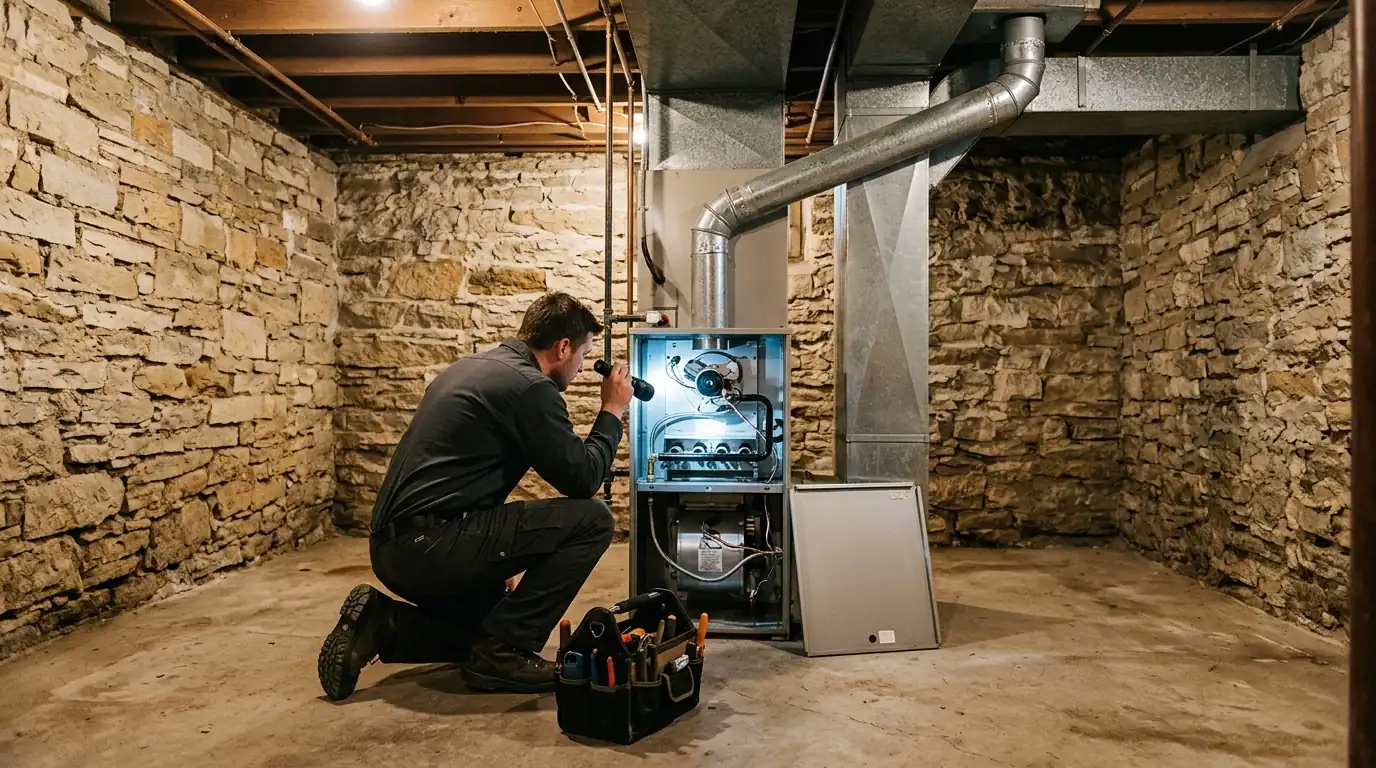
Lexington and nearby counties
Line open 24/7Short answer: Furnace Installation in Lexington, KY
A good furnace replacement starts with a room-by-room heat loss calculation, not the size of the old unit. From there you choose efficiency (80 percent or 96 percent and up), the burner and blower type, and whether the venting, gas line and ductwork need changes. In central Kentucky, most installed gas furnaces fall between about $4,180 and $9,870, depending on efficiency, venting and access.
80 percent or 96 percent: which furnace fits your home
The efficiency choice drives venting, drain work and price. Neither answer is right for every Lexington house.
| Question | 80 percent furnace | 96 percent and up |
|---|---|---|
| How it vents | Metal flue into a chimney or B-vent | Two PVC pipes through a wall or roof |
| Condensate drain | None needed | Needs a drain, often a pump |
| Best fit | Mild use, short heating hours, attic installs | Long heating hours, basements, larger homes |
| Watch out for | Oversized or orphaned masonry chimneys | Drain lines that freeze in crawlspaces |
| Gas used for the same heat | About 20 percent more | Baseline |
Choices that change how a new furnace feels
Beyond efficiency, a few equipment decisions decide whether the house heats evenly and quietly. We explain each one in plain terms before you pick.
Single-stage burner
Fires at full output every time. It is the simplest and least expensive option, and it works well in tight, smaller homes with short duct runs and steady loads.
Two-stage burner
Runs at roughly 65 percent fire most of the time and steps up on cold nights. Longer, gentler cycles mean fewer temperature swings and a quieter start in the morning.
Modulating burner
Adjusts in small steps between about 40 and 100 percent. It suits large or open homes and pairs well with zoning, though it costs the most to buy and repair.
Variable-speed ECM blower
Moves air more slowly and quietly, draws less electricity, and helps the AC pull more humidity out in a muggy Lexington July. Most mid and upper models include one.
Right size from a load calculation
Many older furnaces in Lexington are 100,000 BTU on houses that need 60,000. Oversized units short cycle, run hot and wear out faster, so we calculate rather than copy.
Matched to your existing AC
The furnace blower moves air for cooling too. We confirm it delivers the airflow your AC or heat pump coil needs, or we plan both pieces together.
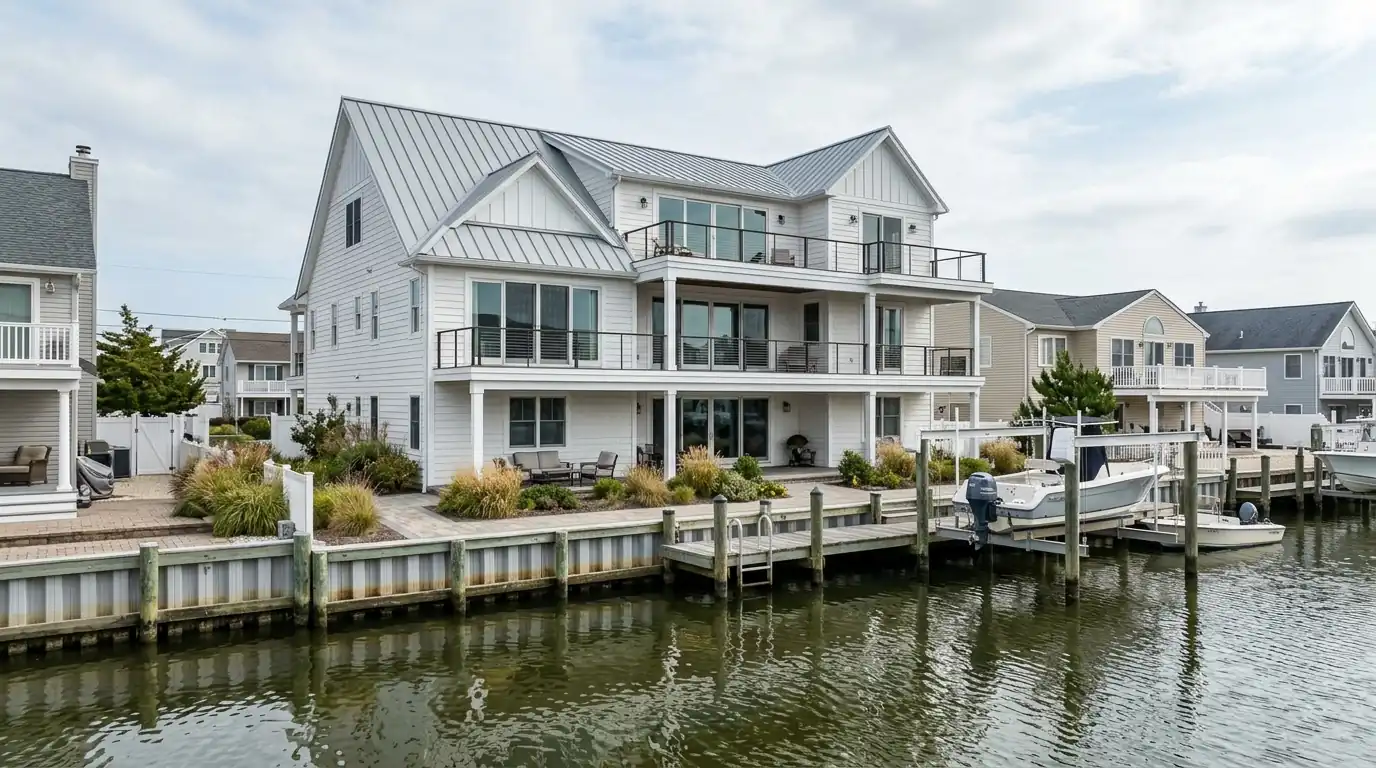
Older chimneys and newer basements in Lexington
Lexington's housing stock sets up different install jobs. In Chevy Chase, Ashland Park and the streets around Bell Court, many houses were built before central heat and later received a furnace vented into the original brick chimney. When a new high-efficiency furnace moves to PVC venting, the water heater can be left alone in a chimney that is now far too large for it. That orphaned water heater may need a liner, and we check for it on every survey.
The ranches and split-levels of the 1950s and 1960s often hold the furnace in a closet or a tight utility room, which limits cabinet size and filter options. Subdivisions from the 1990s and 2000s, like homes in Masterson Station, usually give us a basement or garage with room for a four-inch media filter and a proper condensate pump. Gas service in town comes from Columbia Gas of Kentucky, and we confirm that the gas line and meter can carry the new furnace plus any other gas appliances.
Crawlspace furnaces deserve one more note. On limestone and karst ground, crawlspaces stay damp, so we raise horizontal units on pads or hangers, slope the condensate line and insulate any part that can freeze. A damp crawlspace also points to sealing the ductwork while the system is open, and our duct sealing service can be priced alongside the furnace.
From the first survey to the first heat cycle
A furnace swap is usually a one-day job. The planning before that day is what makes it go cleanly.
Survey and measure the house
We measure rooms, windows and insulation for a Manual J heat loss calculation, then inspect the gas line, venting, chimney, return air and the electrical circuit.
Options in writing
You get two or three written options with the size, efficiency, blower type and any venting or duct changes listed separately, so you can compare line by line.
Remove and prepare
On install day we shut off gas and power, remove the old furnace, protect floors, and prepare a level base, new vent routing and the condensate drain path.
Set, connect and seal
The furnace is set, the plenum and return are sealed with mastic, and the gas line is connected with a new shutoff and drip leg, then leak tested.
Start up with instruments
We set gas pressure to the manufacturer value, measure temperature rise and static pressure, test CO at the flue and in the room, and confirm the safeties trip.
Walk you through it
Before we leave, we show you the filter, the service switch, the drain and what the blink codes mean, and we register the manufacturer warranty in your name.
Furnace replacement prices in central Kentucky for 2026
This range covers most gas furnace replacements we price in and around Lexington, from a straightforward 80 percent swap to a modulating unit with new venting.
- Efficiency and burner type. A single-stage 80 percent furnace sits at the low end, while a modulating 97 percent unit with a variable-speed blower sits near the top.
- Venting changes. Converting from a chimney to PVC venting, or lining a chimney for the water heater left behind, adds parts and several hours of labor.
- Location and access. Attic and crawlspace installs, tight closets and stairs that need a cabinet carried in by hand all add time compared with an open basement.
- Duct and return fixes. Undersized returns, a new plenum to fit a different cabinet, or sealing leaky trunk lines are priced as separate lines on your estimate.
- Gas line and electrical. A larger furnace or new appliance sometimes needs a bigger gas line, and an older circuit may need a new disconnect or breaker.
These are typical installed ranges for 2026. Your written price comes after we look at the system, measure the house and check the venting. Compare typical prices for every service.
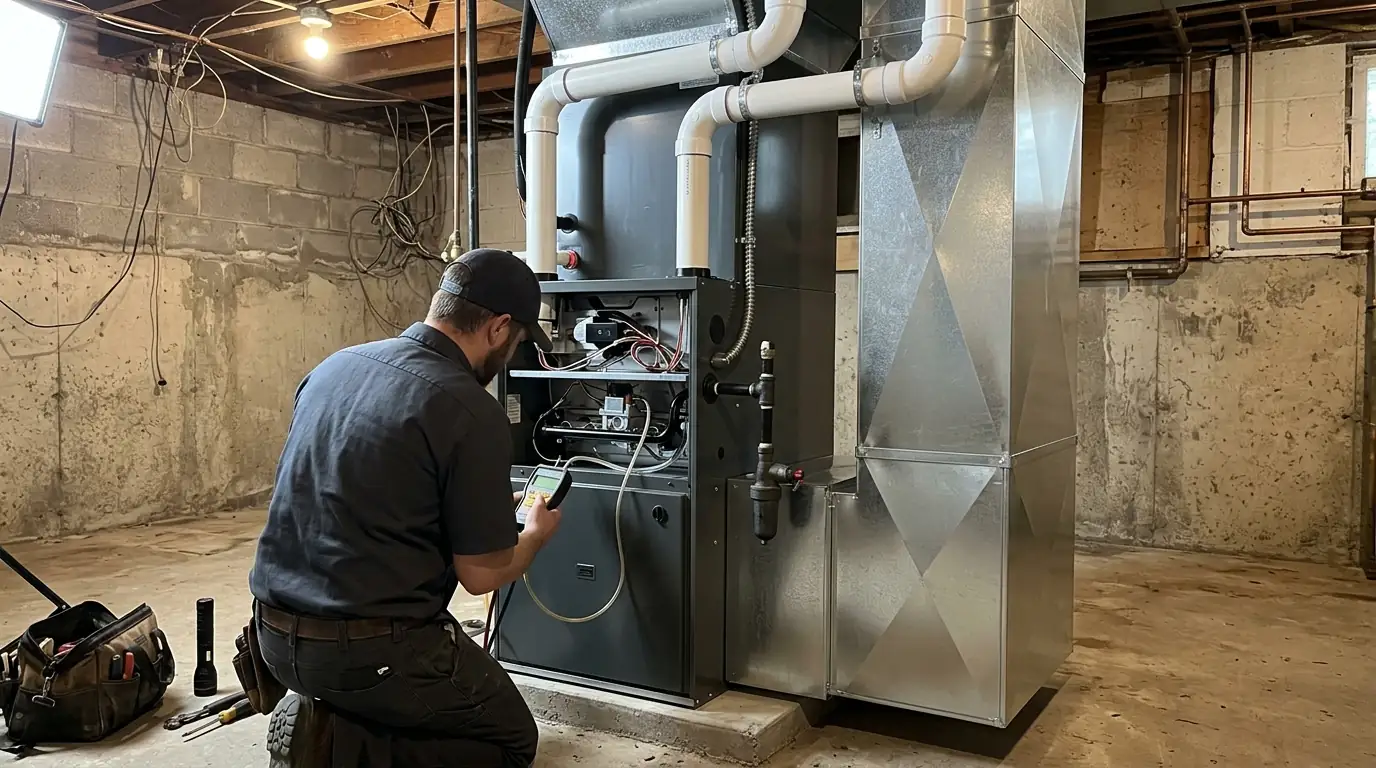
Questions to ask before you approve any furnace quote
Whoever you call, these questions separate a measured proposal from a guess. Call (859) 377-8167 if you want us to walk through a quote with you.
- Was a heat loss calculation done, and can I see the result?
- Does the new furnace match the airflow my AC coil needs?
- What happens to my water heater venting if the furnace leaves the chimney?
- Where will the condensate drain go, and can it freeze?
- Is the return air large enough for the new blower?
- Will you measure gas pressure and temperature rise at startup?
- Which manufacturer warranty applies, and who registers it?
We work on Carrier, Trane, Lennox, Rheem and Goodman equipment along with every other major brand found in Lexington homes, and the same testing comes first on all of them.
Where we handle furnace installation most often
We cover every Lexington neighborhood and the towns around it. These are the places we visit most for this work; the full list is on our Fayette County page and the service area page.
Further reading from our Comfort Blog
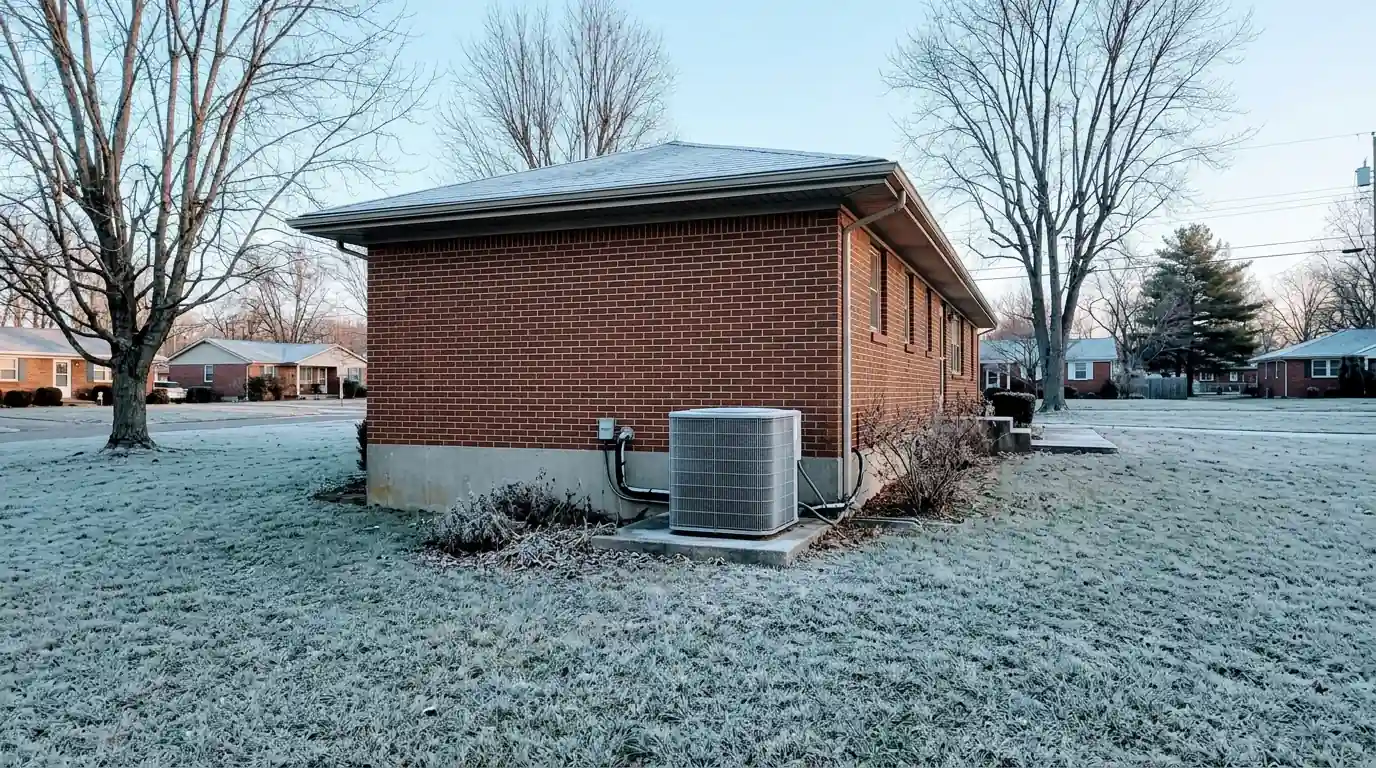
Heat pump or gas furnace for a Lexington home
Both systems heat central Kentucky homes well. The better pick depends on your gas line, your ductwork, how your house handles a January cold snap and how hot you like the air at the registers.
Common questions on furnace installation around Lexington
How do I know what size furnace my Lexington home needs?
The only reliable way is a Manual J heat loss calculation that accounts for square footage, insulation, windows, air leakage and our local winter design temperature. Copying the old furnace size often repeats a mistake, because many furnaces installed in the 1980s and 1990s were oversized. We measure the house during the survey and show you the calculated load next to the size we recommend.
Can a new gas furnace be installed in a crawlspace?
Yes. Horizontal furnaces are built for crawlspaces and attics. We set the unit on a raised pad or hangers to keep it out of standing water, slope the condensate drain correctly, and protect any line that can freeze. In damp Kentucky crawlspaces, we also check for rust on ductwork and supports, because the new furnace connects to them.
Should I replace my AC when I replace my furnace?
Not automatically. If your air conditioner is under about ten years old, runs on R-410A and still cools well, we can match the new furnace blower to it. If the AC is older, uses R-22 or needs repair, replacing both together saves a second labor charge and lets the coil and blower be matched. Our full system replacement page explains that option.
How long does a furnace installation take from start to finish?
Most straight gas furnace replacements take one working day. Jobs that change venting from a chimney to PVC, move the furnace, or add new return ductwork can run into a second day. We keep heat available overnight whenever possible, and we tell you before the work starts if your job is likely to need more than a day.
Call and describe what the system is doing
A person answers (859) 377-8167 day and night. Tell us what you are seeing and a technician takes it from there.