Ductwork & Airflow · Lexington, KY
Dryer vent cleaning in Lexington that clears the whole run
If a load of towels now takes two cycles, the laundry room gets hot, or the dryer shuts itself off partway through, lint is probably packed somewhere inside the vent.
Lexington and nearby counties
Line open 24/7Short answer: Dryer Vent Cleaning in Lexington, KY
Dryer vent cleaning removes lint from the entire vent path, from the dryer outlet through the wall or roof to the outside hood. Lint buildup makes clothes dry slowly, overheats the dryer and is a leading cause of home dryer fires. A good cleaning includes the transition hose, the full run with rotary brushes, the exterior hood and damper, and an airflow check at the outlet afterward.
Everything we inspect along your dryer vent
Lint doesn't only collect at the lint screen. These are the points we check from the back of the dryer to the outside wall or roof.
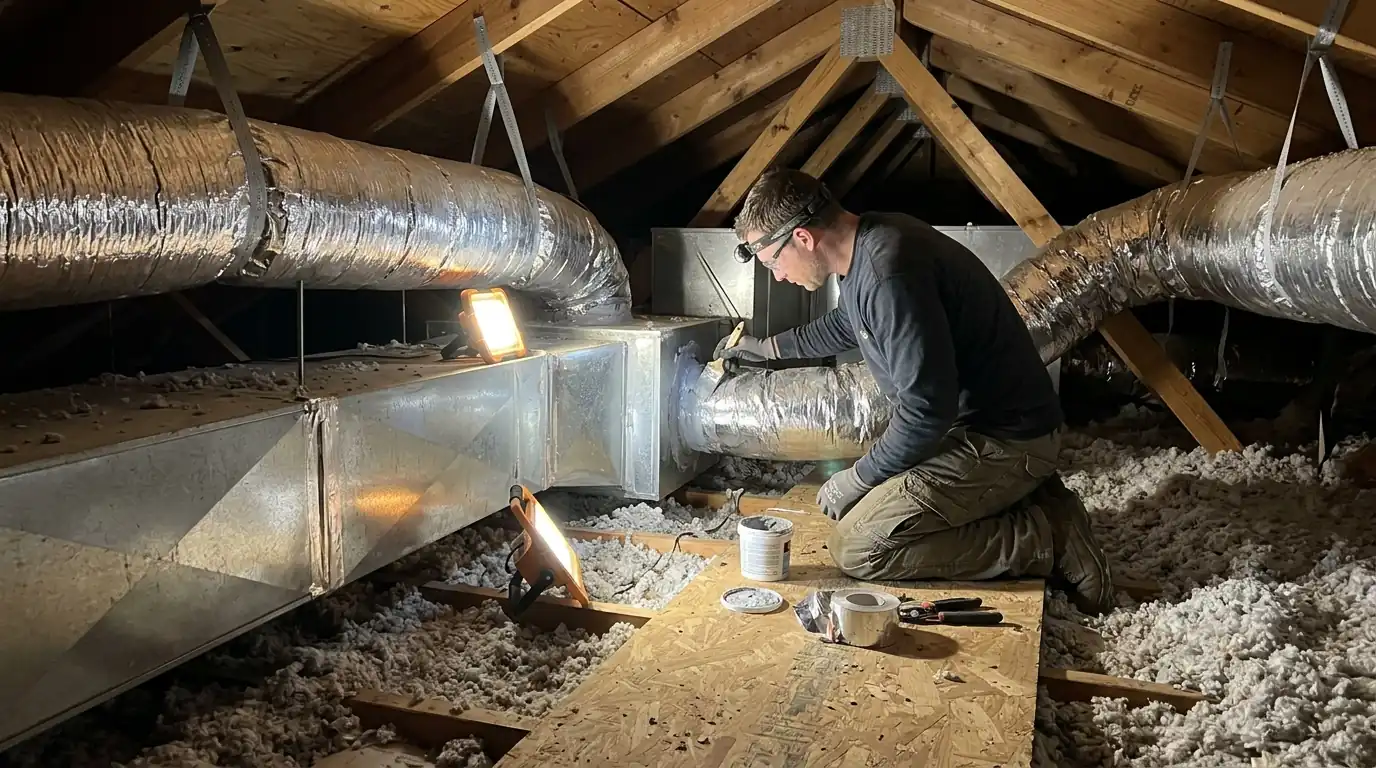
- Transition hose behind the dryer, checked for foil or vinyl material and crushing
- Dryer exhaust outlet and the lint trap housing below the screen
- Wall connection where the transition meets the rigid vent
- Every elbow in the run, where lint packs tightest
- Joints fastened with tape rather than screws that snag lint
- Total vent length and elbow count against the dryer maker limit
- Exterior hood flap or damper, checked for sticking, nests and screens
- Airflow at the outside hood with the dryer running on air only
Signs a clogged dryer vent is raising your fire risk
Lint is highly flammable and dryer heating elements run hot. These warning signs mean airflow is restricted and heat is building where it shouldn't.
Two cycles for one load
A dryer that used to finish towels in 50 minutes and now needs 90 is fighting a restricted vent. The heat has nowhere to go, so moisture leaves the drum slowly.
Clothes hot, still damp
Very hot clothes that are still damp at the seams point to heat building up in the drum because the moist air can't get out through the vent.
Burning smell in the laundry room
A scorched smell means lint near the heating element or the exhaust is overheating. Stop using the dryer until the vent and lint housing are cleared.
Hood flap barely moves
With the dryer running, the outdoor flap should open firmly. If it barely lifts or stays shut, the vent is blocked somewhere along the run or at the hood.
Lint around the outside hood
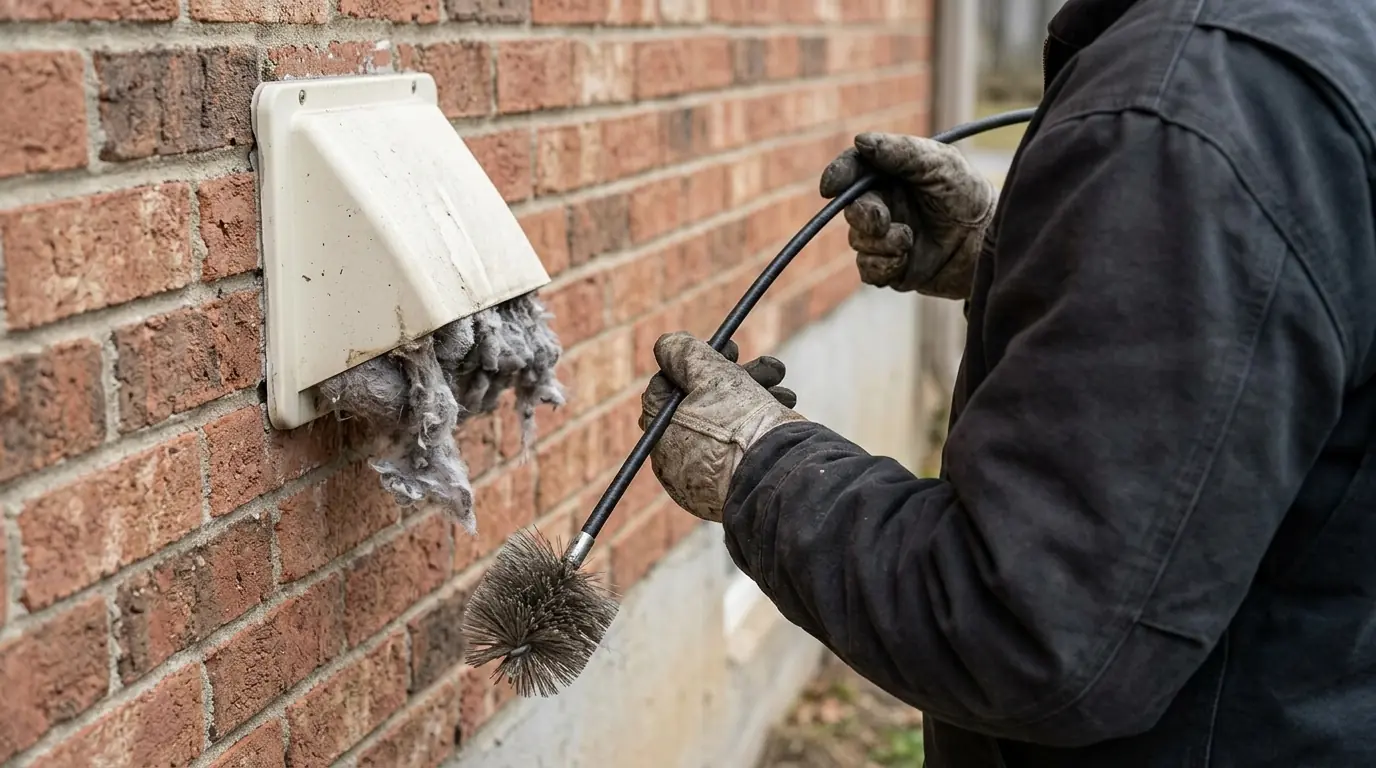
Lint collecting on the siding or ground below the hood, or packed behind a screen on the hood, means the vent is shedding lint and the opening is choked.
Dryer stops mid-cycle
Many newer dryers have a high-limit or vent-blocked sensor that shuts them down. It's a warning to act on, not a fault to reset and ignore.
How we clear a dryer vent from the dryer to the hood
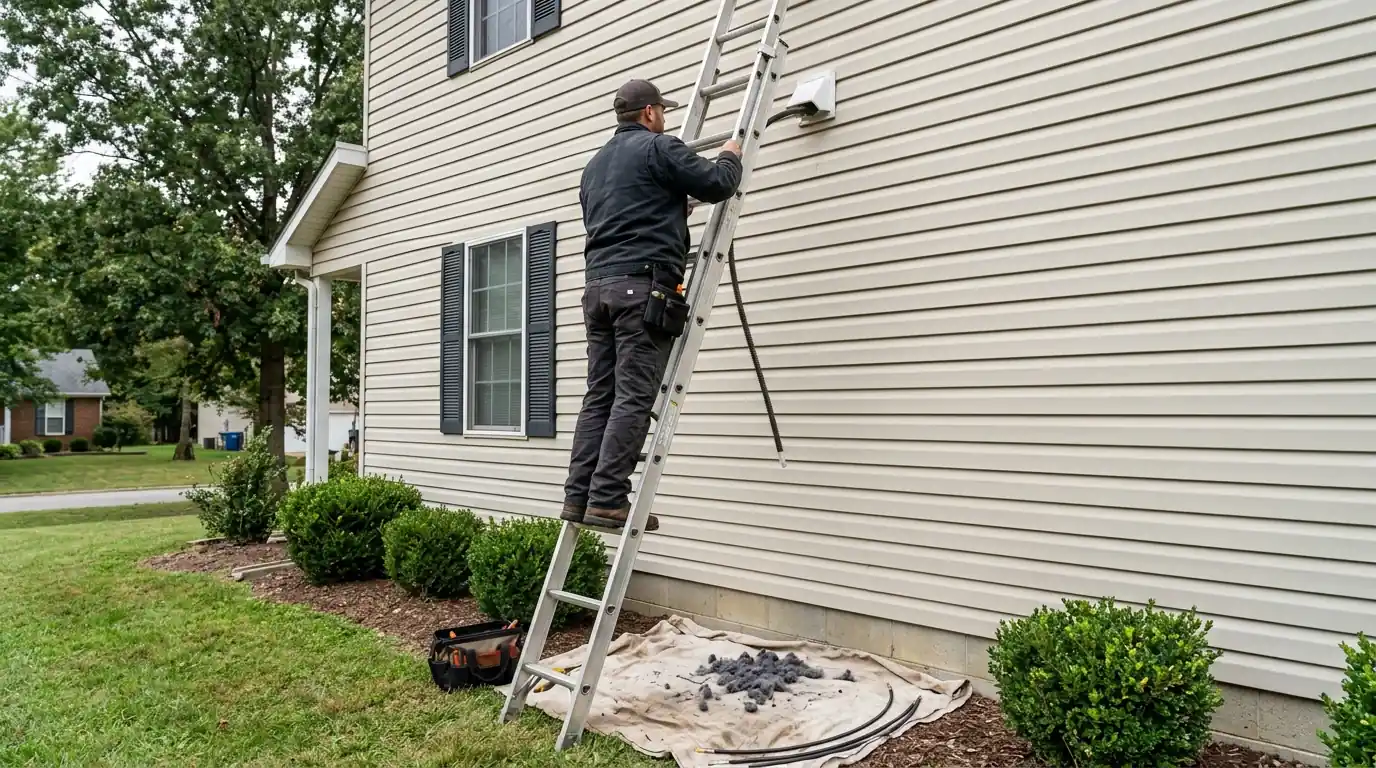
Most dryer vent cleanings take 45 minutes to an hour and a half, depending on the length of the run and how it exits the house.
Pull out the dryer
We slide the dryer out, disconnect the transition hose and look at its condition. On gas dryers we move the unit slowly so the flexible gas connector isn't kinked or strained.
Brush the full run
A rotary brush on flexible rods runs through the entire vent while a vacuum collects lint at the open end. Long runs get brushed from both ends.
Clear the hood
We clean the exterior hood and flap, remove any nesting material, and free a damper that has stuck partly closed.
Clean the lint housing
Lint that slips past the screen collects in the housing below it. We vacuum that cavity, because it sits close to the heat source.
Reconnect and test
The transition hose goes back on, or gets replaced with semi-rigid metal, and we check airflow at the hood with the dryer running.
Long vent runs in newer Lexington homes and townhouses
Dryer placement changed in the 1990s and 2000s. Many homes in Hamburg, Masterson Station and similar subdivisions put the laundry on the second floor or in the middle of the house, so the vent travels through a ceiling or wall cavity to a roof or side wall. Those runs can reach 25 to 35 feet with three or four elbows, and lint settles in every one. Basement laundry in older ranches usually has a short, straight run that stays cleaner longer.
Roof terminations need the most attention. A roof cap with a screen collects lint fast, and the lint mats into a solid layer that blocks the opening. Building codes have moved away from screens on dryer terminations for that reason. When we find one, we clean it and talk with you about a proper dryer roof cap.
Kentucky humidity plays a part too. On a muggy summer day the vent carries more moisture, and lint gets damp and sticks to the walls of a long run more readily. If the homes around Hamburg and other newer subdivisions you know have upstairs laundry, a yearly cleaning is a sensible habit. To get a cleaning on the calendar, call (859) 377-8167.
Typical dryer vent cleaning prices around Lexington
Short first-floor or basement runs fall at the low end. Long runs through the roof or second-floor ceiling land at the higher end.
- Length of the run. A six-foot straight run through a basement rim joist takes minutes. A 30-foot run through a ceiling with several elbows takes far longer to brush.
- Roof termination. Vents that exit through the roof need ladder access and roof work to clear the cap, which takes more time and depends on safe weather.
- Severity of the blockage. A vent packed solid with lint, or with a bird nest at the hood, takes extra passes and sometimes cutting a section free to clear.
- Transition hose replacement. Replacing foil or vinyl transition hose with semi-rigid metal is a small added material cost and one of the best safety changes you can make.
- Damaged vent sections. Crushed or disconnected sections inside a wall or ceiling need repair, and the vent can't be safely used until they're fixed.
The written price comes after we look at the vent route and how it exits the house, and any repair is priced before we start it. Compare typical prices for every service.
Keeping lint out of the vent between cleanings
Clean the lint screen before every load, and wash it with warm soapy water every couple of months if you use dryer sheets, since the residue builds a film that blocks airflow. Hold the screen under the tap: if water pools instead of running through, it needs a scrub. Check the outdoor hood once a season to make sure the flap opens freely.
Keep the dryer from being pushed tight to the wall. A crushed transition hose behind the dryer cuts airflow as badly as a clogged vent. Semi-rigid aluminum hose holds its shape, while white vinyl and thin foil hoses crush easily and are not safe for dryer exhaust. Joints should be fastened with foil tape, never screws, which snag lint and start clogs.
Moisture is another reason to keep the vent working. A dryer venting poorly can push humid air into a laundry room or crawlspace, adding to summer humidity. If your house already runs damp, our guide to whole-house dehumidifier options covers the bigger picture. And if you also want the main HVAC ducts inspected, ask about a camera look at your ducts during the same visit.
We work on Carrier, Trane, Lennox, Rheem and Goodman equipment along with every other major brand found in Lexington homes, and the same testing comes first on all of them.
Neighborhoods and towns that call us for dryer vent cleaning
We cover every Lexington neighborhood and the towns around it. These are the places we visit most for this work; the full list is on our Fayette County page and the service area page.
Questions about dryer vent cleaning in Lexington
How often should a dryer vent be cleaned in a busy household?
Once a year suits most homes. A large family running the dryer daily, homes with pets, and long vents that exit through the roof or a second-floor wall usually need cleaning every six to nine months. If drying times start creeping up, that's the signal to clean sooner, whatever the calendar says.
Is a dryer vent cleaning different for a gas dryer?
The vent cleaning itself is the same, but a gas dryer also produces combustion exhaust, so a blocked vent can push those gases back into the laundry room. We move the dryer carefully and check that the gas connector isn't kinked when it goes back. If you ever smell gas near the dryer, leave the house first and call Columbia Gas of Kentucky from outside.
Can a dryer vent run through the attic or crawlspace safely?
It can, as long as it's rigid or semi-rigid metal, sealed with foil tape, supported so it doesn't sag, and ends at an outside hood rather than in the attic or crawlspace itself. A dryer vent that dumps into an attic adds moisture and lint there, which leads to mold on the roof deck.
Why does my dryer vent fill with lint so quickly after cleaning?
Common causes are too many elbows, a run longer than the dryer maker allows, a hood with a screen, a sagging section that traps lint, or screws through the joints. A torn lint screen lets lint straight into the vent too. We look for the cause while cleaning, so the next cleaning isn't needed in three months.
Need dryer vent cleaning today?
A person answers (859) 377-8167 day and night. Tell us what you are seeing and a technician takes it from there.