Emergency & Projects · Lexington, KY
Emergency HVAC repair in Lexington, answered day and night
It's late, the furnace or air conditioner just quit, and the house is heading the wrong direction fast. Here's what to do in the next ten minutes, and when to call us.
Lexington and nearby counties
Line open 24/7Short answer: Emergency HVAC Repair in Lexington, KY
In an HVAC emergency, first rule out danger: if you smell gas or a carbon monoxide alarm sounds, leave the house and call Columbia Gas or 911 from outside. Otherwise, check the thermostat, breakers, filter and furnace door switch. If heat or cooling is still out, or you smell burning, call (859) 377-8167. Calls are answered 24/7, every day of the year.
Your first ten minutes when the heat or AC fails
Work through these in order. The first step matters most, and the rest often fix the problem without a visit.
Rule out gas and carbon monoxide
If you smell rotten eggs or a CO alarm sounds, get everyone outside, leave doors open, and call Columbia Gas or 911 from outdoors. Don't flip switches on the way out.
Check the thermostat
Confirm it's set to Heat or Cool, the setpoint is past room temperature, and the screen is lit. Dead batteries cause more late-night calls than broken equipment.
Check the breakers and switch
Look for tripped breakers for the furnace, air handler and outdoor unit, and confirm the light-style switch near the furnace is on. Reset a tripped breaker only once.
Check the filter and door
A clogged filter can trip high-limit safeties on a furnace or freeze an AC coil. Make sure the furnace door is seated firmly on its safety switch.
Call with what you found
If nothing brings it back, call us. Tell us what the system did, any codes the furnace light is blinking, and what you already checked.
When an HVAC problem can't wait until morning
Some failures are uncomfortable, and some are urgent. These are the ones we treat as urgent.
No heat below freezing
When nights fall into the 20s or lower, a home without heat cools quickly and pipes in exterior walls and crawlspaces can freeze. Older adults and infants are most at risk.
Burning or electrical smell
A hot plastic or wiring smell from the furnace, air handler or outdoor unit can mean a shorted motor or burned wire. Turn the system off at the breaker.
Water spreading from the unit
A blocked drain or failed condensate pump can soak floors and ceilings fast, especially under attic units. Turn cooling off and contain the water.
No cooling in a heat wave
During hot, humid spells, an indoor temperature in the upper 80s becomes a health risk for elderly residents, infants and anyone with heart or breathing problems.
Repeated breaker trips
A breaker that trips again after one reset points to a short or a locked motor. Leave it off, since repeated resets can damage wiring.
Heat pump stuck on emergency heat
If the heat pump has failed and strip heat is carrying the house, you're warm but the KU bill climbs fast. Call to get the heat pump running.
What Lexington weather does to failing equipment
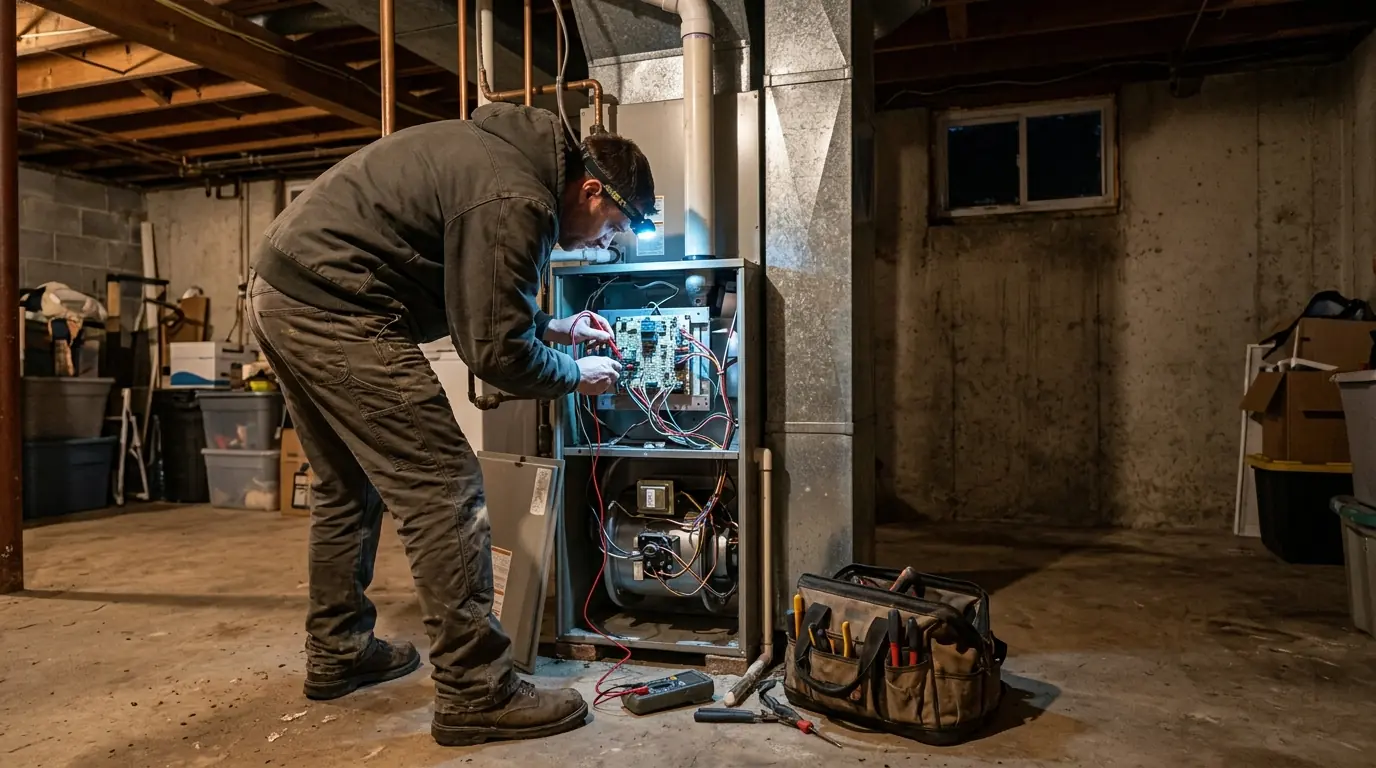
Most emergency calls in central Kentucky come in clusters. The first night that drops into the low 20s finds furnaces with dirty flame sensors, cracked igniters and weak inducer motors. When a cold snap pushes temperatures into the single digits, heat pumps lean on backup heat and any weak part in the outdoor unit or defrost controls tends to fail at once.
Summer works the same way. The first week of humid days in the upper 80s finds the compressors and fan motors that were limping along in May. Evening storms add outages, and a system that restarts the instant power returns can trip a breaker or lock itself out. Those nights are the busiest, so a clear description of what happened helps us bring the likely parts.
The housing stock adds its own risks. Crawlspace systems in older ranches can have frozen drain lines or water pipes during cold snaps, and homes on propane in outlying areas can run out of fuel unexpectedly. A homeowner who knows where the furnace switch, breaker and filter are can often solve a problem before needing us.
What happens when we arrive after hours
An emergency visit follows the same careful steps as a daytime call. Only the clock is different.
Safety check first
On gas furnaces, we check for gas leaks and measure carbon monoxide near the appliance before anything else. On electrical failures, we look for heat damage.
Diagnose with readings
We read furnace error codes, test igniters, flame sensors, capacitors and motors, and measure voltage and amp draw rather than swapping parts on a guess.
Price before repair
You get the cause in plain words and a written price. If the part isn't on the truck, we'll explain the options for getting heat or cooling back sooner.
Restore and verify
After the repair, we run a full cycle and confirm temperature rise on heat or temperature split on cooling, and we check the safeties.
What emergency HVAC repairs typically cost
The range below covers most repairs completed on an emergency visit. Igniters, flame sensors and capacitors sit low, while motors and control boards sit higher.
- Time of the call. Repairs done overnight, on weekends or on holidays can carry a higher labor rate than the same work on a weekday afternoon.
- Part that failed. A hot surface igniter or capacitor is a small part. An inducer motor, blower motor or control board costs several times more.
- Parts availability. Common parts ride on the truck. Brand-specific boards and motors for Lennox, Trane or Carrier equipment may need a supply house run.
- Equipment location. Attic and crawlspace units take longer to reach safely at night than a furnace in a basement or a hall closet.
- Refrigerant work. A cooling emergency that involves a leak or a recharge adds refrigerant cost, which varies with R-22, R-410A or newer refrigerants.
The written price comes after we look at the system and find the fault. Nothing is repaired until you approve the number. Compare typical prices for every service.
Keeping the house safe while you wait
Without heat in winter, close the doors to unused rooms, keep curtains shut on north windows, and open cabinet doors under sinks on exterior walls so pipes get room air. Let a faucet drip on the coldest wall. Use space heaters only on a clear floor, plugged directly into a wall outlet, and never run a generator, grill or gas oven to heat the house.
Without cooling in summer, close blinds on sun-facing windows, run ceiling fans, and keep the lowest floor as the gathering spot, since basements stay cooler. Check on older neighbors and anyone with health conditions. If the air conditioner froze up, our AC repair page explains why the fan should run while the cooling stays off.
If the furnace smells odd but there's no gas odor or CO alarm, turn it off and read our guide to furnace smells and carbon monoxide. For no-heat problems on gas units, we'll usually look at the flame sensor and igniter first during furnace repair. Those two parts cause a large share of winter no-heat calls.
We work on Carrier, Trane, Lennox, Rheem and Goodman equipment along with every other major brand found in Lexington homes, and the same testing comes first on all of them.
Where we handle emergency HVAC repair most often
We cover every Lexington neighborhood and the towns around it. These are the places we visit most for this work; the full list is on our Fayette County page and the service area page.
Further reading from our Comfort Blog
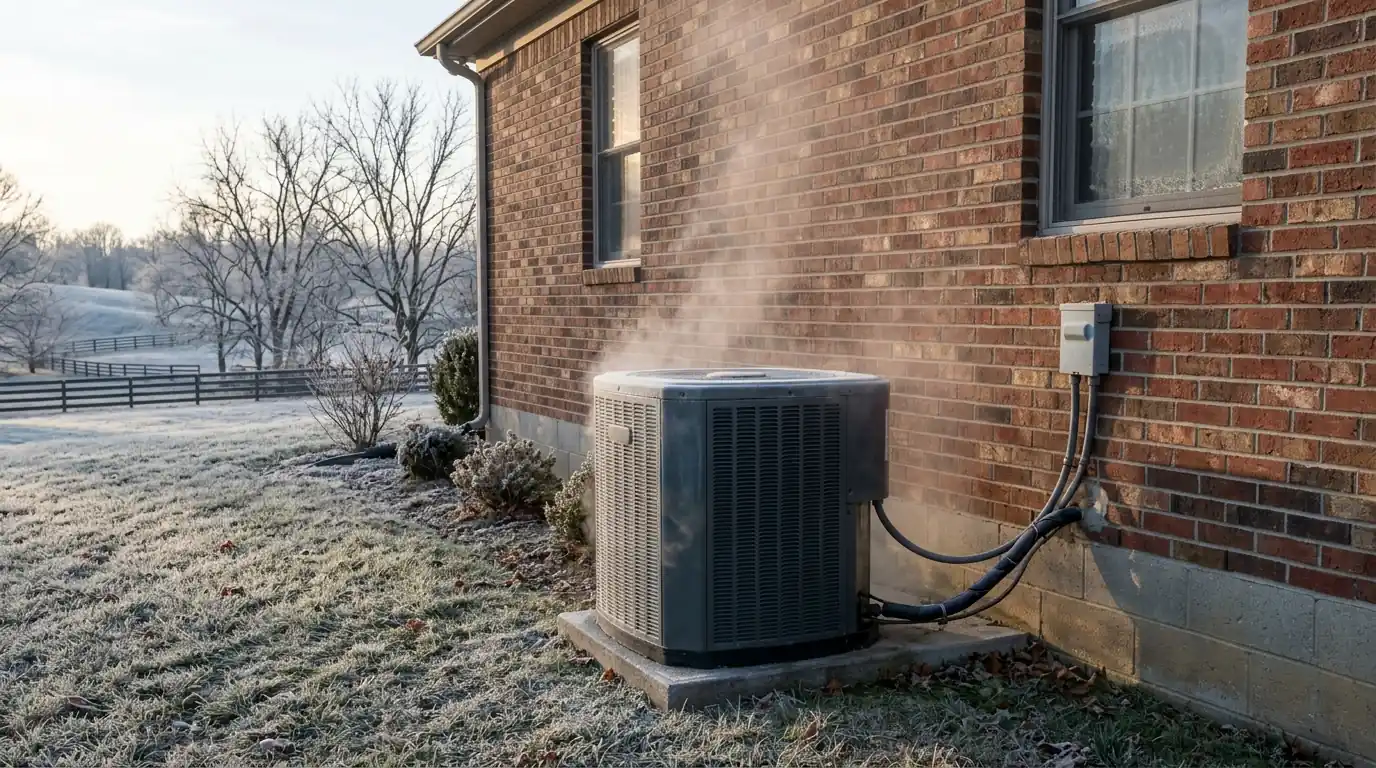
Heat pump noises: what is normal and what is not
A heat pump keeps more moving parts outdoors than a furnace, and some of its loudest sounds are perfectly healthy. This guide sorts the routine noises from the ones that need a shutoff and a call.
Questions about emergency HVAC repair in Lexington
What should I do if my furnace quits at night in a Kentucky cold snap?
Check the thermostat batteries and setting, the furnace switch and breaker, and the filter. Make sure the furnace door is seated. If the furnace light is blinking, count the flashes and note the code. If heat still won't start, call us any hour, close off unused rooms, and keep cabinet doors open under sinks on outside walls to protect the pipes.
Is a burning smell from my HVAC system an emergency?
A light dusty smell on the first furnace run of the fall is normal and fades within an hour. A sharp electrical or hot plastic smell is different. It can mean a motor is overheating or a wire is burning. Turn the system off at the thermostat and the breaker, and call for an emergency visit rather than letting it run.
Can I run my heat pump on emergency heat until a repair visit?
Yes, emergency heat will keep the house warm when the heat pump has failed. It runs electric strip heaters, which use far more electricity than the heat pump, so your KU bill will rise if it runs for days. It's a safe bridge, not a long-term setting. Our guide to AUX and EM heat explains the difference.
What emergency HVAC problems are dangerous to leave overnight?
A gas odor, a carbon monoxide alarm, an electrical burning smell, water spreading toward electrical equipment, and no heat in freezing weather with vulnerable people at home should not wait. For a gas smell or a CO alarm, leave the house first and call Columbia Gas or 911 from outside. For the others, shut the system off and call us.
Need emergency HVAC repair today?
A person answers (859) 377-8167 day and night. Tell us what you are seeing and a technician takes it from there.