Comfort Blog
Heat pump noises explained, from the defrost whoosh to grinding
A heat pump keeps more moving parts outdoors than a furnace, and some of its loudest sounds are perfectly healthy. This guide sorts the routine noises from the ones that need a shutoff and a call.
By Alton Gilley, Comfort Blog EditorPublished Answered 24/7 at (859) 377-8167
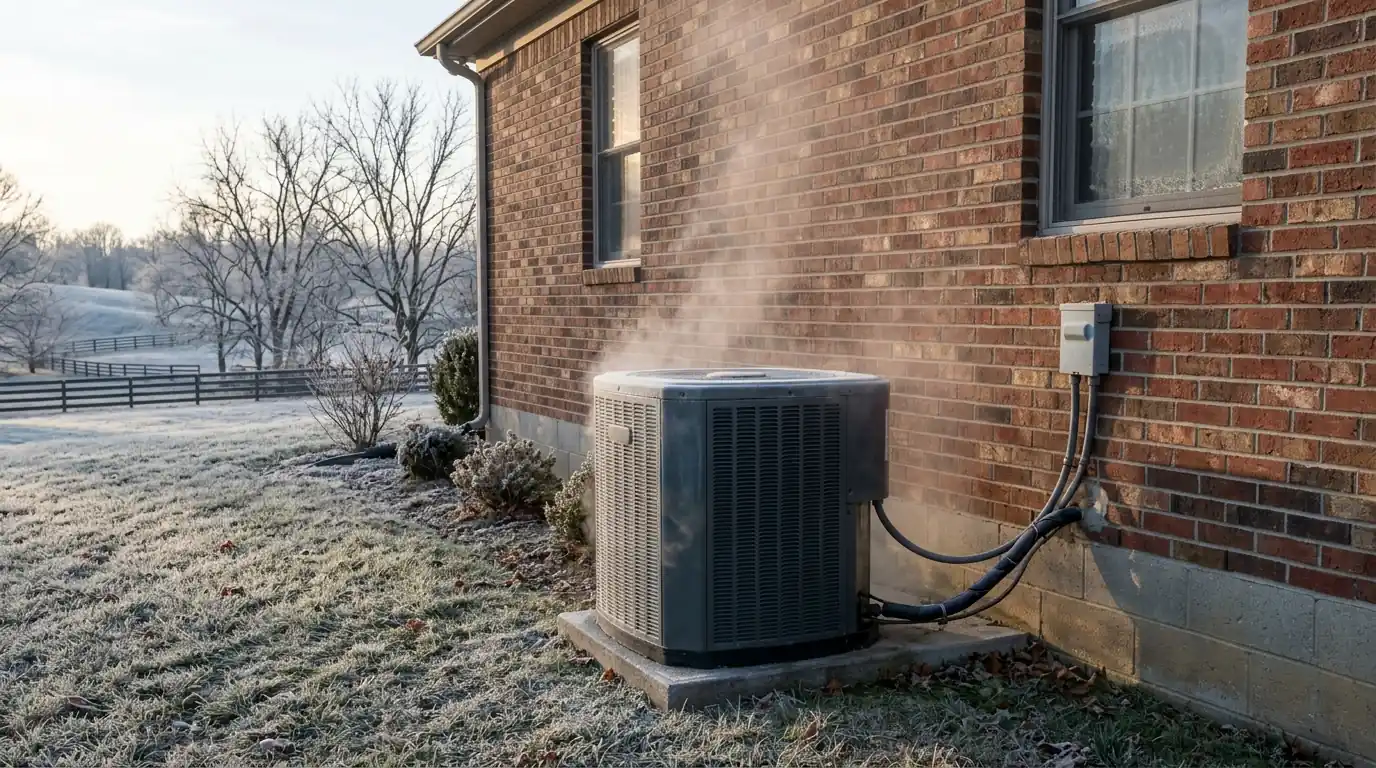
Short answer: Heat pump noises explained, from the defrost whoosh to grinding
A whoosh or hiss when a heat pump starts or ends defrost, a click as the reversing valve shifts, and a steady hum while it runs are normal. Grinding, screeching, loud buzzing with the fan stopped, or banging from the outdoor unit are not. For those sounds, turn the system off at the thermostat and call before the compressor or fan motor is damaged.
Why a heat pump is louder than the furnace it replaced
A gas furnace does its noisy work in a basement or closet. A heat pump runs a compressor, a fan and a set of valves in your yard, often a few feet from a bedroom window, and in winter it runs long, steady cycles. Many homeowners hear these sounds for the first time on a still January morning, when the street is quiet and the unit is working hardest.
Winter also adds sounds that summer never makes. In heating mode the outdoor coil runs below freezing and collects frost, so the system stops every so often to melt it. That defrost routine reverses the refrigerant flow, parks the outdoor fan and produces the rushes and hisses that send people to the window. The trick is knowing which sounds belong to that routine and which do not.
The whoosh, hiss and silence of a winter defrost
On a damp morning in the 30s, a typical central Kentucky heat pump defrosts after every 30 to 90 minutes of run time. The sequence is consistent. The outdoor fan stops, a solenoid clicks, and the reversing valve shifts with a sharp whoosh as high and low pressure trade places. For the next few minutes hot refrigerant runs through the outdoor coil, and you may hear hissing and dripping as the frost lets go.
When the coil is clear, the valve shifts back with a second whoosh and the fan restarts, sometimes pushing out a cloud of steam. Some scroll compressors also give a short rattle or whir as they stop, which is the compressor briefly turning backward while pressures even out. A sound that follows this pattern and repeats on a schedule is almost always routine. Our post on cool-feeling heat pump air covers what defrost does inside.
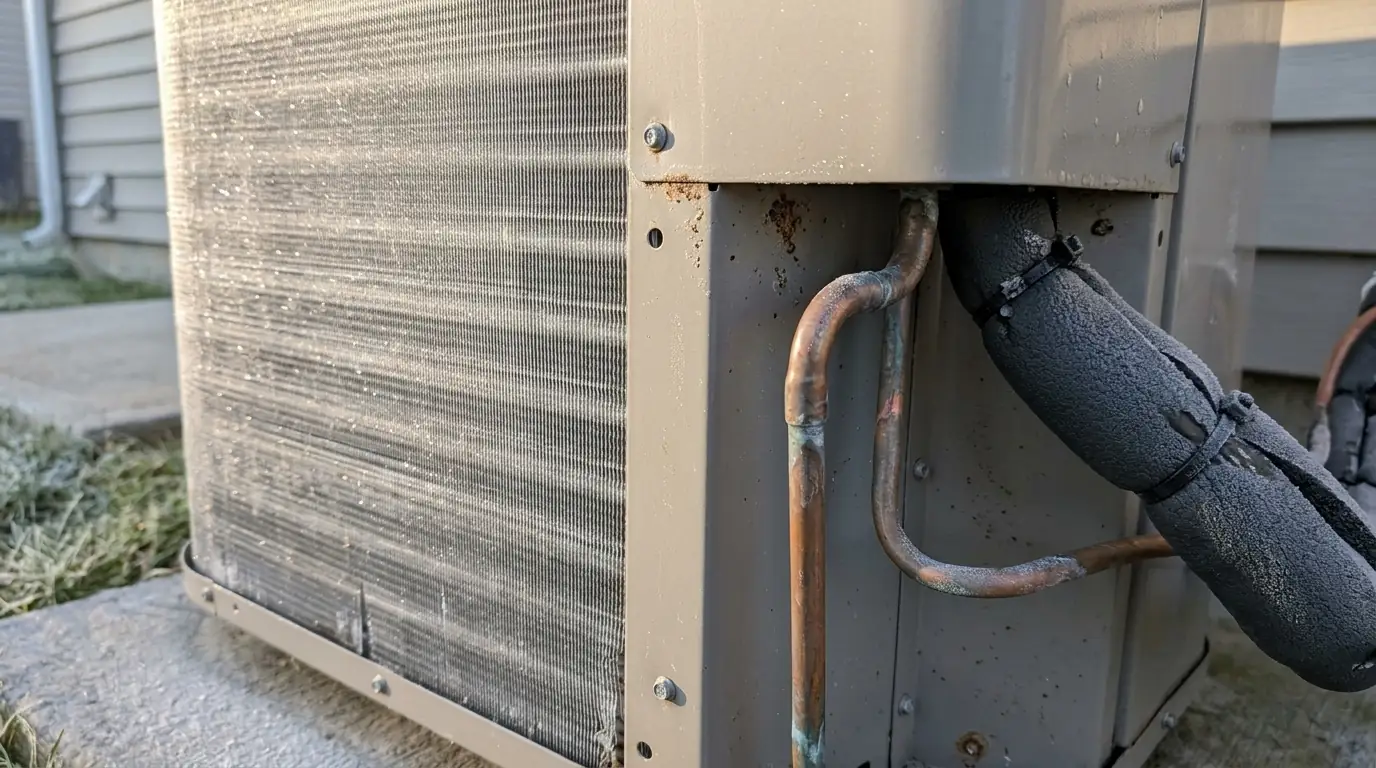
What is not routine is a defrost that never seems to end, a coil that stays caked in ice, or a valve that clunks back and forth every few minutes. Those point to a bad defrost board or sensor, low refrigerant or a sticking valve. After freezing rain, ice can also build on the top grille until the fan blades scrape it. Turn the unit off and let it thaw rather than chipping at it.
Common heat pump sounds and what each one usually means
Use this as a first sort. A sound from the normal rows that suddenly gets much louder still deserves a look.
| Sound | When you hear it | Usually means |
|---|---|---|
| Whoosh or rush | Start or end of defrost | Reversing valve shifting, normal |
| Single click or soft clunk | Cycle start or stop | Relay or contactor closing, normal |
| Steady low hum | While the compressor runs | Normal operation |
| Gurgle or trickle | After shutoff or during defrost | Refrigerant or meltwater moving, normal |
| Loud buzz, fan not turning | When it tries to start | Failed capacitor or stuck motor, call |
| Grinding or screeching | Any time it runs | Bearing or compressor trouble, shut off |
Sounds that mean shut it off and call
Turn the system off at the thermostat when you hear any of these. Running a damaged motor or compressor turns a modest repair into a large one.
Grinding from the outdoor unit
Usually a fan motor bearing that has worn dry, or a blade scraping ice, debris or a bent grille. Left running, the motor overheats and the blade can break loose.
High screech at startup
A shrill, rising screech can mean the compressor is fighting very high pressure or failing inside. Shut it off right away and leave it off until it has been tested.
Loud buzz with nothing spinning
The compressor or fan is getting power but cannot start, most often because of a failed run capacitor or a seized motor. Each failed attempt overheats the windings.
Banging or clanking in the cabinet
A loose compressor mount, a broken internal part or a fan blade striking something solid. Metal-on-metal noise rarely fixes itself and usually gets louder quickly.
Rapid clicking without a start
A contactor chattering on and off points to low control voltage, worn contacts or a thermostat wiring fault. Burnt contacts can eventually damage the compressor they feed.
Hissing that never stops
Defrost hiss lasts a few minutes. A constant hiss near the copper lines, especially with oily residue nearby, can mean a refrigerant leak that keeps draining capacity.
Noises from the indoor air handler and ductwork
Not every sound comes from the yard. When backup heat strips switch on, you may hear a series of clicks from the air handler as relays bring each element online, along with a faint dusty smell on the first cold day. Metal ducts in the attic or crawlspace can tick and pop as warm air expands them at the start of a cycle and again as they cool. Both are normal.
A blower that whines, roars or thumps as it spins up is a different story. Worn motor bearings, a blower wheel packed with dirt or a loose mounting bracket can all cause it, and a failing blower motor eventually stops moving air. A rattle at the return grille is often simpler: a loose filter door, or a clogged filter bowing into the opening as the blower pulls on it.
Safe checks before you call about a strange sound
These take a few minutes and give our technician useful clues. Do not open the electrical panel or reach past the fan guard.
- Note whether the sound comes at startup, mid-cycle, shutdown or during defrost.
- Record a short video with sound from a few feet away.
- Look through the top grille for sticks, leaves or ice touching the fan.
- Check whether ice has covered the coil or built up under the unit.
- Make sure the outdoor unit sits level and has not tipped on its pad.
- Listen at the indoor air handler to tell whether the noise is inside or out.
- Confirm the filter door is shut and the filter is not bowed or pulled in.
When a heat pump noise is worth a call tonight
Grinding, screeching, loud buzzing with nothing turning, a burning smell or a breaker that trips again after a reset are reasons to turn the system off now. If your heat pump has backup strips, switching the thermostat to emergency heat keeps the house warm while the outdoor unit stays off. Our guide to AUX and EM heat covers how that setting works and what it does to the electric bill.
Quieter changes matter too. A hum that has grown louder since last winter, or a rattle that started after a storm, is cheaper to fix early. Seasonal heat pump maintenance catches weak capacitors and worn motors before they get loud, and heat pump repair covers the rest. Call (859) 377-8167 any time, day or night, and tell us what you hear and when it happens.
Still wondering about this?
Why does my heat pump make a loud whoosh on cold mornings?
That whoosh is almost always the reversing valve shifting at the start or end of a defrost cycle. The valve redirects refrigerant to warm the outdoor coil, and the sudden pressure change makes a rush of sound, often followed by hissing, dripping and a little steam. If it happens every 30 to 90 minutes in frosty weather and the house stays warm, it is normal.
Should I turn off a heat pump that is making a grinding noise?
Yes. Grinding usually means a fan motor bearing is failing or a blade is hitting ice, debris or the grille, and running it can destroy the motor or break the blade. Turn the system off at the thermostat, switch to emergency heat if you have backup strips, and leave the outdoor unit off until a technician has looked at it.
Why does my heat pump click several times but never start?
Rapid clicking without the compressor or fan starting usually comes from the contactor or a control relay. Common causes are low control voltage, worn contacts, a failed capacitor, or a safety switch opening and closing. Repeated start attempts heat the compressor windings, so turn the system off and call. We test voltage, the contactor and the capacitor to find the part at fault.
More from the Comfort Blog
Furnace smells and carbon monoxide: when to leave
Some furnace smells are harmless and fade within the hour. Others mean shut the system off, and a few mean get everyone out of the house first and ask questions later.
Get your AC ready before the first hot, humid week
The first stretch of 85-degree, sticky days is when weak capacitors, clogged drains and dirty coils give out. A short homeowner checklist and one test run catch most of it early.
Central air for older Lexington homes without ducts
Plaster walls, radiators and tight attics make conventional ductwork hard to fit in Lexington houses from the 1910s to the 1940s. These are the cooling options that actually work in them.
Want a technician to look at it?
Call (859) 377-8167 any hour and describe what you are seeing. We will tell you what to check now and what needs a visit.