Comfort Blog
What AUX heat and EM heat mean on your thermostat
Those two small labels on a heat pump thermostat cause more winter confusion than almost anything else. One is automatic and expected. The other is a manual setting you should rarely need.
By Alton Gilley, Comfort Blog EditorPublished Answered 24/7 at (859) 377-8167
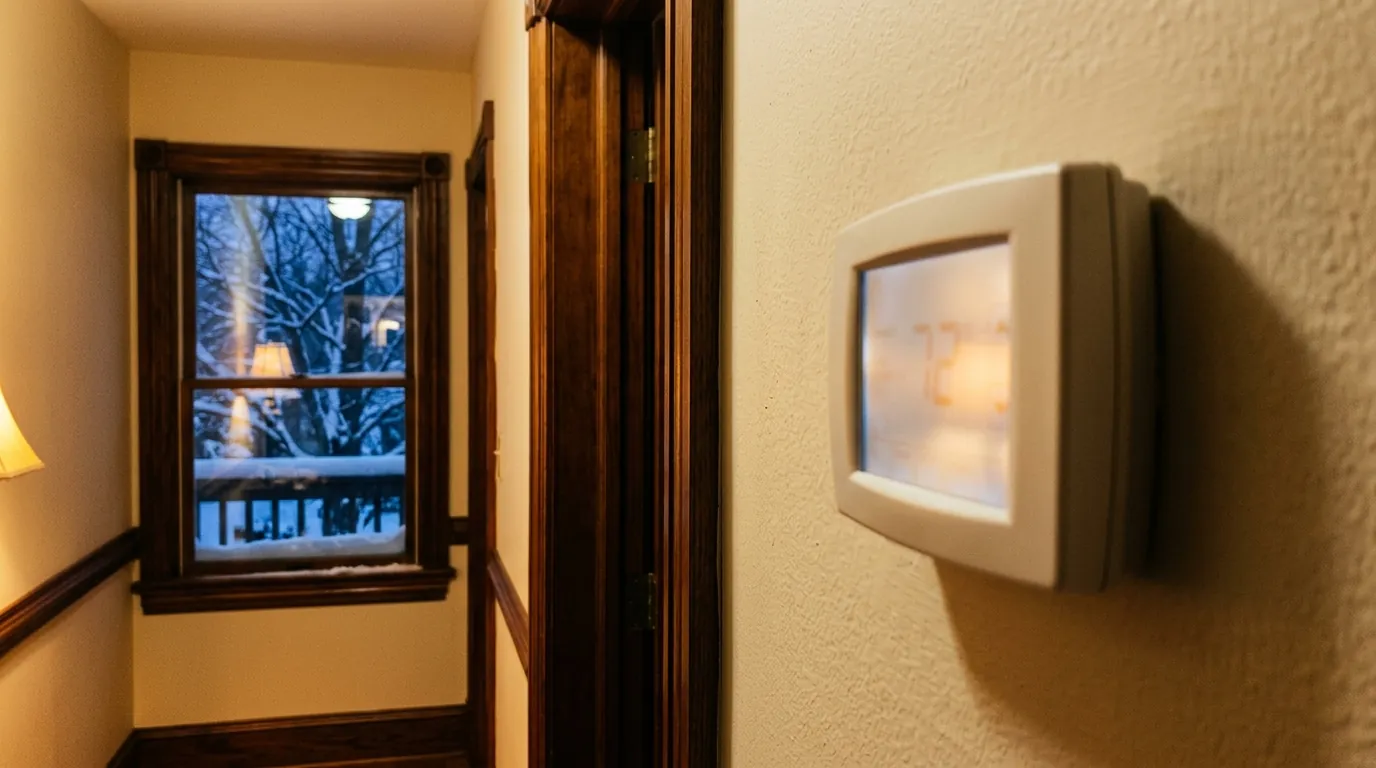
Short answer: What AUX heat and EM heat mean on your thermostat
AUX heat means the thermostat has turned on backup electric heat strips to help the heat pump, which is normal during defrost, deep cold or a big temperature jump. EM heat is a manual setting that shuts the heat pump off and runs only the strips. Use EM heat only when the outdoor unit has failed or is damaged, and call for service soon, because strip heat costs far more to run.
AUX heat is your heat pump asking for help
Most heat pumps in Lexington have a bank of electric resistance coils inside the air handler, often called heat strips. They work like the coils in a toaster: electricity runs through them and they glow hot. When the thermostat shows AUX, it means those strips are running alongside the heat pump, adding warmth the outdoor unit cannot supply on its own at that moment.
Seeing AUX on a cold morning is normal. The heat pump still does most of the work, and the strips fill the gap. The thermostat decides this automatically based on how fast the house is warming, the outdoor temperature if it has a sensor, and whether the system is in a defrost cycle. You do not need to switch anything on or off for AUX heat to work.
Situations that switch on auxiliary heat strips
AUX comes on for a handful of predictable reasons. Most of them are short and expected.
Outdoor temperature below balance point
Every house has a temperature, often somewhere in the 20s or 30s, where heat loss outpaces what the heat pump alone can deliver. Below that point, the strips fill the gap for as long as it stays cold.
Defrost cycle in progress
While the outdoor coil defrosts, the heat pump briefly runs in cooling mode. The strips turn on so the air at the vents does not turn cold for those few minutes.
Large jump in the thermostat setting
Raising the setting three or four degrees at once tells many thermostats to call for strip heat to catch up quickly. Smaller steps let the heat pump recover on its own.
Recovery after an overnight setback
Deep night setbacks force the system to recover in the coldest hour of the morning. On many heat pumps, that recovery happens largely on expensive strip heat.
A heat pump fault going unnoticed
If the heat pump has a refrigerant leak or a failed part, the strips may quietly carry the whole load. AUX showing all day in 40-degree weather is a warning sign.
Comparing heat pump, AUX and EM heat modes
The same air handler can heat three different ways. This is how they differ.
| Mode | What runs | When it is right |
|---|---|---|
| Heat (normal) | Outdoor heat pump only | Most of the winter |
| AUX heat | Heat pump plus strips, automatically | Defrost, deep cold or fast recovery |
| EM heat | Strips only, heat pump locked off | Outdoor unit broken, iced solid or damaged |
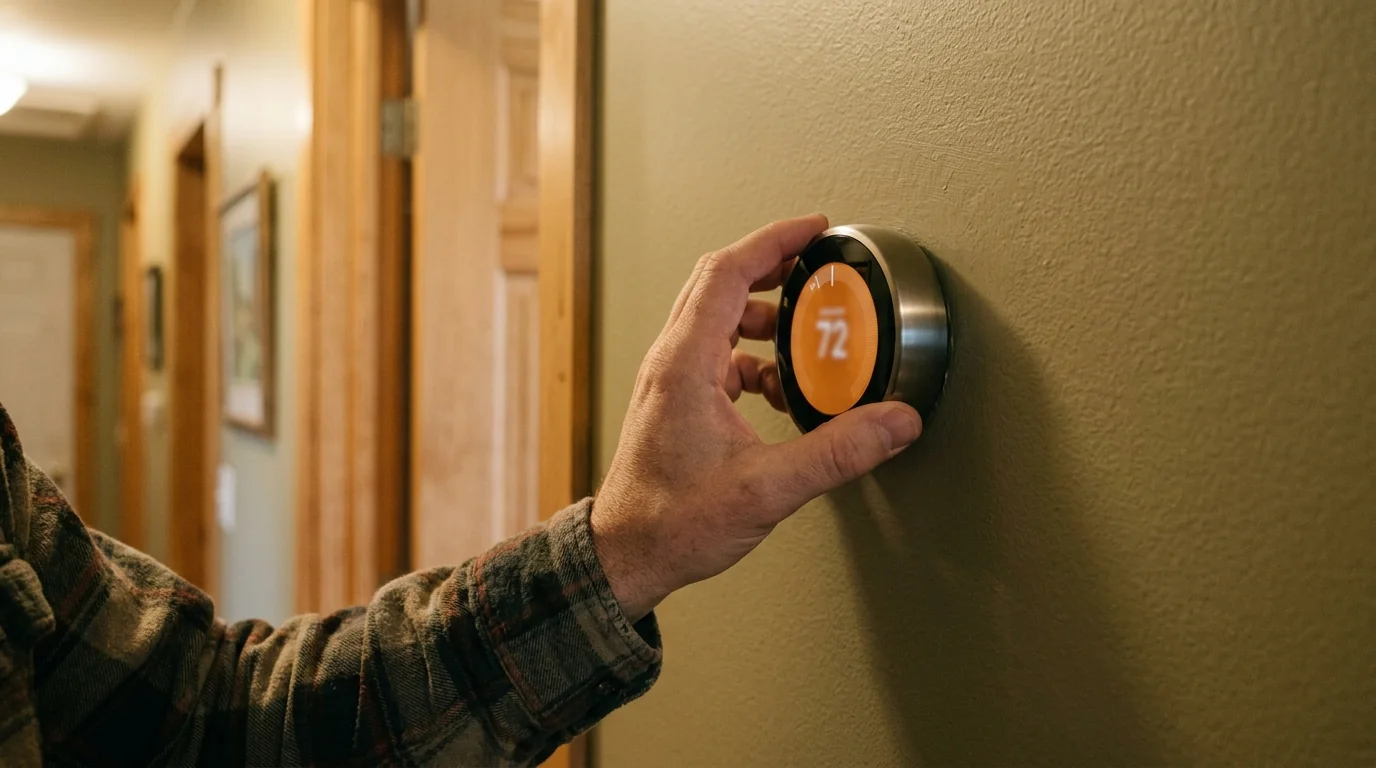
How long strip heat hours change your KU bill
A heat pump moves heat instead of making it, so on a 40-degree day it delivers two to three times as much heat as the electricity it uses. Heat strips have no such advantage. Every kilowatt-hour from Kentucky Utilities becomes exactly one kilowatt-hour of heat. A common 10-kilowatt strip bank draws about as much power as six or seven space heaters running on high.
That is why a cold snap shows up on the next electric bill. A few hours of AUX heat on the coldest mornings is expected and affordable. Days of strips running around the clock, or a household that leaves the thermostat on EM heat for weeks, can raise winter electric use sharply. If your January bill jumps far more than the weather explains, the strips are often the reason, and a heat pump fault may be hiding behind them.
Using emergency heat safely when the outdoor unit fails
EM heat is a backup plan for a broken outdoor unit, not a cold weather setting. If you need it, follow these steps.
Confirm the heat pump has failed
Go outside. If the outdoor unit is silent while the thermostat calls for heat, is buried in ice, or was damaged by a fallen limb, emergency heat is the right temporary move.
Switch the thermostat to EM heat
Select EM or EMERGENCY in the mode menu. The outdoor unit will stay off, and the strips will heat the house by themselves. Expect drier, warmer air at the vents.
Lower the setting a couple of degrees
Strip heat costs more per hour, so setting the thermostat a degree or two lower than usual trims the bill while you wait for a repair visit.
Call for heat pump service
EM heat is a stopgap. Call so a technician can find out why the outdoor unit stopped, whether that turns out to be a capacitor, a defrost control, a frozen coil or a refrigerant leak.
Switch back to normal heat after repair
Once the heat pump is fixed, return the thermostat to HEAT. Leaving it on EM heat after a repair is one of the most common causes of a surprise winter electric bill.
Still wondering about this?
Should I turn on EM heat whenever it gets very cold in Lexington?
No. Even in single-digit weather, the heat pump still contributes useful heat, and the thermostat brings on AUX strips automatically when it needs help. Switching to EM heat shuts the heat pump off and makes the strips do all the work, which costs more and adds nothing to comfort. Save EM heat for times when the outdoor unit is broken, iced solid or physically damaged.
Why does my thermostat show AUX heat every morning after a setback?
When the thermostat sees a large gap between the room temperature and the new setting, many models bring on strip heat to close it fast. Deep overnight setbacks on a heat pump often cost more to recover than they save. Try a setback of only two degrees, or use a thermostat with adaptive recovery that starts earlier and lets the heat pump do the work.
How much does strip heat raise an electric bill during a Kentucky cold snap?
It depends on the size of the strip bank and how many hours it runs. A 10-kilowatt bank running for one hour uses 10 kilowatt-hours, roughly two to three times what the heat pump would use to deliver the same heat on a mild day. A few hours per cold morning is modest. Days of nearly constant strip heat can noticeably raise a monthly KU bill.
More from the Comfort Blog
Furnace smells and carbon monoxide: when to leave
Some furnace smells are harmless and fade within the hour. Others mean shut the system off, and a few mean get everyone out of the house first and ask questions later.
Get your AC ready before the first hot, humid week
The first stretch of 85-degree, sticky days is when weak capacitors, clogged drains and dirty coils give out. A short homeowner checklist and one test run catch most of it early.
Central air for older Lexington homes without ducts
Plaster walls, radiators and tight attics make conventional ductwork hard to fit in Lexington houses from the 1910s to the 1940s. These are the cooling options that actually work in them.
Want a technician to look at it?
Call (859) 377-8167 any hour and describe what you are seeing. We will tell you what to check now and what needs a visit.