Indoor Air Quality · Lexington, KY
Whole-house dehumidifiers in Lexington for sticky summer air
The thermostat says 72, but the house feels sticky, the basement smells musty and the hygrometer reads 60 percent or higher. Your air conditioner cools well, it just isn't built to dry the air that much.
Lexington and nearby counties
Line open 24/7Short answer: Whole-House Dehumidifiers in Lexington, KY
A whole-house dehumidifier is a ducted unit, usually rated 70 to 130 pints per day, that dries air for the entire home independently of cooling. It makes sense when indoor humidity stays above about 55 percent even with the AC running, in spring and fall when the AC barely runs, and in basements or sealed crawlspaces. Size it by square footage, how leaky the house is and moisture sources, not by guesswork.
Why your AC alone may not dry the house
An air conditioner removes moisture as a side effect of cooling. When the coil is cold and the system runs long cycles, it pulls plenty of water out. But many homes have equipment that's oversized for the house, so it cools quickly and shuts off before it has removed much moisture. Others have a variable-speed blower set for high airflow, which keeps the coil warmer and drier than ideal for dehumidifying.
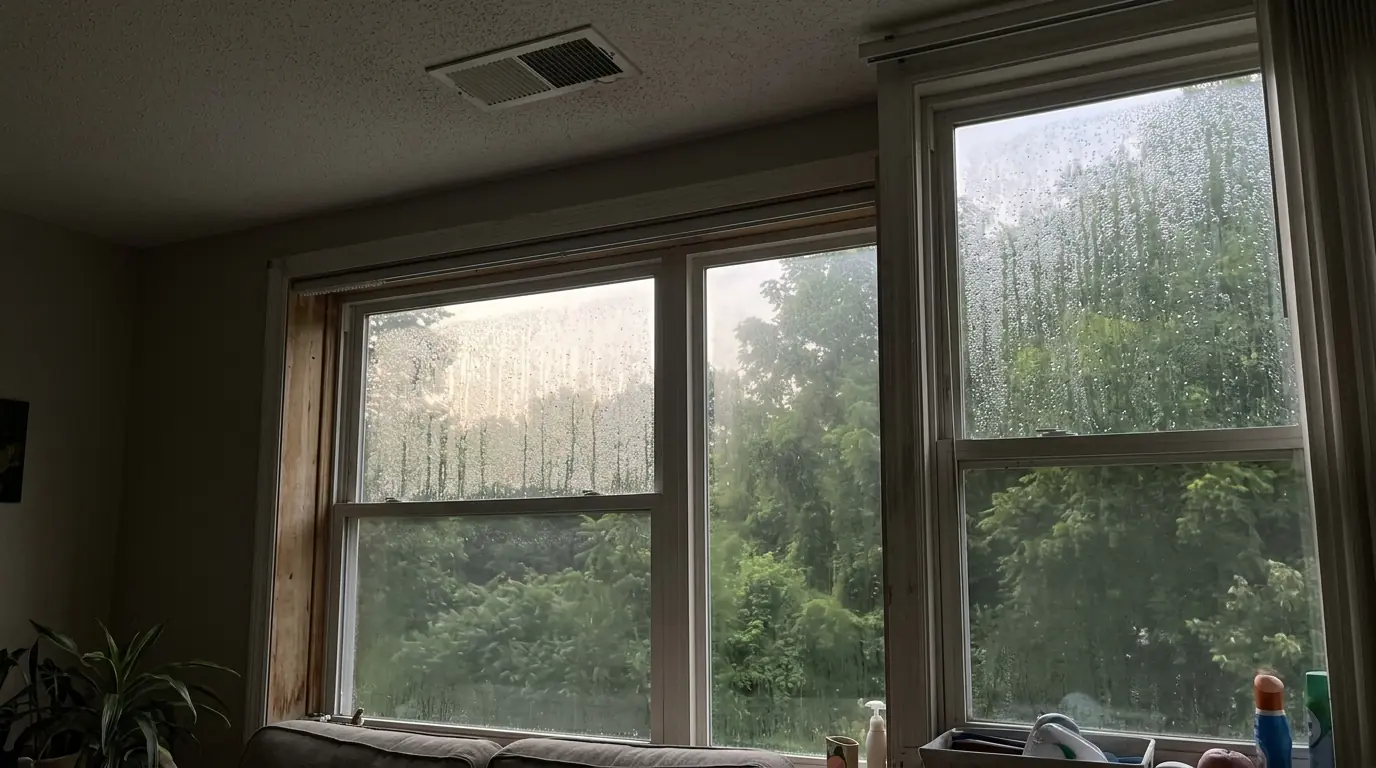
Spring and fall are the bigger gap. On a 72 degree day in May with drizzle and a dew point in the 60s, the house doesn't need cooling, so the AC barely runs. Humidity indoors creeps up to 60 or 65 percent, and that's when musty smells, sticky floors and condensation on windows show up. A dedicated dehumidifier handles that moisture without overcooling the house.
Before recommending one, we check the simple things first: fan set to AUTO rather than ON, the right airflow setting, a working drain and return ducts that aren't pulling crawlspace air. Our post on why a house feels clammy with AC running covers those causes. If they're all fine and humidity still stays high, a whole-house unit is the right tool.
Sizing a dehumidifier in pints per day
Pint ratings are measured at a standard test condition. These are typical starting points we refine after looking at your house.
| Home situation | Typical size | Common setup |
|---|---|---|
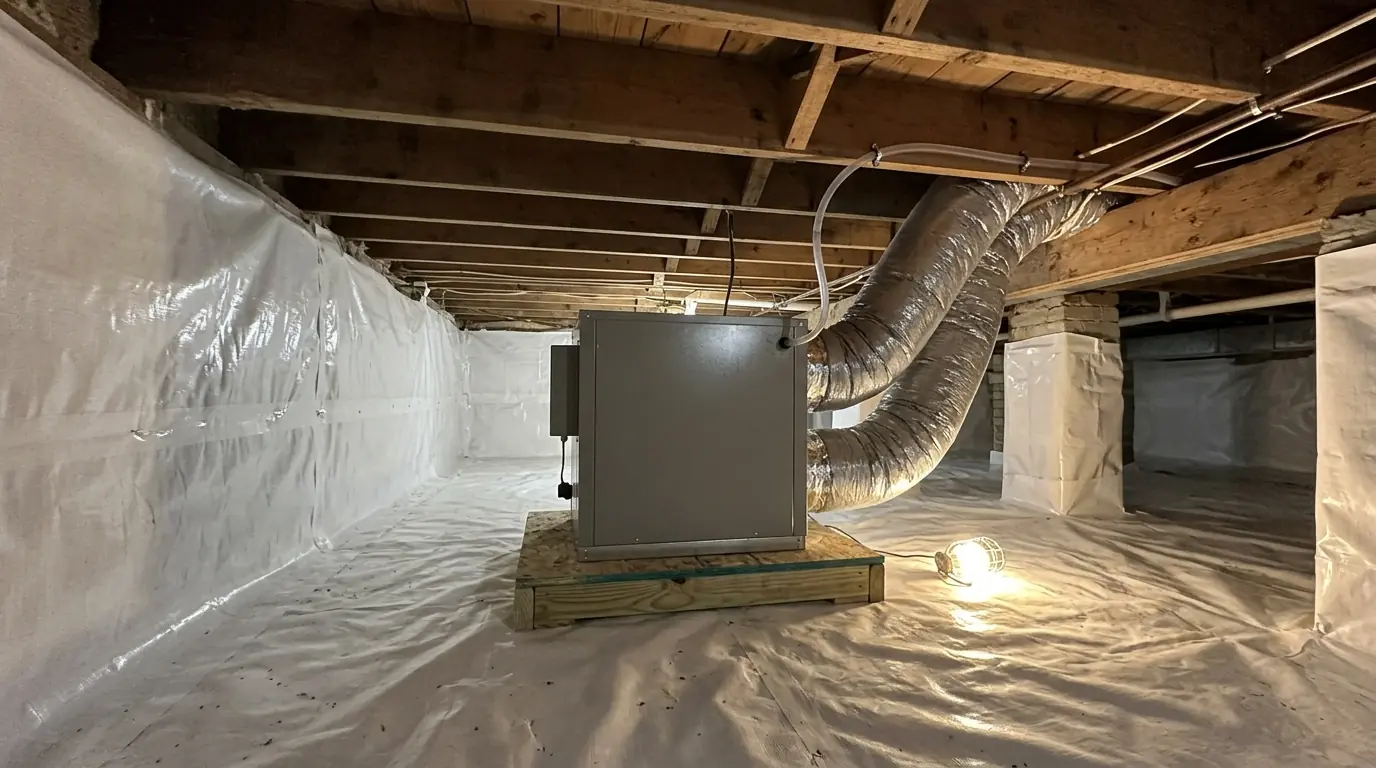
| Sealed crawlspace, any home size | 70 pints per day | Unit in the crawlspace, ducted to it |
| Basement or ranch to about 2,500 sq ft | 70 to 98 pints per day | Tied into the return of the main system |
| Two-story home, 2,500 to 4,000 sq ft | 98 to 120 pints per day | Ducted to returns with its own supply |
| Large or very leaky older home | 120 to 130 pints per day | Stand-alone ducting or two units |
Choices that shape a dehumidifier installation
Once you've decided a whole-house unit makes sense, these are the decisions that determine how well it performs and how easy it is to live with.
Where the unit lives
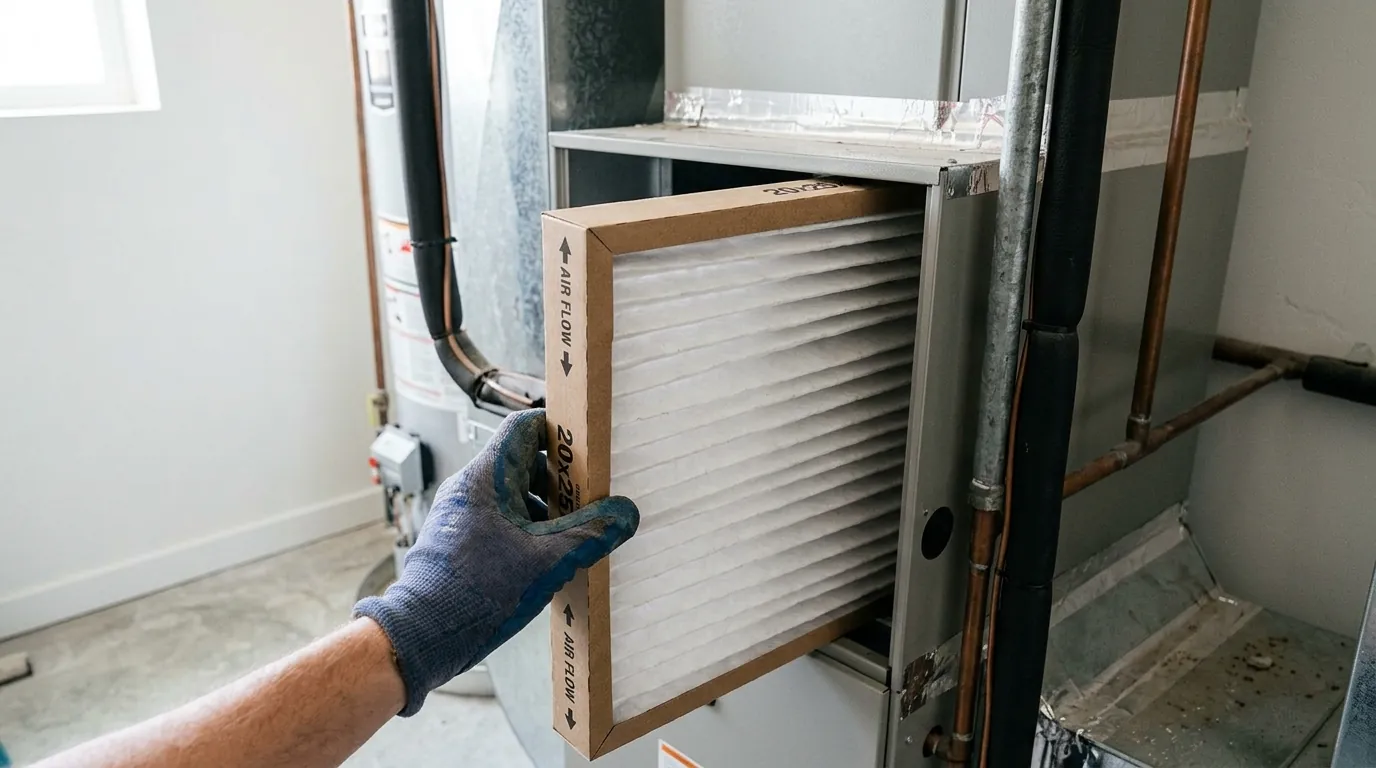
Basements, crawlspaces and utility closets all work. The unit needs a drain path, a 120 volt outlet and service clearance for annual filter changes.
Ducted into the HVAC system
Most installs pull from the return and deliver dry air into the supply. That uses your existing ducts to spread the drier air through the house.
Stand-alone ducting
Homes with ductless systems, boilers or sealed crawlspaces can use dedicated ducts so the unit runs without the main blower.
Drain and pump
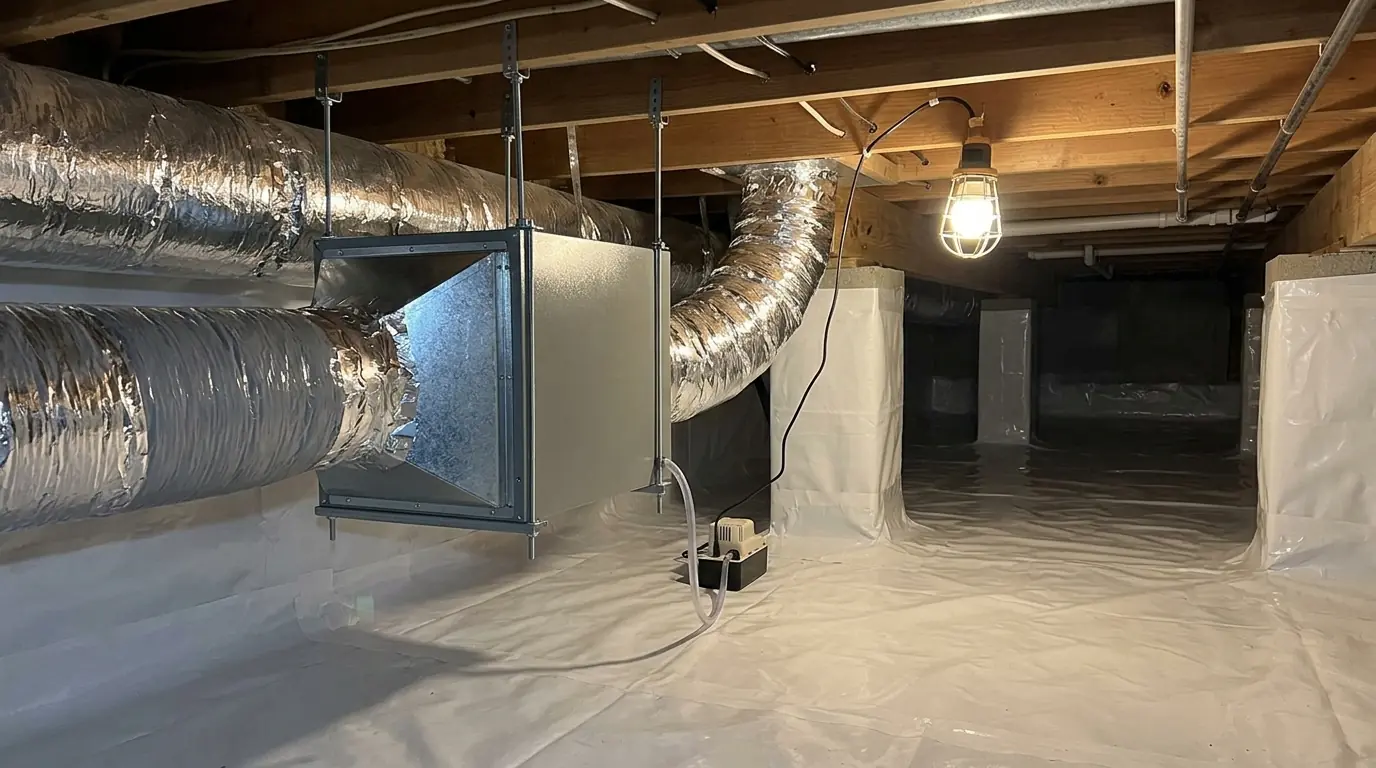
A 98-pint unit can make several gallons of water a day in a wet stretch. It needs a gravity drain or a condensate pump to a proper outlet.
Humidity control location
A wall control in the living area reads the air you breathe. We set it around 50 percent, and many units also tie into the thermostat.
Filter on the intake
The dehumidifier coil needs clean air too. Most units have a MERV 8 or 11 filter that should be changed at least once a year.
From humidity readings to a dry, quiet install
Installation typically takes one day once the location and duct connections are planned.
Measure the moisture
We read indoor humidity in several rooms and in the basement or crawlspace, then check AC runtime, fan settings and return duct leakage.
Size and place the unit
From the readings and house size, we pick a capacity and a location with access for service, power and a drain.
Connect the ducts
Supply and return connections are cut in and sealed with mastic. Backdraft dampers stop air from flowing through the unit when it's off.
Drain, power and control
We run the condensate line or pump, connect power, and mount the humidity control where it reads the living space accurately.
Run it and verify
With the unit running, we check that the drain carries water away, measure dry air leaving the unit, and set the target humidity with you.
Crawlspaces, limestone and the Lexington humidity season
Lexington summers bring dew points in the upper 60s and low 70s, and that air finds its way into houses through every gap. Crawlspaces are the biggest moisture source in many local homes. The soil over limestone stays damp, vented crawlspaces pull in humid outdoor air, and that moisture rises through the floor. Sealing and conditioning the crawlspace with a dehumidifier often changes how the whole house feels.
Basements are the other common trouble spot. Finished lower levels in homes built from the 1970s on often hold 60 to 70 percent humidity all summer, which is enough for mold behind furniture and a musty smell in carpet. A whole-house unit set to 50 percent controls the basement and the floors above together, and it's quieter than a portable unit running in the corner.
Spring and fall shoulder seasons are long here, with cool rainy stretches when the AC never comes on. That's when a dedicated unit earns its place. If ductwork under the house is sweating or leaking, pairing the install with sealing and insulating crawlspace ducts cuts the moisture load at the source. To talk through the readings in your house, call (859) 377-8167.
Whole-house dehumidifier installation cost in 2026
A 70-pint crawlspace unit with a simple drain falls near the low end. Larger ducted units with dedicated supply runs and a condensate pump land higher.
- Unit capacity. A 70-pint unit costs noticeably less than a 120 or 130-pint unit, and the larger units also need bigger duct connections.
- Ducting approach. Tying into the existing return and supply is simpler than running dedicated ducts to several rooms or to the crawlspace.
- Drain route. A floor drain or nearby sump keeps it simple. Otherwise a condensate pump and a longer drain run add cost.
- Power availability. Most units plug into a 120 volt outlet. If there isn't one near the install location, a new circuit or outlet is needed.
- Crawlspace preparation. Units in crawlspaces work best when the space is sealed and has a vapor barrier. That preparation is separate from the dehumidifier itself.
The written price comes after we look at the system, take humidity readings and choose the location, so the capacity matches your house. Compare typical prices for every service.
We work on Carrier, Trane, Lennox, Rheem and Goodman equipment along with every other major brand found in Lexington homes, and the same testing comes first on all of them.
Neighborhoods and towns that call us for whole-house dehumidifiers
We cover every Lexington neighborhood and the towns around it. These are the places we visit most for this work; the full list is on our Fayette County page and the service area page.
Further reading from our Comfort Blog
Why your house feels clammy with the AC running
A thermostat can read 72 while the air still feels sticky. In central Kentucky, that usually means the system is cooling the air without pulling enough moisture out of it.
Questions about whole-house dehumidifiers in Lexington
What indoor humidity should a whole-house dehumidifier hold in summer?
Most homes are comfortable between 45 and 50 percent in summer. Below about 40 percent, the dehumidifier runs more than it needs to and uses extra electricity. Above 55 percent, dust mites and mold start to thrive and the house feels sticky. We usually set the control at 50 percent and adjust from there.
Does a whole-house dehumidifier raise the electric bill on KU service?
It adds some usage, typically similar to a large refrigerator during the months it runs heavily. Many homeowners offset part of that by raising the thermostat a degree or two, since drier air feels cooler at the same temperature. The actual cost depends on how many hours the unit runs in your house.
Can a whole-house dehumidifier work with a heat pump system?
Yes. It ties into the heat pump's ducts the same way it does with a furnace and air conditioner. In shoulder seasons when the heat pump isn't cooling, the dehumidifier handles moisture alone. Some newer variable-speed heat pumps also have a dehumidify mode, which can reduce how much the separate unit needs to run.
Is a whole-house dehumidifier better than portable units in the basement?
For most homes, yes. Portable units have small tanks or need a hose, run loudly, and only dry the room they sit in. A whole-house unit drains on its own, can be located out of the way, and treats the basement and upper floors together through the ductwork, so humidity stays more even.
How often does a whole-house dehumidifier need maintenance?
Change or clean the intake filter at least once a year, more often if the house has pets or the unit sits in a dusty crawlspace. Check the drain each spring, and have the coil and condensate line looked at during a regular spring cooling tune-up, since the same algae that clogs AC drains can clog these lines too.
Call and describe what the system is doing
A person answers (859) 377-8167 day and night. Tell us what you are seeing and a technician takes it from there.