Ductless & Controls · Lexington, KY
Ductless mini split installation for Lexington homes and additions
You have a room that never gets comfortable, an addition the main system cannot reach, or an older home with radiators and window units, and you want real heating and cooling without tearing open walls for ductwork.
Lexington and nearby counties
Line open 24/7Short answer: Ductless Mini Split Installation in Lexington, KY
A ductless mini split pairs one outdoor heat pump with one or more indoor heads, connected by a small refrigerant line set through a three-inch hole in the wall. Each head has its own thermostat, so rooms are controlled separately. In Lexington, a single-zone system typically costs $3,860 to $6,240 installed, and multi-zone systems for whole houses run $8,970 to $21,480.
Picking the right mini split layout
The first decision is not the brand, it is how many zones you need and what kind of indoor unit fits each room. These are the options we lay out for homeowners.
Single-zone wall head
One outdoor unit, one indoor head. The simplest and most efficient setup, ideal for a sunroom, garage apartment, bonus room or a single problem bedroom over a garage.
Multi-zone outdoor unit
One outdoor unit feeding two to five heads. It saves yard space but costs some efficiency, and every head shares the same outdoor capacity.
Ceiling cassette
Mounts flush in the ceiling and blows four directions. A good fit for open living areas and rooms where a wall head would look out of place.
Slim ducted air handler
Hides in a closet, attic or soffit and feeds two or three rooms through short duct runs. You see only grilles, not equipment.
Floor console
Sits low on the wall like a radiator. Common in rooms with sloped ceilings, knee walls or windows taking up the upper wall.
Cold-climate outdoor unit
Holds most of its heating output down near 5 degrees. The right pick when the mini split is the main heat, not just supplemental.
Older Lexington homes and rooms ductwork never reached
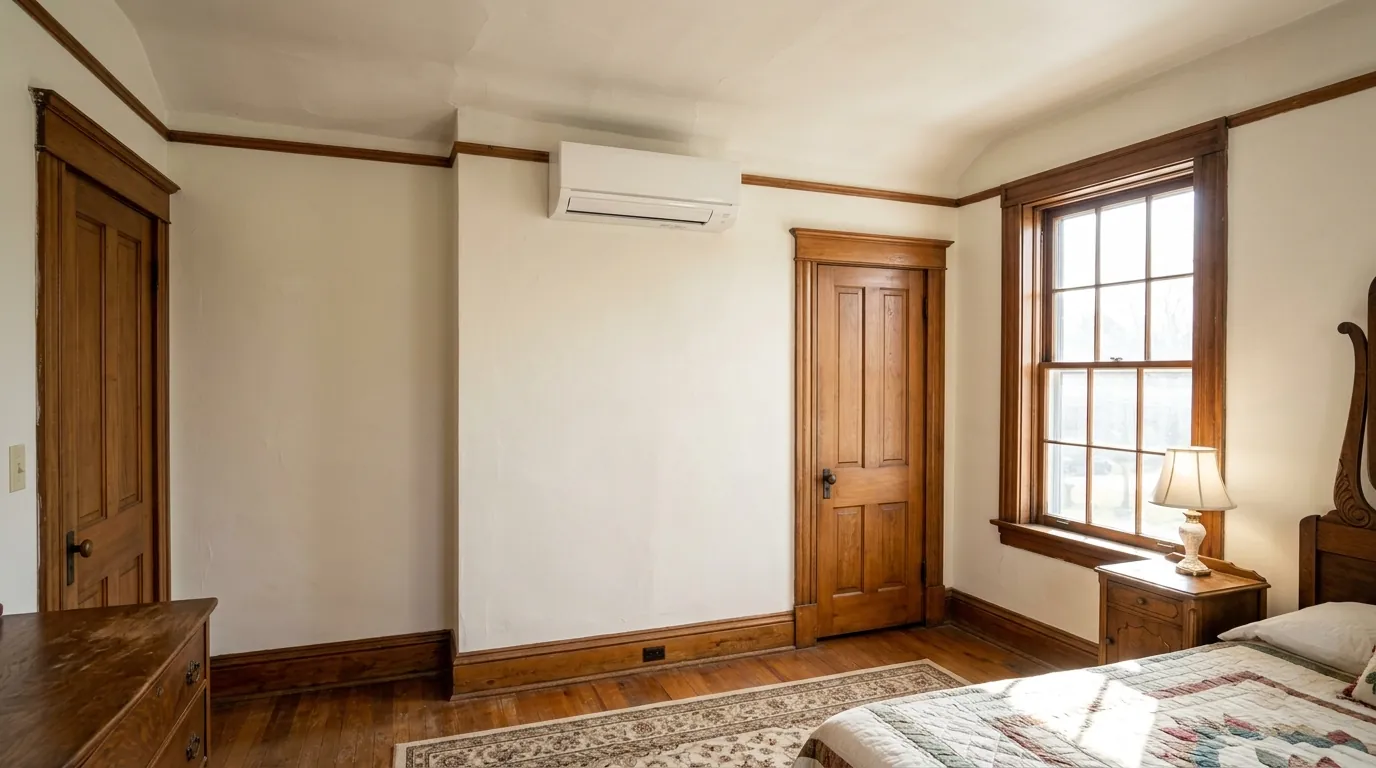
Many early 1900s homes in Chevy Chase, Ashland Park, Bell Court and Kenwick were built with boilers and radiators, and the walls and floors were never framed to carry ductwork. Plaster walls, finished hardwood and tight attics make running ducts disruptive and expensive. Ductless lets these homes add cooling and efficient heat with a line set and a small wall penetration in each room, leaving the plaster and trim largely alone. Many owners keep the boiler for the coldest nights and let the mini splits handle shoulder seasons and summer.
Newer homes have their own gaps. Bonus rooms over garages in 1990s and 2000s subdivisions such as Masterson Station, Andover or Palomar are notorious for running hot in July, and a finished basement may sit cold all winter because it was never tied into the main ductwork. A single-zone unit fixes the room without upsetting the rest of the system. For homes where hidden outlets matter more than wall heads, small-duct high-velocity air is worth comparing too.

What happens on mini split install day
A single-zone install usually takes most of one day. Multi-zone jobs often take two or three, depending on line set routing and the number of heads.
Mark head and line locations
We confirm each head location with you, check for wall studs, wiring and plumbing, and plan the shortest clean line set path to the outdoor unit.
Drill and mount
Each head hangs on a mounting plate. A three-inch hole carries the line set, communication wire and condensate drain through the wall with a slight downward pitch.
Set the outdoor unit
The condenser goes on a raised pad or wall bracket that keeps it above snow and drip lines, with a disconnect and dedicated circuit wired to it.
Flare, test and evacuate
Line set flares are made with a proper flaring tool and torqued to spec. The system is pressure-tested with nitrogen and pulled into a deep vacuum.
Release refrigerant and commission
We open the service valves, check pressures and temperatures at each head, confirm drains flow outside and set up each remote or wall controller.
Mini split installation prices around Lexington
The range below covers single-zone systems, the most common project. Multi-zone systems for whole homes or several rooms cost more.
- Number of zones. Each added head brings more equipment, line set and labor. Whole-house multi-zone systems typically land between $8,970 and $21,480.
- Head style. Wall heads cost the least. Ceiling cassettes and slim ducted units need more framing and finish work, which adds to the price.
- Line set length and route. Short runs straight through an exterior wall are simplest. Long runs through attics, closets or finished basements add copper, covers and time.
- Electrical work. Most systems need a dedicated circuit. A full panel or a long run to the outdoor unit location adds electrical labor.
- Condensate handling. Heads on interior walls cannot drain by gravity, so they need a small condensate pump, which adds cost and a part to maintain.
This is a typical range, not a quote. You get a written price after we walk the house, confirm head locations and plan the line set routes. Compare typical prices for every service.
Mistakes that make a mini split disappoint
Most complaints we hear about mini splits trace back to design choices made before the first hole was drilled. We plan around these.
- Oversizing heads so they short cycle and leave the room clammy.
- Putting one large head in a hallway to heat several closed bedrooms.
- Using a standard outdoor unit as the only heat in a cold snap.
- Running condensate drains flat or uphill so they back up and drip.
- Mounting the outdoor unit on the ground where snow and splash bury it.
- Skipping the deep vacuum before releasing the refrigerant charge.
Living with ductless through a Bluegrass year
Mini splits handle Lexington summers well. Inverter compressors slow down to match the load, which keeps them running long enough to pull moisture from muggy July air. Most units also have a dry mode for damp spring days when you need humidity control more than cooling. Filters behind the front panel need rinsing every month or two in pollen season.
In winter, a cold-climate unit can heat a well-insulated room through most cold snaps, though older homes with drafty windows may still want a backup on the coldest nights. Outdoor units should sit on brackets or stands at least a foot above grade so snow and ice runoff do not block the coil. If a head starts dripping, blinking an error code or blowing warm air in summer, our mini split repair service picks up at (859) 377-8167 any hour.
We work on Carrier, Trane, Lennox, Rheem and Goodman equipment along with every other major brand found in Lexington homes, and the same testing comes first on all of them.
Neighborhoods and towns that call us for ductless mini split installation
We cover every Lexington neighborhood and the towns around it. These are the places we visit most for this work; the full list is on our Fayette County page and the service area page.
Further reading from our Comfort Blog
Central air for older Lexington homes without ducts
Plaster walls, radiators and tight attics make conventional ductwork hard to fit in Lexington houses from the 1910s to the 1940s. These are the cooling options that actually work in them.
Why the upstairs stays hotter than the downstairs
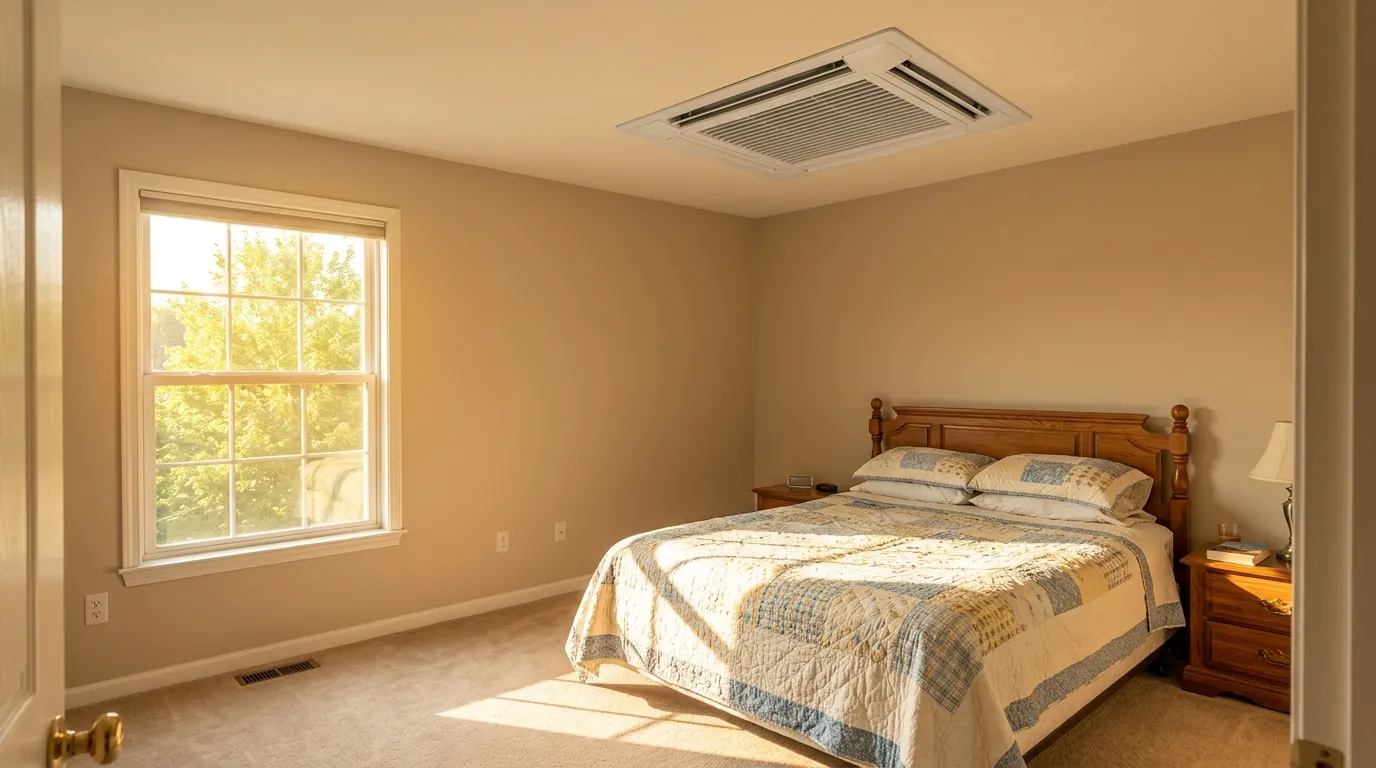
A two-story house with one system and attic ducts has the odds stacked against its second floor. Here is how to measure the problem and which fixes actually close the gap.
Common questions on ductless mini split installation around Lexington
Can a ductless mini split heat an entire older Lexington house?
It can, with careful design. A multi-zone or multiple single-zone setup with a head in each main room can heat and cool a whole house, especially with cold-climate outdoor units. Closed-off bedrooms each need their own head or a slim ducted unit. Many Chevy Chase and Ashland Park homeowners keep a boiler as backup for single-digit nights, which our post on central air for older homes covers in more detail.
Which mini split brands do you install?
We install and work on Mitsubishi Electric, Daikin and Fujitsu ductless systems, along with ductless lines from other major manufacturers such as Carrier, Trane and Lennox. The right choice depends on the head styles you need, whether you want cold-climate performance and which controls you prefer. We recommend a specific model after measuring the rooms.
How big is the hole for a mini split line set?
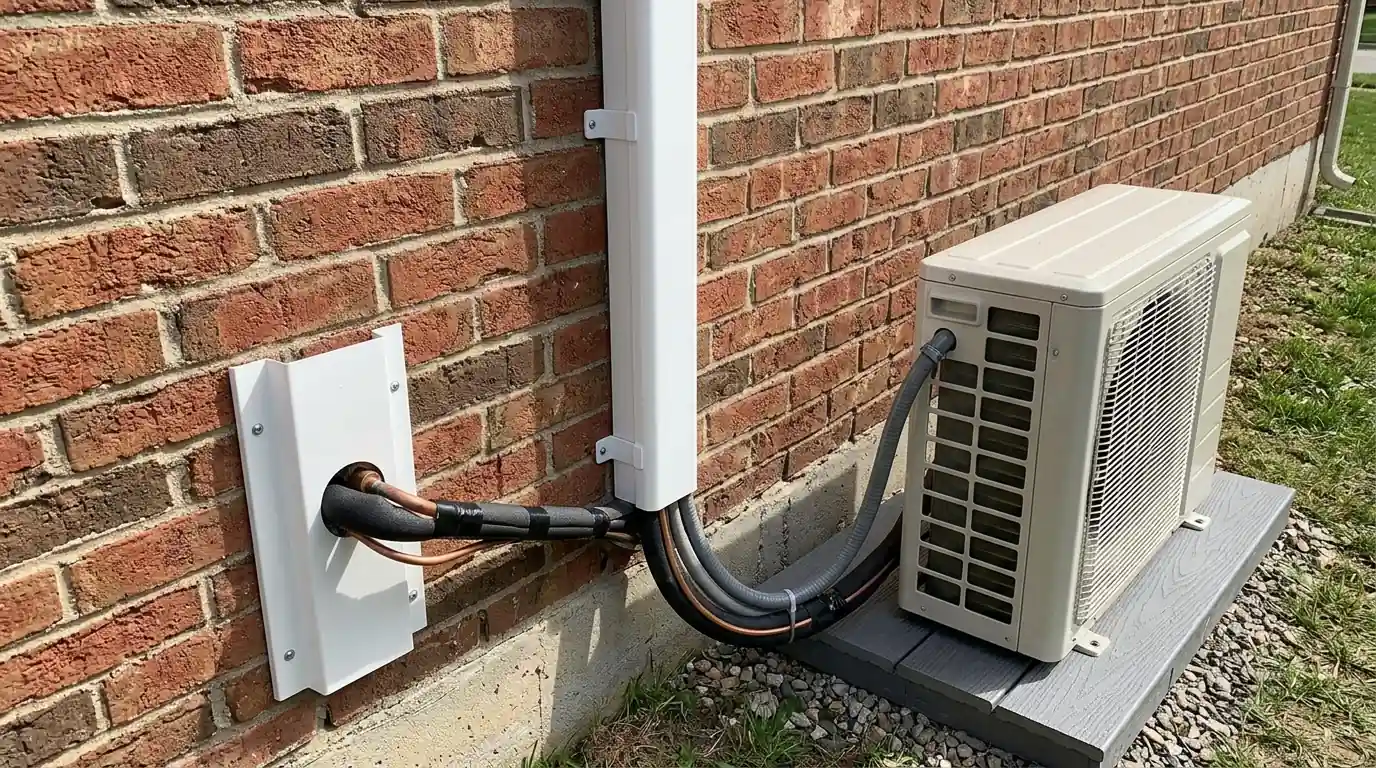
Usually about three inches across. It carries the two copper refrigerant lines, the communication cable and the condensate drain. On the outside it is covered by a sealed wall sleeve, and the lines run down the wall inside a paintable line set cover. Inside, the head mounts directly over the hole, so it is hidden.
How long do ductless mini splits last in central Kentucky?
Most last 12 to 18 years with regular care. Because the outdoor unit runs in both heating and cooling seasons, it logs plenty of hours. Rinsing filters, keeping the outdoor coil clear and having the heads deep-cleaned every couple of years helps the blower wheels and coils stay free of the mold and dust that build up in humid summers.
Need ductless mini split installation today?
A person answers (859) 377-8167 day and night. Tell us what you are seeing and a technician takes it from there.