Heat Pumps · Lexington, KY
Heat pump repair in Lexington for cold rooms and iced coils
Your heat pump is running but the vents feel cool, the outdoor unit is caked in ice, or the thermostat has shown AUX for hours while the electric meter keeps spinning.
Lexington and nearby counties
Line open 24/7Short answer: Heat Pump Repair in Lexington, KY
If a heat pump is blowing cool air, iced solid or running on aux heat nonstop, switch the thermostat to emergency heat, clear snow away from the outdoor unit and check both breakers. Most failures trace to a capacitor, contactor, defrost board or sensor, a refrigerant leak or a stuck reversing valve. Heat pump repairs in Lexington typically run $168 to $2,640.
Steps that keep the house warm right now
These are safe for any homeowner, and they often buy you a warm night while the real fault waits for a technician.
- Set the thermostat to EM or emergency heat so the backup strips carry the load.
- Check the outdoor disconnect and both breakers in the panel for a tripped handle.
- Brush snow and leaves off the top and sides of the outdoor unit by hand.
- Replace a clogged filter, since choked airflow can trip the high-pressure switch.
- Never chip ice off the coil with a tool, because the aluminum fins puncture easily.
- Keep interior doors open so the warm air you do have can circulate.
- Write down any blinking lights, noises or smells so you can describe them on the phone.
Failures we find most often on winter heat pump calls
A heat pump has more moving parts than a furnace, and a Kentucky winter puts all of them to work at once. These faults sit behind most of the no-heat calls we run.
Stuck reversing valve
The four-way valve that switches between heating and cooling can stick in cooling mode. The house gets cool air while the outdoor coil stays warm. Sometimes only the solenoid coil has failed, which is a much cheaper fix.
Defrost board or sensor
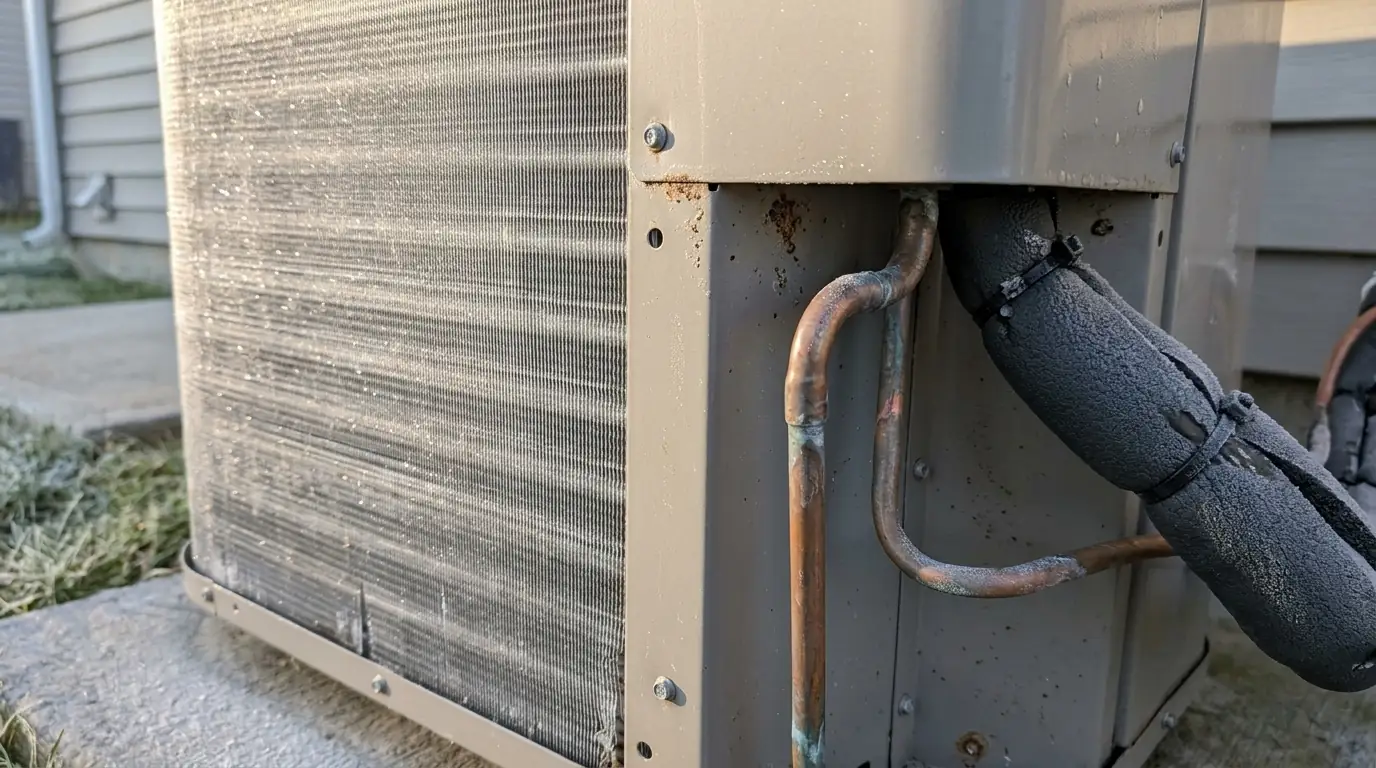
If the defrost control or its coil sensor fails, the unit never clears its frost. Ice builds into a solid block, air stops moving across the coil and heating output drops to almost nothing.
Weak capacitor or burned contactor
These are the most common electrical failures. A swollen run capacitor or pitted contactor keeps the compressor or outdoor fan from starting, and the unit hums or sits silent.
Slow refrigerant leak
Heat pumps push refrigerant both directions all year, so small leaks at flare fittings, service valves or the coil show up as long run times, patchy frost and climbing aux heat use.
Failed outdoor fan motor
Without the fan pulling air through the coil, the unit cannot pick up heat from outdoors. Worn bearings are common on older motors, and the compressor trips on pressure within minutes.
Aux heat that never stops
Strip heat that runs all day points to a thermostat wiring error, a stuck sequencer or relay, or a heat pump that quietly stopped carrying its share. The KU bill usually shows it first.
How we track down a heat pump fault
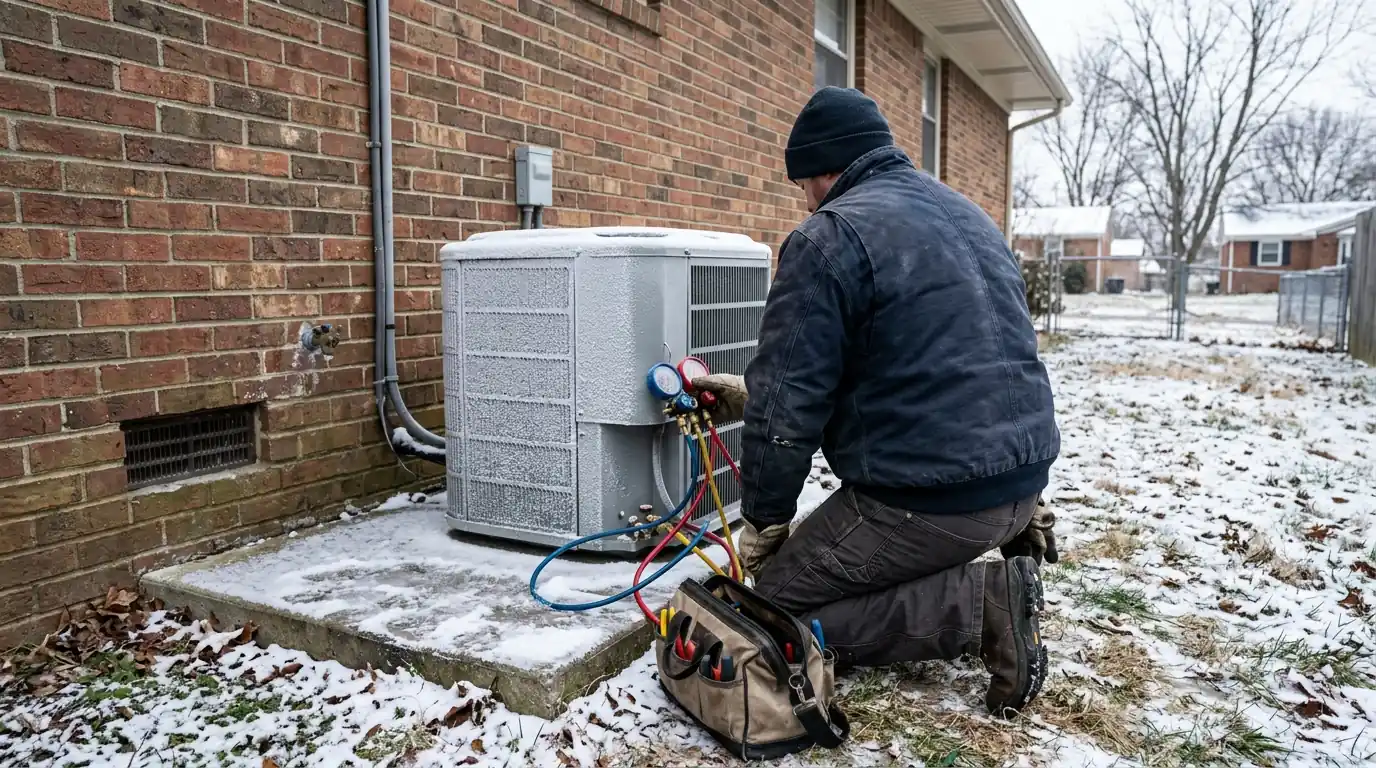
We test before we replace anything, because a frozen coil can come from five different causes and only one of them is the part you can see.
Hear the history
We ask when it started, what the thermostat showed and whether the unit iced over. Those details narrow the search before a single panel comes off.
Check power and controls
We measure voltage at the disconnect and contactor, test the capacitor in microfarads and confirm the thermostat is calling the right stages and the reversing valve.
Read the refrigerant side
Gauges and temperature probes show pressures, superheat and subcooling in heating mode. That tells us whether the charge, the valve or the metering device is the problem.
Force a defrost cycle
We put the defrost board into test mode and watch the reversing valve shift, the outdoor fan stop and the backup strips come on to temper the air.
Price it, then repair
You get a written price before work starts. Once you approve, we make the repair and run the system through a full heating and defrost cycle before we leave.
Typical heat pump repair prices around Lexington
Most heat pump repairs land between these numbers. The failed part, the refrigerant involved and whether the system still runs on R-22 move the price the most.
- Capacitors and contactors. Electrical parts are the least expensive fix, usually $168 to $385 installed, and they are behind a large share of outdoor units that hum but will not start.
- Defrost board or sensor. A coil sensor alone often runs $214 to $390. A full defrost control board, depending on the brand and model, lands closer to $410 to $760.
- Fan motors. An outdoor fan motor with a new capacitor typically runs $440 to $830, and more for the variable-speed motors used on high-efficiency units.
- Reversing valve replacement. The valve is brazed into the refrigerant circuit, so the job includes recovery, brazing under nitrogen, evacuation and a fresh charge. Expect $1,470 to $2,640.
- Refrigerant type. R-410A and the newer A2L refrigerants are priced by the pound. R-22 has been out of production for years, so recharging an older system costs far more per pound.
These are typical ranges, not quotes. We give you a written price after we look at the system and confirm the actual fault, and nothing gets replaced until you say yes. Compare typical prices for every service.
Why Lexington winters are hard on air-source heat pumps
Central Kentucky sits right where heat pumps work hardest. Many winter nights settle into the 20s with damp air, and that mix is exactly when frost builds fastest on the outdoor coil. A unit in Lexington may run a defrost cycle every 30 to 90 minutes on a raw January night, so a weak defrost board or sensor shows up here sooner than it would in a drier climate.
Then come the cold snaps. When temperatures drop into the single digits, an older single-stage heat pump falls below its balance point, the outdoor temperature where it can no longer carry the house alone. The strip heat takes over, and with KU billing every kilowatt-hour, a week of that pushes the electric bill far past normal. Homes on Columbia Gas lines often solve this with a dual fuel setup that lets a furnace take the coldest hours.
Placement matters too. Outdoor units tucked under a roofline take a steady drip during ice storms, and units set low in a side yard can sit in drifted snow. Pads that settle on clay over limestone tilt the unit, so melt water pools under the coil and refreezes. We look at all of that on a repair, because fixing the board without fixing the drip just sets up the next call.
Matching what you see to the likely cause
Use this to decide whether the system can keep running until a technician arrives.
| What you notice | Likely cause | Safe to keep running? |
|---|---|---|
| Cool air from vents, outdoor unit running | Reversing valve or low charge | Switch to EM heat until checked |
| Solid ice on the coil for hours | Defrost board, sensor or fan motor | Switch to EM heat, leave the ice alone |
| Outdoor unit hums but will not start | Capacitor or contactor | No, turn the system off |
| AUX showing all day in mild weather | Wiring, sequencer or weak heat pump | Yes, but call soon to protect the bill |
| Breaker trips again after a reset | Shorted motor or compressor | No, leave the breaker off |
When fixing an older heat pump stops making sense
A $240 capacitor on a seven-year-old unit is an easy yes. A compressor or reversing valve on a 14-year-old R-22 system is a different conversation. We tell you plainly what the repair costs, what else on the unit is showing wear and what a replacement would run, then let you decide without pressure.
A rough rule we share with homeowners: if the repair is more than about a third of the price of a new system and the unit is past 12 years, replacement usually wins over the next five winters. Our guide to deciding between repair and replacement walks through the math, and a call to (859) 377-8167 gets you real numbers for your own system, any hour of the day.
We work on Carrier, Trane, Lennox, Rheem and Goodman equipment along with every other major brand found in Lexington homes, and the same testing comes first on all of them.
Lexington-area places we cover for heat pump repair
We cover every Lexington neighborhood and the towns around it. These are the places we visit most for this work; the full list is on our Fayette County page and the service area page.
Further reading from our Comfort Blog
AUX heat and EM heat explained for cold snaps
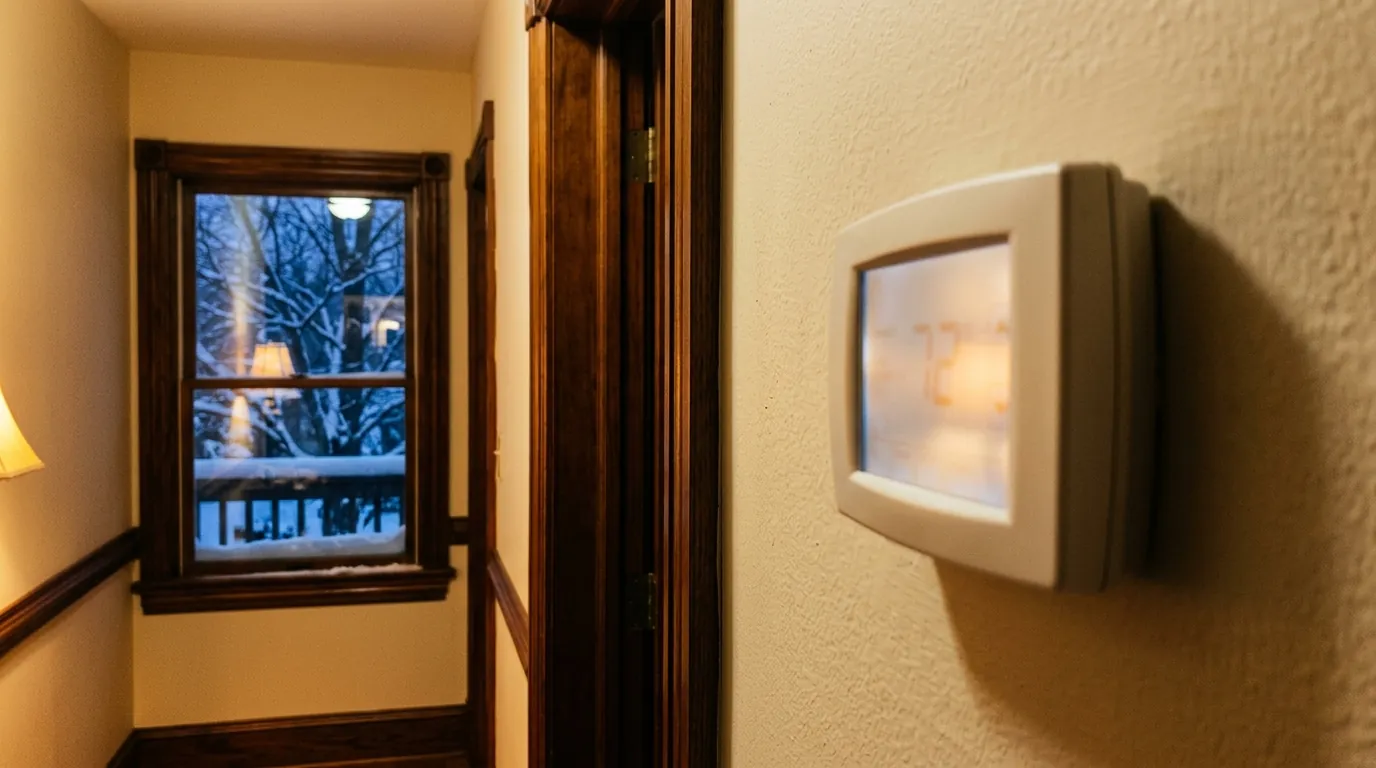
Those two small labels on a heat pump thermostat cause more winter confusion than almost anything else. One is automatic and expected. The other is a manual setting you should rarely need.
Why your heat pump blows air that feels cool
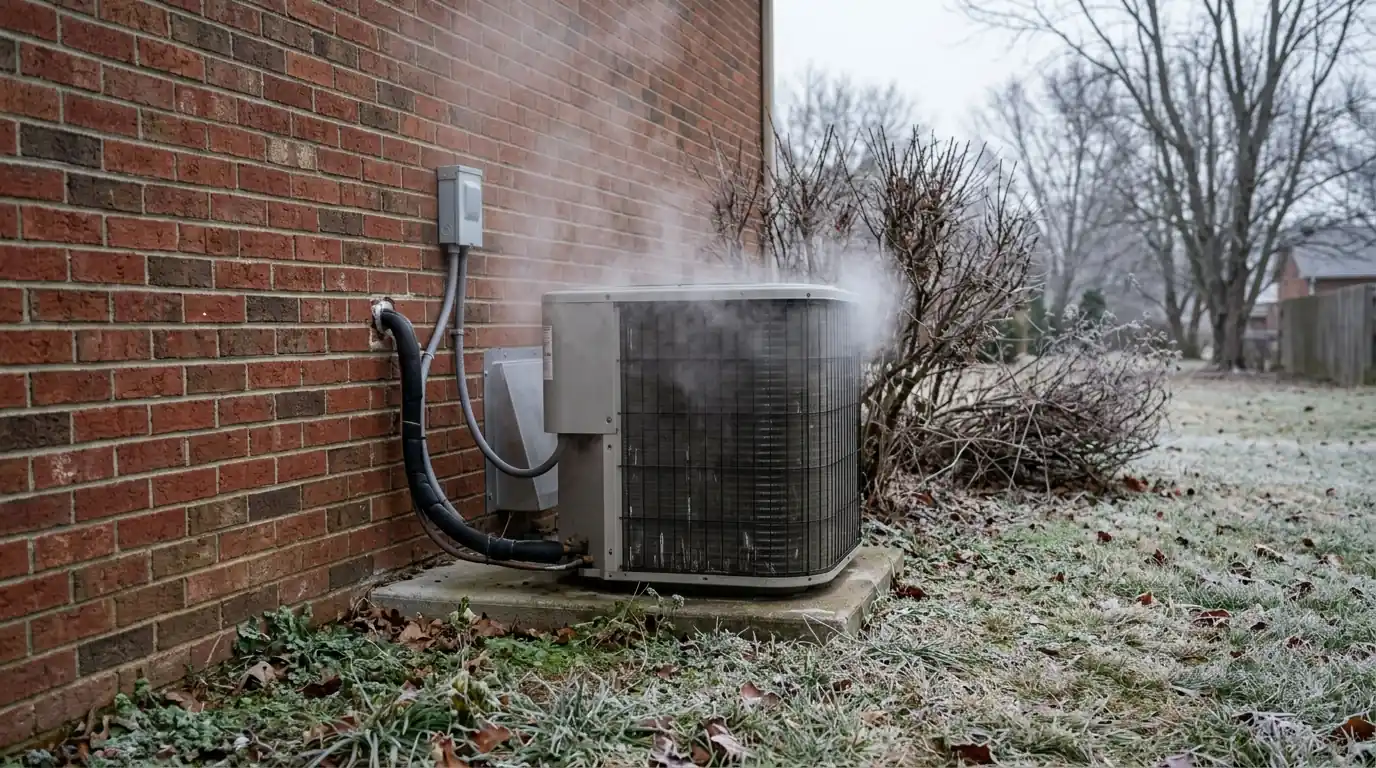
Lukewarm air from a heat pump is usually normal, and steam rising off the outdoor unit usually is too. Here is how to tell normal operation from a problem worth a service call.
Heat pump noises: what is normal and what is not
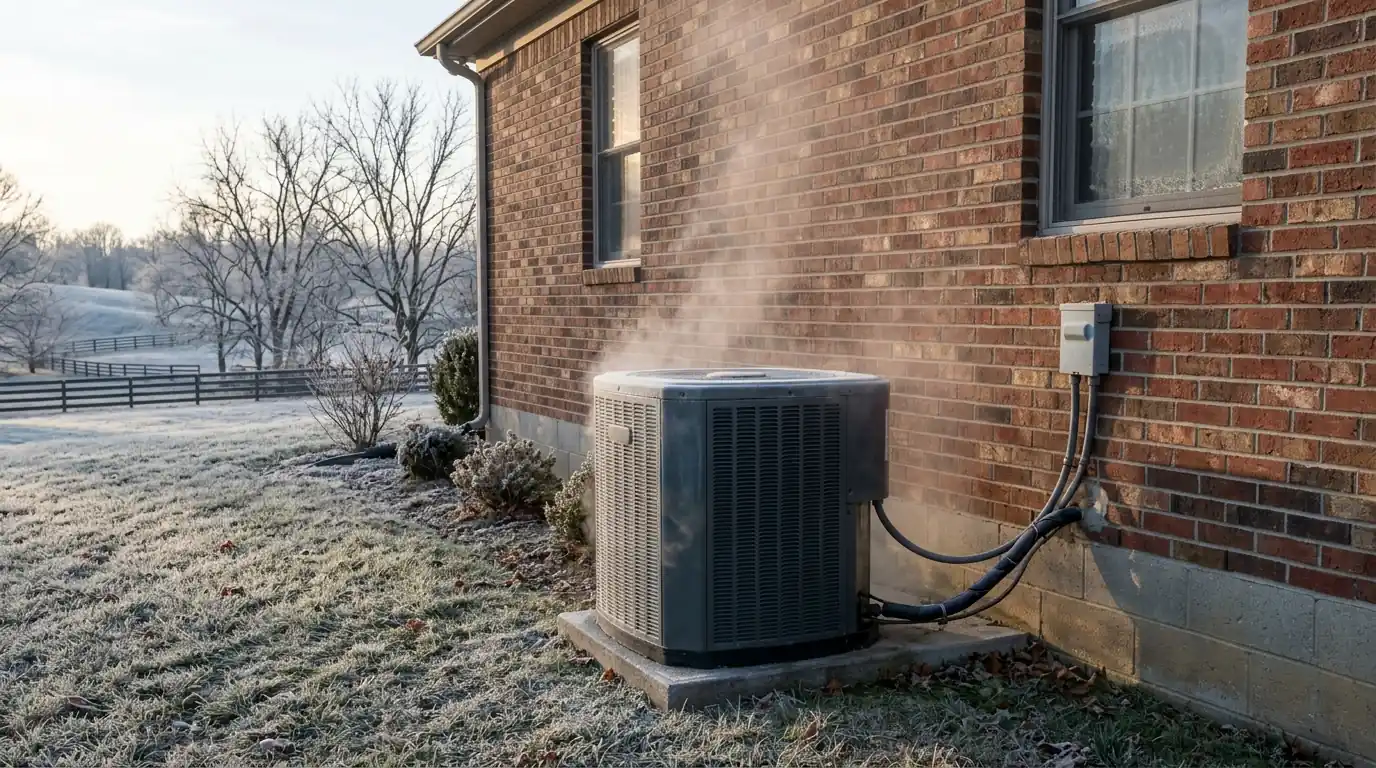
A heat pump keeps more moving parts outdoors than a furnace, and some of its loudest sounds are perfectly healthy. This guide sorts the routine noises from the ones that need a shutoff and a call.
Heat Pump Repair: what Lexington homeowners ask
Is it normal for my heat pump to steam in winter?
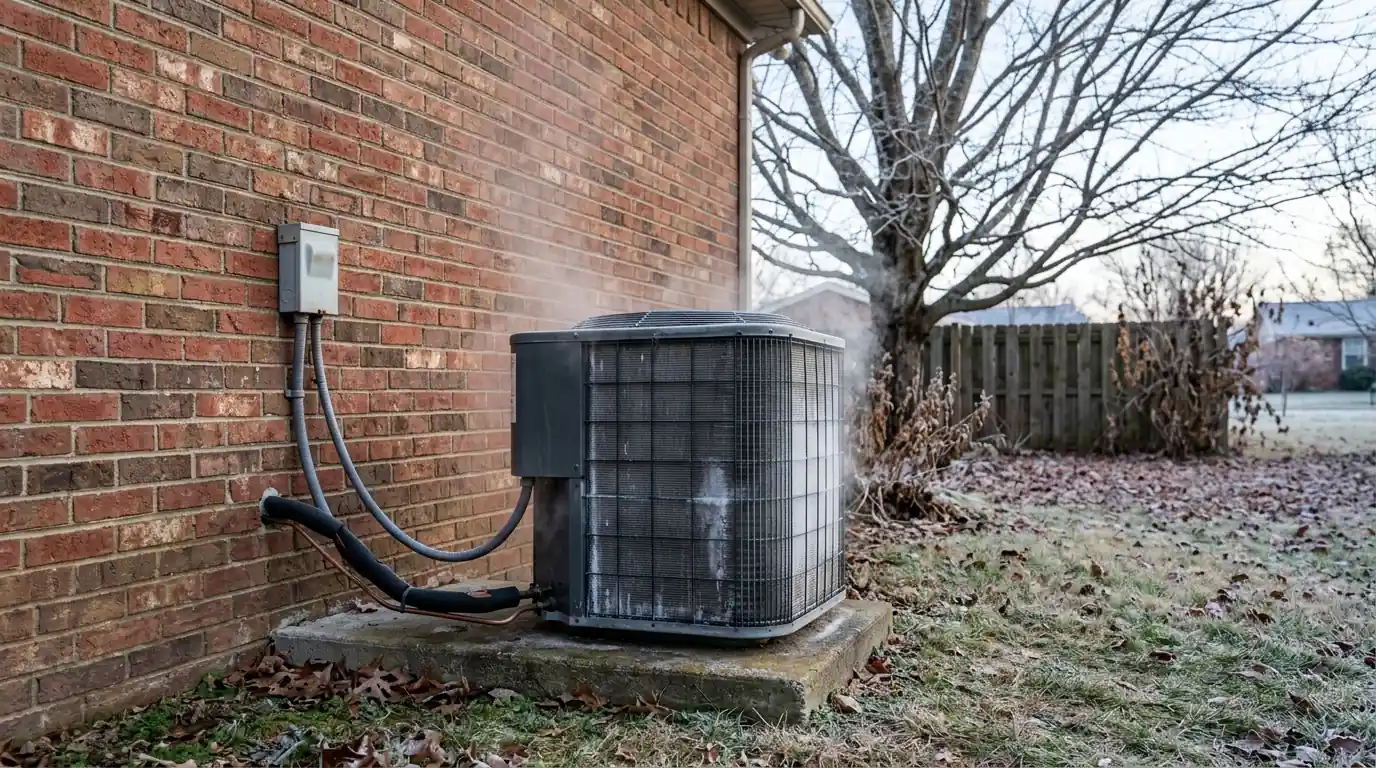
Yes, during a defrost cycle. The unit briefly switches into cooling mode, the outdoor fan stops and the coil warms enough to melt the frost, which rises as steam. It lasts a few minutes, and you may hear a whoosh when the valve shifts. If the coil stays iced after that, the defrost system is not finishing its job and needs a look.
Can I run my heat pump on emergency heat for several days?
You can, as long as the heat strips and blower work. Emergency heat bypasses the outdoor unit and warms the house with resistance coils in the air handler, so it keeps you comfortable while you wait for a repair. The catch is cost: strip heat uses roughly two to three times the electricity of a working heat pump, so expect a higher KU bill until it is fixed.
Why does my heat pump blow lukewarm air even when it seems to work?
A heat pump usually delivers air around 90 to 100 degrees, while a gas furnace sends out air closer to 120 or more. Against your hand, which sits in the low 90s, that can feel cool. If the house holds its temperature, the system is doing its job. Our article on why heat pump air feels cool explains how to tell normal from a real problem.
Which heat pump brands do you repair in Lexington?
We work on Carrier, Trane, Lennox, Rheem, Goodman, Daikin, Bryant, American Standard, York, Ruud, Amana and Heil heat pumps, along with Mitsubishi Electric and Fujitsu ductless systems. Parts differ by brand, especially defrost boards and variable-speed fan motors, so reading us the model number off the outdoor unit's data plate helps us confirm the likely part early.
How long should a heat pump last in central Kentucky?
Most last 10 to 15 years here. Heat pumps work in both seasons, so they log far more running hours than an air conditioner that rests all winter. Units that reach the high end usually had clean coils, the right refrigerant charge and good airflow most of their life, which is what regular heat pump maintenance visits are for.
Need heat pump repair today?
A person answers (859) 377-8167 day and night. Tell us what you are seeing and a technician takes it from there.