Ductwork & Airflow · Lexington, KY
Duct sealing in Lexington for leaky crawlspace and attic ducts
Rooms that never quite cool, a musty smell when the AC starts and bills that climb every summer often trace back to duct joints leaking into a crawlspace or attic.
Lexington and nearby counties
Line open 24/7Short answer: Duct Sealing in Lexington, KY
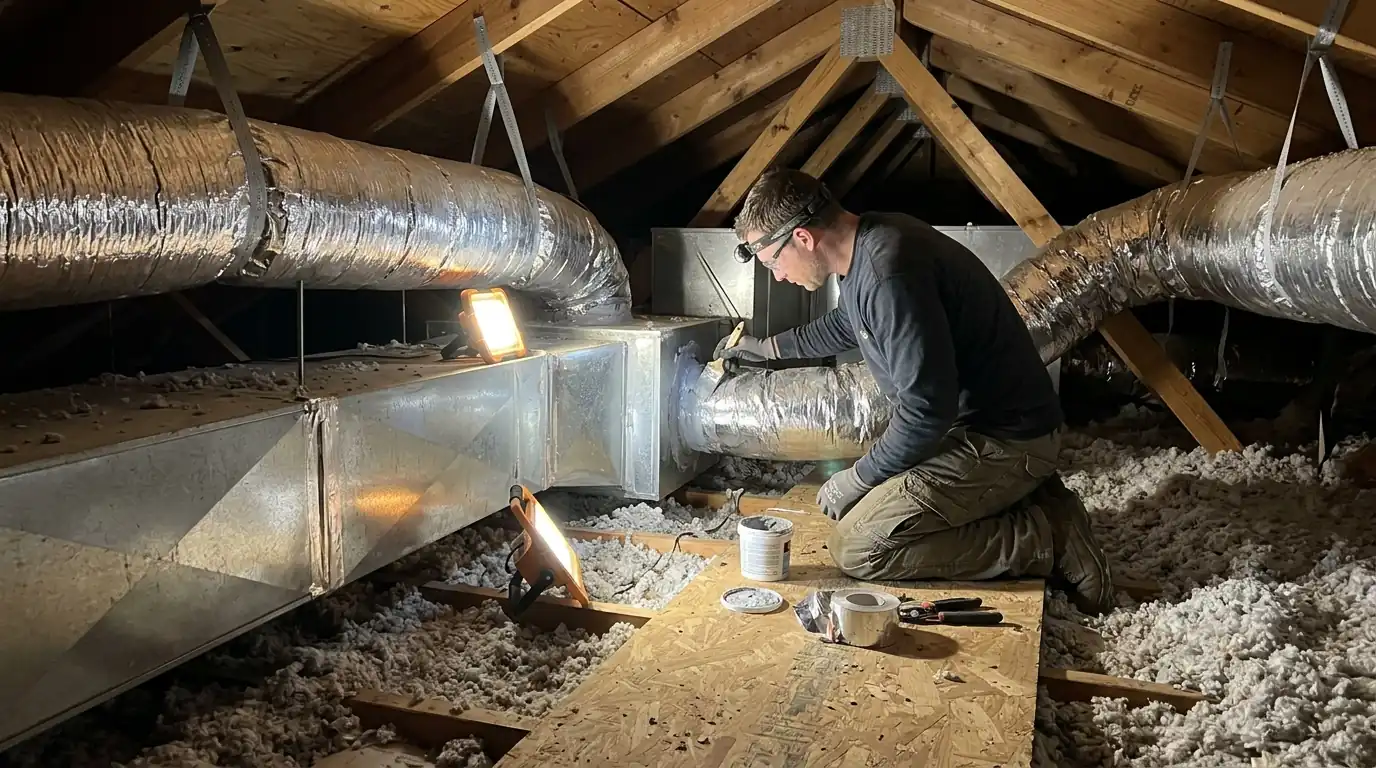
Duct sealing closes the gaps at joints, seams, boots and plenums so conditioned air reaches your rooms instead of the crawlspace or attic. A typical duct system loses 20 to 30 percent of the air it moves through leaks. The lasting fix is water-based mastic brushed over each joint, with fiberglass mesh on wider gaps, insulation where ducts pass through unconditioned space, and a retest to confirm the result.
Mastic, foil tape or new duct: choosing the right repair
The right method depends on the gap and the duct material. Cloth duct tape isn't on this list, because its adhesive dries out and lets go within a few summers.
| Leak location | Best fix | Why it works |
|---|---|---|
| Seams and takeoff joints | Mastic, with mesh on wider gaps | Grips metal and stays flexible |
| Flex duct collars | Clamp strap, then mastic | Holds the liner and seals the joint |
| Boot to floor or ceiling | Mastic or foam at the gap | Stops air leaking into the cavity |
| Duct board seams | Foil tape made for ductwork | Matches the facing and stays tight |
| Panned joist returns | Seal pan edges or add metal return | Pans leak along every edge |
| Rusted, crushed or torn runs | Replace the section | Sealing cannot save a failing duct |
Measuring duct leakage before deciding what to seal
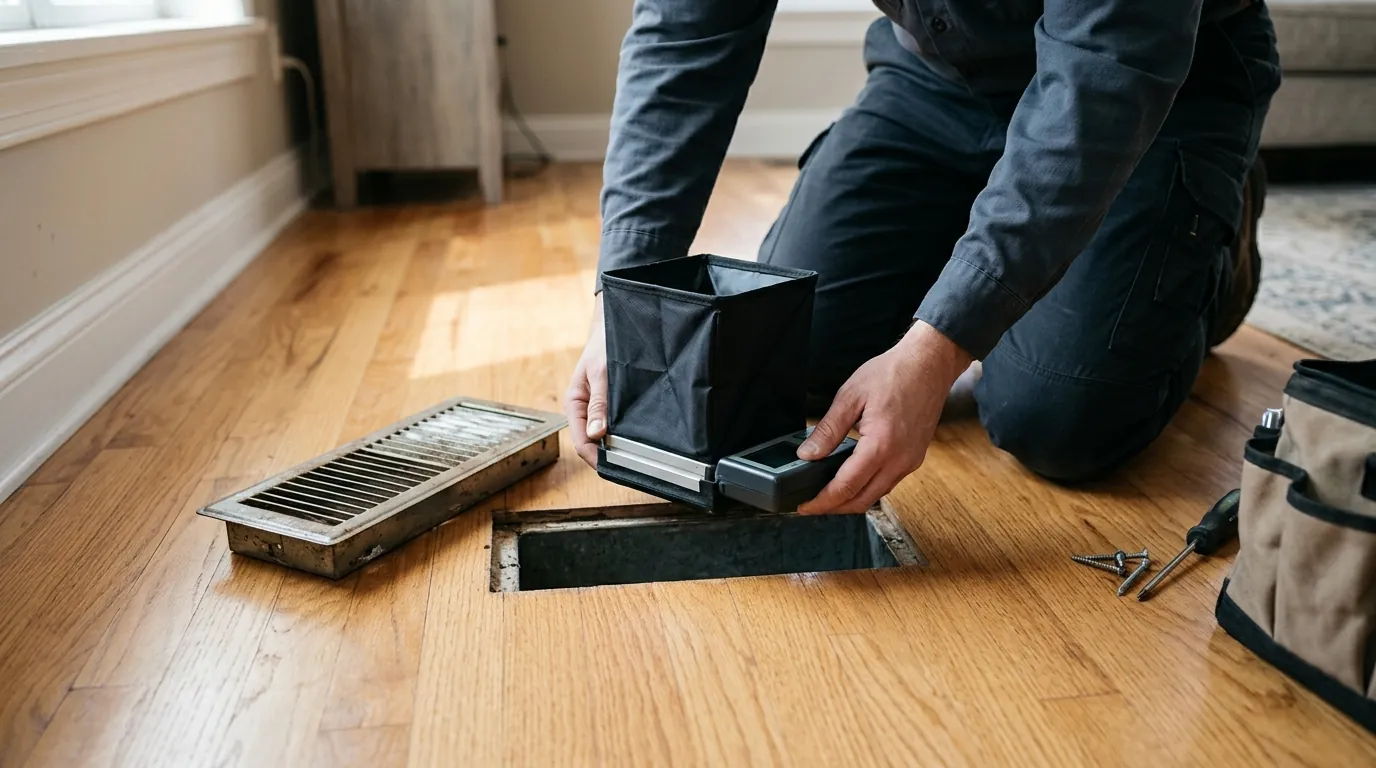
Sealing without measuring is guesswork. We start with a duct leakage test: registers are temporarily covered, a calibrated fan pressurizes the duct system, and the reading shows how many cubic feet per minute escape at a standard test pressure. On a 3-ton system moving about 1,200 cfm, leakage of 200 to 350 cfm is common in older ductwork. Well-sealed newer systems often test under 100.
Then we find where the leaks are. A smoke pencil shows air escaping at joints while the system is pressurized, and a pressure pan reading at each register flags the runs with the worst connections. Supply leaks in an attic waste air you've already paid to cool. Return leaks in a crawlspace pull damp, dusty air into the system, which is often the bigger comfort problem.
With that map, the choice gets simple. Accessible joints get sealed by hand. Sections that are rusted through or crushed get replaced instead, which is where replacing failed duct runs comes in. And when most of the leakage is on the return side, fixing it often clears up the musty smell people blame on dirty ducts.
Clues that your ducts leak into unconditioned space
None of these prove a leak alone, but two or three together usually do, especially in a house with ducts in a crawlspace or attic.
Musty smell when the blower starts
Return leaks in a crawlspace pull in air off damp soil and old insulation. The smell is strongest on the first humid days of summer and fades when the fan stops.
One room always behind
A bedroom at the end of a long attic run that's warm in July and cool in January often loses its air through a disconnected collar or a leaky takeoff.
Dust that comes back fast
If furniture needs dusting a day or two after cleaning, the return side may be pulling dust from wall cavities, the attic or the crawlspace.
Sweating ducts under the house
Water dripping off supply ducts in the crawlspace means cold air is meeting humid air through gaps or missing insulation, which wets the soil and subfloor.
High bills, healthy equipment
When a tune-up shows the AC is charged correctly and running well, yet the bill keeps climbing, the cooled air is often going somewhere other than the rooms.
Doors that slam or whistle
Doors that move or whistle when the system starts point to unbalanced supply and return airflow, and duct leaks make that imbalance worse.
Why sealing pays back fastest in Lexington crawlspace homes
A large share of Lexington ranches and split-levels from the 1950s through the 1980s put the ducts under the floor. Crawlspaces here sit on clay over limestone, and in a humid July the air down there can hover near 70 percent relative humidity. Every return leak brings that moisture into the system, so the air conditioner spends part of its capacity drying crawlspace air instead of cooling rooms.
Attic ducts in newer two-story homes face the opposite stress. An attic can pass 130 degrees on a sunny afternoon, and a supply leak there dumps 55 degree air into it. Disconnected flex collars above bedrooms are one of the most common things we find on summer service calls, and they explain a lot of hot upstairs rooms.
Heating season counts too. Whether you pay KU for heat pump electricity or Columbia Gas for furnace fuel, heated air leaking into a 30 degree crawlspace is paid for and lost. If the house also feels damp all summer, our notes on why a house feels clammy with AC cover the related causes. To schedule a leakage test, call (859) 377-8167.
A duct sealing appointment from first test to retest
Most single-system homes are tested and sealed in one day. Larger houses, or jobs that include replacement sections, can run into a second day.
Baseline leakage test
We pressurize the duct system with a calibrated fan and record total leakage, so you have a number to compare against at the end.
Locate and mark leaks
With the system pressurized, we trace leaks at the plenums, takeoffs, collars and boots, and mark any section that needs replacing rather than sealing.
Seal joints by hand
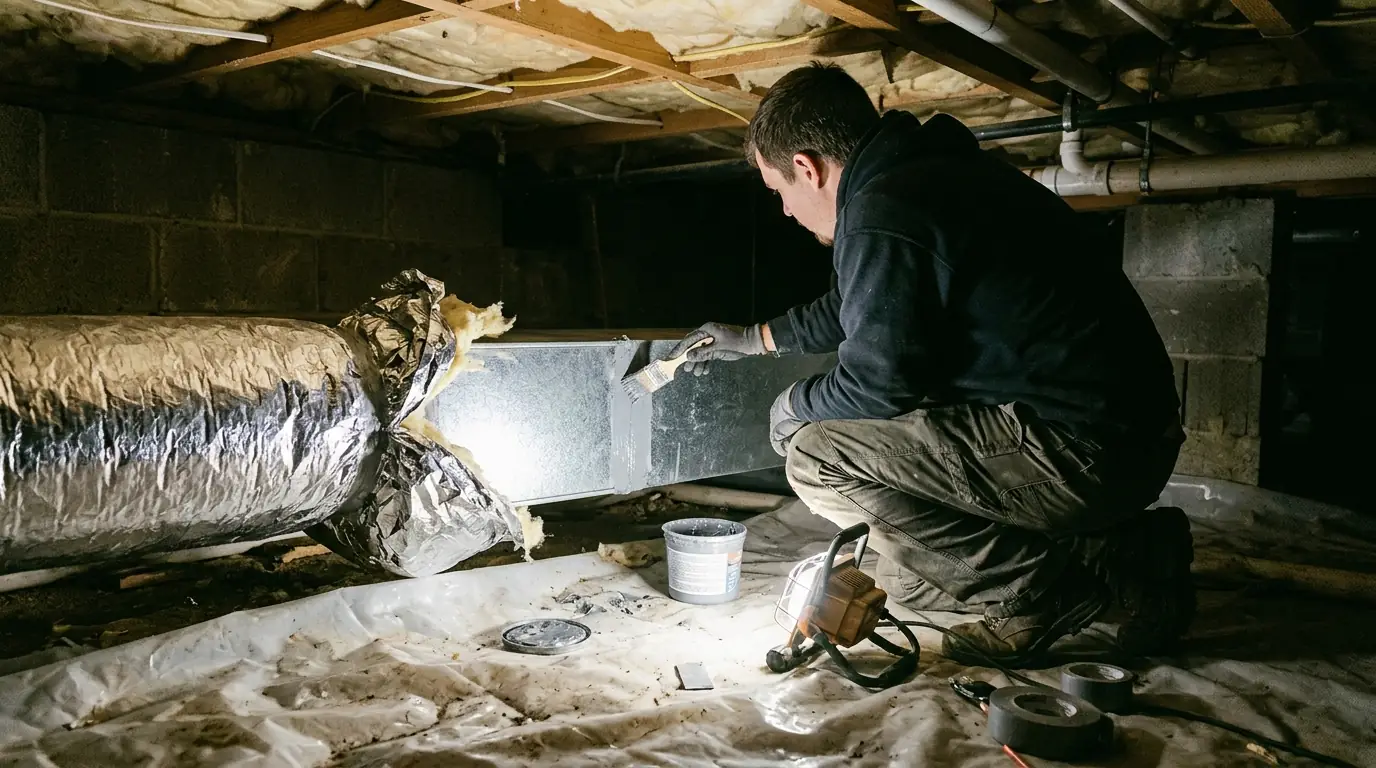
Joints are wiped free of dust, then coated with mastic. Gaps wider than a quarter inch get fiberglass mesh first, and loose flex collars are strapped before sealing.
Insulate exposed runs
Ducts in crawlspaces and attics get insulation wrap where it's missing or soaked, which also stops supply ducts from sweating in humid weather.
Retest and review
Once the mastic sets, we run the leakage test again and show you the before and after numbers along with photos of the sealed joints.
Price range for testing and sealing your ducts
This range covers leakage testing and hand sealing of the accessible ductwork on one system. Replacing failed sections is priced on its own.
- Crawlspace height and access. A crawlspace with three feet of clearance is a very different job from one with eighteen inches and a vapor barrier to work around.
- Attic conditions. Low-slope roofs, deep blown insulation and summer heat slow the work, so attic sealing is usually scheduled for mornings.
- Number of joints and runs. A two-story house with two systems and many branch runs has several times the joints of a small ranch.
- Panned returns. Sealing panned joist returns means working along every edge of the pan, and badly leaking pans are sometimes better replaced with metal duct.
- Insulation needed. Adding or replacing insulation wrap on crawlspace and attic ducts adds material and labor, but it's usually worth doing while we're already there.
The written price comes after we look at the system and run the first leakage test, so you know exactly what's included before work begins. Compare typical prices for every service.
We work on Carrier, Trane, Lennox, Rheem and Goodman equipment along with every other major brand found in Lexington homes, and the same testing comes first on all of them.
Where we handle duct sealing most often
We cover every Lexington neighborhood and the towns around it. These are the places we visit most for this work; the full list is on our Fayette County page and the service area page.
Further reading from our Comfort Blog
Why your house feels clammy with the AC running
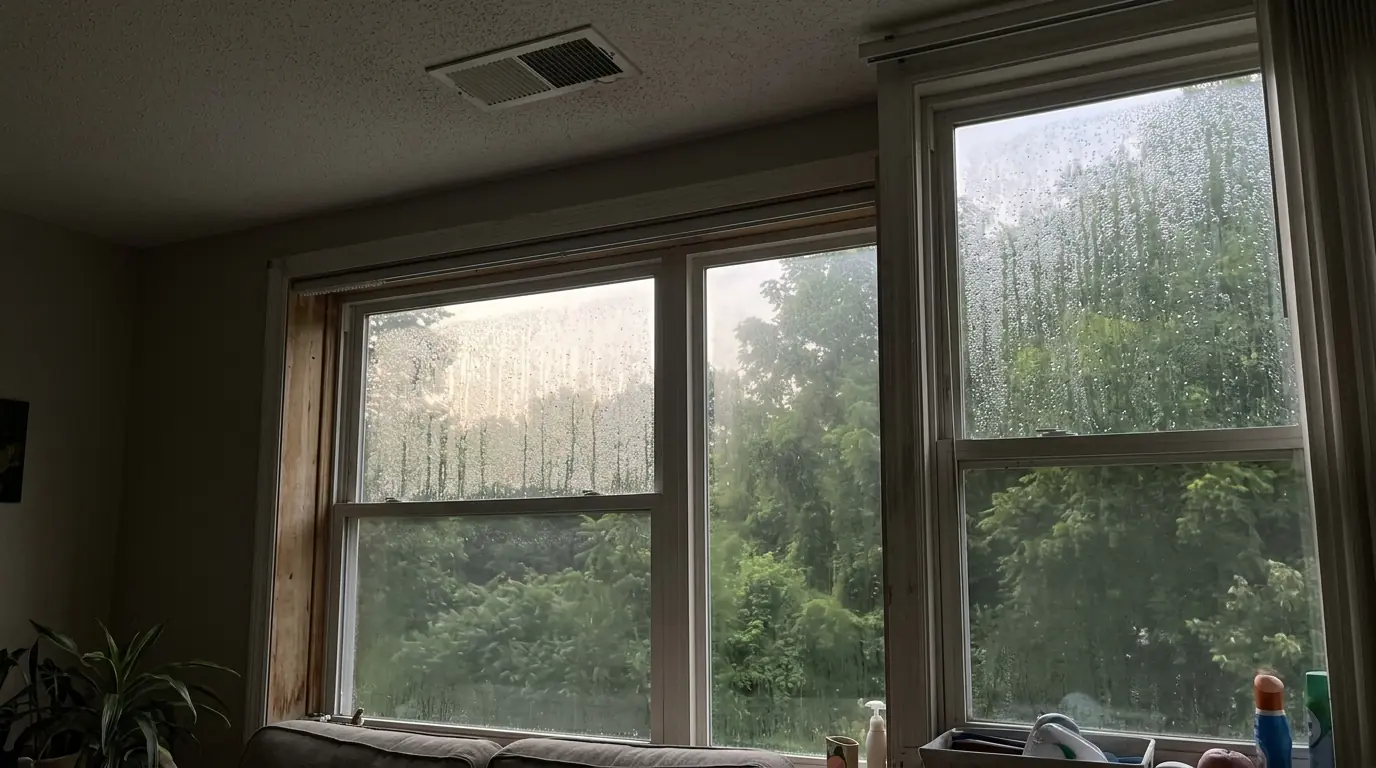
A thermostat can read 72 while the air still feels sticky. In central Kentucky, that usually means the system is cooling the air without pulling enough moisture out of it.
Common questions on duct sealing around Lexington
How much can duct sealing reduce my heating and cooling costs?
It depends on how leaky the ducts were and where they run. Homes with ducts in a crawlspace or attic and a high leakage reading see the clearest change, often in both the bill and in rooms that finally keep up. We give you the before and after leakage numbers, so the improvement is measured rather than promised.
Is cloth duct tape a good way to seal HVAC ducts?
No. Ordinary cloth duct tape fails within a few seasons as heat and humidity break down the adhesive. Mastic is the long-lasting choice for joints, and foil tape made for ductwork works on duct board seams and small gaps. If you want to seal reachable basement joints yourself, brushable water-based mastic from a supply house is the right product.
Should duct sealing be done before a new AC or heat pump goes in?
Ideally, yes. New equipment is set up for a certain airflow, and leaky ducts rob it of capacity from the first day. Sealing first, or as part of the same project, lets the new system deliver what it's rated for. If you're comparing systems now, ask for a leakage test as part of planning a system replacement.
Does duct sealing help with humidity in a Lexington crawlspace home?
Often, yes. Return leaks in a crawlspace draw in humid air that the AC then has to dry. Sealing those leaks lowers the moisture load and can bring indoor humidity down a few points on muggy days. Supply ducts that sweat under the house also need insulation, otherwise the condensation keeps wetting the crawlspace.
How long does duct mastic last once it's applied?
Properly applied mastic lasts as long as the duct itself, provided the joint was clean and dry when it was sealed. It isn't affected by the heat and humidity swings that defeat tapes. When a sealed joint does fail, the usual cause is physical damage, such as someone crawling over a duct in the crawlspace.
Need duct sealing today?
A person answers (859) 377-8167 day and night. Tell us what you are seeing and a technician takes it from there.