Comfort Blog
Why your heat pump blows air that feels cool in winter
Lukewarm air from a heat pump is usually normal, and steam rising off the outdoor unit usually is too. Here is how to tell normal operation from a problem worth a service call.
By Alton Gilley, Comfort Blog EditorPublished Answered 24/7 at (859) 377-8167
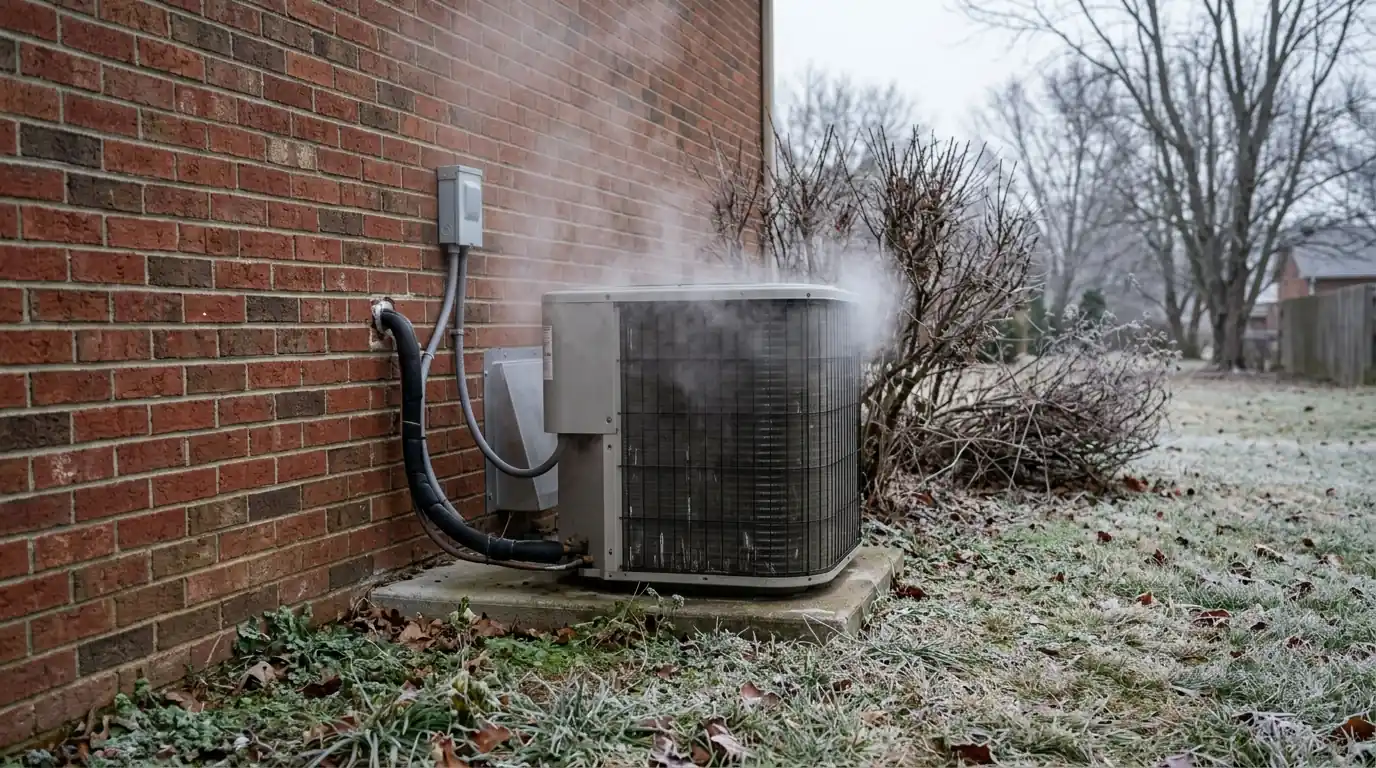
Short answer: Why your heat pump blows air that feels cool in winter
A heat pump usually sends air at about 90 to 105 degrees to the vents. That is warmer than the room, but cooler than your skin, so moving air feels cool on your hand. Short bursts of cooler air and steam outside during defrost are normal. Air that stays near room temperature for more than 15 minutes, or a house that keeps losing ground, points to a real fault.
Your hand is a poor thermometer for heat pump air
Your core body temperature sits near 98.6 degrees, but the skin on your hand is usually in the low 90s. A gas furnace pushes air at 120 degrees or more, which feels plainly hot. A heat pump on a 35-degree Lexington morning might deliver 95-degree air, which is about the temperature of your skin. Add the breeze across your fingers and that air feels neutral or even cool, even while it is warming the house.
The better test is the house, not the register. If the thermostat setting is holding steady, or the temperature climbs a degree or two over an hour after a setback, the system is doing its job. Heat pumps are built to run long, steady cycles at a gentle temperature instead of short blasts of hot air. A heat pump that runs 20 or 30 minutes at a stretch in winter is normal, not a sign of strain.
Normal heat pump behavior versus signs of trouble
Use these rough benchmarks to sort what you are seeing at the vents and outside.
| What you notice | Usually normal | Worth a call |
|---|---|---|
| Air temperature at the vents | 90 to 105 degrees | Near room temperature for 15 minutes or more |
| Steam off the outdoor unit | Brief clouds during defrost | Unit stays iced over for hours |
| Long run times | Steady runs on cold days | Runs nonstop while the house cools down |
| AUX heat light | On during defrost or deep cold | On constantly in 40-degree weather |
| Whoosh or click outdoors | Once at start and end of defrost | Loud grinding, buzzing or banging |
What a defrost cycle looks and sounds like outside
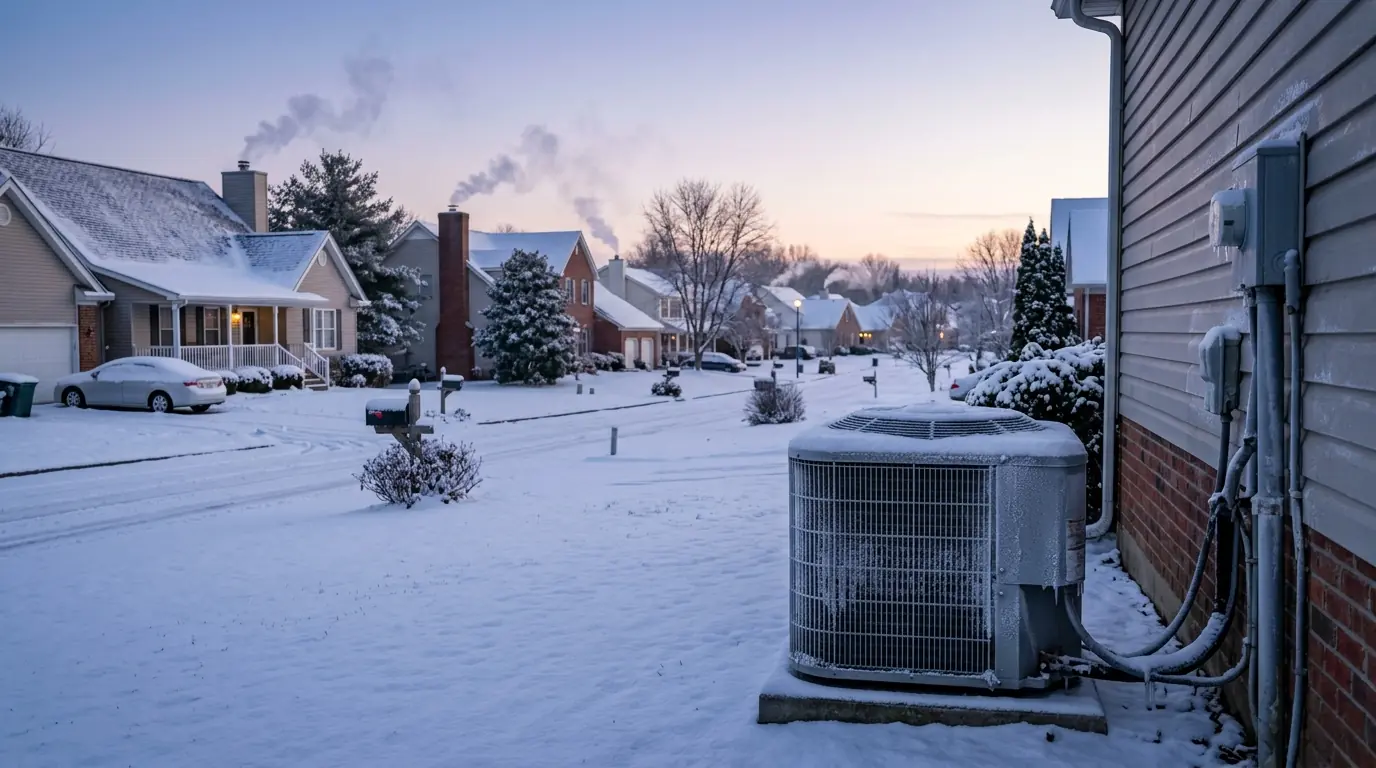
In heating mode, the outdoor coil runs colder than the outside air so it can pull heat in. When the air is damp and near or below freezing, which describes plenty of central Kentucky winter mornings, frost builds on that coil. The heat pump clears it by switching into defrost mode, usually for 2 to 10 minutes, every 30 to 90 minutes of run time while frost is forming.
During defrost the system briefly runs in cooling mode to warm the outdoor coil. The outdoor fan stops, you may hear a loud whoosh as the reversing valve shifts, and a cloud of steam can rise off the unit as the frost melts. That steam is not smoke. Inside, the backup heat strips usually turn on to soften the air, but the vents can still feel cooler for a few minutes. When defrost ends you will hear another whoosh, and warm air returns.
Five minute checks before you pick up the phone
These quick checks solve a surprising share of cool-air complaints, and none of them require tools.
- Confirm the thermostat is set to HEAT, not COOL or AUTO with a low cooling point.
- Set the fan to AUTO so air is not blowing between heating cycles.
- Pull the filter and replace it if you cannot see light through it.
- Make sure the outdoor unit is clear of snow, leaves and drifted mulch.
- Check that the breakers for the outdoor unit and air handler are fully on.
- Wait through one full cycle, about 15 minutes, in case a defrost was running.
- Feel a supply vent near the air handler, since long attic or crawlspace runs lose heat.
Faults that make heat pump air truly cold
If the checks above do not change anything, one of these is the usual culprit. Each needs a technician with gauges and a meter.
Reversing valve stuck in cooling
The valve that switches between heating and cooling can stick or lose its signal. The outdoor unit runs, but the house gets cool air the whole time instead of only during defrost.
Low refrigerant from a leak
A slow leak lowers heating capacity before it causes an obvious failure. Supply air drops toward 80 degrees, run times stretch out and the outdoor coil may frost unevenly.
Failed defrost control or sensor
If the defrost board or coil sensor fails, ice builds until the outdoor coil is a solid block. With no airflow through the coil, the heat pump cannot pull heat from outside.
Compressor or capacitor failure
When the outdoor fan spins but the compressor does not start, no heat moves at all. A weak capacitor is a common, modest repair, while a failed compressor is a much larger decision.
Backup heat strips not working
On frigid nights the heat pump counts on its strips to top up the heat. A burned element, open limit or tripped breaker leaves the house losing ground just when it needs help most.
Leaky ducts in unheated spaces
Supply ducts in vented crawlspaces and attics can lose a good share of their heat before it reaches a room. Loose joints and torn insulation are common in older Lexington homes.
When cool air means it is time to call
Call us when the vents stay near room temperature for more than 15 minutes, when the outdoor unit stays iced over for hours, or when the house keeps dropping even though the system runs nonstop. On a service visit we measure supply and return temperatures, check the refrigerant charge, watch a defrost cycle and test the backup strips. The written price comes after we have found the cause, so you know the cost before work begins.
For most of these faults, our heat pump repair service is the place to start. If the AUX or EM light has you confused, our guide to AUX and emergency heat explains what each setting does. Seasonal heat pump maintenance visits catch weak capacitors and slow leaks before a cold snap does. Call (859) 377-8167, day or night, if your heat pump is blowing cold.
A few quick follow-up questions
Is it normal for my heat pump to blow cool air during a defrost cycle?
Yes. During defrost the heat pump briefly runs in cooling mode to melt frost off the outdoor coil. The backup heat strips usually turn on to warm the air, but the vents can still feel cooler for a few minutes. Defrost typically lasts 2 to 10 minutes. If cool air continues well past that, or happens every few minutes, have the defrost controls checked.
Why is steam coming off my heat pump outdoor unit in winter?
Steam is the frost on the outdoor coil melting during a defrost cycle. On damp mornings near freezing it can look dramatic, but it is normal and usually clears within a few minutes. Real smoke has a burning smell and does not come and go with defrost. If you smell burning or see smoke, turn the system off at the thermostat and call.
What supply air temperature should a heat pump produce in winter?
On a mild day, most air-source heat pumps deliver about 90 to 105 degrees at the supply vents, roughly 20 to 30 degrees warmer than the return air. As the outdoor temperature drops into the teens, that rise shrinks and the backup heat strips add warmth. A rise of only 10 degrees or less on a mild day usually points to low refrigerant or a reversing valve problem.
More from the Comfort Blog
Furnace smells and carbon monoxide: when to leave
Some furnace smells are harmless and fade within the hour. Others mean shut the system off, and a few mean get everyone out of the house first and ask questions later.
Get your AC ready before the first hot, humid week
The first stretch of 85-degree, sticky days is when weak capacitors, clogged drains and dirty coils give out. A short homeowner checklist and one test run catch most of it early.
Central air for older Lexington homes without ducts
Plaster walls, radiators and tight attics make conventional ductwork hard to fit in Lexington houses from the 1910s to the 1940s. These are the cooling options that actually work in them.
Want a technician to look at it?
Call (859) 377-8167 any hour and describe what you are seeing. We will tell you what to check now and what needs a visit.