Comfort Blog
Ice on your AC lines or coil: what causes it and what to do first
A frosted copper line looks alarming, but it is a symptom rather than the problem. Here is what usually causes it, how to thaw the system safely, and what to leave alone.
By Alton Gilley, Comfort Blog EditorPublished Answered 24/7 at (859) 377-8167
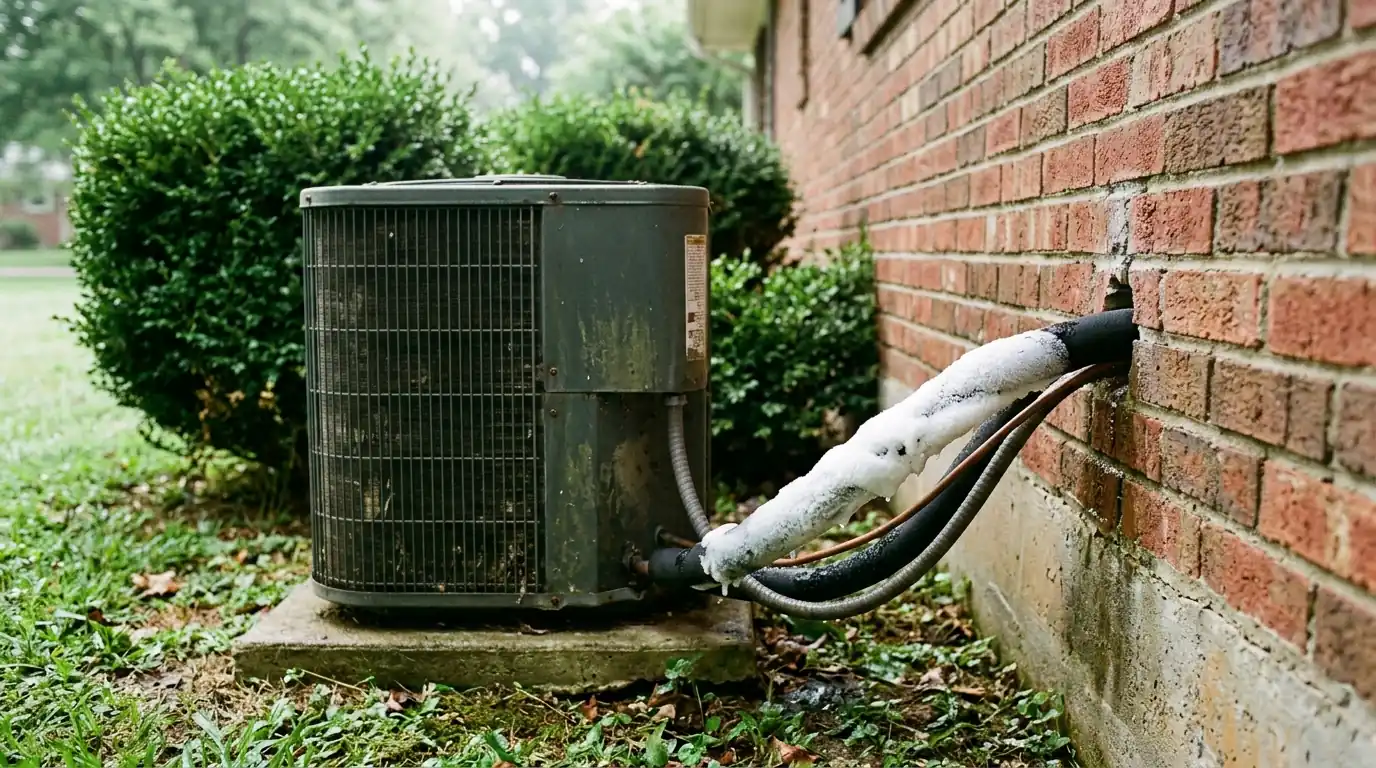
Short answer: Ice on your AC lines or coil: what causes it and what to do first
Ice on an air conditioner line or indoor coil means the coil has dropped below freezing, usually from weak airflow, a low refrigerant charge or a blower problem. Switch the thermostat from cool to off, set the fan to on so room air thaws the coil, and replace a dirty filter. If ice comes back within a day, the cause needs a technician.
Why a cold coil turns into a block of ice
Your indoor coil is supposed to run cold, usually somewhere around 40 degrees, so it can pull heat and moisture out of the air moving across it. On a Lexington afternoon in July, that coil condenses a lot of water. As long as enough warm air keeps flowing over it, the water drips into the drain pan and leaves through the condensate line.
When something pushes the coil temperature below 32 degrees, that same water freezes on the fins instead of draining. Ice insulates the coil, which cuts airflow further, which makes the coil colder still. Within a few hours a thin frost can grow into a solid sheet that blocks the coil and creeps along the larger insulated copper line toward the outdoor unit.
So the ice you notice on the line outside is usually the tail end of a problem that started at the indoor coil. Knocking it off does nothing for the cause, and running the system while it is frozen can send liquid refrigerant back to the compressor, the most expensive part you own.
First moves when you find frost on the copper line
These steps protect the compressor and let you see what you are dealing with. None of them need tools.
Turn cooling off at the thermostat
Set the mode to off, not just a warmer temperature. Stopping the compressor keeps it from pulling liquid refrigerant and gives the coil a chance to warm up.
Switch the fan to on
With cooling off and the fan set to on, the blower pushes room air across the frozen coil. Light frost usually clears in an hour or two; a thick block can take most of a day.
Check and change the filter
Pull the filter at the return grille or the furnace cabinet. If it is gray and matted, replace it. A clogged filter is the most common reason we find a frozen coil.
Protect the floor from meltwater
A thawing coil releases a lot of water quickly. Lay towels around the indoor unit and make sure the pan and condensate line carry the water away instead of overflowing.
Restart cooling and watch it
Once the copper line is dry and the coil shows no frost, set cooling back on. After 15 minutes the large line outside should feel cool and sweaty, not frosted.
Where the frost forms and what it usually points to
The location of the ice is a useful clue. It does not replace measurements, but it narrows the list before anyone opens a panel.
| Where you see ice | Most likely cause | Typical next step |
|---|---|---|
| Even frost across the whole indoor coil | Weak airflow from a filter, blower or blocked returns | Fix the airflow, then retest |
| Frost on part of the coil near the inlet tubes | Low refrigerant charge from a leak | Leak search, repair and recharge |
| Ice on the large line at the outdoor unit | Indoor coil frozen solid and backing up | Thaw first, then find the cause |
| Frost at one spot on the small liquid line | A restriction such as a clogged filter drier | Pressure and temperature testing |
| Ice only after cool nights | Cooling running when it is under about 60 degrees outside | Change settings or check controls |
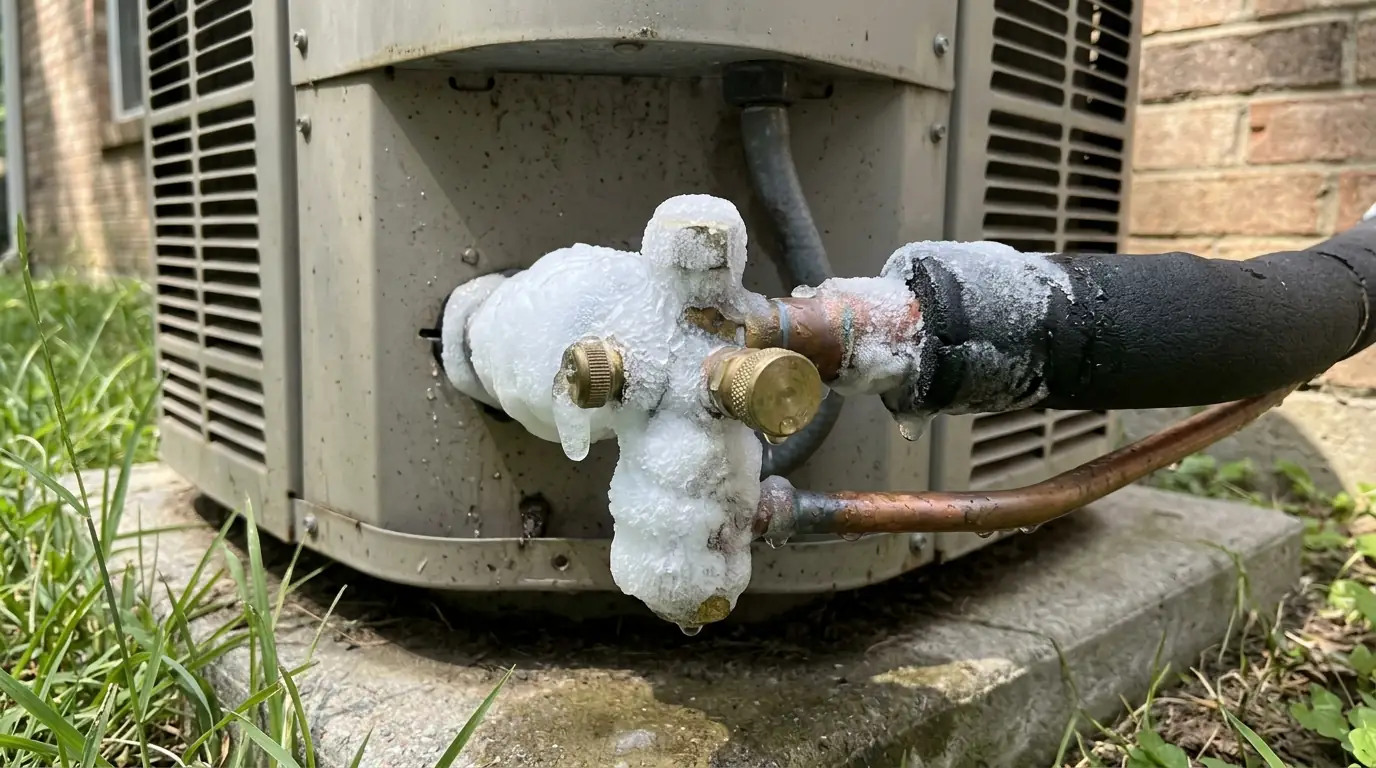
What our technician measures on a frozen system
Once the coil has thawed, we test it running, because a frozen system gives misleading pressure readings.
Static pressure across the blower
A manometer reading tells us whether the ductwork, filter and coil are choking airflow. High readings point to restrictive returns or a dirty coil rather than a refrigerant problem.
Blower motor and capacitor
A weak capacitor or a failing motor can slow the blower without stopping it. We check amperage and capacitor microfarads against the ratings on the parts.
Superheat and subcooling
These temperature and pressure readings show whether the refrigerant charge is right. Low charge means a leak somewhere, and adding refrigerant without finding it only buys a few weeks.
Coil condition
Dust, pet hair and kitchen grease mat the coil face over time. A dirty coil behaves like a clogged filter, and it often hides behind a perfectly clean one.
Drain pan and float switch
Standing water in the pan can freeze into the bottom of the coil. We clear the line, check the trap and confirm the float switch shuts the system off when it should.
Fan speed setting
Some systems freeze because the blower speed was set too low for the equipment when it was installed. We match the fan speed to the tonnage of the outdoor unit.
Shortcuts that turn a frozen coil into a costly repair
We see each of these every summer. Every one either damages the system or hides the real cause.
- Chipping ice off the coil or copper lines with a screwdriver or ice pick
- Aiming a heat gun or torch near the coil, wiring or plastic drain pan
- Leaving cooling on and hoping the ice melts while the compressor runs
- Topping off refrigerant without a leak search, which only repeats the freeze later
- Closing supply vents in unused rooms, which raises pressure and cuts airflow
- Running a dirty filter another month because the house still feels cool
- Running the AC on a cool night with the thermostat set in the low 60s
When ice keeps coming back after a thaw
If you changed the filter, thawed the coil and the frost returned within a day or two, the cause is not something you can fix from the hallway. Repeat freezing usually means a low charge that calls for a proper leak repair, a failing blower motor or a coil packed with dirt. In older Lexington homes where central air was added later, it can also be an undersized return duct that has been there all along.
Central Kentucky humidity makes it worse. A struggling coil stops pulling moisture, so the house turns sticky long before it gets warm. If that sounds familiar, our post on a clammy house with the AC on covers the humidity side. A drain that keeps backing up is its own fix, and condensate drain repair is usually quick once we find the clog.
Call (859) 377-8167 if the coil freezes again after a filter change, if water is spilling out of the drain pan, or if the outdoor unit hums while the large line stays warm. We answer around the clock, and the most useful thing you can do before we arrive is leave cooling off and the fan on.
A few quick follow-up questions
Is it safe to run my AC with ice on the refrigerant line?
No. A frozen coil cannot absorb heat, so the compressor runs against almost no load and can pull liquid refrigerant back into itself. That is how a simple freeze-up turns into a compressor failure. Turn cooling off, run the fan on, and let the coil thaw completely before you try cooling again.
How long does a frozen AC coil take to thaw with the fan on?
With cooling off and the fan set to on, light frost usually clears in one to two hours. A coil frozen into a solid block can take four hours or longer, sometimes most of a day when the air handler sits in a damp basement or crawlspace. Wait until the large copper line outside is dry and close to air temperature before restarting.
Can a clogged AC drain line cause the coil to freeze?
It can contribute. When the condensate line backs up, water sits in the pan right under the coil, and on a system already running cold it can freeze into the bottom rows. A backed-up drain can also trip the float switch and shut cooling off, which some homeowners mistake for a separate failure. Clearing the line and checking the trap usually settles it.
More from the Comfort Blog
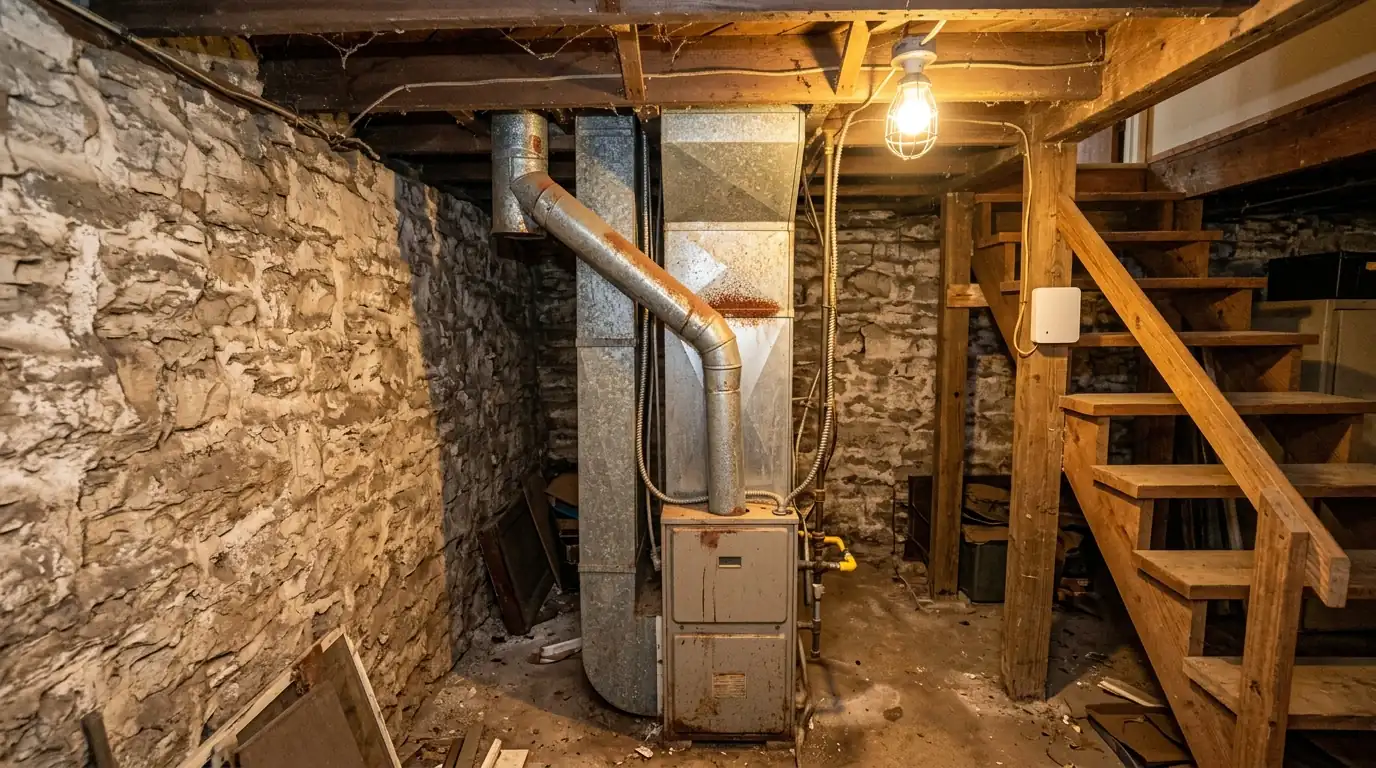
Furnace smells and carbon monoxide: when to leave
Some furnace smells are harmless and fade within the hour. Others mean shut the system off, and a few mean get everyone out of the house first and ask questions later.
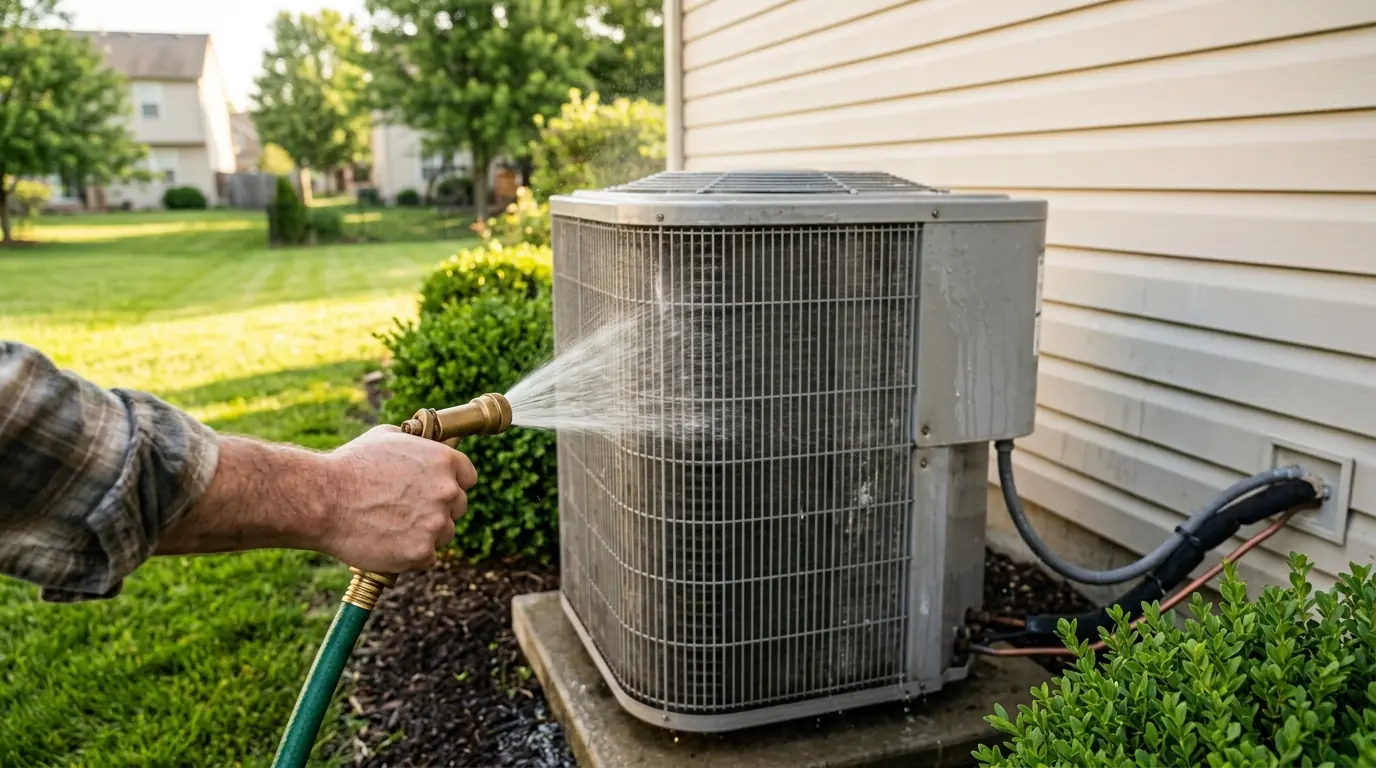
Get your AC ready before the first hot, humid week
The first stretch of 85-degree, sticky days is when weak capacitors, clogged drains and dirty coils give out. A short homeowner checklist and one test run catch most of it early.

Central air for older Lexington homes without ducts
Plaster walls, radiators and tight attics make conventional ductwork hard to fit in Lexington houses from the 1910s to the 1940s. These are the cooling options that actually work in them.
Want a technician to look at it?
Call (859) 377-8167 any hour and describe what you are seeing. We will tell you what to check now and what needs a visit.