Comfort Blog
How often to change your furnace filter and which MERV to buy
The filter is the cheapest part of your heating and cooling system, and the one most often ignored. Getting the size, thickness and change schedule right protects the equipment and the air you breathe.
By Alton Gilley, Comfort Blog EditorPublished Answered 24/7 at (859) 377-8167
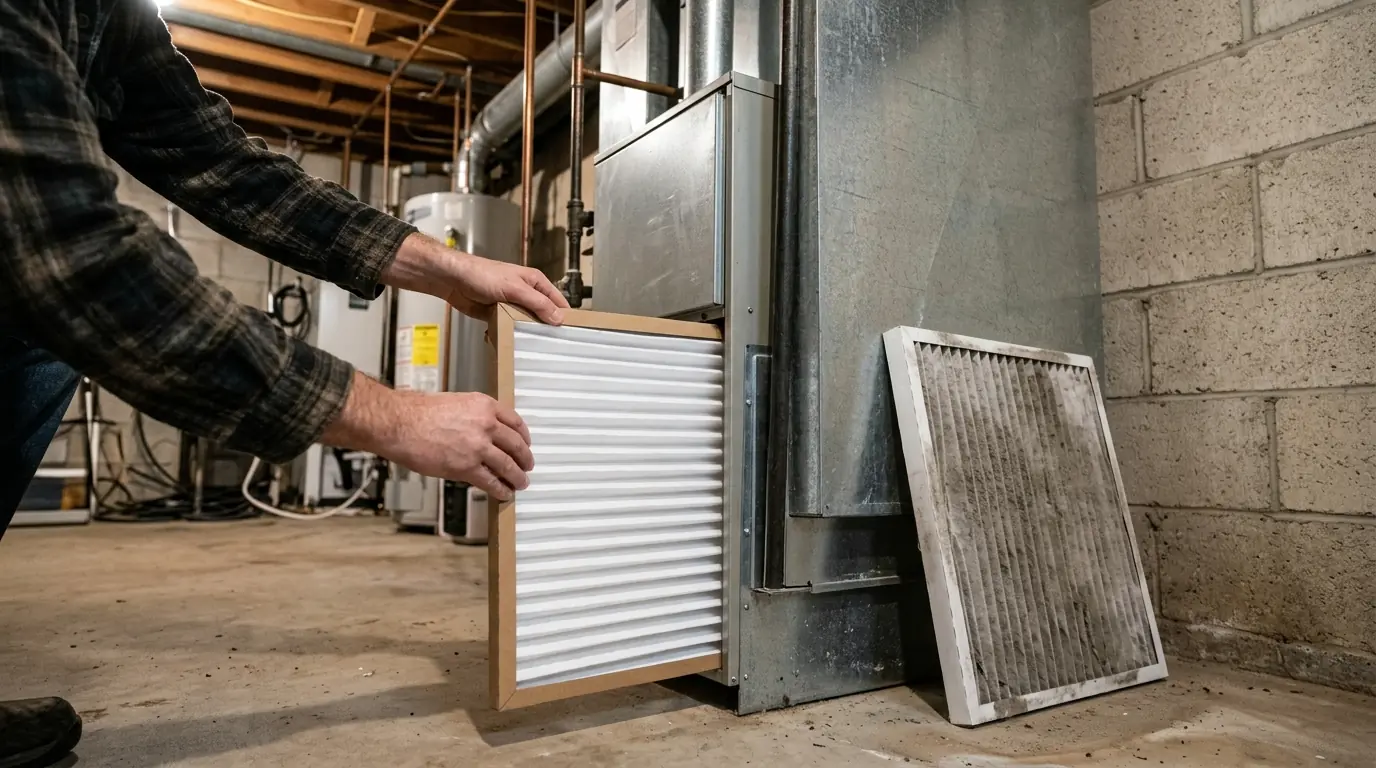
Short answer: How often to change your furnace filter and which MERV to buy
Change a 1-inch pleated filter every 60 to 90 days, or every 30 to 45 days with pets or during heavy pollen season. A 4-inch or 5-inch media filter usually lasts 6 to 12 months. For most homes, MERV 8 to 11 is the right balance of cleaner air and easy airflow. Use MERV 13 only in a deeper media cabinet or on a system checked for the added resistance.
Typical change schedule by filter thickness and type
Start with these intervals, then shorten them for pets, pollen season or a fan that runs all day.
| Filter type | Usual interval | Shorten it when |
|---|---|---|
| 1-inch fiberglass | Every 30 days | Almost always, since it stops little |
| 1-inch pleated | Every 60 to 90 days | Pets, pollen season or the fan set to ON |
| 2-inch pleated | Every 3 to 4 months | Dusty remodeling work in the house |
| 4-inch or 5-inch media | Every 6 to 12 months | Heavy shedding pets or a smoker in the home |
| Washable electrostatic | Rinse monthly | It never fully dries or smells musty |
What the MERV number on the package actually measures
MERV stands for minimum efficiency reporting value, a rating from 1 to 16 based on how well a filter catches particles of different sizes. A MERV 4 fiberglass filter mostly protects the blower from lint and hair. A MERV 8 pleated filter catches most pollen, dust mite debris and mold spores. MERV 11 adds more pet dander and finer household dust, and MERV 13 traps a large share of very fine particles, including some smoke.
Higher numbers catch more, but they also resist airflow more, especially in a 1-inch frame where the pleats are packed tight. Some retail packages use their own scales instead of MERV, so check the fine print for the MERV equivalent before comparing. For most Lexington homes, a MERV 8 to 11 filter changed on time does more good than a MERV 13 filter left in place until it is gray and bowed.
Household details that call for more frequent changes
These conditions load a filter faster than the package interval assumes. If two or more apply to your home, check the filter monthly.
Spring and fall pollen seasons
Central Kentucky gets heavy tree pollen in spring and ragweed in late summer and fall. A filter that lasts 90 days in January can look gray in 45 days during April or September.
Dogs and cats indoors
Shedding pets fill a filter with hair and dander quickly. One large dog can cut a 1-inch filter's useful life roughly in half, and two or more pets can cut it further.
Heat pump running year round
Heat pumps run long cycles in both winter and summer, so far more air passes through the filter each month than with a furnace that sits idle until fall.
Fan setting left on ON
A blower that runs 24 hours a day moves roughly two to three times as much air through the filter as one on AUTO, and the filter loads at the same faster pace.
Remodeling or drywall dust
Sanding and demolition dust can clog a filter in days. Change it during and right after the project, and cover return grilles when the dust is heaviest.
Older homes with crawlspace returns
Leaky return ducts in a crawlspace pull in dust and dirt from outside the living space. The filter catches it, but it loads faster than in a tight, newer house.
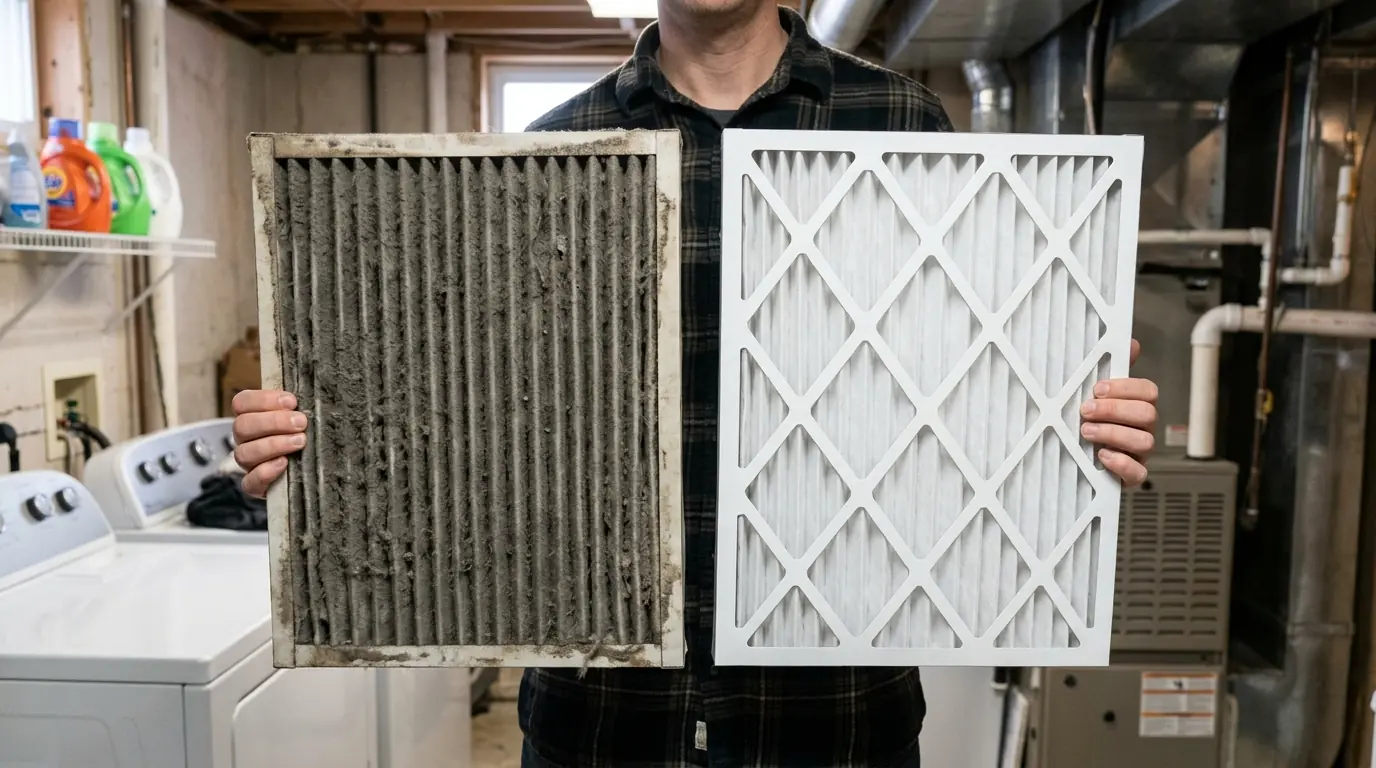
Why a thicker filter often beats a denser one
Every blower is designed to push air against a limited amount of resistance, called static pressure. Ducts, the coil and the filter all use part of that budget. A dense 1-inch MERV 13 filter can take a big bite of it on its own, and a dirty one takes more. Variable-speed blowers ramp up and use more electricity to compensate. Standard blowers simply move less air.
Low airflow causes real damage. In summer it lets the indoor coil drop below freezing, which can lead to ice on the AC lines and water leaks. In winter it overheats the furnace heat exchanger, trips the high-limit switch and shortens the furnace's life. A 4-inch or 5-inch media cabinet spreads the same filter material across far more surface area, so you get better filtration with less resistance and fewer changes each year.
Changing a furnace filter in about five minutes
Most filters slide into a slot beside the furnace or air handler, or sit behind a return grille in a wall or ceiling.
Turn the system off first
Set the thermostat to OFF so the blower does not pull dust past an open slot or suck the new filter out of position while you work.
Find the filter and its size
Check the furnace cabinet, the return duct beside it and any large return grilles. The nominal size and thickness are printed on the edge of the filter frame.
Note the airflow arrow
The arrow on the frame points toward the furnace or air handler, in the direction air travels. A filter installed backward loads unevenly and can collapse.
Slide in the new filter snugly
It should fit without gaps along the sides. Air that bypasses the filter carries dust straight onto the blower wheel and the indoor coil.
Write the date and restart
Mark the date on the frame with a marker, close any access door completely and turn the system back on. Many units will not run with the door ajar.
What adding a 4-inch media filter cabinet costs
Upgrading from a 1-inch slot to a deeper media cabinet is one of the simplest improvements for airflow and air quality.
- Cabinet size and depth. Larger furnaces and air handlers need wider cabinets, and 5-inch housings usually cost a little more than 4-inch ones.
- Space around the equipment. Tight closets or crowded basements may need the return duct reworked so the cabinet fits and the filter door opens fully.
- Sheet metal transitions. Matching an odd-sized return opening to a standard cabinet takes custom transitions, which adds labor and materials.
- Equipment location. Attic and crawlspace installs take longer than basement installs, and the cabinet must stay reachable for future filter changes.
- Filter grade chosen. The first media filter is usually included. MERV 13 media costs more per filter than MERV 8 or 11 replacements.
These are typical central Kentucky ranges. We give you a written price after we look at your system and the space around it. Compare typical prices for every service.
When a filter problem needs more than a swap
Call us if a new filter turns gray within two or three weeks, if dust streaks appear around supply registers, if the filter bows or gets sucked into the slot, or if you cannot find a filter at all. Those signs point to return duct leaks, an undersized return or a missing filter rack. We check static pressure, look at the return side and recommend a fix, with a written price after we have seen the system.
If you want cleaner air than a standard filter can deliver, our filtration and air cleaner options include media cabinets and whole-house air cleaners sized for your blower. A yearly furnace tune-up is also a good time to confirm the filter fits, check airflow and catch problems early. Call (859) 377-8167, any day or hour, with questions about filters, airflow or dusty rooms.
Follow-up questions readers ask
Is a MERV 13 furnace filter bad for my HVAC system?
Not by itself, but a MERV 13 filter in a 1-inch slot can restrict airflow on many residential systems, especially once it starts loading with dust. That restriction can freeze the AC coil in summer or overheat the furnace in winter. MERV 13 works well in a 4-inch or 5-inch media cabinet, or on a system where we have measured static pressure and confirmed it can handle the added resistance.
Should I change my furnace filter more often during Kentucky pollen season?
Yes. Spring tree pollen and fall ragweed load filters quickly in central Kentucky, and a filter that normally lasts 90 days may need replacing in 45 or 60. Check it monthly from March through May and again from August through October. If allergy symptoms worsen indoors, a fresh MERV 8 to 11 filter is an inexpensive first step before considering a media cabinet or air cleaner.
Does a heat pump need a different filter schedule than a gas furnace?
Often it does. A heat pump heats and cools with the same blower, so it moves air through the filter for much of the year, while a furnace-and-AC pair may sit idle in spring and fall. Many heat pump owners in Lexington find a 1-inch pleated filter needs changing every 45 to 60 days. Check it monthly at first to learn your home's pattern.
More from the Comfort Blog
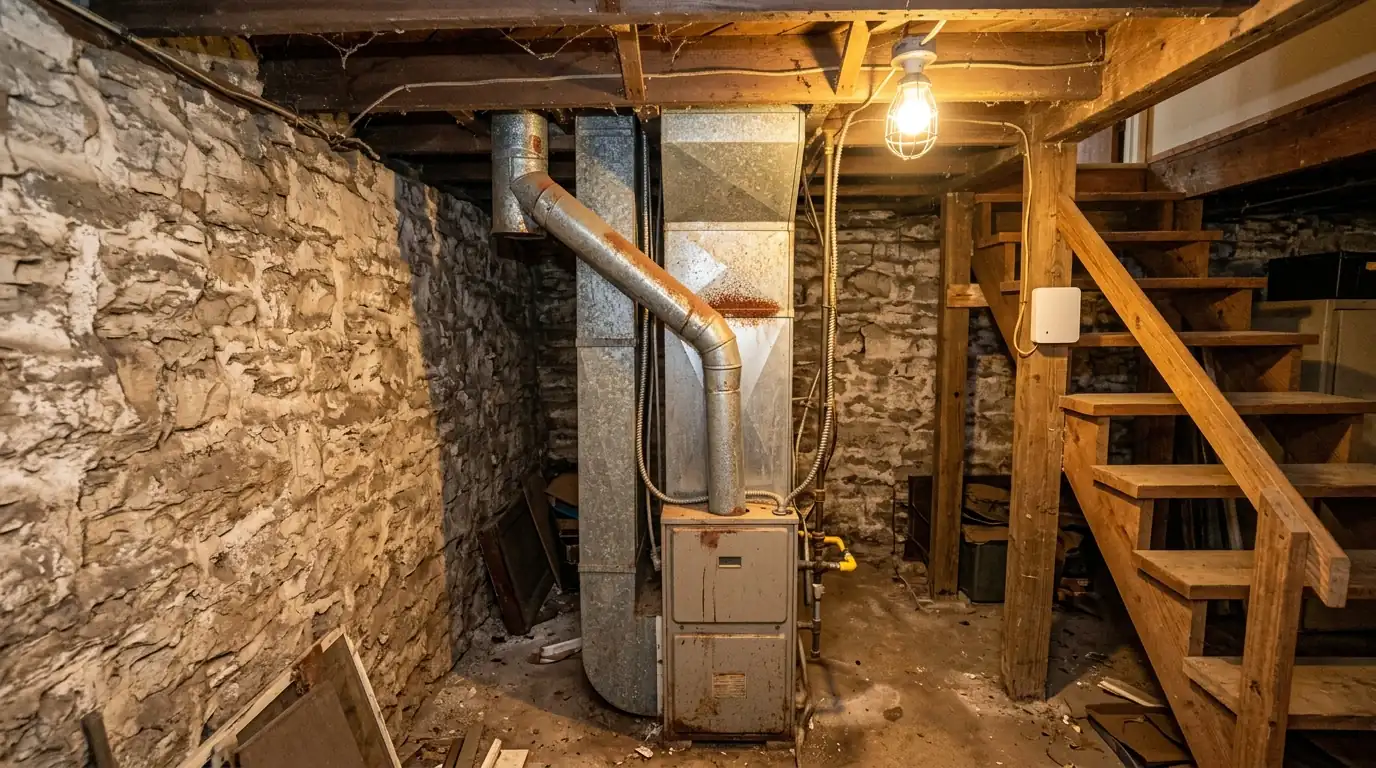
Furnace smells and carbon monoxide: when to leave
Some furnace smells are harmless and fade within the hour. Others mean shut the system off, and a few mean get everyone out of the house first and ask questions later.
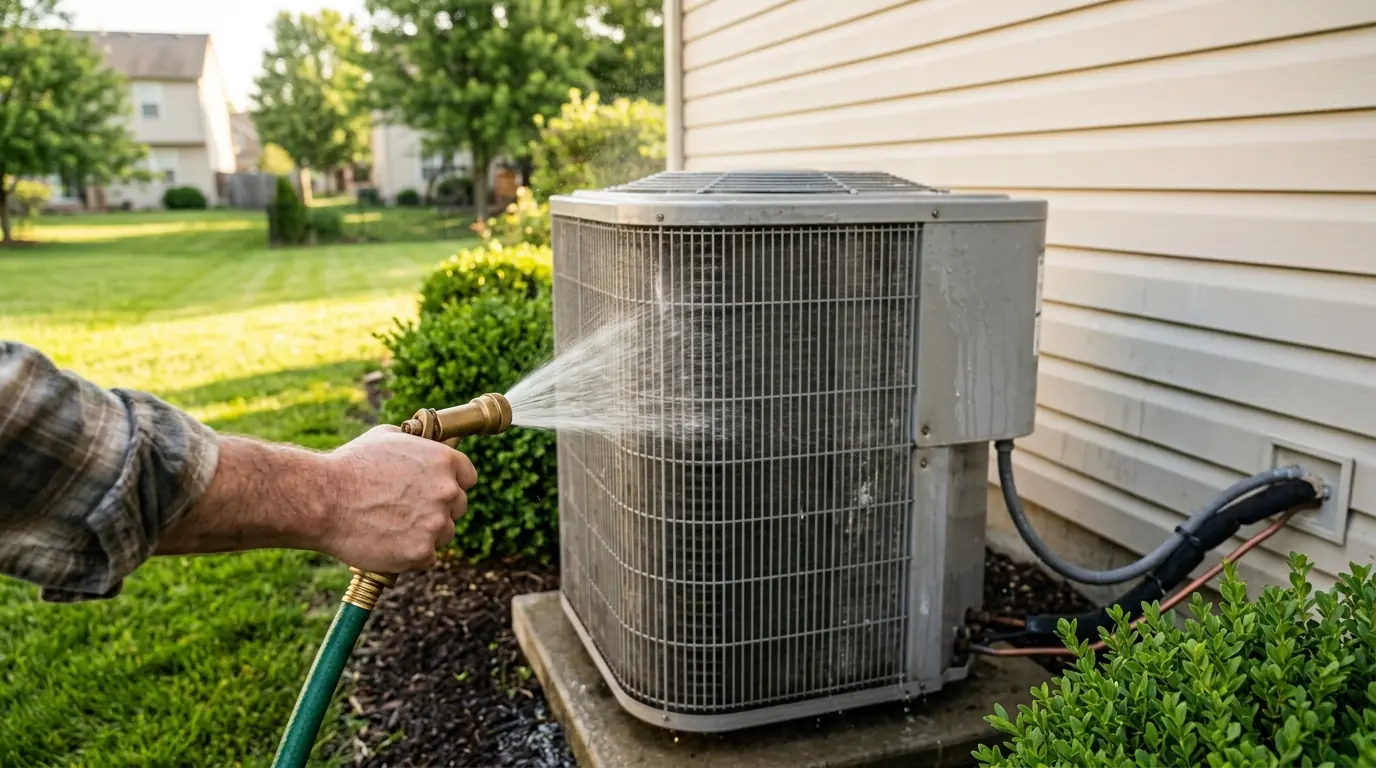
Get your AC ready before the first hot, humid week
The first stretch of 85-degree, sticky days is when weak capacitors, clogged drains and dirty coils give out. A short homeowner checklist and one test run catch most of it early.
Central air for older Lexington homes without ducts
Plaster walls, radiators and tight attics make conventional ductwork hard to fit in Lexington houses from the 1910s to the 1940s. These are the cooling options that actually work in them.
Want a technician to look at it?
Call (859) 377-8167 any hour and describe what you are seeing. We will tell you what to check now and what needs a visit.